
http://nautil.us/issue/52/the-hive/is-tribalism-a-natural-malfunction
http://nautil.us/blog/when-did-tribalism-get-to-be-so-fashionable
Today disgusting deeply offensive rumors abounded about an affair between UN ambassador Nikki Haley and President Trump.
Is this male misogyny against woman of South Asian heritage? What if anything can be done to reduce male misogyny against woman of South Asian heritage? Look forward to hearing everyone’s feedback.
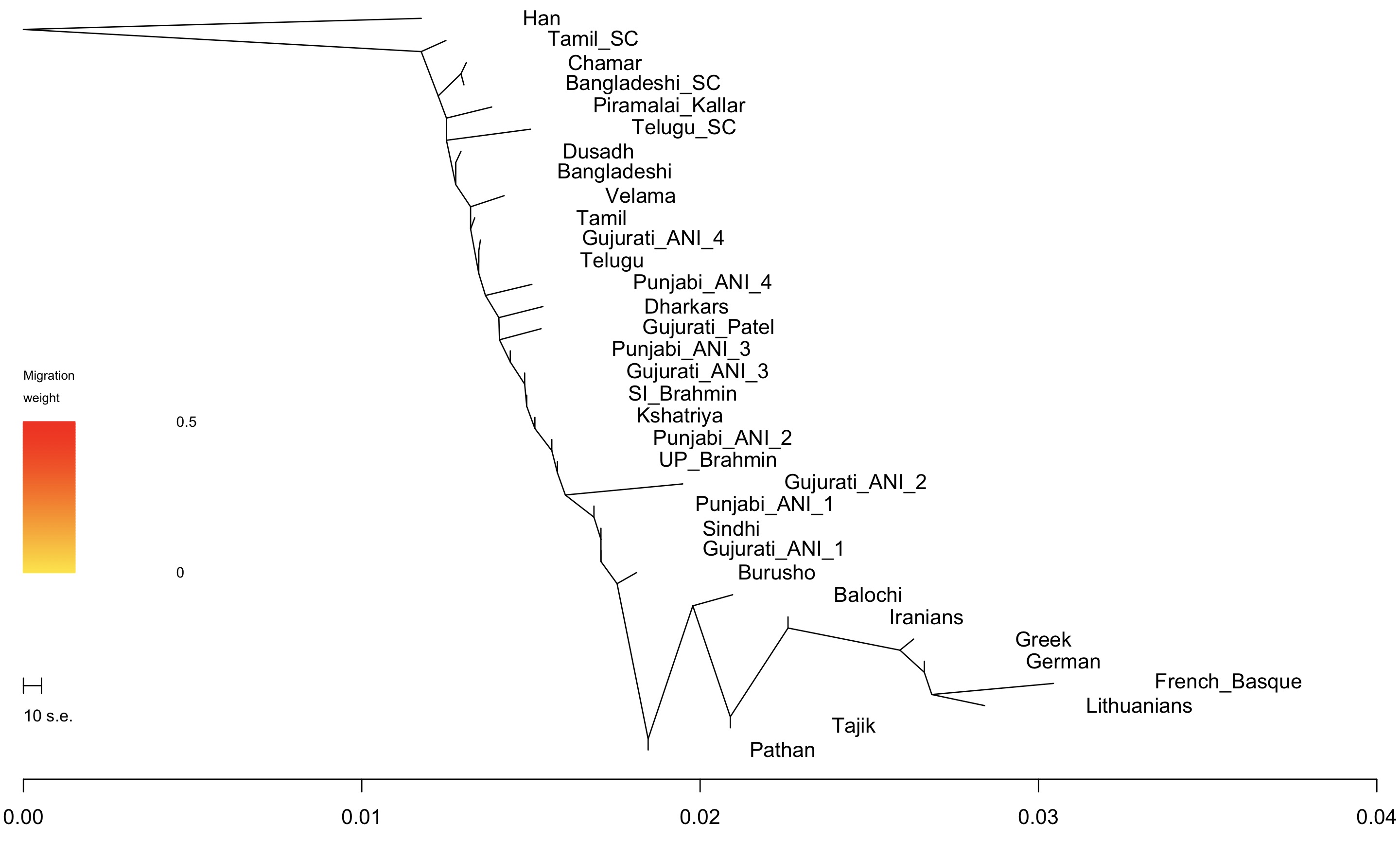
At my other blog. Some charts.

In the post below Zach observes that the progressive author of a piece criticizing Ajit Pai has to note she too is a Gaud Saraswat Brahmin. Of course, she is progressive and opposes casteism no doubt. But to me “caste-dropping” that you are a Brahmin is like criticizing standardized testing, while observing that you also aced your standardized test. Not that that matters. Or that it proves anything.
But I’m posting this because there was a section on the genetic purity of Gaud Saraswat Brahmin’s of Karnataka. It caught my attention because I knew it was likely false. I’ve looked at South Indian Brahmins, and they generally look like they have gene flow from other South Indians. Also, if you use something called your eyes you can see that some South Indian Brahmins do not look like pure Indo-Aryan specimens at all.
Several years ago my friend Zack collected a bunch of data via his Harappa project. We’ve come further since then, but it’s still one of the best sources of information we have. Looking at the data there, and elsewhere, we can say a few things about South Asian genetics.
If you asked me to say why, at this I do think Jatts do have a more recent gene flow than other groups in South Asia. If you talk to Jatts online about their history, you will know what their hypothesis for this exotic element is.
Both South Indian and Bengali Brahmins mixed with the local population. Probably on the order of ~25% of the ancestry of these two Brahmin communities can be attributed to the local substrate. But, if you correct for East Asian admixture Bengali Brahmins are actually quite similar to the Brahmins of the Gangetic plains to the west. This comports with history.
A similar fraction seems reasonable for South Indian Brahmins, though perhaps more. The key issue that I have in this case is that the “European-like” proportion of South Indian Brahmins is about half of that of North Indian Brahmins. This would indicate half dilution. The admixture was probably from the higher end of the non-Brahmin caste hierarchy.
To get a sense of what I’m talking about, here are some percentages:
| Ethnicity | Dataset | N | SIndian | Baloch | Caucasian | NEEuro | NEEuro ratio |
| ap-brahmin | 25 | 49% | 36% | 3% | 6% | 6% | |
| iyengar-brahmin | harappa | 8 | 47% | 37% | 4% | 6% | 6% |
| iyer-brahmin | harappa | 11 | 47% | 37% | 5% | 5% | 5% |
| brahmin-tamil-nadu | metspalu | 2 | 47% | 38% | 6% | 5% | 5% |
| tn-brahmin | 14 | 47% | 38% | 6% | 4% | 5% | |
| karnataka-brahmin | harappa | 5 | 46% | 35% | 5% | 6% | 7% |
| oriya-brahmin | harappa | 2 | 45% | 35% | 2% | 8% | 9% |
| kerala-brahmin | harappa | 1 | 43% | 39% | 4% | 6% | 6% |
| brahmin-uttar-pradesh | metspalu | 8 | 42% | 36% | 5% | 12% | 12% |
| bengali-brahmin | harappa | 8 | 41% | 33% | 5% | 10% | 11% |
| up-brahmin | harappa | 4 | 39% | 37% | 7% | 11% | 12% |
| bihari-brahmin | harappa | 1 | 39% | 38% | 5% | 11% | 12% |
| rajasthani-brahmin | harappa | 2 | 34% | 36% | 8% | 12% | 13% |
| punjabi-brahmin | harappa | 3 | 34% | 39% | 10% | 11% | 11% |
| kashmiri | harappa | 3 | 30% | 37% | 14% | 9% | 10% |
| pashtun | harappa | 7 | 19% | 34% | 20% | 11% | 13% |
| maharashtrian | harappa | 6 | 46% | 35% | 5% | 5% | 6% |
| tamil-nadar | harappa | 5 | 57% | 31% | 2% | 0% | 0% |
| gujarati-patel | harappa | 2 | 55% | 41% | 0% | 0% | 0% |
| bengali | harappa | 11 | 47% | 27% | 2% | 4% | 5% |
| ap-reddy | harappa | 6 | 54% | 36% | 3% | 0% | 0% |
Don’t take the percentages as literal populations.
I picked this link on Ajit Pai from Razib’s blog.
But he also caught my attention because Ajit Pai is a Konkani Gaud Saraswat Brahmin—and I am, too. In late 2016, I retired an oral history project on Konkani-speaking Brahmins because I mostly recorded versions of the same fabulous origin story, more legend than history—that we were “pure” light-skinned Brahmins of the north, who traveled to southwestern India after the Saraswati River “went underground.”
I had a GSB friend but that’s beside the point. What I have noticed is that there is an almost compulsive need in Indians to name drop their caste, especially if it is a high one.
There was no need for this author to mention her K-GSB origins but then that wouldn’t allow her to flaunt it.
Thoughts on the Aziz Ansari issue?
I have many but I’ve kept them to myself..
I’ll throw a rather controversial question out there; “has Aziz reinforced certain stereotypes about Brown & maybe Muslim men in the dating market?”
I’m just asking the questions (don’t shoot the messenger) and exploring the issue from a “Brown” “Pundit” angle.
Perhaps the reason that nonmuslims mistreat muslims so much is because the vast majority of nonmuslims (and for that matter many muslims) don’t understand Islam or muslims. If carefully watching this video many times was a requirement for every nonmuslim in the world; and if nonmuslims were required to write articles on it to demonstrate their understanding; would this help nonmuslims treat muslims better? I think yes. What does everyone else think?
This video is funny like heck. Tarek Fatah should do stand up comedy. It is hard to watch this video without laughing hysterically for large chunks of it. One funny part is when Tarek Fatah said that Mohammed, may peace be upon him, was confused when he said muslims should not make friends with Jews and Christians because they are friends with each other. Didn’t Mohammed, may peace be upon him, know that Christians hated Jews?
Tarek Fatah would like for substantially reorganized Korans to be published. However he says that South Asian scholarship is not respected.
One important take away is how spot on similar older cultured educated Indians, Pakistanis and Bangladeshis are too each other. Tarek Fatah could easily be a Deshi Hindu, Buddhist, Christian, Sikh or Jain and talk the exact same way. When I was a young child, this was much more obvious than it is now. I hope that future generations don’t forget this.
Note, the post was heavily edited with feedback from Kabir. Thanks Kabir 🙂
How wrong was Trump?
I’m half Pakistanis & half Iranian. While I have a patriotic love for my origins; it’s hard to deny how disorganised Pakistan & Iran are (to varying degrees).
Obviously what Trump said was offensive however the fact that usually when a country has a diaspora, it means there’s something very wrong with it.
This is of course just my thoughts on the matter; it is offensive but how wrong is it? Is it offensive to tell the truth?
My wife recommended that I see this short film (15mins) and I found it to be excellent.
India shows an emotional and social maturity light years ahead of its Muslim neighbours.
Also a very moving clip from Turkey:
https://instagram.com/p/BdwnIqgFKM3/
My last post for the weekend (I promise- there is a ton of work pending). I was reading about a Irishman’s observation of the opening ceremony of the Lotus Temple and stumbled on this Tennyson’s poem:
‘That stone by stone I rear’d a sacred fane,
A temple, neither Pagod, Mosque, nor Church,
But loftier, simpler, always open-door’d
To every breath from heaven, and Truth and Peace
And Love and Justice came and dwelt therein;
(and then despairingly)
I watch’d my son,
And those that follow’d, loosen, stone from stone,
All my fair work; and from the ruin arose
The shriek and curse of trampled millions, even
As in the time before; but while I groan’d,
From out the sunset pour’d an alien race,
Who fitted stone to stone again, and Truth,
Peace, Love and Justice came and dwelt therein…
Akbar’s Dream by Alfred, Lord Tennyson
Of course I do take issue with the alien race from the sunset reconstructing lost stones but the poems and the excerpts struck me nonetheless.