BrownCast Podcast episode 24: Shadi Hamid, American politics, Egyptian politics, being online

Another BP Podcast is up. You can listen onĀ Libsyn,Ā iTunes, Spotify,Ā  and Stitcher. Probably the easiest way to keep up the podcast since we don’t have a regular schedule is toĀ subscribeĀ at one of the links above.

You can also support the podcast as aĀ patronĀ (the primary benefit now is that you get the podcasts considerably earlier than everyone else…). Would appreciate moreĀ positiveĀ reviews.

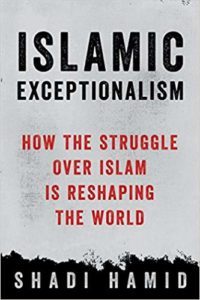
Today we talk to Shadi Hamid, a Senior Fellow at the Brookings Institution. The author of Islamic Exceptionalism and Temptations of Power.

The range of topics was diverse, from the new live-action Aladin film, the role of religious minorities in Egypt, and what it’s like to seem politically heterodox online. I say seem because Shadi’s sympathies with a sort of Left economic populism that isn’t quite exotic, but he evinces less fixation on epistemological hygiene than is common for modern public intellectuals.

We also talked extensively on his views about the role of religion in life, and religious identity in his own life, and the incentive structures of the careers of D.C. intellectual types.

Muslims and Islamophobia

I have realized this long ago and said this often in private but I feel this needs to be said more and more in public. Muslims care more about Islam than Muslims and that’s why they are inseperably attached to the term Islamophobia and cannot adopt a more appropriate term. This is also a primary reason why both Islamophobia and Muslimophobia are rising inexorably.

The Christchurch killer and his inspiration Brevik, both showed in their manifestos that how interconnected the global medium is and how America sits at the very commanding center of this globalized interconnected minds. Reading and watching some of the most famous Muslim discourse-makers in the aftermath of the shooting, it seems clear to me that beneath all the outrage about Trump, White Nationalism, far-right etc etc, what they really want to do is ban criticism of Islam. They may spew tons of words about Trump, White Nationalism, far-right but what they really hate with every core of their being are New Atheists and Ex-Muslims. I have no doubt that Mehdi Hasan eats, sleeps and breathes thinking worst things about Sam Harris. In Britain probably Majjid Nawaz would be a close rival of Sam Harris in terms of being object of hatred by media Muslims.

The saddest thing is that their efforts are all going down the drain at all corners except amng the wokes. Even after a great tragedy like Christchurch, very few joined their bandwagon to stop criticism of Islam. People like Majjid Nawaz and ex-Muslims will keep getting more and more attention. The right, not just far right, are unashamable through cudgel of atrocities. They will hurl back their grievances, big and small. A tragedy like Christchurch barely gives a short pause now in attacking both Islam and Muslims.

The center is confused, it may invite Mehdi Hasan time to time, but it understands uncomfortably that there is something very askew in this guy. Nodding along boilerplate rants doesn’t mean that very mixed thoughts about Islam and Muslims are not going on in the heads of people at the center. Even in this age of wokeness, the center knows how central is freedom of criticism of ideas to liberalism. Nobody in the center believes that Islam is in any way better than Christianity. After the buldozing Christianity faced in modernity, few would want Islam to be treated any differently. That is not just fair.

The term Islamophobia is exacerbating Muslimophobia. Protection of ideas at this day and age is very very costly. Muslims are paying the cost of protecting Islam. All decent people want to protect people, most decent people do not want to protect ideas.Ā  Just wait till the next San Bernadino or Nice attack happen. Neither ideas nor people will be spared.


Pakistanis must give up ā€œtit for tatā€

Kabir Bhai writes:

My understanding is that ā€œVande Mataramā€ is a hymn to the mother goddess and thus goes against the monotheistic nature of Islam. It also comes from an anti-Muslim novel.

If Majlis is a group that includes both Indians and Pakistanis, then its logo probably shouldn’t refer to an Indian nationalist slogan which Pakistanis shouldn’t be expected to be comfortable with. Many Indians wouldn’t like it if the logo included ā€œPakistan Zindabad!ā€ or something like that.

Then it is perfectly logical to change the name ā€œMajlisā€ to Assembly or something neutral. The point is that Islamicate culture never seeped into the Subcontient through peaceful trading routes.

It was accompanied by violent conquest and if we have to ask Indians/Hindus to accept Islamicate culture, with its extraordinarily bloody history, then we have to accept the difficult bits of Indian nationalism.

I find Pakistanis are always focussed on ā€œretaliationā€ and are the masters of cutting off their nose to spite off their face. Then they complain as to why their country is teetering on bankruptcy and not thriving (Survival is not enough).

In real life though I simply will never accept any alteration to the traditional logo, no matter whatever some Pakistani says. It is a matter I will simply not compromise on..

1971, Majlis & Vande Mataram

We wrapped up the debate on 1971; as I quipped I had been forced to “Defend the Indefensible. Most of the audience who spoke up did so in our favour (the audience was very mixed).

Pakistaniyat

I found this an interesting debate because it was extremely difficult subject area; I could have argued for either side but it so happened I was slotted into “Team Pak”, which frankly suited me.

My “Pakistaniyat” is surging at the moment after Iran, Queen of the East, was slighted last week. I’ve realised Pakistan is the Persianate Shield and a stalking horse for our Turanian civilisational-complex. Once we cede the Satrap on the Indus; all chaos follows.

So this debate, which was rather serendipitous since it was only a matter of “timing” (I had gone for Chaat & Chat and then got drafted/enlisted myself in the debate) chimed with my own awakening Pakistani identity; dormant for so long.

However this does not change my pro-Hindu anti-Islam convictions (contradictory much I know). The latest controversy at Majlis is that the old logo had Vande Mataram on it, to which the Pakistanis are objecting to.

Vande Mataram

I’m extremely upset about this since as a Briton I’m rooted in a love for tradition. If the Majlis logo had Vande Mataram when it was founded in 1891 then it must continue the same tradition.

There are understandable concerns about VM’s anti-Muslim bias but Pakistanis must transcend the tit-for-tat mentality. Otherwise I will be making a move to change the name of Majlis to something neutral like “South Asian Gathering.” The Persianate culture did not come to India peacefully but forcefully and if we Pakis are to take on historical slights at every opportunity then we must also accept the dismantling of our shared culture.

VM is a rousing anthem about an ancient people waking up to defend their Motherland. It is a historical fact that those invaders included the Muslims and therefore just as God Save the Queen has some problematic verses so will VM. It doesn’t mean that we have to deny it but rather accept and understand the context in which it arose.

As a Kaffirstani I dislike the intense Pakistani attachment to Islam. Pakistanis must learn now to slice away this reflexive association and start immersing ourselves in a Hindu cultural framework. Just because India destroyed Babri Masjid and assault Allahabad does not give Pakistan any permission to destroy Hindu temples or rename Lakshmi Chowk. In fact Indo-Islamic culture has always been syncretic and Pakistan must embrace the Indian as well as the Islamic.

Cambridge as a South Asian Hub

Incidentally I was the first speaker of the first debate, in over 30 years, of a 128 year old Society that was extremely influential in the politics during the Raj.

As an aside Cambridge has always been a hub for South Asian politics unlike Oxford; Allama Iqbal, Chaudhary Rahmat, Nehru, Rajiv Gandhi are all associated with the college. I imagine this has to do with Cambridge’s more “radical” politics as opposed to Oxford being more conservative and establishment driven.

What I enjoy about Majlis is that it chimes so well with my online interests in BP and BC (BrownCast). A decade (patchy at times) of BP gives me a rather deep familiarity with the minutiae of South Asian contemporary politics and history..

The arguments on 1971

I made two arguments (we were limited 5 minutes each) and I got a bit carried away so I thundered them (at heart as a Kaffirstani, I’m quite the chameleon in my relentless need to blend in I take on lots of different roles):

(1.) The cause for a Just War. India did not sufficient explore diplomatic or international consensus. India as an “aggressive power”; 1948 Hyderabad, 1963 Goa and of course 1971 East Pak.

Furthermore the need to establish some greater consensus was not geniune as the Soviet Union was trying to avoid conflict a month before.

(2.) The nuclearification of the Subcontinent stemmed immediately from 1971 (December 1971 the war was lost, Jan 1972 Pakistan began the nuclear program).

I’ve heavily condensed my two arguments but I was only meant to deliver the main thrusts.

I was followed by my very good friend MJ, who’s a brilliant postdoc physicist (he’s Indian Hindu but his ancestors are from Dhaka). He structured his arguments as follows:

(1.) India was forced to act on its principles and help midwife the Bangladeshi people to freedom.

(2.) The genocide of the Bangladeshi people (he prefaced his remarks with gonimoter maal).

Following that we had some other argument (3 Prop, 3 Opp including ourselves) however my second Prop focused on the “hypocrisy” of Indian foreign policy.

To cut a very long story short I do think the Prop carried it because we did not contest the need for Bangladeshi independence but rather drew upon the reasons for Indian interference in 1971.

BrownCast Podcast episode 23: Dr. Jeffery Long on Hinduism, history and politics

Another BP Podcast is up. You can listen onĀ Libsyn,Ā iTunes, Spotify,Ā  and Stitcher. Probably the easiest way to keep up the podcast since we don’t have a regular schedule is toĀ subscribeĀ at one of the links above.

You can also support the podcast as aĀ patronĀ (the primary benefit now is that you get the podcasts considerably earlier than everyone else…). Would appreciate moreĀ positiveĀ reviews.

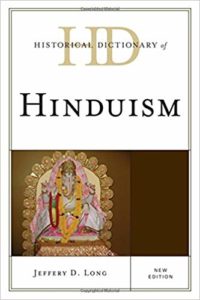
Today we talk to Jeffery Long, a professor of religious studies at Elizabethtown College. A practitioner of Vedanta, he is also the author of Historical Dictionary of Hinduism, Jainism: An Introduction, and A Vision for Hinduism: Beyond Hindu Nationalism. Dr. Long is also an editor of Buddhism and Jainism.

We discussed a variety of topics, from the nature of Hindu philosophy, the interaction with Islam, the distinction between astika and nastika schools, as well as Dr. Long’s impressions of Tulsi Gabbard (someone who he actually met at some point).

How Indian are Pakistanis (vs. non-Indian)

I was sent this link via Twitter, Pakistanis are Arabs:

OK – so clearly that’s nonsense … but while I have your attention ..

Back in 2012, the Aspen Institute held a discussion called ā€œMy Middle Eastā€ featuring authors from around the ā€œmodern Middle Eastā€. This included participants from various Arab countries, Turkey, Iran, Afghanistan and Pakistan. Each author was given an opportunity to provide insight into their unique Middle Eastern experience. The brilliant Daniyal Mueendin was representing Pakistan. When it was his turn to speak, he started rambling about how the question was confusing to him as he was not a Middle-Easterner and so didn’t really know what to say – in other words, he missed the point completely i.e for all practical purposes (and particularly from the perspective of the audience) his cultural experience was Middle Eastern enough. I should add that the participants from Turkey and Afghanistan had no such problems. To me this brought to the fore an issue that’s been bothering me for a while namely a tendency among affluent, liberal Pakistanis to underplay Pakistan’s cultural affiliation with the Greater Middle East and instead fixate eastward, towards India, for such cultural linkages.

To be frank there is no substance I can see to the blog post, just some assertion. After reading this I am more convinced that Pakistanis are South Asian and shouldn’t be included as part of the “Greater Middle East,” because the argument presented is so weak, vacuous and contentless.

Pakistanis, especially the ones who are from Pashtun backgrounds, are more Middle Eastern than other South Asian peoples, even Muslims from Uttar Pradesh. I don’t deny that. But the dominant Punjabi culture of Pakistan is South Asian. Indian if you want to remove the term “Indian” from its current political valence.

Note: It is not surprising that this is the question where some of our local Hindu nationalists agree with Pakistani nationalists. Reality damns them both.

Brown Pundits