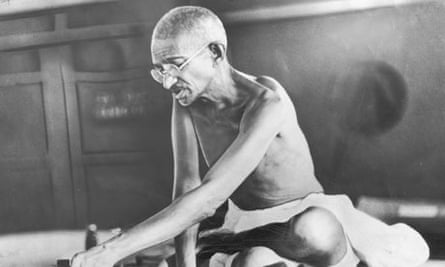
Some brief points on Gandhi

A brief summary of my views about Gandhi

  • I have seen the entire “Mi Nathuram Godse Boltoy” play and read the entire speech by Nathuram Godse. Till my late teens, I was impressed by parts of Godse’s arguments but today I find them misguided and half baked and his actions hasty and counterproductive (From Hindutva POV). On further reading – especially Gandhi’s own writings and other commentaries my views have changed almost 180Degrees wrt Gandhi. A lot of hatred of Gandhi in MH brahmin circles is due to the 1948 Anti Brahmin riots.
  • He would be best classified as a Brave Pacifist Extremist. He combined both Tilak’s and Gokhale’s tactics. He was not a moderate like Gokhale, nor did he condone violence like Tilak – yet he tried to encapsulate both streams in Congress before him.
  • Prima facie a lot of his pacifism seems excessive and inefficient, but when you read Gandhi’s own writings on Violence as a tool against oppression the pragmatism of his position comes through.
  • Non-violence was the path of least resistance and hence extremely helpful in building national movement while instilling democratic values in the populous.
  • His pacifism was more rooted in Jain/Jesus’ influences on him than Hindu Ahimsa.
  • His Ahimsa probably won’t have worked against other colonial powers.
  • Gandhi deserves the most credit for increasing the involvement of the Indian populous into the freedom struggle.
  • He said and did a lot of stupid things that cannot be defended no matter what. His moral grandstanding can be seen as extremely patronizing.
  • His campaign against untouchability had a significantly more impact than he gets credit for.
  • His fasts which can be seen as moral blackmail did a lot of good for the country too. The 1932 Poona pact being a primary example. I also see his controversial 1948 fast for money transfer to Pakistan (for which he finally died) as not without merit.
  • His solution for most Hindu-Muslim conflicts was naive. He can be rightfully accused of being very soft on Muslim extremists. Khilafat movement was arguably a great blunder.
  • Blaming Gandhi for Partition is extremely unfair. If anything the blame must reside with Nehru/Patel for their greed for power.
  • His ideas about bottom-up Swarajya and sustainability appear naive and stupid in the 21st century.
  • Some moments in Gandhi’s life are extremely extraordinary – eg: His Satyagrahas, his reception by Manchester mill workers, his conflict resolution in Naokhali.
  • Why he favored Nehru (over Patel) who was very unlike Gandhi is a mystery to me. Guha and others have tried but I am not convinced.
  • He understood the country much more than his peers.
  • Influence Gandhi has had on foreign movements is extraordinary – MLK, Mandela. He is along with Yoga the two strongest candidates for Indian soft power.
  • Liberal criticism of Gandhi (South African racism, Casteism, Sexism) miss the point of Gandhi. Seldom have public figures changed their views on issues with changing times so drastically and so transparently. IMO that’s the quality that keeps Gandhi apart from other famous politicians.
  • I guess distant future history will remember Gandhi as a flawed yet great human being – in league with Jesus and Mohammad.
  • He is undoubtedly the most consequential (hence Greatest ?) Indian from the 20th century.
  • In the long run, as already seen by the RSS/BJP embrace of Gandhi, his legacy is safer than others (Like Nehru)
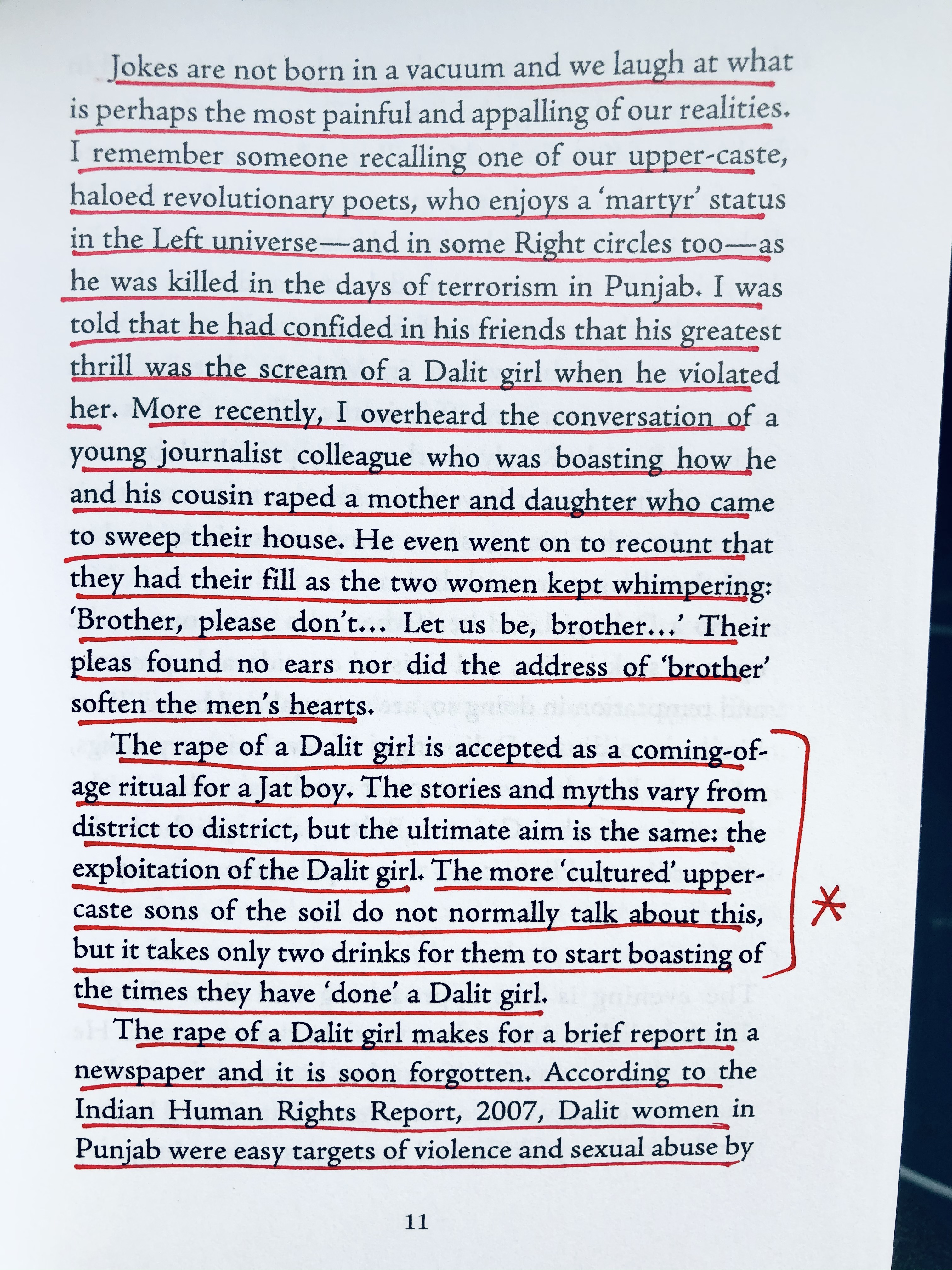
Rape Culture, Indian Edition

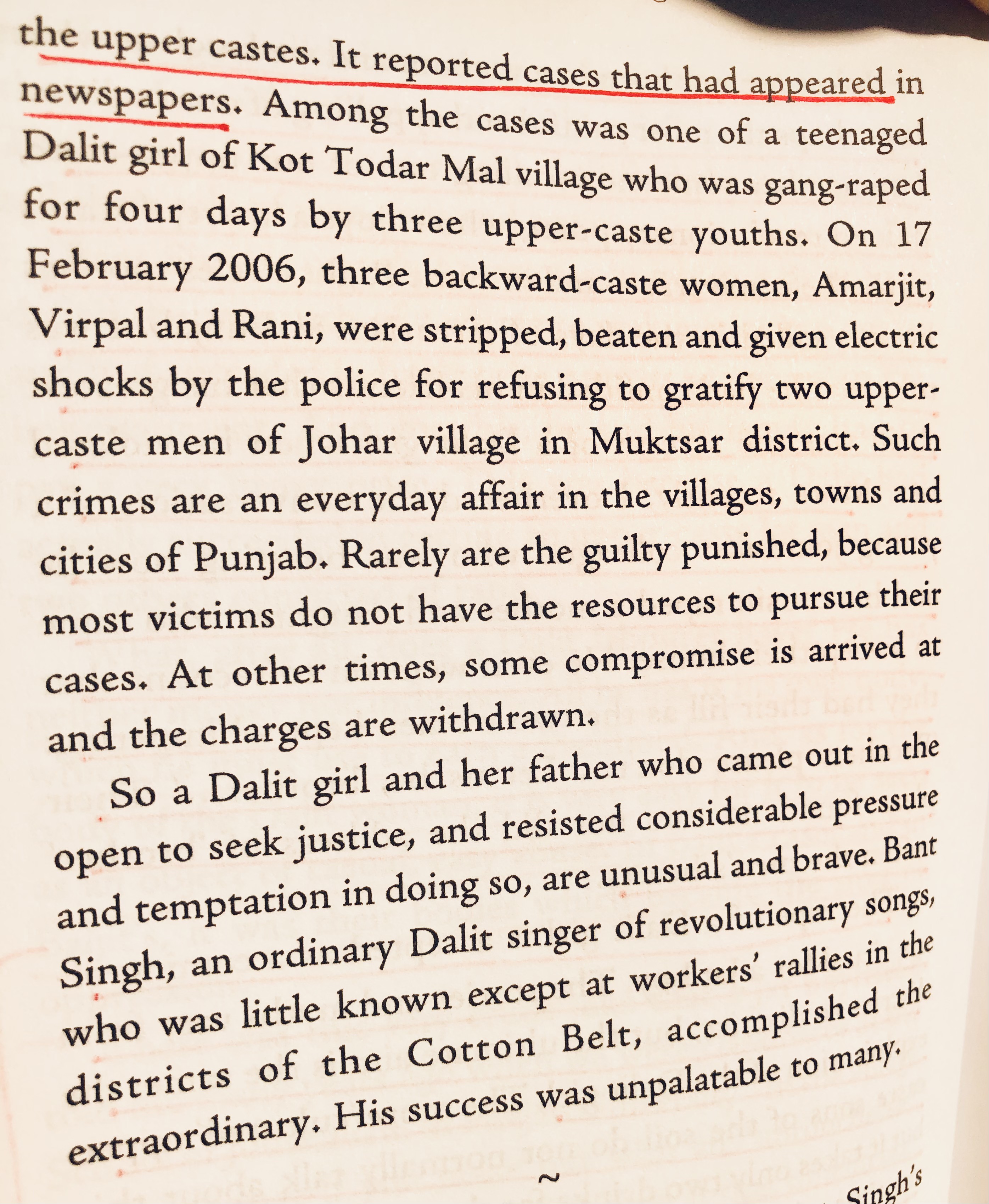
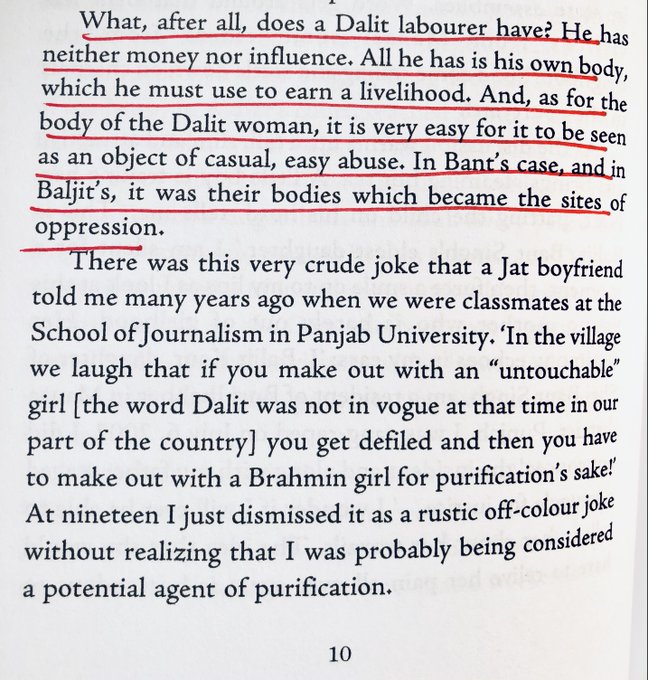
There is news about another rape case (alleged rape case?) making wavers in India and Twitter regular @conradkbarwa posted some excerpts from a book by poet and journalist Nirupama Dutta that you can see below:


Image

Image

Image

The anecdotes listed in these pages are obviously very disturbing and shocking, and I have no doubt that even if Nirupama moves in unusually nasty company, many such cases do occur across the Indian subcontinent and in most of them the police are yet another source of oppression (and sometimes even a second rape in the police station). The excerpts above are from East Punjab, so from a land that we are not entirely unfamiliar with (apart from whatever similarities exist across east and west Punjab, my in-laws are from villages near Ludhiana). It made me think about our own Punjab and the various anecdotes I have heard about rape of lower class women in villages as well as the use of sweepers and servants for sexual favors in urban areas. And of course, about the well publicized recent rape cases in Pakistani Punjab and about Razib Khan’s comment somewhere that “THIS is what a real rape culture looks like”. Which led to a tangential question in my mind: what are the similarities and differences between rape culture in Pakistani Punjab and Indian Punjab? 

  1. Differences in terms of actual prevalence and mechanics? Is such rape more common? less common? about the same? What figures do we have? How reliable are they? What is the trendline? How does this compare to other societies? 
  2. Differences in how it is framed: rapes in Pakistan tend to be framed as either class oppression (mostly by leftist/liberal commentators) or as “declining morals due to Indian movies, western influence, modernization, etc” (Islamist and/or traditional commentators). Rapes in India tend to be framed as class oppression too at times, but it seems that liberals and even traditional leftists in India (or about India, this is also true of most sympathetic Western commentators) seem very likely to blame “Brahminism” and the caste system as very specifically Indian forms of rape culture, not comparable to similar atrocities that happen to lower class populations in other countries (though I assume that population numbers being what they are, most actual rapists in East Punjab are  likely to be Jats or other local elites, Sikhs rather than Hindus, and rarely Brahmins). There is also a traditionalist view in India (that “lax morals, westernization, bollywood ” etc are to blame) and of course Hindutva types will add “love jihad” or “Muslim/Turkic colonization” to the list of putative causes. What are the most important causes in your view? 
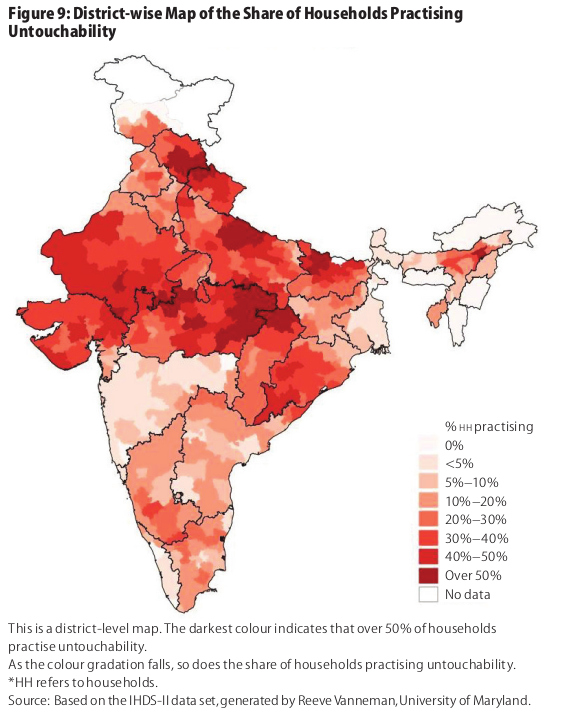
  3. Which brings me to the real trigger for this post: Do you think the focus on caste in East Punjab (as in Nirupama Dutta’s book) and its relative absence in Western Punjab stories reflects a real difference in how easy it is to rape poor girls and get away with it? I know most Pakistanis will say this is exactly the case and that we are much better off since we are Muslims and any caste-ism that exists in us is a legacy of Hinduism, is less than it is in East Punjab, is fading fast and is the reason we have less rapes already, while Indian society will remain stuck in rape culture because of “Brahminism”.  Of course this is a question that in principle can be answered. What is the prevalence of the rape/sexual abuse of lower class women in Pakistani Punjab vs East Punjab? If it is really lower, then it needs an explanation. If it is not lower, then it may be that the focus on Brahminism is taking the public discussion (and possible solutions) into unhelpful areas? Or is it Pakistan that needs to talk more about caste rather than class to catch up to the reality? 
  4. I am not revealing any secrets by adding that this is connected to a personal feeling that left/liberal discourse is focused on political needs (defeating BJP/Hindu revivalism in this case)  and when you add that the usual human thing of finding a convenient narrative and beating it to death, it is possible that Pakistanis are actually a little better at analyzing their own society because they don’t have to carry this burden. But I am aware that this may be an extension of “grass is greener on the other side” on my part, and it is in fact the case that conversion to Islam (or “Indus man superiority”) has made Pakistanis less rapey than Indians. But if this is the case, why are Sikhs still rapey? does Brahminism work on them more than it does on Punjabi Muslims? (I am also aware that 6 out of ten readers will misunderstand what I am trying to ask here, but that is par for the course and I am more interested in the 4 who do get the question).

Fire away…

Afghan Conundrum

From Dr Hamid Hussain. 

“A real friend is one who takes the hand of his friend in times of distress and helplessness’.  Afghan proverb

 In September 2020, Afghan government and Taliban representatives met for the first time publicly in Qatar to start intra-Afghan dialogue.  There were lot of hurdles between the first step of signing of agreement between United States and Taliban in February 2020 and start of intra-Afghan dialogue in September 2020.

 All parties are asking Taliban for a ceasefire during intra-Afghan dialogue.  Taliban are not agreeing to this condition and violence has escalated in the last few months.  Taliban leadership is concerned that if it agrees to a ceasefire then foot soldiers and local commanders will head back to their homes.  This will weaken Taliban negotiation position and it will require some effort to re-mobilize foot soldiers.  In addition, there is also fear that hardline Taliban may break away.  The price that Taliban are paying is negative public opinion inside Afghanistan.  Large number of Afghans are angry that Taliban have signed a truce with foreign troops; the very rai-son d’etre of Taliban fight while shedding the blood of fellow Afghans with impunity. Continue reading Afghan Conundrum

The Ambition of the Emirates


For a large part of history, the inhabitants of the Arabian peninsula were on the fringe in the rise and fall of empires. They alternated raiding and trading as this wheel of fire rolled on across the dunes. But eventually, the Arabian caravan would be equipped with both sword and word to make haste across the Old World in a relentless raid that would change both history and humanity.

Yet just as quickly as the prized Arabian horses would gallop into newly conquered lands, the Arabs would soon scatter leaving their language, faith, and the prestige of their roots behind in strange lands. Tribalism trumped their newfound unity and the Arabs would once again retreat into their wildernesses and pilgrimages.

That is until wealth erupted from its wastelands. The old elites of the Middle East would now return from their desert exile to begin another round of a game of thrones.

Continue reading The Ambition of the Emirates

Will the Sikhs Save India?

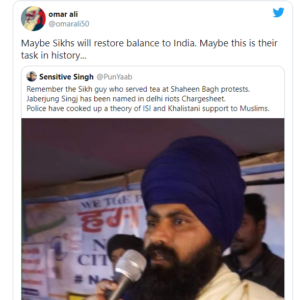
This topic came up a few days ago on Twitter because I happened to tweet:


The original tweet I was quoting is about the arrest of a Sikh leader who had gone to express solidarity (and serve tea) with the Shaheen Bagh protesters. I know nothing about him and have no idea if he is a Khalistani or a leftist or just a random guy who wanted to be nice to the protesters, so my tweet was not about him, but what was it about then? Several friends asked me this question (and others jumped in with their own theories, as expected on twitter), so i thought i would write a quick post to try and explain my quip.. Continue reading Will the Sikhs Save India?

Sexual selection by Indian Society and its implications

Peacock courtship (A peacock displaying its full-length tail feathers in a courtship dance) © Gaurav Lele

To human eyes, few things in the animal world come close to the splendor of a full-grown peacock in plumage. The iridescent blue and green of a peacock tail can leave even the driest and unpoetic of us spellbound. Such a magnificent fellow seems wasted on the thoroughly mediocre peahen. The peacock’s tail puzzled Charles Darwin, for he could not find any survival value in the flamboyant tail (rather the tail makes escaping predators much more difficult). The driver of this trait was not any direct survival value, but the seemingly partial treatment peacocks with fuller tails received from the peahens (some say the tail is a health indicator). They mated more often, sired more offspring and so their genes flowed and conquered the peacock gene pool, making peacocks with huge tails a norm.

In the 21st century, many evolutionary biologists state that with increasing health care, eradication of many contagious diseases, evolution via natural selection of homo sapiens is no longer shaping our future as a species as it did leading up to the 20th century (Or at least they did in the Pre COVID era ). For generations, preferences and desires of women have helped shape the alpha male- the knight in shining armor, whereas the preferences of men have led to the distinct female characteristics being present in most women. Oddly though, today overwhelmingly humans without means to meet even their basic needs are passing their genes to further generations (breeding like rabbits some call it). To compare humans to other animals may offer a specious argument today as we have left some of our evolutionary habits far behind, leading very different lives than our animal cousins. The Games of Sexes in humans have become incredibly nuanced which has complicated ramifications on every aspect of our society.

This courtship game has taken even weirder morph in the Indian subcontinent. In India, it’s not just the woman whom decides she mates with, but her parents, grandparents, her uncles, and aunts. Sexual selection has become a task for the entire society and feeling incredulous at this tendency is considered suspect. As we depend on middle-men in arranged marriages, single negative feedback from an otherwise unimportant person is enough to cast serious doubt in the proceedings. The growing feminism movement in the world has not yet had a substantial effect on the way marriages work in India. The society (Eg: western Maharashtra ) still dictates that an eligible bachelor

Image for post

  • Is halfway decent looking
  • Earns over 5–15 lacs per annum & Earns at least marginally more than the girl (a lot of Indian mechanical engineers in the US – especially California are facing worse rating in the arranged marriage game as girls tend to take to Software and hence earn a lot more)
  • Owns at least one house (or at least his parents own a Pucca house; The more the merrier — Preferably with low EMI)
  • comes from a well to do family & own’s caste.
  • has a Car (how did I forget about the CAR)                                                                 (Make your own list #####)

Whereas an eligible spinster is:

  • Good looking — Highly comparative
  • Homely ? or Earning 

.. (depends on who is looking)
  • Sanskari – (even in families where their daughters are offered considerable freedom expectations from a daughter in law are stricter- though things are rapidly changing)

As one might note, society-created a criterion for eligibility of women are changing as feminism percolates slowly in our deeply patriarchal society. It’s more difficult to have a stereotype of the ideal spinster than that of her counterpart.

Many individuals (especially closeted homosexuals) are forced into an early and unhappy marriage especially when they’re the elder siblings. If and when homosexuality is accepted in our society, the change from that to the current rules of selection will be even more interesting. A flippant joke on the matter

Son: “Mother , I am going to marry Rajesh, I love him and now Gay marriage is legal in India too”.

Mother: “Naa beta 
 You cant marry him 
”

Son : “Why ?”

Mother : “He isnt from our caste son. Find a gay from our caste.”

Image for post

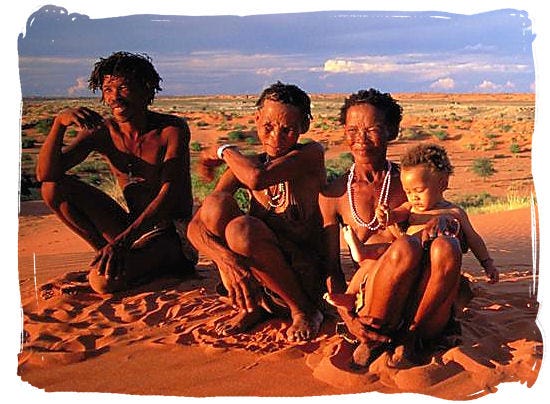
Bushmen from Kalahari desert (San people)

But ironically none of the above-stated qualities are essentially needed to pass on the genes as a Kalahari Bushmen would know. These qualities might make the individual a stable and bankable partner but they can’t be assumed as gospel blindly. The men today (even women to a growing extend today) spend their lives being overwhelmingly stressed to meet firstly the needs of their respective spouses in the future, their parents, and on a larger scale, their society. Exposure to such high levels of stress has resulted in low fertility (men and women)and erectile dysfunction in the millennials. One might even relate the above 5 eligibility points to have a linearly negative effect (above a certain threshold) on the overall physical state, thus hampering (re)-productivity. Is the battle for sex leading the individual away from sex?

India has not been the land of true innovation since the colonial experience like some of the western countries. We are good at jugaad and thus produce good engineers shy of true brilliance. Apart from the educational system and other “systems”, considerable blame can be put on the social system. An early marriage not only casts doubts on any aspirations a woman might have but also restrains the man from venturing further in his dreams. If the risk-taking scientist/ innovator is not assured of any respect from society, his task becomes doubly challenging. Not only is he expected to get married at 26–30 but he is also expected to prepare for it since 22. The problem is that families don’t choose risk-takers over boring / stable. Truly passionate people can take such rejections in their stride and move on. But when the whole societies fervently impose judgments and expectations on these to-be-innovators many of these innovators can bundle and pack-up. A man or woman above 30/-35 being single becomes a topic of gossip and doubts. Many times the clutches of sexual policing lead people to marriage where they would’ve otherwise stayed single whilst indulging in sex uninhibited. Deciding to spend your life with someone because you love them is one thing, doing it because you are lonely and needy is another. But being expected to marry someone because your family and society want it to happen is something totally different.

If we take away the societal pressure from the institution of marriage and keep the social networks of marriage active, individuals who wish to settle down will still get access to an efficient system to find mates while. But eccentric geniuses and renegades will not be forced to conform. Incidentally, that seems to be the place where Indian society appears to be heading IMO.

Post Script:

I am a supporter of a liberal Arranged Dating + Marriage which is picking up steam in Liberal India in the 21st century. I would love to see some research done on the stability of arranged marriages (the liberal Arranged Dating + Marriage ones – where individuals have a choice and veto) versus love marriages. I can see As I married quite early (in my peer group) at the age of 27, a lot of this argument might appear hypocritical.

Some tidbits on the state of United States in 1800

The United States today is the 3rd most populous country on earth with 330MM people. We all know that the first European settlements in North America began circa 1600. But what did the eastern seaboard look like, some 200 years later in 1800 – a good twenty four years after the Declaration of Independence?

To understand America some 200 years ago, one of the best books to read is Henry Adams’s History of the Administrations of Jefferson and Madison. The period covered is from 1800 to 1816. But let’s focus on Chapter 1 of the work – that discusses the physical state of US in 1800.

In 1800 the whole of United States (i.e. the 13 states, and not the whole continent) had 5.3 MM persons. To put that in perspective, the US in 1800 when Jefferson took office had fewer people than the city of Bangalore today.  The figure of 5.3MM is relative to the 15MM who lived in the much much smaller British Isles the same year, and the 27MM people in the French Republic post revolution. Out of 5.3MM, about a fifth were African slaves. So the free white population was about 4.5MM. This excludes the native American population (on whose population I can’t readily find estimates in the book or elsewhere).

Nearly all of this 5 MM was concentrated along the Atlantic seaboard and the 13 original states. Barely about 0.5MM lived beyond the Alleghany mountains of Pennsylvania and had made their way to territories westward like Ohio and Kentucky.

Travel was mostly through land for getting to the interior regions even on the eastern seaboard. And land travel as one would expect was pretty expensive and very very long.

Let’s take the cities of New York and Boston – separated by some 220 miles – a distance covered in about 4 hours by car today. Back in 1800, the Boston to New York journey was a 3 day affair, despite the existence of a “tolerable highway” in Adams’s words. There were apparently stage-coaches from NY that departed to Boston thrice a week carrying passengers and mail. So it’s not just about the 3 day long journey but also the infrequency of travel options. Just thrice a week.

Let’s take NY to Philadelphia – two towns separated by 100 miles (and a 2 hour cab drive today). Back in 1800, the stage-coach ride from NY to Philadelphia took the “greater part of two days” in Adams’s own words. The journey between Baltimore and Washington DC (the country’s capital then as now) was a perilous one in 1800 – as there were forests to traverse. These two towns are barely an hour’s drive from each other today.

Let’s see what Adams has to say about housing in 1800 US –

“Fifty or a hundred miles inland more than half the houses were log-cabins, which might or might not enjoy the luxury of a glass window. Throughout the South and West houses showed little attempt at luxury; but even in New England the ordinary farmhouse was hardly so well built, so spacious, or so warm as that of a well-to-do contemporary of Charlemagne.”

Back in 1800, it used to take 16 days for a mail to reach Lexington Kentucky from Philadelphia – two towns separated by 650 miles. A mail from Philadelphia to Nashville took 22 days.

How large were the great cities of US in 1800 –

  • Philadelphia – 70,000 people
  • New York – 60,000
  • Boston – 25,000

So Philadelphia was no larger than a midsized town like Liverpool (also 70K) in England. London to put things in perspective had 1 million inhabitants in 1800.

For those familiar with NYC, here’s an interesting tidbit from Adams on how the city was back in 1800 – “the Battery was a fashionable walk, Broadway a country drive, and Wall Street an uptown residence”!!

So this was the state of US, a good 200 years after the European first settled it! That’s a long long time. Even after 200 years, two third of the American population was within 50 miles of the Atlantic seaboard!

Adams’s take on the state of US presided over by Jefferson is very sobering. It tells us how difficult “progress” is, and how much of a long haul just about everything was all over the world, before the railroad and the steam engine (particularly in the absence of waterways).

Also this chapter underscores the sheer physical challenge posed by the American continent – a far greater challenge than say Western Europe where the sea is within a couple of hundred miles of most parts.

It also helps explain why North America was so uninhabitable and backward for millennia despite being colonized by man as early as 15,000BC. Even the highly civilized Eurasian man could barely bring himself to move away from the seaboard after spending 200 years on the continent.

The author tweets @shrikanth_krish

On Indians in East Africa

The Indian diaspora is said to be over 30 million. While the popular tendency is usually to talk of the diaspora in the West (which is recent in formation), Indians have played a far more important role in East Africa if we take a long historical view of the past 150 years

Thomas Sowell’s very fine book “Migrations and Cultures” is an eye-opener in this respect as it sheds a great deal of light on the Indian engagement in Africa since the middle of 19th century. This short post dwells briefly on the Indian contributions in East Africa (particularly Uganda / Tanzania / Kenya) drawn mainly from Sowell’s work.

Let’s take the Tanzanian island outpost of Zanzibar off the African east coast. While the Indian presence in Zanzibar today is not much to write home about, this island was one of the first African territories to be settled by Indians. There was a phase in history when Zanzibar was practically run by Indians. In 1860, a report mentioned – “All the shopkeepers and artisans at Zanzibar are natives of India”!

The numbers of Indians in Zanzibar weren’t great. Only about 5000 in the 1860s. But nearly all foreign trade was conducted by them. As of 1872, an American trader owed Indian financiers in the Island $2MM and a French firm owed these financiers at least $4MM.

While in mid 19th century, Indian presence was largely in Zanzibar and some coastal areas of East Africa, the interior was opened up when the British constructed the great railroad that connected Mombasa port in Kenya to Lake Victoria in Uganda in late 19th century. 16000 laborers were involved in the construction of this great pioneer Railway project. Of which 15000 were Indians.

What’s interesting is that these coolies were pretty expensive compared to the indigenous African labor. Yet the expensive indentured Indian labor from thousands of miles away was preferred as they were more valuable and productive than locally available African labor. The railroad construction proved the trigger for much of the Indian migration to the African mainland – particularly Kenya and Uganda. Much of the migration was from Gujarat.

The Indian settlements in these parts were a momentous event in Africa’s long history. In Sowell’s words, the Indian shops in East Africa were the first commercial retail establishments ever encountered by these African villages in their entire history. The Indians in East Africa were the first to import / sell cereal. Sowell credits them for “transforming East Africa from a subsistence and barter economy into a money economy” in the late 19th / early 20th century.

As an example Taxes in Uganda until late 19th century were paid in kind. Starting in 20th century they were paid in money and the currency was rupees!

In 1905, a report in Kenya declared – “80% of the present capital and business energy in the country is Indian”. In 1948, Indians owned over 90% of all cotton gins in Uganda. In the 1960s, when the Indian population peaked in Uganda, their share of the population was about 1%. But as per some estimates the “Asian” contribution (mostly Indian) to the national GDP ranged from 35% to 50%.

In 1952, there were twice as many African traders as Indian traders in Uganda, but the Indian traders did 3 times as much business as the Africans! Despite Govt regulations which hampered Indians from setting up shops (again as per Sowell).

Resentment against Indian dominance eventually got a lease of life when most of the East African countries became independent in the 60s and 70s. The dictator Idi Amin’s expulsion of most Ugandan Indians in the early 70s was a notorious episode at the time when the Asian population in Uganda dropped from 96K in 1968 to ~1000 in 1972.

The case in Kenya was not very different from Uganda. Indians dominated the Kenyan economy. Yet post Kenyan Independence, the pressures to “africanize” meant that the Asian (mostly Indian) numbers in Kenya dropped from 176K in 1962 to 25K in 1975.

Today Indians play a more marginal role in the region than they once did. .While we tend to diss imperialism a lot, we sometimes forget that imperialism was also a driver of such unlikely inter-continental migrations which brought commercial culture to hitherto unexplored regions.

Political independence to the region did not work out very well for the enterprising Indian diaspora. The Indian businessman who had played a large role in building these economies was driven out of it, with little gratitude.

The story of Indians in East Africa is a much unheralded one, that ought to be celebrated more in India, and must be taught in Indian textbooks. This was not a political colonization driven by kings. This was a mission undertaken by hard working ordinary Indians who shone with their probity, enterprise and sweat.

All the more reason to celebrate and commemorate it.

The author tweets @shrikanth_krish

Brown Pundits