Never Have I Ever


The new series on Netflix about a young Indian American teen is pretty good. Despite attempts to write about it in a political frame, I don’t see that it’s a political show really. There is also an element of verisimilitude to the show because the non-Indian love interests are of East Asian, Jewish, or mixed East Asian backgrounds. Too often when talking about dating and love outside of one South Asian culture there’s a temptation to assume “American” means Sven and/or the St. Pauli Girl. Southern California, where the show is set, is way more diverse than that, and unlike 90s sitcoms like Friends and Seinfeld Never Have I Ever actually seems like it was set in and around suburban SoCal.*

Oh, and I have to observe, that the protagonist is complected like a lot of the Indian Americans I grew up around.

* The protagonist did say “Hella,” which is very NorCal. I have no idea how that got past the writers’ room.

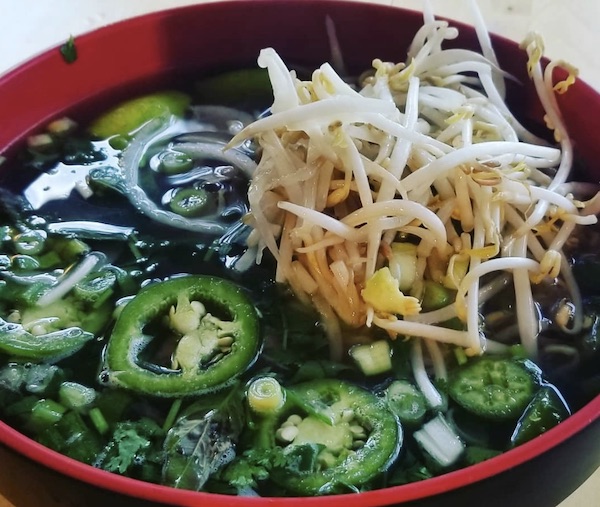
Browncast Episode 96: From Vietnam with Phở

Another BP Podcast is up. You can listen on LibsynAppleSpotify,  and Stitcher (and a variety of other platforms). Probably the easiest way to keep up the podcast since we don’t have a regular schedule is to subscribe to one of the links above!

You can also support the podcast as a patron. The primary benefit now is that you get the podcasts considerably earlier than everyone else. This website isn’t about shaking the cup, but I have noticed that the number of patrons plateaued a long time ago.

I would though appreciate more positive reviews! Alton Brown’s “Browncast” has 30 reviews on Stitcher alone! Help make us the biggest browncast! At least at some point

This episode is a discussion Jasper Gregory, an expat living in Danang. Having basically “beaten” Covid-19, is coming out of “lockdown.” We talk about how this happened, and what “normalcy” looks like.

Jasper and I also discuss the geopolitics, religion, and popular culture of Vietnam and Southeast Asia. Also, does he prefer northern or southern phở?

Sri Lanka: post 1948, Economy and China

Some snippets on Economy, Population.   The seeds for the darkest years of our history were being laid.   China was lending a helping hand, and India was backstabbing Sri Lanka by training the LTTE.

Sri Lankas population was approx 7 million in 1948
By 1971 had increased 12 million (70% increase)

Until 1967 or so high rubber prices, were able to sustain a welfare system. Free rice etc. Development of better synthetic rubber, dropped natural rubber price.
Sri Lanka economy crashed and unlike now, no one was willing to lend.

A large part of food, including rice was imported. Gal-Oya type scheme (Large dam/Irrigation system, see here for more descriptive) etc was not sufficient for a population that was increasing by the day. There wasnt enough land to go around for the large population increase.

The first big sign of the crisis caused by the population and an economy unable to keep pace was the 71 insurrection by Sinhalese mainly southern rural youth. Once the insurrection was suppressed, Land Reform was put into place and  imposed a ceiling of twenty hectares (50 acres) on privately owned land and sought to distribute lands in excess of the ceiling for the benefit of landless peasants.

No foreign exchange, we had to engage in barter, eg the Rubber Rice pact with China.  Then as usual the Americans twisted our balls. Their surplus wheat that had gone mouldy was given under PL480. It was not free, SL had to pay for it.

So, we had to learn from scratch, without much capital to be self sufficient.

The economy of Jaffna and the Vanni boomed. Much of the veggies, chillies came from there.

Then in 1977 JR Jayawardene opened up the economy. The farming economy and local industry, collapsed specially in the North.    !977 riots, burning of the Jaffna library helped us well on the way to self destruction.

Well worth reading

Prime Minister, Dudley Senanayake, however, fully backed his Minister of Commerce and was prepared to pay this price; he realized that the benefits to Sri Lanka from the agreement far outweighed losses consequent to the cutting-off of American aid. He argued:
“Ceylon’s oil trade pattern has been knocked out by changes in the world market and we have to seek new markets for our needs of essential foodstuffs and for our exports”

R. G. Senanayake: “We noted on the Chinese side the absence of the spirit of bargaining and haggling on comparatively small points. On the other hand, they gave us the impression of being large minded and forthright in their dealings”

http://www.island.lk/2002/12/22/featur06.html

India and industrialization

The question: why does China produce and export so much more than India does ? At the coarsest granularity, the answer comes down to demographics, distance and war.

Demographics: India and China may have similar populations today, but the size of China’s labor force is still around twice that of India’s. This is because of the different ways in which the two countries transitioned to low fertility. China had a huge surge in population growth after WW2, but its fertility fell dramatically in the 1970s. This has given it a huge pool of workers, nearly a billion, but their number will fall off equally rapidly in the coming years.

In contrast, India will never as many workers as China does today, but will have the largest workforce of any country for a long time. India’s transition to low fertility has been steady and smooth. Basically India’s labour force time series will be flatter with a lower peak, as compared to China’s sharp curve with a higher peak.

Distance: Distance matters. A lot. Within India itself, villages within 5km distance from an urban area became 20% richer between 1993 and 2005, whereas those more than 10 km away became 2% poorer in the same period. Wealth clusters, rich countries tend to clump together in Western Europe and East Asia. The same is true for the rich states of the American North East.

China benefited enormously from being proximate to Japan, Korea and Taiwan (total population 220 million). They were already plugged into the American led rich world, and China entered this network via its contacts with them. For India, the rich countries nearby were the oil rich Gulf states, and we did benefit from them via remittances. But these desperately underpopulated countries cannot be compared to places like Japan that experienced massive industrialization in the early 20th century.

War: Among the top industrial powers in the world, China ranks first, but this is mainly due to low tech goods and high tech reexports. But after China, the countries are the US, Japan and Germany. In fact, they were the leading industrial powers since WW2. (India, by the way is sixth after Korea).

The American economy expanded by a factor of 3 in the decade of the WW2. Even though Germany and Japan were devastated, the hysteresis effects from the large scale industrialization that fighting modern, mechanized wars remained. They had the will and memory to industrialize again.

India has also seen military conflict, but this has remained confined to its margins. We have just never experienced ‘war time’ economy and discipline for long periods of time.

If Indians wanted large scale industrialization, they would demand it. But they dont. They demand everything from reservations to train routes to temples. Perhaps, the payoff from industrialization for workers is not as great as our chattering classes like to think. Foxconn factory workers in Sri City make half the salary of a maid in nearby Chennai. For many families, a second child is a better investment over the long term than the temporary boost in income from the woman working a factory job.

Trying to become the ‘next China’ is not desirable at all, we have to find ways of increasing our service exports, and improving our agro productivity.

Extraction!


I just watched a somewhat silly film Extraction on Netflix. There’s not much plot. But some of the background is subcontinental. Some comments

* The translation of the Bengali elided quite a bit of flourish. For example, they didn’t translate “son of a bitch” from Bengali into English in the subtitles

* The dominance and impunity of organized crime in Dhaka seems implausible

* It was kind of funny watching Chris Hemsworth beat up guys a foot shorter than him

Leadership in Crisis Times; Who is your Wallfacer?

In Cixin Liu’s sci-fi trilogy (The Three Body Problem), humanity is under attack by a more advanced alien civilization. The aliens have sent sophons (modified photons) that can read/see/hear everything that is outside our heads, but they cannot read minds (apparently the Trisolarians have not solved the mind-body problem either), so the UN selects some people to be “wallfacers”; selected humans who are given free rein to develop a strategy to stop the aliens; they keep their strategy hidden inside their own minds, while using whatever resources humanity can put in their hands. In some sense, charismatic leaders are a bit like wallfacers; we trust their leadership without necessarily knowing what goes on in their head. As the Covid-19 pandemic continues to rage, we have the organized (relatively transparent) commissions and committees of the world hard at work, trying to figure out the best possible strategy. But much is unknown about the pandemic and how it will play out, especially in economic and political domains; in such times, leadership matters more because sane people disagree and no algorithm can decide who is right. The leader really has to lead, to make difficult decisions, to take original initiatives, to look for fresh answers. So who, out of the current crop of world leaders, is likely to do something above (or well below) “normal” handling?

  1. Trump. My view is not a secret. He is a corrupt narcissistic conman and a disaster. That does not mean he is wrong about everything and his critics are correct. In some cases his instincts may turn out to be better than those of the bureaucrats and traditional politicians, who maybe fighting the last war with yesterday’s methods (and whose own corruption and blind spots gifted us Trump in the first place). But he is batshit ignorant, he does not want to learn, he is not interested in anything beyond his own welfare. I expect nothing from him. I don’t even think he is seriously thinking about what to do, other than what he can get for his own re-election (see how he has managed to discover that stopping immigration is an anti-viral move at this time). That said, I am aware that there are sane people who like him and I encourage them to tell us more in the comments section 🙂
  2. Xi Jinping. Comrade Xi and his team are a black box to me. Please add your opinion in the comments section. I do think he is a Chinese patriot and I think China has many competent people at high levels of government and they have high standards of professionalism in midlevel people; I expect them to do some things very well, but it is also a dictatorship; dictatorships breed yes men and sycophants. Which brings us back to Xi, who I dont know anything about. So please comment..
  3. Putin. The Czar of all the Russians is clearly an intelligent and capable man. He has been in power for a long time. That breeds overconfidence and limits reality testing. Also, his country has less money than the first two. But the list of outsiders who paid the price for underestimating Russians is a long one; they are an amazing people, regularly screwing up on a massive scale and then regularly performing well beyond expectations.  What do you think it will be this time?
  4. Merkel. She seems highly intelligent and Germany can never be underestimated, but while I expect her to do a competent job, I do not expect unexpected miracles. No big “out of the box” moves. Which may be a good thing.
  5. Modi. His fans love him the way Trumpists love Trump; he is their only hope in an elite that otherwise does not have their pet projects as priority number one. Unlike Trump, he is not a conman, he is probably sincerely trying to make India stronger (whether he is succeeding or not is a separate question). But other than thinking he is sincere, I remain almost completely ignorant about his qualities as an individual. To hear his opponents say it, he is a bigoted non-entity, a “small man”, neither intelligent, nor well informed and certainly not well-intentioned. Supporters have a different view, but I am not sure how much of that is based on any real knowledge of the person, as opposed to his carefully cultivated persona (and their own projections/hopes). As far as i can tell, he is surrounded by yes men, doesn’t take criticism well and keeps his private thoughts to himself (in this at least, he is the polar opposite of Trump). So the bottom line is, I don’t know if he is capable of something above and beyond whatever capabilities the Indian state has collectively. Those abilities may be good enough (or better than nothing), but that does not seem to hold out the hope of any “out of the box” brilliant moves. Conversely, it also means they will not do crazy stuff.
  6. Imran Khan. The less said, the better. I will be happy if his regime turns out to have done about average. I fear they may do worse than average.
  7. Bojo. Baby Churchill may not be Churchill. Lets hear it in the comments.

What else? who is your wallfacer? and why? (I clearly know nothing about the leaders of South Korea, Taiwan or Japan.. feel free to tell us more about them in the comments section)

Just to be clear, I am not talking about “routine” response to the pandemic. That is important and it follows protocols and plans developed by bureaucrats and public health professionals, for better AND for worse. The thought here was that there may be an opportunity here for some nation to go beyond that level (or to significantly sink below it). IF that happens, who is likely to outperform the herd, who is likely to underperform? (e.g. I am guessing that Trump will under-perform, by American standards).  For the purposes of this post, I am thinking more about the economic and political consequences, not so much the caseload and death rate. 

Browncast Episode 95: Stanford serological study incorrectly underestimates infection fatality rate

Another BP Podcast is up. You can listen on LibsynAppleSpotify,  and Stitcher (and a variety of other platforms). Probably the easiest way to keep up the podcast since we don’t have a regular schedule is to subscribe to one of the links above!

You can also support the podcast as a patron. The primary benefit now is that you get the podcasts considerably earlier than everyone else. This website isn’t about shaking the cup, but I have noticed that the number of patrons plateaued a long time ago.

I would though appreciate more positive reviews! Alton Brown’s “Browncast” has 30 reviews on Stitcher alone! Help make us the biggest browncast! At least at some point

This episode is a discussion with a person who was a participant in the Stanford serological study. Basically he talks about the selection bias in the study sample, and the wrong inferences we can make from that.

Razib Khan corona-casting in the time of coronavirus

I recently talked about coronavirus with our old friend Kushal Mehra. I decided this is probably a time where I can post all the different coronavirus related podcasts I’ve done. I started on February 17th, on my podcast with Spencer Wells. You can see all the podcasts in rough order of date recorded…

It’s not live yet, but I’m going to have an episode on Two for Tea soon (it was recorded before the two below, so I put it here).

Brown Pundits