The late Major General Tajammal Hussain Malik had an illustrious military careere (and a very controversial retirement career). In 1965 his unit played an important role in the defense of Lahore (a battle that the Indian army could have won if led by someone like Sagat Singh, but luckily for Pakistan, their GOC was Niranjan Prasad and Lahore was saved) and in 1971 his brigade was the only major force that the Indian army could not break in its lightning campaign in East Pakistan. Gen Tajammal was also a true believer who dreamed of the standard “Pak army true believer” stuff (abolish provinces, impose shariah law, unite the ummah), but with the interesting twist that he hated the crook Zia ul Haq and actually planned to assasinate him on 23rd March 1980 (his second coup plan, more serious than his first, which had been little more than a vague thought that arose when he was denied a well-deserved promotion). By the way, when Islamophobes think of Pakistan they tend to imagine that the median army officer is as fanatical as Gen Tajammal (though they obviously assign a more negative valence to that fanaticism than Islamophiles do), but as the following interview makes clear, his level of belief is not exactly common in the senior ranks of the army.
Anyway, here is an interview that Major Amin conducted with Gen Tajammal in 2001 (a couple of years before Gen Tajammal passed away). I am posting it here both as an important historical document and as a window into the mind of someone who was NOT the median Pakistani army officer, but is probably representative of what we may call the “PMA ideal”: an officer who combined professional competence with a Nasim Hijazi level view of history, a PMA-level view of Pakistani politics and a naive but intensely sincere faith in what can only be described as the Chakwal version of Islam. Comments welcome. (I put Major Amin’s words in red, the rest is Gen Tajammal speaking)
Postscript: I have added the full text of an article Abdul Majeed Abid wrote about General Tajammal in the Pakistani newspaper “The Nation” at the end of this interview.. it add more detail to the picture of Gen Tajammal.
Major General Tajammul Hussain Malik
Agha H Amins Note:—
This is the man who was praised by Indians and they established a commission to study his masterpiece Battle of Hilli .He was praised by his Indian battle opponent in his book “Indian Sword penetrates East Pakistan” as a singularly brave man .
He was miles above pygmies like Zia , Ayub and Musharraf. When we joined the army, we were inspired by his battalion 3rd Baloch’s attempted coup of 23 March 1980 to wipe out despicable clown Zia and his dirty clique !
We had to wait till glorious 17th August 1988 when that plane finally crashed right into the Hindu Shamshan Ghat on Basti Lal Kamal !
One good thing that General Beg did immediately after that glorious crash in 1988 was to restore Tajammuls complete military honours and privileges. Tajammul was serving a sentence of 14 years RI for planning to liquidate all army generals and Zia on 23 March 1980, a brilliant scheme indeed !
Tajammul has thrown light on Zias shallow personality in this interview !
May God Bless His Soul !
Major Agha H Amin (Retired)
Maj Gen (Retd) Tajammal Hussain Malik
A.H Amin
September 2001
Please tell us something about your early life, parents? Continue reading Interview with a Mujahid: Maj Gen Tajammal Hussain Malik
 As someone who was raised in the United States as a person of brown complexion, I grew up as an “Indian.” This, despite the fact that the last time any of my ancestors were Indian nationals was before 1947. The main reason is that it is really hard to get people in 1980s America to know what “Bangladesh” was. Yes, there was a famine and a concert in the early 1970s, but this was not very well known. Since I had brown skin, and my parents ate spicy food, it seemed plausible to accept that I was Indian and just “go with it”.*
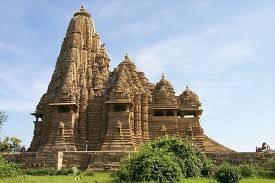 As a grown adult, with children of mixed background who find my exotic antecedents amusing, I have had to reflect more on the relationship between India and its native religious traditions and identities. Hindus often make the accusation to Indian Muslims and Christians that these religion’s holy sites are elsewhere. In contrast, southern Asia is the locus of “Hindu” spirituality. The sacred geography of Islam in Arabia, the Levant, and for Shia and Sufis more broadly across the Near East (with some expansion in other areas for Sufis, though these are secondary). For Christians, the locus is in the Near East and Europe. But I think this focus on Islam and Christianity takes the eyes off the major prize.
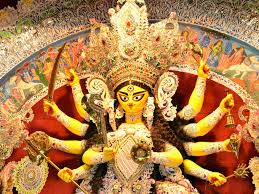
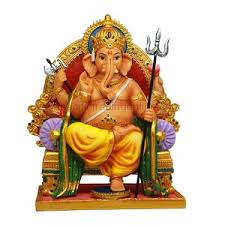 What does it mean to be Hindu?** I think that it is clear that Hinduism is a precipitation of the indigenous religious traditions of India, a fusion of numerous strands which are quite distinct. As a non-Hindu it is not my role to adjudicate on what is, or isn’t, Hindu, but it seems quite clear that there is something distinct from Islam and Christianity, and that that distinctiveness is usually due to indigenous aspects (some of which were exported through Buddhism out of India). Al-Biruni saw this. Hindus themselves saw this even if they did not think of themselves as a confessional religion.
 This doesn’t mean that non-Hindu Indians and subcontinentals are not distinctively South Asian. Look at a street scene in Pakistan, and it looks more like New Delhi than Tehran. The people, the color, the foods and density. But for various reasons Pakistanis have rooted their identity in Islam, and this makes identification as subcontinental awkward for many Pakistanis, because Hinduism suffuses subcontinental identity. The word Hindu after all originally just meant Indian.
 The point of this post is not to take a particular stance on whether India is or isn’t secular, or should or shouldn’t be secular (whatever that means in India, which is different from the United States). Rather, it’s to acknowledge the “elephant in the room.” Growing up around my parents’ Indian, Pakistani, and Bangladeshi friends, there was always the reality and tension that they had non-subcontinental attachments and identification, in theory. The theory part is made salient by the reality that my parents socialized with Hindu Indians and Bangladeshis (generally Bengali, but not always), but never with Muslims from other regions (the sole exception was when I had an Indonesian best friend, though my parents complained that the Indonesians weren’t very good Muslims anyway so what was the point?). They were foreigners in concrete terms, though there was an abstract brotherhood implied by faith.

 You can also support the podcast as a