
Please keep the other posts on topic. Use this for talking about whatever you want to talk about.
Notes on podcast & blog
 – A greater and greater portion of the traffic on this weblog is mobile (about 60% now). That’s why I redesigned it a while back. This mobile traffic is clearly driven by Indian traffic, which is overwhelmingly mobile.
– There has been a major dropoff in positive reviews on Apple Podcasts and Stitcher. Please leave some positive reviews.
– The downloads are about 50% American (USA). About 10% from India. The balance is other nations.
– I’m still doing all the editing, which is one reason the sound quality is…variable. If you want that to change, you probably should become a patron. Once we hit around $200/month I think we can afford an editor I know who does good work (she edits The Insight). Right now it is costing me $40 a month to host the podcasts and get a good Zencastr account.
But really the opportunity cost of time is the major issue for me. I enjoy recording podcasts. I generally am ambivalent about editing (it’s kind of interesting to listen, but I have to focus on other things besides content).
– This weblog now regularly gets more traffic than my primary weblog, Gene Expression.
Appropriation of “black and brown”
Language evolves, and social media has made certain phrases mainstream where they were relatively unknown. The fragment “black and brown”, often used in conjunction with “folks,” connotes certain issues and politics in 2019. It probably emerged as a term because there are 35% more Latinos than black Americans and the two form a minority social and political block.
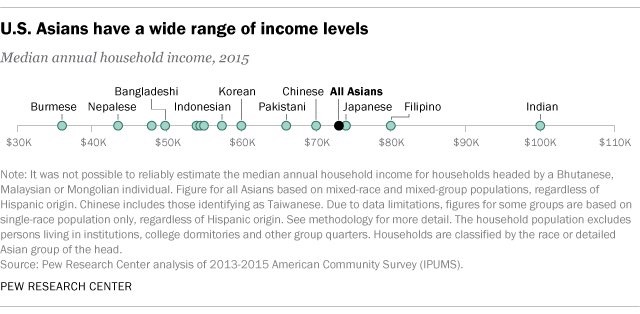
 But sometimes terms made can be remade and refashioned. An Indian American friend in Silicon Valley noticed a few weeks ago that some Indian American activists and public intellectuals are using the term “black and brown” to include Indian Americans. This is rather easy because Indian Americans are literally brown. And in fact, they are browner on the whole than most Latinos.
A plain reading of language suggests that including Indian Americans into this catchall category is perfectly reasonable. They are brown people who have been subject to racism and are marginal to the narrative of America. On the other hand, on various social metrics, Indian Americans do quite well. If the term “black and brown” exists to mobilize economically, socially, and racially, marginalized people, then Indian Americans, along with white Latinos, are edge cases of note. They are racially marginal, but economically and socially far less so.
To a great extent, the utilization of the term “black and brown” by progressive Indian American intellectuals and activists inclusive of their own identity strikes me as an appropriation of the term away from its intended ends. I can’t imagine that this won’t be noticed at some point. That being said, this is exclusively a matter of the Left, where intersection/racial coalitions are a major dynamic.
But, that means it is relevant to Indian Americans, who align themselves with the Democratic party on the whole (even if they are mostly moderately engaged immigrants, the Indian Americans born or raised in the United States are highly engaged and vocal).
An observation for David Ronfeldt
[ cross-posted at Zenpundit — suggesting that the “how do we know when a radicalized thinker shifts into violent action mode?” question is frankly a koan ]
.
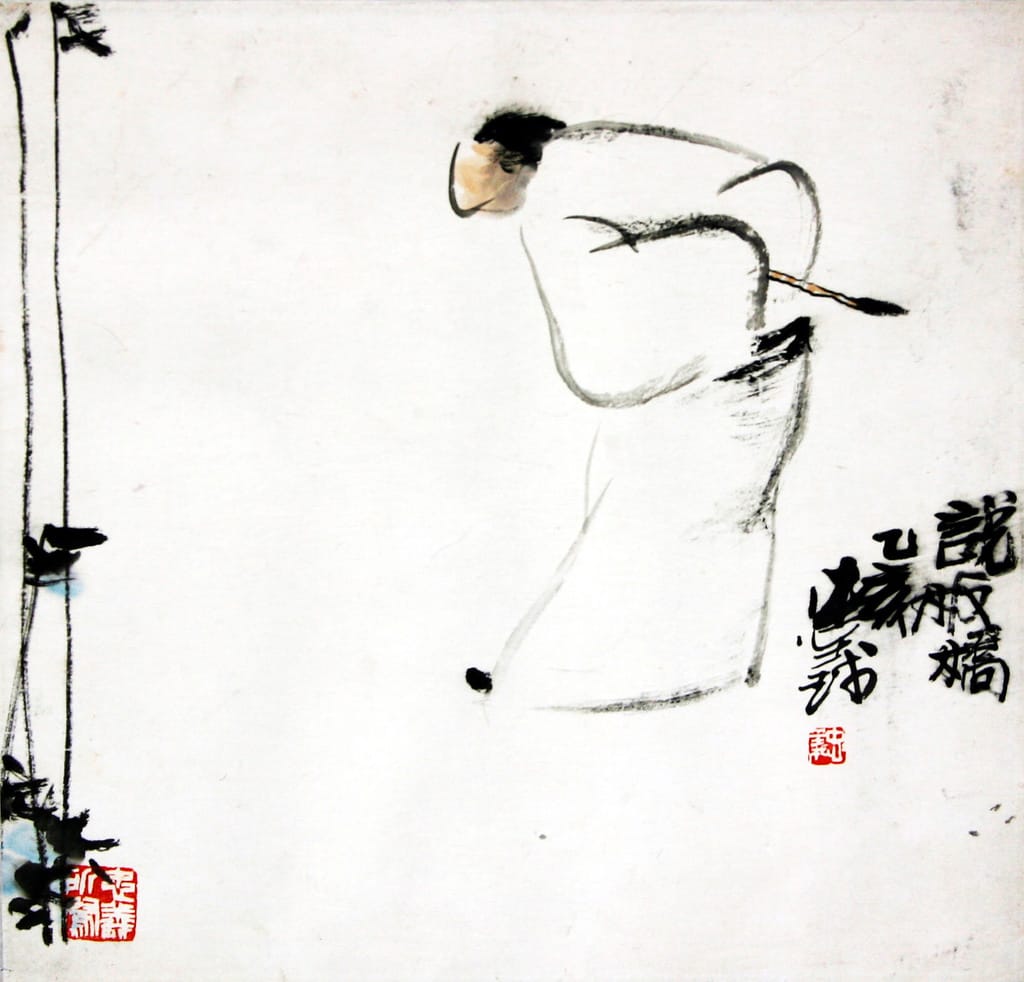
stern task-master image borrowed from The Zen Priest’s Koan
**
We’d been discussing on FB The Right Way to Understand White Nationalist Terrorism, and in particular this observation:
This movement is often called white nationalist, but too many people misunderstand that moniker as simply overzealous patriotism, or as promoting whiteness within the nation. But the nation at the heart of white nationalism is not the United States. It is the Aryan nation, imagined as a transnational white polity with interests fundamentally opposed to the United States and, for many activists, bent on the overthrow of the federal government.
and an idea occurred to me that seemed interesting enough for me to re-post it here on Zenpundit and Brownpundits:
We’re seeing a lot of discussion of how to foresee the switch from a terror-propensity thought into a terrorist act. Even in retrospect this is very difficult to manage, although lots of people elide the difference or feel constrained to separate the two, and managing an effective strategy to accomplish forewarning seems close to impossible.
I’d like to observe that the great leap between thought and act is in fact a leap across the mind > brain distinction, ie the “hard problem in consciousness”. > It’ds called the “hard problem” because it’s a question so basic that our best reaches of thought can’t stretch across the inherent paradox, a koan in effect.
Perhaps if we started with that koan, we could at least understand the “size” of the problem that predicting terrorist violence poses.
**
I think that’s, technically, an audacious idea.
What the hell do I mean by that? It doesn’t threaten my physical well-being, nor, I’d suspect, national security. It’s “just a thought” — so what’s the big deal?
Well, it concerns a matter of immediate strategic and tactical concern, for one thing. And for another, it takes that strategic and tactical issue way past its present discursive parameters, and analyzes it to a level of fundamental abstraction — so much so that it invokes one of the few most basic unresolved issues in scientific thought, a veritable western koan.
That’s quite a reach, but I believe it’s a reach that illuminates the difficulty of the “strategic and tactical issue” from a fresh point of view that’s frustratingly so deep as to be virtually impenetrable.
**
In Chalmers‘ words, the “hard” problem is:
how physical processes in the brain give rise to subjective experience … the way things feel for the subject. When we see for example, we experience visual sensations, such as that of vivid blue. Or think of the ineffable sound of a distant oboe, the agony of an intense pain, the sparkle of happiness or the meditative quality of a moment lost in thought
You remember the kids’ mathematical saying, “three into two won’t go”? Well here’s a case of “mind into brain won’t go” in the sense of Chalmers‘ hard problem.
**
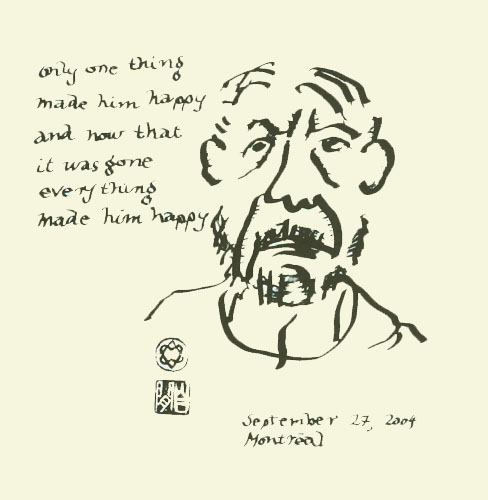
Leonard koan, yes, yes — from Leonard Cohen (1934-2016)
U.S.-Pakistan Re-Engagement; Hamid Hussain
From Dr Hamid Hussain
U.S.-Pakistan Re-Engagement
Hamid Hussain
‘Being a friend of the United States was like living on the banks of a great river. The soil is wonderfully fertile, but every four or eight years the river changes course, and you may find yourself alone in a desert’. General Muhammad Zia ul Haq to William Casey 1983 quoted in John E. Persico’s Casey: The Lives and Secrets of William J. Casey: From the OSS to the CIA.
In July 2019, Prime Minister of Pakistan Imran Khan and President Donald Trump met at White House that generated some headlines and as expected from every Trump encounter some controversy. As expected, this news lasted less than twelve hours in United States and 4-5 days in Pakistan. Life has gone back to normal. Positive signs should be acknowledged but Pakistan should not be carried away by euphoria. The good part is that civilian and army leadership does not have trust deficit and not undermining each other. This alone is a breath of fresh air for Pakistan. Continue reading U.S.-Pakistan Re-Engagement; Hamid Hussain
Genetics of Kashmiris
People keep asking about this. But there was a paper, A Genome-Wide Search for Greek and Jewish Admixture in the Kashmiri Population. Basically, they aren’t anything you wouldn’t expect.
Episode 63: Zack Ajmal, Pakistani American in Pakistan
 Another BP Podcast is up. You can listen on Libsyn, iTunes, Spotify, and Stitcher. Probably the easiest way to keep up the podcast since we don’t have a regular schedule is to subscribe at one of the links above.
You can also support the podcast as a patron. The primary benefit now is that you get the podcasts considerably earlier than everyone else. I am toying with the idea of doing a patron Youtube Livestream chat, if people are interested, in the next few weeks.
Would appreciate more positive reviews!
This episode is a conversation with Zack Ajmal, a Pakistani American who recently visited Pakistan. Zack and I have known each other since 2002, and he was behind the Harappa DNA Project.
Kashmir “open thread”

Nothing to say of substance myself. What do I know compared to you geniuses? That being said, I’m a little surprised how dumb the American media is ( basically they seem to fall back on the same sources).
Like they used to say back in the day, “it’s yours”….
A matter of representation
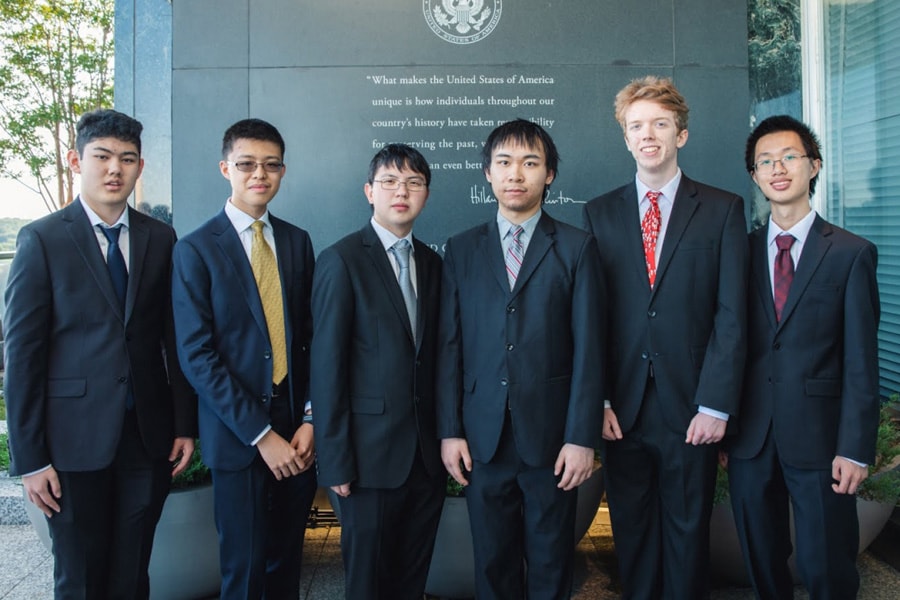
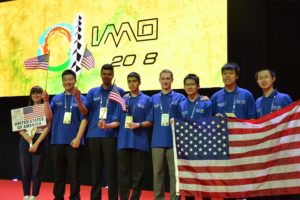 Several readers have brought it up in the comments, and it even cropped up in a secret message group I’m in, so I need to talk about this issue I guess. There is a serious lack of representation in the 2019 winning team from the United State of America in the International Math Olympiad. Except for a token Tocharian, it looks as if every member of the team is of East Asian heritage.
Contrast this with the much more diverse team from 2018, just last year. There were two South Asians on the team! In 2017, there was a <<<Bengali>>> American and a Tocharian on the team.
We’re moving backward. Do better.
Little Qatar playing the Soviet Union in our time
It’s cool how Jake Tapper compares occupied Palestinians to white nationalists while he’s actually giving them a platform on his own show (Richard Spencer most recently). Collect your man @cnn.
— Sana Saeed (@SanaSaeed) August 5, 2019
There is a little Twitter tiff going on because of what seems like a misunderstanding (misrepresentation?) of what Jake Tapper said on his CNN show on Sunday. The source of the misunderstanding (or, as Tapper stated, the lie) is a journalist at AJ+.
AJ+, of course, is the English-language social media-oriented arm of Al Jazeera. Al Jazeera is controlled by the government of Qatar, an authoritarian monarchy. Not only is Qatar authoritarian, but it is a very explicit caste society.
As a person of South Asian descent, I am quite aware that the United States gives me a far better “fair-go” than an of the Gulf monarchies would, including Qatar. Money is fungible, but the reality is that the funds in Sana Saeed’s bank account almost certainly derive in some way from the exploitation of South Asian laborers in Qatar.
To get a sense of Qatar, you can read this article, Lamborghinis, Burkas, Sex Party Invites And ‘Chop Chop Square’: A New York Lawyer’s 15 Years In The Middle East. It’s basically a hit piece. There’s nothing surprising or novel about the facts reported. It was probably written to satisfy our Gulf allies in the UAE and Saudi Arabia. Both of these states run on exploited labor and operate as caste societies (well, Saudi Arabia less so since it has indigenized more).
Qatar’s game kind of reminds me of the Soviet Union during the Cold War. The Soviets, correctly, pointed out America racism. But, they did not shine much of a light on their own prejudices and brutality toward ethnic minorities (they literally engaged in ethnic cleansing several times for reasons of geopolitics). And, Communist anti-racism was fundamentally shallow, as evidenced by the well-known racism among the populace of the post-Communist states.
As with my post on Mehdi Hasan, my point is not to say that people getting their paychecks indirectly from the exploitation of South Asian laborers shouldn’t be able to express opinions. But, considering that they are employed by a media outfit controlled by a mildly racist and very authoritarian regime, perhaps one should be a bit more skeptical of their good faith.
I mean, if Israel is an apartheid state, what would they call Qatar?
Addendum: Also, AJ+ journalists should chill on the guilt-by-association. Their Arabia language channel platforms some really nasty people.