Browncast Episode 55: 17 years in the blogosphere

More innocent times

Another BP Podcast is up. You can listen on LibsyniTunesSpotify,  and Stitcher. Probably the easiest way to keep up the podcast since we don’t have a regular schedule is to subscribe at one of the links above.

You can also support the podcast as a patron. The primary benefit now is that you get the podcasts considerably earlier than everyone else. I am toying with the idea of doing a patron Youtube Livestream chat, if people are interested, in the next few weeks.

Would appreciate more positive reviews!

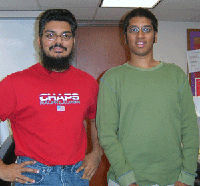
On this episode, I talk to my old friend Aziz Poonawalla. Aziz and I have been in the “blogosphere” for 17 years, and we talk about its rise and fall, and our thoughts about the Twitter world. Aziz and I also differ on a lot of issues. He is a liberal observant Muslim (Bohra Ismaili), and I am a conservative atheist. So we end up the conversation talking about politics, and Aziz’s roots in the Dean campaign of 2003.

Super30, Casteocracy & Blacked Up Hrithik Roshan

We did a late night viewing of Super30.

The movie was inspirational and was pretty much in line with the recent theme of how uplift the lower castes of India. This followed through from Daughters of Destiny and our very own CAMbFIRE launch.

I found the idea of Hrtithik Roshan, who has the colourings a Greek deity, blacking up to play an OBC to emblematic of India’s Casteocracy.

The idea that an education system, designed by dead white men and then rapidly disseminated to all traditional elites in the world, can somehow uplift the masses is deeply problematic. The template of the IIT/IIM system suits rural and poor upper castes, who have a culture of education and enough urban access to understand how the system works.

It’s similar to Oxbridge & the Ivy Leagues, which are geared towards the aspirational segments of the petty bourgeois (the aristocrats don’t really need educational pedigree).

Other than that the movie had very interesting motifs; it was downright anti-Hindu. It quote a segment in the Mahabharat where the tribal Eklava, who was a better archer than Arjuna, had his thumb cut off by their teacher so that Arjuna could remain the best.

Every caste Hindu is a product of Casteocracy just as a white American is a functionary and beneficiary of the Republic’s early origins. This isn’t necessarily an indictment but merely a reflection of fact. We all carry privileges embedded within us.

As India Westernises and follows trends emerging in the West; will it too suffer the ongoing racial convulsions in the West. The idea of a white actor blacking up to play a role is now simply unthinkable.

I’m extremely involved in BAME activities in Cambridge; in fact I’m co-founder to two initiatives that are rapidly catching the University’s attention.

A lot of the Upper Caste Hindus are involved in BAME because they can’t tolerate being the equivalent to Dalits in the West.

In some ways I think Quaid-e-Azam and Allama Iqbal’s mistake was that they didn’t fuse their valid demands with linguistic representation. It’s very obvious that the replacement of Persian with English and the evisceration of Urdu into Hindi only reinforced the dramatic caste divides.

The idea of English as the elite language binding together South Asia creates an effective barrier to the rest of the classes. In Pakistan learning English doubles one wage immediately.

Why Cambridge University needs a central Asian Kitchen

We threw a hugely consequential event last night in Cambridge. The University sent very senior reps to participate in the discussion and change is in the offing.

It’s interesting that I’m directly involved in the two great BAME initiatives that are emerging from Gown (which is what we call the University); BREAD and CAMbFIRE.

The university needs to do more to alleviate the intense alienation that is there in Cambridge. However I’m the sort of the person that I’m not confrontational but rather conversational.

I also follow the wisdom of my Parsi kinfolk when they first came to India. A good immigrant is “sugar in the milk“; we should be sweetening society where we can rather than simply transforming it.

So it’s a two way process however the host society must also make accommodation for the new arrivals.

I realise that with the BAME community, the silent humiliations and mockery builds up until it bursts the dam and the angry activists come through with these demands. Then the stereotype of an angry immigrant emerges.

My suggestion is that if we stop otherising “the other” (both host and guest) then we can deal with each other as human beings. That’s why I focus on these conversational and cultural initiatives; as a Baha’i I work towards unity.

However throughout the University there happens to be 30 college formals happening every evening. They serve Western food and usually people have to wear gowns to them.

If the University were to repurpose one of its old building in town and make an Asian Mess (with proper Asian chefs); it would do so much to serve the BAME community. One could argue why not Latin American or African but the Asian community is now 10+% and Asian cuisine is very particular (I would define Asia as per the US Census, Pakistan to Pacific).

Integration is not assimilation and it would be nice to have a less stuffy space that would cater to a growing community.


When Brownz don’t stand together; the Coloniser wins

https://m.facebook.com/32040/posts/10108032923882941?s=32040&sfns=mo

It’s a sad day for the Subcontinent as the Cricket World Cup is now all-white even though the majority of the participating nations are not.

I wrote a few screeds after India’s defeat to England but thankfully they went unpublished.

My spidey sense told me that India conspired to keep Pakistan out of the World Cup and I felt quite betrayed by it.

This parable of the World Cup disaster reminds me of the Indian obsession with Pakistan. India is so keen to be “Western”, at any cost, that it sometimes forgets itself.

Australia, Canada & New Zealand are the “Old Dominions”, not South Asia, and I think India would do a lot better by seeing Pakistan as a friend rather than a foe.

Peace in the Subcontinent will only come about when we stop “otherising” one another. Surely one can understand why Pakistanis wanted to avoid the fate of Dalits and Muslims in India?

The jingoistic upper caste nationalism that seeks to Saffronise and purify everything in its wake has been hugely destructive (and frankly a bit nauseating; vegetarian biryani is not tasty) to the post-1857 South Asian political landscape.

AOC’s brain has gone and done it now!


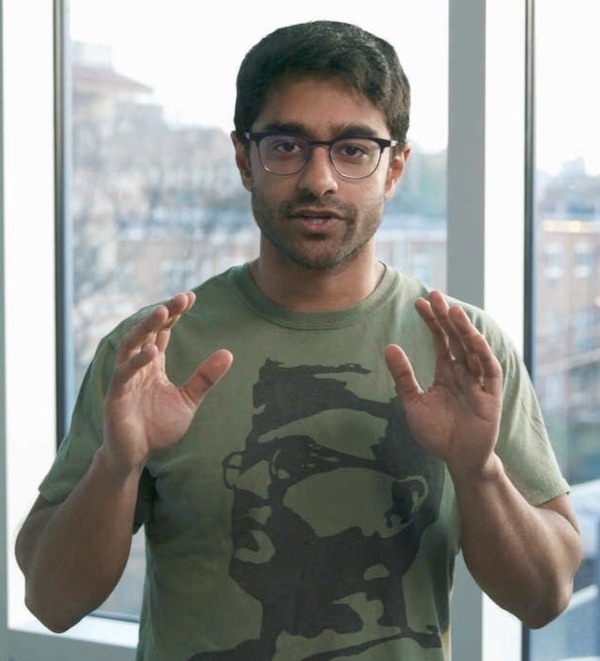
I call Saikat Chakrabarti “AOC’s brain.” I think it is likely that he is responsible for her tweet’s that mention prescriptivism:


Chakrabarti went to Harvard, studied computer science, then Wall Street, before becoming a founding engineer of Stripe. Stripe is valued north of $20,000,000,000 right now, so his paper wealth is likely putting him in the 0.1% or more (unless he cashed out early, which would mean he’s more liquid, though less wealthy).

In addition to his far-Left politics, professional and financial successes, he seems to lift judging by the photos. So good for him!

Today he got in trouble for wearing a t-shirt with a photo of Subhas Chandra Bose. Bose was a radical nationalist, but complex otherwise. Today he is being reduced to his alignment with the Axis-powers a meeting with Hitler (after all, in the West, all that matters is your meeting with Hitler during World War II, not what was going on in far off Asia).

The weird thing is if Chakrabarti wore a Che Guevera t-shirt I don’t think it would be a major issue. But to me, that would be worse, because Che acted with brutality in favor of international Communism of his own free will. Bose’s alliance with the Axis-powers was clearly driven mostly by pragmatic concerns. An analogy here might be Finland’s alliance with Nazi Germany, so as to fend off absorption into the Soviet Union.

Of course, the online Left has never been much for subtly. Do unto them, as they would do unto you. I hope Chakrabarti gets what he deserves, but I doubt he will. Blue-checks take care of their own kind…

Browncast Episode 54: Sojourn in India as a international Parsi

Another BP Podcast is up. You can listen on LibsyniTunesSpotify,  and Stitcher. Probably the easiest way to keep up the podcast since we don’t have a regular schedule is to subscribe at one of the links above.

You can also support the podcast as a patron. The primary benefit now is that you get the podcasts considerably earlier than everyone else. I am toying with the idea of doing a patron Youtube Livestream chat, if people are interested, in the next few weeks.

Would appreciate more positive reviews!

On this episode, we talk with Iona Italia about he experiences a returning Parsi (she was raised in Europe) to the Indian subcontinent. She is the host of Two for Tea podcast, an editor of Areo Magazine, and a contributor to Letter Wiki.

The end of the European age

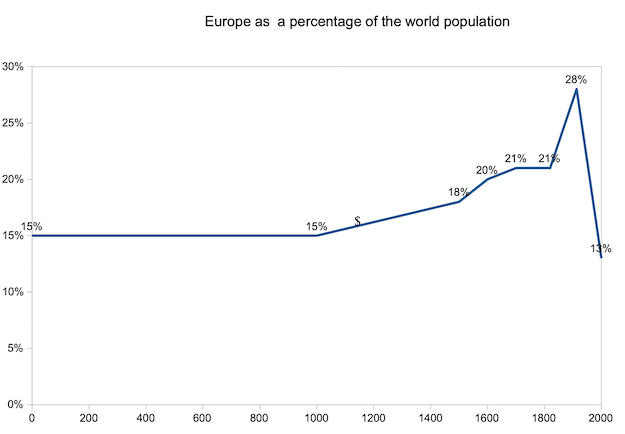
I made the above chart for a presentation I’m working on. You notice that in 1913 Europe is 28% of the world’s population. In 2000 it is 13% of the world’s population. In 2019 Europe is almost certainly closer to ~10% of the world’s population (the above estimates for Europe include Russia).

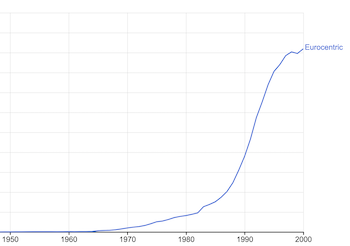
To the right, I’ve posted the screenshot of an Ngrams search of books with the term “Eurocentric.” Notice that that term shoots up just as European hegemony went into freefall.

Today there is a lot of talk about postcolonialism, “colonizers,” “white supremacy,” and whatnot. And yet what else is this but a shadow of ages gone by?

We as humans are always fighting the last war. European societies are geriatric. They are wealthy, healthy, and have great aesthetic qualities. Many people would love to live in Europe. But unless you are an acolyte of Madison Grant, who believes in the peculiar and unparalleled genius of European peoples, the numbers are telling a story you can’t avoid.

Browncast Episode 53: Memories of partition: Amrik Chattha

Another BP Podcast is up. You can listen on LibsyniTunesSpotify,  and Stitcher. Probably the easiest way to keep up the podcast since we don’t have a regular schedule is to subscribe at one of the links above.

You can also support the podcast as a patron. The primary benefit now is that you get the podcasts considerably earlier than everyone else. I am toying with the idea of doing a patron Youtube Livestream chat, if people are interested, in the next few weeks.

Would appreciate more positive reviews!

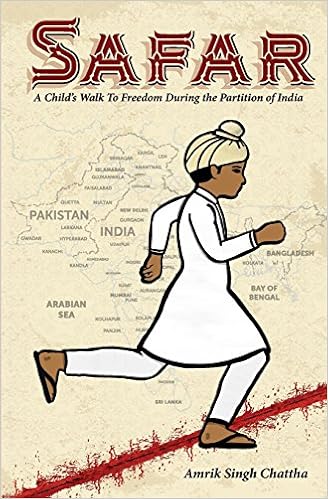
On this episode, we talk with Dr Amrik Chattha. Dr Chattha is the author of “Safar: A Child’s Walk To Freedom During the Partition of India“, available on Amazon. He talks about life in a Punjabi village before partition and the horrors that followed partition.

Brown Pundits