

Moon Landing
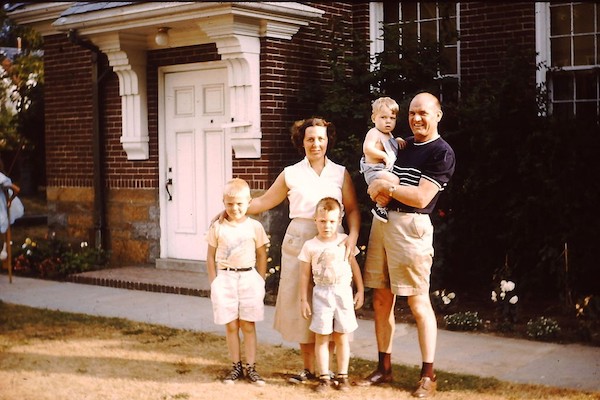
We bought our very first TV in 1969. Unlike Vladimir Nabokov, we did not buy it JUST in order to watch a man land on the moon, but it so happened that the moon landing took place a few months after we got that TV and we got see it live.
Why do nonmuslims treat muslims so badly (f)?
The Dalai Lama demonstrates how the world’s 6 billion nonmuslims can treat the world’s 1 1/2 billion muslims. In the above video the Dalai Lama hosts Kashmiri Ladhak muslims. The Dalai Lama emphasizes the ancient close ties between Tibetan and Kashmiri Muslims, Buddhists and Hindus. Including how Tibetan and Kashmiri Buddhists and Hindus have built mosques for muslims for centuries.
The Dalai Lama said that for too long Tibetan, Kashmiri and Indian muslims have been silent. Now they must speak out and inspire the rest of the muslim world to follow their impressive example. Tibetan, Kashmiri and Indian muslims have been less affected by the Islamic civil war than the rest of the muslim world. Sunnis, Shia and other sects of Islam get along reasonably well in Tibet, Kashmir and India. Tibetan, Kashmiri and Indian muslims also need to share their perspectives with the rest of the muslim world about harmony between muslims and nonmuslims.
The Dalai Lama is completely correct in this. Dharmic muslims (muslims of Tibet, Kashmir, India, Sri Lanka, Bangladesh, Thailand, Malaysia, Indonesia) are a precious treasure and remarkable by global standards. The Dharmic peoples need to protect their muslims from Islamist extremists and encourage Dharmic muslims (Tibetan, Kashmiri, Indian muslims, Bharatiya muslims, Hindu muslims) to engage in dialogue with the rest of the muslim world.
As an aside, there are many close ties between Sufis, Hindus and Buddhists that the Dalai Lama alludes to (Dalai Lama uses the word “muslim” instead of “Sufi”). One of these ties is the connection between Mahayana Vajrayana Tibetan Buddhism, Trika Kashmiri Shaivism and Sufism. One of the mothers of modern Trika Kashmiri Shaivism is Lal Ded or Lalleshwari (perhaps 1320-1392). {Of course Trika is far older} Almost all Kashmiri Shaivites revere Lal Ded and her many amazing musical and poetic compositions. One of her main disciples was the great Sufi master Nund Rishi–patron saint of Kashmir. Nund Rishi remains incredibly revered and influential among Kashmiri muslims and the Rishi order of saints he founded. He is also deeply respected by Indian Sufis more generally, including in Ajmer India.
Most Sanathana Dharmic Uttara Mimaamsa orders emphasize 25 tattvas or subtle sub-elements or qualities that can be identified in meditation. But there is an infinity beyond them. Mahayana Buddhists break this down into many Swargas (often translated as heaven; perhaps these are levels of Samadhi). So do the Trika. The Trika combine Samkhya (one of the ten Darshanas) with Yoga (one of the ten Darshanas) with Purna Mimaamsa with Uttara Mimaamsa. Trika uses 36 tattvas–defining Tattvas closer to how the Samkhyas do. Of these 24 are Samkhya standard and unreal. {Note that Chitta is called Pritvi in Trika.} 7 are partly real and partly unreal. 5 come closer to the truth. In this Trika describes the Alokic or transcendental realms of consciousness in some detail, similar to how lord Buddha did. Note that Sufi Muraqabah descriptions are very similar to this. The wikipedia article is remarkably good and similar to many Sufi books I have perused. Many parts of the Muraqabah are almost identical to several
The Dalai Lama is asked about the Rohingya and expresses great sadness. He is sad that major global publications headline Buddhist monks with the title “terrorist.” The Dalai Lama alluded to the immense complexity and nuance required to deal with Rohingya. The Dalai Lama smiled and laughed sweetly while saying that others call him terrorist too. {I was impressed by how the Dalai Lama reacts to being called a terrorist. This is the Sanathana Dharma way. Loving and respecting our enemies and bad people with all our hearts, all our souls, all our minds and all our might. This includes loving and respecting those who are “white supremacist”, “Nazi”, “racist”, “bigoted”, “hegemonic”, “imperialist”, “colonialist”, “exploitative”, “oppressive” towards us. Or people who accuse us of these things and other permutations of being evil. }
The Dalai Lama counsels compassion or love. If not this then being “wise selfish” rather than “foolish selfish”. We are connected to others; benefit from their success and suffer from their harm. When we don’t treat others well we don’t
As an aside the Dalai Lama is asked 1 hour, 50 seconds in about the true state of Nirvana. The Dalai Lama tried to describe it with words, which is very difficult. My paraphrase would that a pure mind without any ignorance can see reality clearly through practice {Sadhana in Sanskrit}. Mere understanding is not sufficient. He said that ancient Indian and Buddhist literature describe learning Nirvana in three levels:
- Through hearing or reading {in sanskrit this is called Apta Shabda Pramana or Shastra Shabda Pramana}
- You yourself think deeply and understand through reasoning which gradually brings deeper experience and constant “think” {I would translate this as deep contemplation or Dhyaana or what Patanjali would call “Savitarka Samprajnata Samaapatti Samadhi” . . . it has specific names in Muraqabah texts as well. I would say a cross between Idraak and Waruud. Or similar to Kashf or Ihaam}
- Deep experience. This really affects our emotion. {I would say that this is transcending all 31 Swargas or levels of awareness. The Muraqabah equivalents might be Fanāʾ Fī ʾilāh, Safr-e-Nuzooli and Baqa billah and nafs al-mutma’inna}
+++++++++++++++++++++++++++++++++++++++++++++++++
PS. Previous Brown Pundit articles on this subject are:
AI, STEM and moral philosophers
$
newsletter
|
Insitome’s apps, Regional Ancestry, Neanderthal, and Metabolism, are now priced at only $19.99! |
 |
| June 27th, 2019 |
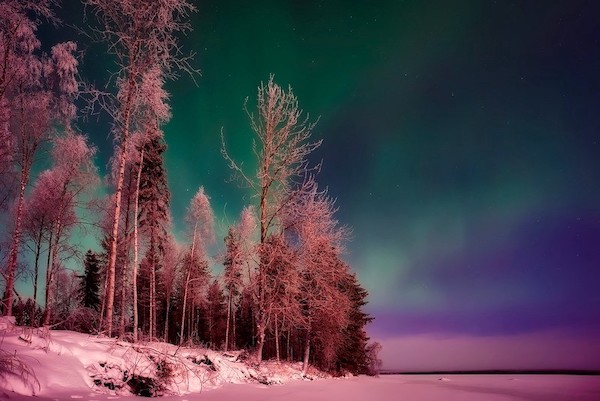 |
Humanity on the edge of the worldWhen the glaciers retreated 10,000 years ago, the far north of Eurasia was finally opened up for human habitation. In Europe, Scandinavia was settled first by our own species. Here they encountered an eerie world of cold dark winters, icy mountains, and rich seas. |
|
Scandinavian Genetic HistoryAs Razib wraps up the second season of The Insight, he talks to Torsten Gunther about what ancient DNA has told us about Scandinavian prehistory. Make sure to subscribe so you don’t miss the beginning of season three! (show notes). Also available on |
|
Copyright © 2018 Insitome 106 East 6th St Suite 230 Austin, TX 78701 USA. If you’d prefer not to receive these emails, unsubscribe. |



Who are the Indus Periphery people ?
From the pre-print of the Narasimhan et al paper, we got hold of 3 ancient Bronze Age samples which the authors contend, based on their genetic ancestry (which had significant levels of AASI ancestry and no Anatolian Neolithic farmer ancestry (ANF)) to have been South Asian in origin.
Since these 3 samples were found outside of the geographical expanse of the Harappan civilization (2 from Shahr-i-Sokhta in Eastern Iran & 1 from Gonur (BMAC) in Turkmenistan), they have been designated as Indus Periphery samples – implicitly under the assumption that they were migrants from the Harappan civilization.
It has been a long time since the Narasimhan et al preprint had come out in 31st March 2018, and we still await the peer-reviewed publication of the paper. However, there are a few things we already know about the final paper. One of these is the fact that the final paper, in comparison to its preprint, will have significantly greater number of samples from Eastern Iran and Central Asia, including as many as 14 Indus Periphery samples.
This is exciting stuff !
More specifically, 10 of these Indus Periphery samples are from Shahr-i-Sokhta are from Eastern Iran and 4 from the site of Gonur in BMAC.
This is a very important information !
Let me explain how it is so.
The Indus Periphery samples have been assumed to be Harappan migrants from South Asia into Eastern Iran and Central Asia, an assumption which is largely correct.
However, the Narasimhan et al paper went one step further and argued that these 3 Indus Periphery samples can be taken as a good sample representation of the entire Harappan genetic diversity which spread over a vast geographical expanse from Afghanistan in the West to Western UP in India in the East and upto the northern half of Gujarat in the South.
Clearly, the mature Harappan civilization had emerged by the assimilation of several distinct but interacting early Harappan cultures. The Early Harappan period is broadly defined by 4 cultural groups –
- The Damb Sadat or Quetta ware tradition of northern Baluchistan and southern Afghanistan,
- the Amri-Nal tradition of the southern Baluchistan and Sindh but also extending into Gujarat (Dholavira is considered a type site of this culture)
- The Kot Diji tradition of the Greater Punjab region
- The Sothi-Siswal tradition of North Rajasthan, Haryana, Western UP and also parts of Punjab.
The Kot Diji and Sothi-Siswal traditions were clearly the dominant cultural traditions in the formation of the Mature Harappan civilization and their sites were also typically larger in size than the other 2 traditions.
There are also greater nuances even within this broad 4-way classification. Therefore it is rather simplistic to assume that the 3 Indus Periphery samples give us a good estimation of the genetic diversity of the Harappans, without identifying the likely geographical origins of these Indus Periphery samples within South Asia.
And the fact that we have 10 Indus Periphery samples from Shahr-i-Sokhta and 4 from Gonur helps us a great deal in narrowing down their geographical origins within South Asia.
Archaeological evidence clearly shows that the site of Shahr-i-Sokhta only began to emerge around 3200 BC (very close in time to 1 Indus Periphery sample from this site which dates to around 3100 BC). And there is a lot of cultural similarities with the Chalcolithic cultural traditions of Baluchistan in the East, which has lead archaeologists to argue that there likely was migration from Baluchistan into Shahr-i-Sokhta.
To put it more directly and clearly, there was a significantly large input from the Chalcolithic people of Baluchistan in the formation of Shahr-i-Sokhta, including migration of people. The ancient DNA evidence has now confirmed it by showing the presence of as many as 10 Indus Periphery samples in Shahr-i-Sokhta (where perhaps the total no. of aDNA samples are unlikely to be more than 20-25).
By the way, hundreds of cattle figurines were discovered from the site of Shahr-i-Sokhta, and all the securely indentified figurines of cattle (more than 600 of them) are of the South Asian Zebu cattle.
The place in South Asia which was most directly involved in the formation of Shahr-i-Sokhta was Baluchistan and therefore it is quite safe to say that the Indus Periphery samples in Shahr-i-Sokhta are also migrants from Chalcolithic cultures of Baluchistan.
Furthermore, Shahr-i-Sokhta and the cultures of Eastern Iran in general and quite possibly Baluchistan as well, are said to have in turn significantly influenced the cultural formation of BMAC. So the 4 Indus Periphery samples from the BMAC site of Gonur could very well have been from these regions in Baluchistan or Eastern Iran in the South.
Now that we have identified the most likely place of origin of the Indus Periphery people within South Asia, let us understand the implications of this in terms of the genetic data.
On the 5th of August the Indian govt announced that it had changed the status of Jammu and Kashmir. I think Professor Christine Fair has written a pretty good summary of the change and its implications (you can see it here), and you can read her article or a host of other articles to get the details (she has a bad rep in Pakistan right now, but I think this article does a very fair job of summarizing the issues involved, if you are a Pakistani nationalists you can ignore her comments about Pakistan, but the rest is still pretty useful in my opinion). Anyway, the bottom line is that the erstwhile state of Jammu and Kashmir is no more. It was created after the Anglo-Sikh wars when the British sold Kashmir to the Dogra ruler and it operated as one of over 500 supposedly independent princely states in British India (the actual level of independence varied, none were truly independent in that a British “Resident” was around to make sure British interests were paramount, but the larger states had a good deal of internal autonomy, with their own armies and judicial systems); it included the vale of Kashmir (where most Kashmri speakers lived) as well as Jammu (mixed population, but dominated by Dogras), Gilgit and Batlstan (mostly Muslim and ethnically and culturally distinct from Kashmir) and Ladakh (Western Tibetan in terms of culture and religion). In 1947 the princely states were told they had to pick either Pakistan or India. The Dogra ruler dithered for a while (presumably because he wanted independence, and would prefer not to join either new state) but when Pakistan organized an invasion by Pakhtoon tribesmen to capture the state, he acceded to India and Indian troops landed to stop the tribal invasion and recapture Kashmir for India. They pushed the raiders back towards Muzaffabad, Pakistan also committed regular troops and the two dominions fought a mini-war for over a year. In late 1948 India took the case to the UN and the two sides agreed to a ceasfire that was supposed to be followed by a plebiscite, but that never happened. Instead both sides consolidated control over respective parts of Kashmir and the cease fire line has held with minor modifications since then. Pakistan insists that India should hold the plebiscite and let Kashmiris determine if they want to be with India or Pakistan. India insists that it is Pakistan that never fulfilled the first requirements for the plebiscite and that since then it has held elections in Kashmir and the issue is now moot. Or something like that, you can read more about the endless legal and procedural wrangles in a 1000 different posts from Pakistan and India and reach your own conclusions, but this post is not about the legal or diplomatic ramifications