
Please keep the other posts on topic. Use this for talking about whatever you want to talk about.
Zack Addition: what’s happened to the Indian elections; was this in line with predictions? Seems either way the big winner is Indian democracy..
Please keep the other posts on topic. Use this for talking about whatever you want to talk about.
Zack Addition: what’s happened to the Indian elections; was this in line with predictions? Seems either way the big winner is Indian democracy..
From Dr Hamid Hussain.
Some have asked questions about sexuality during the Raj as related to the army. Enjoy.
Hamid
When British arrived in India, India was sexually more liberal than Europe. Heterosexual and homosexual relations were common, open and celebrated in poetry and paintings. Concubines were a common phenomenon practiced by all religious and ethnic groups. In contrast, there was quite strict sexual repression in Victorian England. There are two aspects of sexual relations; one relating to British soldiers and second British officers. In eighteenth and nineteenth century India, prostitution was legal and well-regulated in British controlled India. In 1850s, there were seventy five military districts and in every district prostitution was supervised by authorities. Doctors of Indian Medical Service (IMS) were responsible for regulating brothels. All prostitutes were registered, minimum age for prostitutes was fifteen and women were provided with their own living quarters or tents that were regularly inspected. Some establishments were quite large and brothel in Lucknow had fifty five rooms. Prostitutes infected with sexually transmitted diseases were removed and not allowed to practice their trade until recovered. Both native and European soldiers used these bazaars; however sepoys were discouraged to visit those prostitutes preferred by European soldiers. Most British soldiers were from lower strata of the society and were not held to the standard of a British officer. British soldiers visited prostitutes more often than sepoys. One reason was that British soldiers were not married while sepoys were usually married men. These bazaars were called ‘lal bazaars’ (red streets). Both heterosexual and homosexual relations were common. British regiments spent several years in India and many a times children were born of such relationships. Special houses and schools were assigned as early as eighteenth century for these children. Continue reading Sex and the British-Indian Army
https://twitter.com/journonitten/status/1071778759919919104?s=21
I have seen this countless times on Twitter and facebook; Brahmins almost always need to “humble brag” their caste. It really is in poor taste..
https://twitter.com/iyervval/status/1071301552680255489?s=21
Related: Oh to be a Gaud Saraswat Brahmin
https://twitter.com/anushkasharma/status/1072359108274081797?s=21
Trigger Warning: This is quite a “Desi post”; I’m assuming basic knowledge of the Indian cultural landscape (who’s who in Bollywood etc).
https://twitter.com/ExSecular/status/1071854448006246400
There have been 5 “Royal Weddings” this year in India in contrast to the 2 we had in Britain (Prince Harry & Princess Eugenie).
India does many things well but weddings is a particularly South Asian boon. Desis take our weddings very seriously and Pakistan recurrently tries to cap “grand weddings.”
There is a high-octane mix of money, Westernisation and liberalisation galvanising the Indian elite to ever more convention defying customs. Continue reading The Ambanis got it so wrong with their Wedding Celebration.
The latest BP Podcast is up. You can listen on Libsyn, iTunes and Stitcher. Probably the easiest way to keep up the podcast since we don’t have a regular schedule is to subscribe at one of the links above.
Thanks to everyone who reviewed the podcast! Please leave more 5-star reviews. If this podcasts interests enough people I’ll be getting us on other platforms.
Note: Using the older context of Hindu.
I also wore my Apple Watch and Oura ring, both in airplane mode. My best meditations always had the least variation in heart rate. When I wasn’t focused, it would jump around a lot. Here’s a night of sleep on the 10th night (my resting heart rate was consistently below 40). pic.twitter.com/9fiz8s8DR5
— jack (@jack) December 9, 2018
Not sure why Jack is getting flak over his interest in Vipaasana. It is showcasing one of the things that is wrong about Western culture today where sincerity and earnestness is ridiculed. https://t.co/VNUabUfGwV
— American Desi Anonymous (@AmrikanDesiAnon) December 9, 2018
Jack Dorsey, cofounder of Twitter & Dropbox(?), isn’t a favourite of mine with his “smash the Brahmin Patriarchy.” Continue reading Jack D. rapes the East
Coloured people in Britain have a choice; either support the Commonwealth, a multi-national multi-Cultural family of nations under the aegis of the British Sovereign, or the white man’s club that is the EU. @patel4witham is being subject to racist abuse
— Zac X (@XerxestheMagian) December 8, 2018
Why are India’s leftists so afraid of nationalism in India, particularly among Hindus, but have a soft spot for terrorists, jihadis and Pakistan?
— Dr David Frawley (@davidfrawleyved) December 7, 2018
The Cambridge South Asian Forum is a group that I’ve started to get more involved in. Last night they organised a talk by an Indian academic, Mr. Pandey, and his almost miraculous trip to Lahore (the day after he submitted his PhD).
I don’t want to go into the details because Vidhi had the clever idea that I should interview him for a podcast (he didn’t go into it but his talk in Lahore was on Padmavat).
I wanted to instead dwell upon another point. Vidhi and I both noticed that among the Cambridge PhD contingent Indians are overrepresented in the liberal arts and Chinese in the STEM (V has a rather low opinion of the Humanities but that is a separate matter for another time). Continue reading Indian liberals make for excellent company
Today a father and son walked into the shop. They were chattering in Hindustani and the son was being super deferential to his dad.
There was something about the father and son pair that screamed Pakistani. The father had the heavy-set ruddy gruff behaviour that characterises so many Punjabis middle aged men and his youngish son (who was interviewing at Cam for MechEng undergrad next year) just looked salt of the earth Pakistani. I had clocked the father’s gold bling but I disregarded it.
After a while I threw in an Urdu word just to signal I was Desi too. While in other parts of the country this would go unnoticed & rather unremarkable, Cambridge is defined by the white-Chinese dynamic. They were a bit startled and then I asked if they were Pakistanis. The father was like no we’re Indians. Furthermore that they were from Gujarat, which I was rather taken aback from since Gujaratis have such a different feel to them. Continue reading Pakistan’s Ghost in the Indus
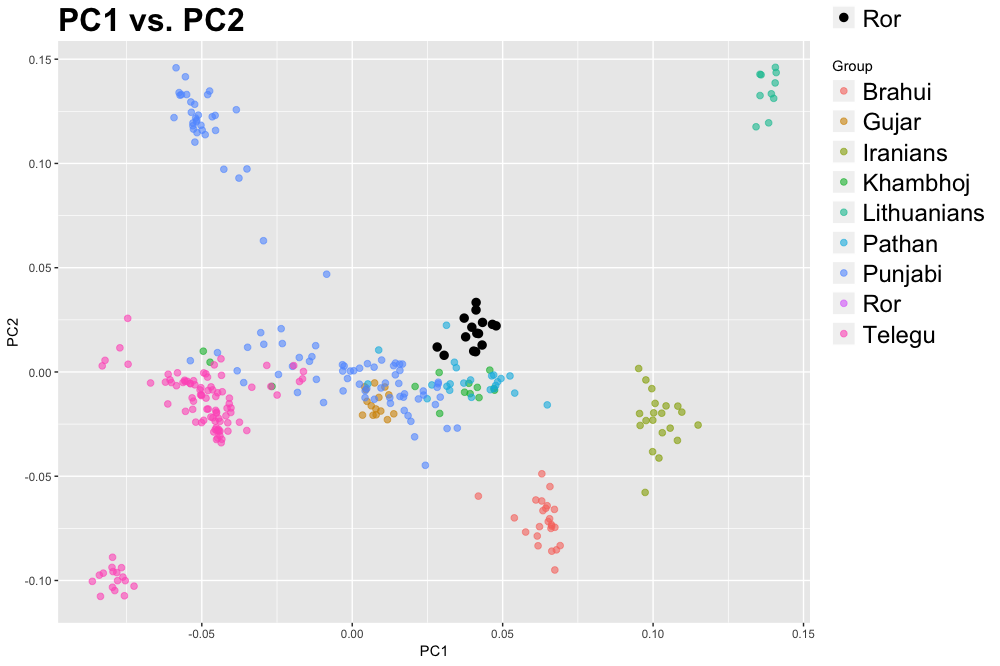
A new paper, The Genetic Ancestry of Modern Indus Valley Populations from Northwest India.