The passing

In 1998 Bill Clinton stated:

Today, largely because of immigration, there is no majority race in Hawaii or Houston or New York City. Within five years, there will be no majority race in our largest state, California. In a little more than 50 years, there will be no majority race in the United States. No other nation in history has gone through demographic change of this magnitude in so short a time … [These immigrants] are energizing our culture and broadening our vision of the world. They are renewing our most basic values and reminding us all of what it truly means to be American.

The year 2050, or whatever date you want, is when “whites” will become a “minority.” Both words are in quotes, since what counts as “white” and “minority” matter a great deal in terms of these quantities. Clinton, like many liberal(ish) white Americans, did not look upon that future with dread or anxiety. Rather, he was, and presumably is, hopeful. At the time many people asserted that Bill Clinton was arguably the first American president who was personally comfortable with nonwhites. After all, Vernon Jordan was one of his closest friends.

And yet here are the demographics of the town where Bill & Hillary chose to settle down after the 1990s:

. The racial makeup of the CDP was 91.80% White, 0.94% African American, 0.03% Native American, 5.62% Asian, 0.02% Pacific Islander, 0.52% from other races, and 1.07% from two or more races. Hispanic or Latino of any race were 2.55% of the population.

Bill may look forward to our bright diverse future of 2050, but he lives socially and demographically in 1950. And he’s not alone.

To me, this is the important lacunae left out in Panjak Mishra’s op-ed in The New York Times, The Religion of Whiteness Becomes a Suicide Cult. The op-ed is a testament to the fact that even a sophist must speak the truth now and then. It is certainly true that there is a discomfort and disquiet in the world as the long centuries of white supremacy, in the most literal and descriptive sense, slowly come to a close. Naturally, Mishra points the finger at figures from the past, who can’t dispute his disdain, as well as those individuals such as Donald Trump, whom the readers of The New York Times see as heralds of reaction and regression.
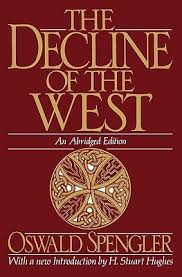
But the truth is that as the “the rising tide of color against white world-supremacy” begins to crest even the “good whites,” the “progressive whites,” will begin to become uncomfortable and unmoored. The noblesse oblige of progressive whites is predicated on the reality and fact of their privilege, of their dominion over the colored races. And yet the reality is that many of these progressive whites show revealed preferences which are not much different than non-progressive whites. On the whole, they live amongst other whites, socialize with other whites, and marry other whites.

Having lived in California, around white people who are politically far more liberal than I am, I have a bit of personal experience with how these “revealed preferences” work. Rather than anecdotes, I’ll just point to this article, Ghosts of white people past: witnessing the white flight from an Asian ethnoburb.

The “passing of the great race” is a far bigger story than nationalism, racial or otherwise. It is the expiration of a whole Weltanschauung. An undermining of assumptions. The death of a world civilization, and the birth of a new one.
Sikh-American President?

https://www.facebook.com/NowThisOpinions/videos/vb.301565040380161/2139764439614338/?type=2&theater

Razib mentioned that different generations of immigrant-Americans had different experiences. When I hear the chap above and his Obamaesque accent (plus level of eloquence); it’s difficult to find the parallel in Britain.

The immigration and diaspora experience in Britain is more similar to the 1920’s Eastern and Southern European immigrants. To give a more precise analogy; post 1965 most Indian Americans immigrated as individuals or as families (except maybe the Patels) however in Britain it was almost communal immigration.

My friend’s father (who is a Sikh) moved to Britain in the 50’s/60’s from the Punjab. He was a civil servant in India and it was actually Enoch Powell who thought Indian civil servants could fill the labour gap in post-war Britain. He immigrated with less than 5 pounds (that was the limit they were allowed to bring) and his children are particularly British (half of them have white British spouses which is uncommon for that cohort, even now intermarriage is sub 10%). Even though he immigrated as a young man his friends had also moved and they had essentially formed a friendship cluster. So even though my friend grew up in a very white area she does remember that the family’s social grouping was still fairly Sikh (and competitive as all the parents had started with the same 5 pounds so the competition was on).

The British Asian experience is almost sui generis. For instance Asian-Americans usually denotes East Asians whereas British Asians immediately signified Desis (Orientals was apparently the term used for our more Far Eastern cousins).

As a final note Britain is an extraordinarily class-obsessed society and aesthetics is usually correlated with class. America, at least from this side of the Atlantic, seems a much more balanced society and the aesthetics of the immigrant populations are usually more pleasing. Americans are probably the best-groomed people in the world, on the whole (notwithstanding notable exceptions) and prosperity is linked to beauty.

Mr. Grewal cuts a very impressive profile both with his mannerisms and profile. He really reminds me of a Sikh Obama. Maybe he will run for President since he really does Brown Proud.

On the genetics of Bengal and Southeast Asia

Over at my other weblog, genetics post some readers might have an interest in. I think in the near future I’ll be talking more about the genetics of Southeast Asians and how they were influenced by Indians. Long story short: there’s a significant Indian genetic impact in many areas of Southeast Asia that can’t be ascribed to colonialism. Rather, the spread of Indian culture in the region was probably catalyzed by Indians….

Suno Punjab

We’ve been watching the excellent Suno Chanda. It’s the story of a respectable Muhajir industrialist family in Karachi but features some ethnic characters as well (a Punjabi mother in law and a Pathan Uncle).

Even though I spent formative years in Islamabad the only ethnic language I was exposed to was Pushto, which was the domain of the labourers, house help and security guards. Punjabi was simply non-existent and Urdu & English were the dominant languages. So I haven’t heard much Punjabi and to be honest growing up all the Punjabi neighbours were the “Pakistanis” while the Sindhis, Pathans were the exotics.

So for the first time I’ve really been listening to the Punjabi language in sustained doses.

Udaari and Dastaan also had Punjabi speakers but in Dastan the Muslim Punjabis spoke chaste Urdu while it was the Sikh kidnappers who lapsed into comical Punjabi.

What is rather shocking to me is how Punjabi sounds like a rustic version of Hindustani. A sort of Braj Brasha for the East?

The diminishing writ of Punjabi?

What makes Sindhi a teachable language but Punjabi a foul one?

Little did the opposing party know that this could be expected of any language spoken in Pakistan but Punjabi, for it is considered by our beau monde to be an illiterate version of Urdu owing to the likeness of the two languages. Speaking Punjabi in public is frowned upon and is not used by our nonpareil A-list to even communicate with servants. The current status of this 14-centuries-old language can be gauged by the simple inclination of Asif Ali Zardari to deliver at least some part of his speeches in Sindhi, but the smirks and guffaws that erupt in assemblages of the Pakistan Tehreek-e-Insaf when Imran Khan utters a single phrase in Punjabi.

Something has happened in the history of Punjabi whereby Hindustani speakers pushed Westward into the Lahore region (Amritsar is essentially a Lahori suburb). As an aside in the “Sacred Geography” of India; are there any Hindu holy sites in present-day Pakistan?


What is interesting is that all the “Lahnda” (Western) dialects of of Punjabi are in Pakistan and all the Eastern dialect (except for the prestigious and no doubt Hindustani influence Majhi) are in India. Continue reading Suno Punjab

India: the north-south disparity

Excerpts
Four of the top five states are from the south, with Kerala leading the list.  Tamil Nadu is at number two on the survey which ranks states across a three-year period.

A notable inclusion in the top three is the state of Telangana, which was created in 2014, carved off from Andhra Pradesh/

The bottom spots of the survey were taken up by states from the north: Madhya Pradesh, Jharkhand and Bihar.

States in India have a wide remit with control over water, agriculture, land rights, public health and order, theatres and entertainment, even duties on opium and other narcotics, and in some cases are as powerful as an individual country in a continent such as Europe might be. Uttar Pradesh, home to 200 million people, would be the world’s fifth biggest country if it were an autonomous nation,

States are linguistically diverse, culturally and socially varied – for example, in the cluster of eight northeastern states which border China and Myanmar, people look eastwards for their cultural cues, eschewing Bollywood in favour of K-pop, and prefer soccer to cricket. Home to matrilineal societies, women are far more visible in everyday life than in the “cow belt” states of central India.

Kerala too, is markedly different from the north. It has the highest literacy rate in the country, at more than 93%, as well as a high life expectancy and the best gender ratio in the country. It also tops the UNDP-sponsored Human Development Index thanks to high standards in sanitation, health, education and poverty reduction.

But for all of its highs, Kerala – indeed, all of south India – is about as appealing to the central government as coconut oil in butter chicken. In north India, southerners are universally mocked with the pejorative “Madrasis” (a reference to the former name of the city of Chennai). South Indians are looked down on for their dark complexions, their mannerisms, even their diets. Keralites eat beef.

It might be worth noting that four out of the top five best-government states are not ruled by the Hindu-right BJP, but the party does preside over the three states that come last in the survey.

At the same time, a handful of social media posts claimed the floods were divine justice for the beef-eaters.

From
https://www.lowyinstitute.org/the-interpreter/india-north-south-disparity

Western Asians are Western

The above diagram really hits at something important. Back when I was commenting on Sepia Munity, or as I read The Aerogram, I always come back to the reality that many people of Asian heritage who grew up in the United States or Europe are culturally Western.

Therefore, fundamental aspects of Asian culture were always refracted through a Western lens. When I read The Aerogram I know what I’m getting: the story will end with a progressive (Western) “final thought.” The types of Asian Americans who write this type of journalism are politically progressive. Those of us who are Asian American, and not progressive, do other types of work.

Not that there is anything wrong with this…but there is often a tendency to not take non-Western culture on its own terms. People of Asian origin in the United States are identified as fundamentally and deeply Asian because of their faces in their native environment, the West. They are ambassadors and exemplars of Asiatic ways. But over the years these people forget that Asians living in Asia see them, rightly, as Western. They have no authority from authenticity, the authority is given to them by non-Asian Westerners who don’t know sari from salwar.

“Woke Asians” are actually simply “woke,” and so they have internalized a world-system where it is bad whites/colonialists against good PoC. When Asian values, Asian practices, don’t fit into the narrative, the prosecution brings the case against Asians for being insufficiently authentic, of being distorted by hegemonic “colonialist” paradigms.

The sin of “oppression” is universal, not particular.

Crazy Rich Asians is not social work


I have not watched Crazy Rich Asians. Perhaps I will for my cultural edification. Unlike some people, I don’t care too much about “representation.” This isn’t for ideological reasons…I just have weak group identity/identification, and on an implicit level, I probably think I’m a unique enough person that no other is going to “represent” me in the media, ever. I know I’m not the only one who feels this way.

But the reality is that the Western Asian cohort in the cultural space is dominated by the aggrieved chattering class. So there is this piece in The Guardian, Where are the brown people? Crazy Rich Asians draws tepid response in Singapore. It references another piece, ‘CRAZY RICH ASIANS’ IS NOT A RADICAL WIN FOR REPRESENTATION.

About the author of the second piece:

Sangeetha Thanapal is an artist and writer working on the intersections of race, gender and body in Asia and Australia. She is the originator of the term ‘Chinese Privilege,’ which situates institutionalized racism within Singapore. Her fantasy fiction and political writing have been published by Djed Press, Brown Girl Mag and many more.

First, about “representation.” I put it in quotes because in a social justice context the word means something particular. For example, “representation” of South Koreans means Sarah bane-of-goblin-kind Jeong. Not, an evangelical Korean missionary in the Middle East. In the academy, “representation” means a good regional, racial, and gender proportionality. Not, reflecting the political and religious variation in the population.

Crazy Rich Asians are Asian, but not the representational kind of Asian. Sangeetha Thanapal though is a representational Asian: she’s cosmopolitan, educated, and woke. Ironically, her South Asianness is almost incidental. Kind of a wrapping around the real substance of her ideological affinity to a certain tendency which spans all shades.

The second issue are the specific particulars to Singapore and the relationship between East Asians and South Asians, or more generally, “Chinese” and “Indians.” It is a simple fact that Chinese people are racist against Indians for being dark, for India being a poor an underdeveloped nation, as well as differences in comportment and social mores. It is also a simple fact that Indians are racist against Chinese people, who are perceived to be strange-looking dog-eaters who lack deeper values than the acquisition of money and power.

If you want to represent the true dynamics of the Chinese and Indian relationship in Singapore, then you need to represent the racism and segregation which is mutual. Of course, there are other dimensions as well, such as the growing number of mixed-race Chindians. Unless that is, you want to “represent” your nonexistent utopian vision?

Which brings me to the big issue about objections to Crazy Rich Asians: the critiques are reductive and simplistic, even if they utilize layered and verbose textures. Singapore is dominated by a Chinese ruling class, and there is racism against minorities. But a massive influx of highly educated professional Indian immigrants in the past few decades into Singapore is why Indians now earn a bit more on average than Chinese in Singapore. But this summary is misleading too, and masks the diversity of the South Asian population, from well-off Indian immigrants to manual laborers from Bangladesh, as well as the long-established Tamil community which is itself socioeconomically diverse.

Finally, there are some things that Thanapal and others bring up as “Chinese privilege” which I don’t see as a privilege. Singapore is a mostly Chinese city, in a region where Chinese economic power is ascendant. It is entirely reasonable that the city-state should be given preference to English and Mandarin Chinese as the dual languages. Thanapal’s Tamil language is not hard-wired into her being like her dark skin and curly hair. Tamil can continue to be maintained in the traditional Tamil community, but in Chinese dominated city-state it seems reasonable that Tamils should learn the lingua franca of the majority and adopt it as their own. Mandarin can be a fine first language even if your hair is blonde or your skin is black.

Chinese Indians speak Indian languages, and when they speak English they naturally have an Indian accent.

I’m not saying my viewpoints are the “right” ones. But, for various reasons my viewpoints are not not “represented” in the mainstream international media. And I’m not the only one who feels this way. So there, I said it.

Brown Pundits