Vijay makes a very important contribution on the Aryan-Dravidian debate and how all of it was cooked up by the British (Hindu/Muslim divide, caste system, martial races etc).
It is the absurdity and arrogance of the British to imagine they created/united India; India has always existed from the times of our AASI/Andamese/Negrito ancestors (maybe we should go back to 80’s Britain and call the AASI black so we are basically black according to one-drop rule).
Colonialism was an absurdity and travesty and did so much to hold back Hindustan (I define this from the Hindu Kush to the Indian Ocean). Even Lord Curzon mentions (again I go quoting colonial authorities; I’m such a munafiq) that Rivers are not real boundaries; India does not stop at the Indus but at her mountains (Hindu Kush, Himalaya) and oceans.
“3) Indian politics –<br />a) North South divide – North = Arya, South = Dravida or Non-Arya aka Natives”<br /><br />You are overemphasising the so-called North-South ‘Divide’ . ‘ Dravida’ referred ethonologically to the Pancha Dravida brahmins ; this included brahmins of Gujarat and Maharastra. 19th Century ametuer linguist Rev Caldwell mistakenly thought it referred to the four large south Indian languages and named the linguitic group as ‘ Dravidian family’ and as was the prevalent notion of 19th century thinkers , he conflated the linguistic group with a racial group. From a purely linguistic angle , his identification of the linguistic group is right, but wrongly named it and even more atrociouly mistook it for a race.<br /><br />It is testament to the success of the the 19th century colonial categories that western mistakes have become creed for a section of Indians.<br /><br />However , the bald ‘ Arya-Dravida’ division is prevalent only in Tamilnadu, and not in other south India states; that too it is politically hyped up. The irony is the Tamil literature knows no word called Dravida till late 19th century under colonial instruction. <br /><br />Political froth from Tamilnadu should not be mistaken as the opinion of majority of people. The majority of Hindus have refrained from taking control the social and historical narrative or even challenging the prevalent narratives which are of 19th century western provenance. That is their mistake. I don’t think the so-called ‘Out of India’ theory is the solution. One nonsense cannot be fought with another nonsense. Wherever you see nonsense , be relentless in challenging and exposing it.<br /><br />The so-called ‘arya-dravida’ divide has no histotical basis – however such toxic narartives need exposing . The narrative of “arya-dravida” divide in Tamilnadu is high decibel and aggressive – it gets more aggressive as it’s historical basis is non-existant and it is running on empty. History is made by aggressive lies in the short run – Satyameva Jayate is a pious hope
Bharata Bharatavanshi · April 27, 2018 · 25 comments
Where and how did this difference begin, is there anything universal to this or is it due to certain historical condition to how things developed in Europe. The founder of Heterodox Academy Jonathan Haidt gave this talk of incompatible sacred values between truth and social justice. And how the telos of Universities ought to be ‘Truth’.
In my view, this distinction begins with The role of church in European History.The distinction of secular and religious. The aim of the church had to do with what people believed. So, the eventual marxist world view simply took over the hole left behind by the long irrelevance of church in academia in many european societies.Present role of Humanities dept in I believe comes from the role of the church, if one were to consider their aim was to spread their belief system. Church still has an impressive anthropological division, translations into many native languages etc.
In other worldviews, like stoicism or buddhism,jainism,advaita,ajivika had a more cosmic oriented worldview. I see the differences in universities as an evidence of deeper epistemological differences between christian worldview and their greeko roman heritage. This model has now been transported to other places and is leading to similar problems. I was reminded of this view once again by the tweet storm of nassim taleb. One cannot read the history or even consider the ideas of west without asking in what ways has the role of church been in shaping the west and its impact in development of every idea that has come from the west, claims of universalism needs to be independently checked.It maybe that the church has found ways and means to keep itself out of the scrunity in different ways to be able to survive and adapt to developments of science, this could be in the role of the institutions or the kind of rhetoric deployed or organisations at community level or perhaps in academia itself.Perhaps this the crucial difference in comparison with other societies , they didnt have time enough to adapt and this is leading to further troubles.
Hence I do wish for other people of different beliefs or none to have their own independent study of the west and test the ideas and the claims.All Ideas,claims need to be independently tested. Otherwise one might find oneself undone by some future eventuality that one didnt consider beforehand and suffer a mighty loss.
Here is how nassim taleb connects these,
EDUCATION. Distilling the conversation with @bryan_caplan hosted by @tylercowen 1) There has been a traditional separation between: + "liberal education" for free men, (liber), who didn't work for a living, & +"technical education", for those who labor.
5a) The problem of the peer review system is selecting professors on theories abt subject never checked for basic knowledge of subject. It is common for people to know the "post colonial gender theory" of Levant, teach it, but never the actual facts.
5b) The French solved the problem with knowledge exams for educators ("aggregation"); you never end up having people judged solely by peers (See #SkininTheGame ).
(Same problems: "know economics" is interpreted as knowing theories by economists, not economic facts).
6) The educational model is now imploding as the only thing people seem to learn at colleges is ideology by losers who became professors because they aren't good enough to create things & got together to BS in a citation ring #RentSeekers (not just in economics, but everywhere)
8) The idea that liberal education makes free thinkers is about the greatest myth: empirically, liberal education creates the exact opposite of "thinkers" and "free": indoctrinated and slaves.https://t.co/JaoiDNftG7
9) Remember that the "University" system for this "liberal education" (trivium/quadrivium) was historically closely associated with, and supervised by, the Church.
I am doing a round-up of the past 10 posts excluding my own since ordinarily I tend to write more. I try to judge the tempo of BP and when it’s moving on it’s own momentum I hum down and do other stuff. Incidentally I have excerpted the last twenty articles (the pages display ten articles at a time) and I was surprised that in 3 days we generated so much content.
Revisiting Somnath–A Review: Kabir revisits Somnath academically and I do agree that British historiography somehow intensified Hindu-Muslim political rivalry. Of course it was a complex equation but I’m surprised no one senses the nefarious hands of Imperialism!
Jaydeepsinh Rathod on the historocity of Sanskriti:AnAn compiles all of JR’s thoughts on the historocity of Sanskriti. In the Aryan threads there are some very knowledgeable comments; I remember Allama Iqbal ending his thesis that the reason Hinduism survived and Zoroastrianism did not was because the Brahmins obsessively discussed every detail of their philosopy and mythology whereas the Magis did not. I sometimes feel like my Magian ancestors and I like to hold on to my cherished notions..
Toxic textbooks and social engineering in Pakistan:AMA investigates how the Pakistani psychosis came to be. I myself of course thoroughly indoctrinate in the Pakistani psychosis; I am rather a bit too proud of my Hijazi camel trader ancestors (nos ancetres les Hijazissounds a lot less glamorous than the Moghuls).
Madeeha Gauhar, Pakistan’s most famous Theatre Director passes away:Kabir mourns the passing of Madeeha Gauhar, I had remembered Ajoka Theatre coming to London for Dara Shikoh but I didn’t watch the play on principle. When I was in London I used to go to the theatre weekly (sometimes twice or thrice a week) but I got annoyed when I saw all the Pakis rushing to the National Theatre. I am quite white in my inclinations (I am a pretty good rock climber, love a good Oxbridge formal and enjoy the theatre – ergo I have to interact with far too many liberal Wasps). RIP Madeeha Khanum and thank you for your services to Pak Theatre!!!
The water rises and Canute drowns:Razib writes a short piece touching on Genes, Aryans & India. Result, one of our viral threads. I don’t really know too much to comment on the matter; it’s sad how ill-informed I am about Indus Valley Civ and anything before Mo Bin Qasim. Pakistani psychosis and all that!
Rajneesh and Sheela Ambalal Patel, a question by sbarrkum, on the new Netflex docuseries about the Rajneeshess cult. I’m shocked to realise that Osho is actually no more; I thought he was still alive! ZackThought: I was pondering over this that the older a religion, the more reliant it is on charismatic individuals (gurus, popes, Imams) to guide the religion. The younger the religion the more institutionalized it is (Protestantism, Mormonism, Ahmediyyah, Sikhism, Baha’i Faith).
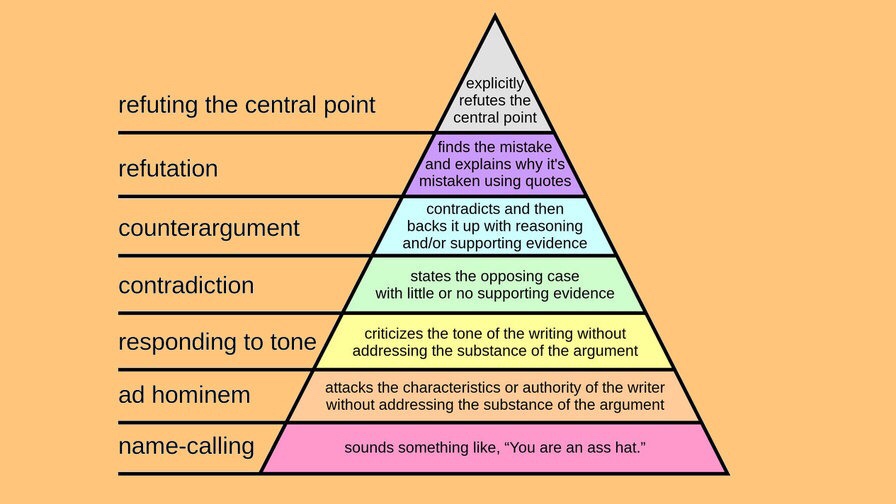
X.T.M · April 26, 2018 · Comments Off on How to argue
LV sent this to me and I found this a useful guide to blog debate..
I am very sensitive to “tone” so I probably am between Step 2 & Step 3 on the 7 step path to Aristotle.. IRL I tend to shy away from much discussion or debate, except with the better half, as I’m a very kinesthetic learner.
A major personal peeve of mine is that the past few centuries of Western colonialism have overshadowed so much that moderns are often unequipped to understand the vast tapestry of human historical and geographical diversity. If you are a modern Indian or Chinese or African person you know your own culture and its history…and its relationship to the modern West. This is a shadow of a bygone age which is down in its terminal stage.
Presuming that the audience of this weblog is mostly South Asian, here are some very broad surveys which I think the audience might find interesting:
It’s nice to see BP so active – I completely failed in my goal to take up AnAn’s suggestion and do a compendium of recent posts but I shall indulge with some observations.
We seem to spend a lot of time on BP talking on caste origins.
The more interesting castes are Bollywood; where most of the acting families are linked and intermarry with the industrialist and cricketing caste (the Sharma-Kohli wedding was presaged by Malik-Mirza match).
The Bollywood caste is Punjabi & Muslim men (Ranveer Singh dropped his Sindhi name – who would watch Ranveer Bhavnani) with women stemming from other parts of the Subcontinent.
I’m surprised by the lack of Sikhs in Bollywood; Arijit Singh (who is a cut Sikh) and Ranbir’s mother + Saif’s first wife are Sikh. Where and who are the Sikh men?
I think people forget India is undergoing a breathtaking pace of modernisation. However because of Bollywood; this modernisation isn’t necessarily Westernisation. Bollywood takes a nod from the West and translates it in Hindustani culture, language & values which then influences the whole nation (Pakistan is undergoing the same process but is far more immunised from Westoxication; we are generation to half a generation behind in liberalism).
LV was showing me the new trailer for Veere de Wedding (Kareena Kapoor & Sonam Kapoor) and I was remembering what Kangana Ranaut was saying about nepotism in Bollywood.
Also Vidhi pointed out to me that a lot of the “Punjabis” are in fact half-Sindhi (KJo, RSingh, Kareena Kapoor, Sonam Kapoor).
One of the most shocking juxtapositions in the Subcontinent is just how cosmopolitan and glamorous Sindhi Hindus are whereas Sindhi Muslims have such a staid reputation (landowners, wadheras).
1. But it can, however, be used to argue against an origin in India – the Indo-Gangetic plain is also a spread zone, but the demographic weight of agricultural populations mean that spread of a language is much more difficult here – which is why Scythian and Hunnic and Turkic conquerors haven’t left any linguistic descendants in the subcontinent
Here is where you need to remember that there was already considerable demographic weight in the Bronze Age itself in the Indus civilization. This means that steppe nomads coming in from the North in the 2nd millenium BC quite simply could not have had the enormous success in changing the linguistic landscape going by what as you yourself indicate happened with the later migrants.
If IE languages originated in India, we would expect at least one other basal branch of the family to be found in South Asia. That is, there should be some other IE subfamily in or around India that is about as different from Indo-Aryan as the European IE languages are.
(Originally published at Naya Daur, whose website was blocked by PTA in Pakistan a day after this was published).
“In every country, the textbook is the primary implement of education at the school and pre-university stages of instruction. In Pakistan, it is the only instrument of imparting education on all levels, because the teacher and the lecturer don’t teach or lecture but repeat what it contains and the student is encouraged or simply ordered to memorize its contents. Further, for the young student the textbook is the most important book in his little world: he is forced to buy it, he carries it to the classroom every day, he has to open before him when the teacher is teaching, he is asked to learn portions of it by rote, and he is graded by the quantity of its contents that he can regurgitate.”
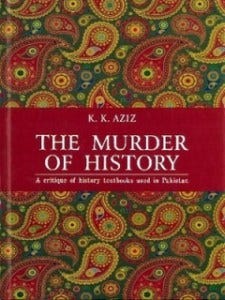
This was how Pakistani historian K.K. Aziz started his groundbreaking work The Murder of History: A critique of history textbooks used in Pakistan. The book was published 25 years ago (in 1993) and the only change in the role of textbooks since then is that provinces were granted the right to formulate their own textbooks under the 18th amendment to the Constitution. Another significant change in the last two decades has been the mushrooming of private schools that use textbooks different from the official ones.
History doesn’t start with Muhammad bin Qasim
While textbooks for natural science subjects — like Physics, Chemistry and Biology — or those pertaining to language studies are less likely to form a child’s worldview, textbooks for history and “social studies” (a mixture of history, civics and geography) are supposed to be the first step toward a social conscience.
In the textbooks that my father’s generation studied, history textbooks did not start with the year 712 A.D., when Muhammad bin Qasim invaded Sindh. They contained history of the Indian Subcontinent before that particular event. They were also devoid of chapters devoted to the ‘Ideology of Pakistan’ and other such vague ideas.
But the distortion of history in Pakistan started as soon as the country came into being. On the 17th of August, 1947, a mere three days after Independence, an article written by Mr. Abdullah Qureshi was published in national newspapers, titled “Textbooks of History and Need for Reform”.
The atrocity that was Abdullah Qureshi
In that article, Mr. Qureshi argued, “The person who knows the Islamic history accurately, would prove to the best citizen of Pakistan. He will not commit any act against the state of Pakistan. His heart would be filled with love for Islam and Muslims and he would not even think about treason. In my view, it is imperative that history of Muslims should be popularized as it will lead to strengthening Pakistan. Every citizen should be made aware of Glorious Islamic Traditions. Every Citizen should be reminded that straying from National Interest would lead to destruction of the Nation.”
He further wrote, “The history that is taught to our children in schools is not factual. It is based on propaganda spread by the British and it serves to justify British Imperialism. It is based on personal biases of British Historians. As a result, worthless events have been presented as glorious occasions. It promotes a false Hindu-Muslim parity, while the fact is that before arrival of Muslims, Hindus did not have any authentic history or collection of traditions. Due to need of the hour, British historians concocted false narratives to appease the Hindus.”
The British periodized Indian history
Now it is interesting to note that Mr. Qureshi rails against the biases of British historians, and yet, falls back on a form of Indian historiography invented by them. After all, as Dr. Mubarak Ali wrote in an article:
“The periodization of the Indian history as the Hindu, the Muslim, and the British was not done by any Hindu historian but by a British historian, James Mill, the author of the “History of British India”. He intentionally divided the history on religious basis, but did not call the British period a Christian period in order to keep a secular outlook, and to maintain a balance between these two opposite religious communities. This periodization is challenged and severely criticized by a Hindu Historian [sic], Romila Thapar. In India, historians no more use these terminologies whereas in Pakistan historians persist to use them”
Following the debacle of 1971, textbooks were modified to rationalize the separation of East Pakistan as a ‘Hindu Conspiracy’
Nevertheless, the project of historical revisionism proposed by Abdullah Qureshi was, indeed, put into motion in Pakistan.
Distortion of History to rationalize the Fall of Dhaka
K.K. Aziz analyzed history textbooks written during the period 1960–1990 and he found factual errors in most of these books. Distortion of history had started soon after Independence but the particular ideological tilt that we are today most familiar with started in the 1970s. Following the debacle of 1971, textbooks were modified to rationalize the separation of East Pakistan as a ‘Hindu Conspiracy’. This obfuscation was intended to whitewash the atrocities committed upon Bengalis starting from 1947.
Zulfikar Ali Bhutto came to power amidst political confusion with an Islamic socialist programme, promising to build a new Pakistan and to address the economic and political issues facing the country at the time. The result was an over-emphasis on a separate “Pakistani identity” and a new description of “the enemy” so as to unify the nation. The strategic use of Islam in education policy started during the era of General Ayub Khan and continued during the Bhutto period.
Manufacturing a false pride?
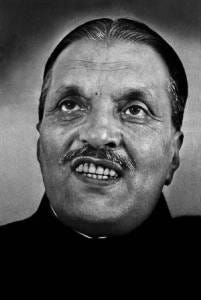
Gen Zia ul-Haq — PC: Dawn.com
The worst of the rot truly set in during General Zia-ul-Haq’s regime during the period 1977–88. Dr. Parvez Hoodbhoy and A.H. Nayyar mention in their book “Rewriting the History of Pakistan” in Islam, Politics and the State: The Pakistan Experience (published in 1985):
“In 1981, General Zia-ul-Haq declared compulsory the teaching of Pakistan studies to all degree students, including those at engineering and medical colleges. Shortly thereafter, the University Grants Commission issued a directive to prospective textbook authors specifying that the objective of the new course is to ‘induce pride for the nation’s past, enthusiasm for the present and unshakeable faith in the stability and longevity of Pakistan’. To eliminate possible ambiguities of approach, authors were given the following directives:
To demonstrate that the basis of Pakistan is not to be founded in racial, linguistic, or geographical factors, but, rather, in the shared experience of a common religion. To get students to know and appreciate the Ideology of Pakistan, and to popularize it with slogans. To guide students towards the ultimate goal of Pakistan — the creation of a completely Islamised State.
Islamization of Science books
As a result of this ideological onslaught, even the books of science were “Islamised”. Specific chapters have been dedicated in books of Physics, Chemistry and Biology, introducing young students to Muslim Scientists. Most of these “Muslim Scientists” were a product of the Mu’tazilla tradition in the medieval period, a fact that is not included in any of the introductions.
Any effort to reform the current textbooks should ideally cleanse all the waste material that the books have accrued in the last 65 years.
The ideological propaganda that has plagued the textbooks has also contributed to a confused state of mind among the next generation of Pakistan. It is not a co-incidence that according to a survey of educated youth by Pakistan Institute for Peace Studies, “A sizeable percentage of the survey population believed that religion should be the only source of law in Pakistan.”
How distortion of History begets fundamentalism
The British Council released a report in November 2009 titled “Pakistan: The Next Generation” focusing on issues surrounding the youth in Pakistan. The report also noted, worryingly, that “Disillusion with democracy is pronounced. Only around 10% respondents have a great deal of confidence in national or local government, the courts, or the police. Only 39% voted in the last election.” Another report by the British Council in 2013 mentioned that “38% respondents expressed a desire for implementation of Shariah as opposed to parliamentary democracy with 29% respondents opting for continuation of Democratic system.”
Confusion has led to identity crisis
Any effort to reform the current textbooks should ideally cleanse all the waste material that the books have accrued in the last 65 years. It is expected to be a Herculean task and it requires a great deal of willingness from the provincial governments.
The insertion of exclusionary modes of thinking and petty ideological narratives in textbooks has resulted in the emergence of a confused, disillusioned and restless educated class of Pakistanis. Textbooks have become a contested space for ideological skirmishes in the last few decades. The educated youth of Pakistan faces a dilemma when confronting realities on the ground — because they have been taught a very different narrative. This national confusion has led to a widespread identity crisis.
Meanwhile, in an Islamiyat textbook for undergraduate students in Punjab, the introduction to the book states, “Pakistan is an ideological state. It has been founded on the pattern established in Madinah.”
According to a Pakistan Studies textbook used in Punjab, something known as “Nazriya Pakistan” (Ideology of Pakistan) is based on Islam, which itself is claimed to be a complete code of life.
In an Islamiyat textbook for undergraduate students in Punjab, the introduction to the book states, “Pakistan is an ideological state. It has been founded on the pattern established in Madinah.”
A sociology textbook for the Intermediate level in Punjab paints the Baloch people, citizens of Pakistan, as ‘looters’.
These are but a few examples of the pernicious ideological conditioning that these textbooks perform.
ANP’s improvements to curriculum in KP rolled back by PTI
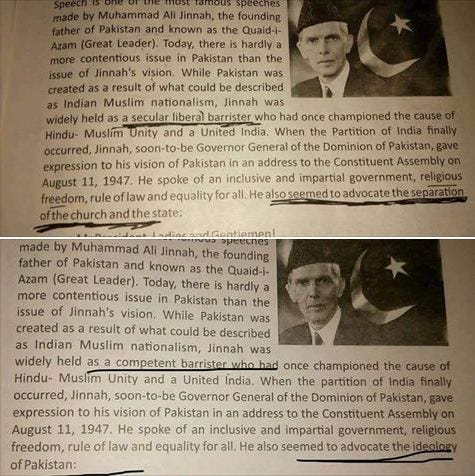
In the aftermath of the 18th amendment, provincial governments were provided an opportunity to make amends. In the case of Khyber-Pakhtunkhwa, the Awami National Party (ANP) government during 2008–2013 made some positive changes in the curriculum — driving the focus away from religious militarism towards an ideal of coexistence and peace. But, following the rise to power of the Pakistan Tehreek-e-Insaf (PTI) government in that province, most of those gains were reversed under the influence of religious parties allied to the PTI.
The upper one is a picture of a KP textbook from ANP era, terming Jinnah a ‘secular liberal barrister’ who ‘also seemed to advocate the separation of the church and the state’. Below is the current version of the same book where the ‘secular liberal’ has been replaced by ‘competent’ while ‘separation of the church and the state’ has been replaced by ‘ideology of Pakistan’. — Picture courtesy: Omer Qureshi
In Punjab, according to Dr. Hoodbhoy, textbooks have been “improved considerably”, moving beyond some of the worst dogma. One hopes that this experiment is implemented nationwide and Pakistan’s next generation is taught according to the finest international standards of education — where there is little room for deliberately conditioning young students into authoritarian, theocratic and racist mindsets.
Razib: I follow your super feed and read your postings here and on Brown Pundits. The subject of the ancestry of South Asians comes up frequently. It seems to have a political valence that I, as an outsider, do not understand.
Can you explain it? or point us to an explanation?
My response is “British colonialism and modern-day culture wars.” I could say more, but honestly, I don’t care that much. The science is more interesting to me, and it’s a lot to keep track of. Can readers comment?
(Related: there are some Pakistanis who try and pretend as if they are descended from Persians, Turks, or even Arabs. The explanation is pretty straightforwardly summarized as “self-hatred”, though we could all elaborate on that).

@Fraxinicus,
1.
But it can, however, be used to argue against an origin in India – the Indo-Gangetic plain is also a spread zone, but the demographic weight of agricultural populations mean that spread of a language is much more difficult here – which is why Scythian and Hunnic and Turkic conquerors haven’t left any linguistic descendants in the subcontinent
Here is where you need to remember that there was already considerable demographic weight in the Bronze Age itself in the Indus civilization. This means that steppe nomads coming in from the North in the 2nd millenium BC quite simply could not have had the enormous success in changing the linguistic landscape going by what as you yourself indicate happened with the later migrants.
If IE languages originated in India, we would expect at least one other basal branch of the family to be found in South Asia. That is, there should be some other IE subfamily in or around India that is about as different from Indo-Aryan as the European IE languages are.