What does it mean to be “Brown?”

I have never liked the word Brown (too much of a New World term) but I much prefer Desi.

I don’t actually know what desi means (I think it’s rustic & rural combined) because its haziness is what makes it so compelling. It’s a shorthand for the children of Mother India but doesn’t extend to South East Asia, the term attenuates somewhat in Sri Lanka (who have their own cultural peculiarities) and Nepal (because of their physical resemblance to the East).

Desiness fades off somewhere in KPK/Afghanistan; exactly where is a matter of choice because the historical boundary with Greater Iran begins somewhere in the Hindu Kush. The Indo-Gangetic plan is the beating heart of Desiness; the three rivers constitute the lifeblood of desiness.

Desiness connotes shared food, a Hindustani vernacular, Bollywood, an Urdu-Mughal High culture set off against Sanskrit religion, a local & earthy UP-Punjabi culture, PIR & Guru worship, a feeling of physical & geographic unity that extends to South Asia. It’s also a sentiment and a state of being rather than a fixed characteristic. Some desis are not so desi and sometimes you can turn up and turn down the Desiness, not so with Brown (unless you use some nasty bleach products).

Of course in the migration to the New World the stark complexities of what it means to be desi sort of strips away into “Brown.” For instance do Brown people like Urdu dramas & Hindi films? Desis usually like one or the other (and the smarts ones both 🙂

When we call ourselves Brown Pundits is there really much of a common ground in this matter? Is there anything that really unites Brown people beyond the colour of their skin; there are brown Cambodians and Turks.

Desiness of course is earthiness fused with a sumptuousness and lavishness that is almost unparalleled (look at a desi wedding as an example). Persia and her strong aesthetic influence have historically percolated through the Sub-continent via the medium of Muslim/Mughal High Culture (thanks to the Brits who ensured the two became synonymous). The interplay between the Sanskritic pushback and the Persian advance has contributed to so much of our cultural heritage (try as they might Urdu is not dead yet; in exile from its UP homeland to find refuge & succour in the Punjab and a bastardised existence as lyrics in Bollywood films).

But at the end of it all Desiness somehow captures the magic & mystery of India; a culture that has persevered despite all the odds. A millennia of foreign Pardeshi rule but India has somehow managed to preserve her traditions, her religion and her culture; no mean feat.

Even Persia was reborn of an Arab rape in a way that India was not. There are several orders of magnitude more continuity between the Rig Veda and modern day India than there is with the Avesta & Iran-zamin (Zoroastrianism is memory fused with myth; Hinduism is a living reality ready to tame Islam at a moment’s notice, in fact Hinduism derives her strength by not being Islam).

Brown doesn’t really do justice to what is a highly complex and evolving civilisational space. Even if India & Pakistan make an ass of themselves on the world stage battling one another (and Pakistan always threatening defection to be a sweeper in th Minarets of the Middle East) it doesn’t mean it’s not a fascinating Sub-continent. When I compare India, Pakistan & Iran; India has retained that hue & joy of paganism that the stark monotheists have long abandoned (Islam has had such a problematic relationship with music for instance).

Of course Desipundits doesn’t have as good a ring to it as Brownpundits so I guess we’ll have to suffice with Brown.

Why is white such a problematic term

The more I think about it the more I realise Ta-Nehsi Coates is into something. White is probably as loaded as the n-word. My reasoning below:

Before 1492 Europe had some but limited contact with other civilisations (Marco Polo, Greco-Roman antiquity, trade) therefore there wasn’t a sense of definition. Since the Old Word, for the most part, is racially continuous the ethnic distinctions are for the most part slight. Most Greeks are lighter-skinned than most Turks but it’s a stretch to call the former white and the latter not. Everyone blends into one another, not excacy but even so just enough to make for hazy lines.

After 1492 when Europeans encounter another civilisations entities and meets/imports them into the New World; new racial terms are required. Turk & Christian aren’t enough because slaves could be either faith.

So the term white arose in a milieu of European domination (Europe may have initially sought out the world to trade but eventually like all cultures it turned to domination).

In this sense white turns out to be ethnic dominator labels like Turk or Arab (most Muslims in the Indian East trace their ancestry, whether real or fictitious, to either of these groups never to Persians as an example). However since one drop rule didn’t really exist anywhere else (Arabs have huge dollops of SSA ancestry making them descendants of both slaves & slave-holders) it makes white a very loaded term and a holdover of half a millennia of domination.

The ancient Greeks & Romans blended into their populations; do we have any unadulterated relics of their colonies to the existing day? Such stark racial terms (black, white etc) ellide the common truth that Humanity is One and that humans have always commingled & co-existed with one another, one-drop rule is the exception as opposed to the rule.

Again I could be wrong but most of human history is myth and if we have the right myths, maybe we could evolve in a better direction?

Too light-skinned to be Pakistani?

We had a Pakistani Dinner late and it was quite a laugh (even though I’m quite Indianised these days & constantly rant about Muslims, I do love my Pakis). One of my friends brought along a white lady who joined us. As we left the dinner she asked me if I was fully Pakistani because I was lighter than the rest and they looked “more Indian.” She then mentioned that I could pass off as a Spaniard, which frankly was BS ???.

I was much annoyed (not faux-annoyed because it seemed like she was giving me a compliment) because I’m instantly taken for an Indian (& happily so) whereever I am in the West (not Arab not Middle East not even Persian). I am usually seen as Indian or Muslim (especially when I wear a beard, which is what I am, the collision of the Ummah & Mother India) in an all-white context; it takes a very discerning white person to see me as anything other than those.

A good rule of thumb is that the rounder my face the “desier” I look, the leaner the more Persian I get (an Iranian friend told me that and it makes sense).

What I found interesting is that in an all-desi context (which has been a while) my “otherness” admittedly did jump out (I felt it myself but then this was a predominantly salt of the earth Punjabi table, where the Urdu spoken has a nasal quality to it).  If I had been with Muhajirs (of the KGS strata) or Pathan-Punjabi mixes it wouldn’t have felt so stark; this was a case of regional rather than national differentiation. But Punjabis own Pakistan and good for them, some compensation for the horrid they had to undergo at partition.

I find this bestowing of “light privilege” by white people to be ridiculous and micro-aggressive (microaggression is a thing!).
It’s not that we don’t have our colour fixations in South Asia (and the Middle East) but colour is a spectrum/gradation rather than a stark barrier. There are dark Brahmins after all (even though I once heard a quip in Kampala that never trust a dark Brahmin lol) the Aryans seemed much more partial to mixing & mingling than Southern Slaveholder Landlords.

The divide & rule concept with which goras have categorised and classified coloured people borders on the ridiculous. One can be considered coloured if they have two or more of the following; dark hair, dark eyes and dark skin. The distinction between Meds & Middle Easterners (swarthy Sicilians are essentially like Levantines) does get more hazier but I do have to agree with Ta-Nehisi Coates that I find the concept of “white” to be more of a political than a racial construct. Human societies have always grappled with light & dark (with preference for the former usually but then with few exceptions invaders tend to stem from the icy north) but black & white is a distinction that seems to have arose in the slave-holding societies in the New World (don’t take my word for it I’m not a scholar!)
Adios (gotta practise my Spanish now)
Ps: while my wife has done a very good job in Indianising me; as soon as I am in a Pakistani crowd my Pak-narrative conditioning kicks in and I blend in like a chameleon (that’s what my best friend calls me since I like to constantly blend in). I’m such a Munafiq!

Religion trumps race in Sri Lanka


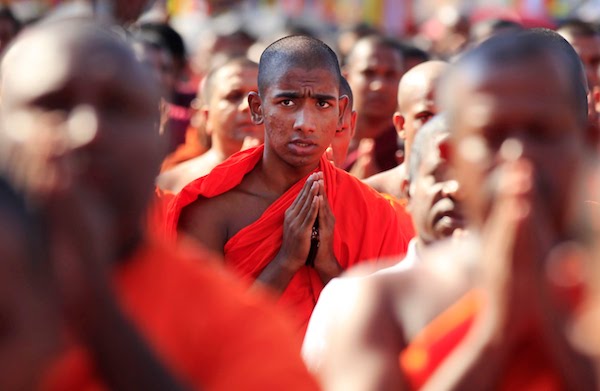
Monk-led mob attacks Rohingya refugees in Sri Lanka:

“These are Rohingya terrorists who killed Buddhist monks in Myanmar,” the monk said in his live commentary on Facebook, pointing to Rohingya mothers with small children in their arms.

Sri Lanka’s extremist Buddhist monks have close links with their ultra-nationalist counterparts in Myanmar. Both have been accused of orchestrating violence against minority Muslims in the two countries.

South Asians understand that the power of religion as opposed to race more than most people. The craven and obsequious respect granted to Arabs (and to a lesser extent Iranians and Turks) by South Asian Muslims is so natural and taken-for-granted that it only seems that way to outsiders. Despite the fact that Muslims and Hindus of any given region are clearly related by blood (in some cases, whole portions of castes convert in toto), they often speak as if they are racially distinct. Muslims somewhat sincerely, but affirming obviously false West Asian Asian, and Hindus more performatively, by asserting that India is for the Hindu race, from which Muslims are excluded.

The above story is a different dimension: the identification of Sri Lankan Buddhism monks with the Buddhist Burmese against the Rohingya. There is some historical background to this, as both the Sinhala and Burmese are predominantly Theravada Buddhist peoples. During periods of Buddhist decline in Sri Lanka lineages were reinforced form Burma, and vice versa.

The Rohingya, as I have stated, are racially really no different from the people of Bengal. And like Bengalis the Sinhala are a dark-skinned South Asian people (there are still debates as to whether the Indo-European language in Sri Lanka came from Gujarat or Bengal). The Sri Lankans I’ve met could easily pass as Bengali, and in general vice versa.

It’s an interesting observation from an American perspective, where race is the most salient factor in social-political identification. At least explicitly.

Good on you Mahira Khan-Kapoor – now please stop playing the Virgin

Mahira Khan is of course Pakistan’s biggest actress and she seems to be dating Ranbir Kapoor (in this picture he looks the spitting image of his Dad Rishi).

Of course Twitterstan is going mad with calling Mahira an infidel and what not for betraying her country for a Hindu Indian (no matter that the Kapoors, like so many of their caste, are sons of an Indus soil).

My only take in all this is that good on Mahira for expressing herself and living life to the fullest. However kindly stop playing the Virgin in Distress (Hum Safar, Bin Roye, Sadeqay Tumhara & Sheree Zaat). It’s that hypocritical strain in Pakistani culture that we must constantly project this hyper-idealised version of reality where women have no autonomy or sexual freedom apart from their role as good Muslim mothers.

Spoiler:

In Hum Safar she accepts her treatment at her mother-in-law Farida’s schemes. In Bin Roye she punishes herself with a tortuous (and unconsummated) marriage while in Sheree Zaat she atones for her arrogance by becoming a good Namaazi. While Sadeqay Tumhara (which is a truly fantastic show along with the groundbreaking Hum Safar) she allows her future to be ruined by her mother.

Mahira has created a dangerous template for a female lead in Pakistani dramas; Kashaf (played by Sanam Saeed) in Zindagi Gulzar Hai is a much more autonomous and forward looking character but even in that brilliant show the central message was on the Mother’s Sacrifice so shall the Good Life be built. Pakistani culture needs to start giving our Women Room to Breathe and allow them to make their Mistakes/choices the way the Menfolk are given that Carte Blanche.

Good luck Mahira, Mahira Khan-Kapoor has a good ring to it & with your Star Presence you will smash Bollywood (you were the best thing in Raees, maybe I’m being jingoistic when I say that but Paki pride still runs deep lol).

When all you have is postcolonial theory everything is about the white man

Recently I read a piece, Confronting White Supremacy in Christianity as a Christian South Asian, which is interesting from an anthropological perspective. After all, I don’t know what it’s like to be a progressive South Asian Christian, which is the perspective of this author. But as I read the piece I felt that it elided and conflated so much. A much deeper and richer story was being erased so as to serve up another illustration of the primacy of white supremacy.

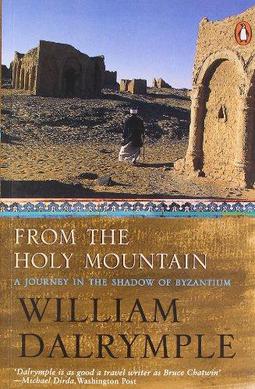
If you read From the Holy Mountain: A Journey Among the Christians of the Middle East you know that how white American Christians treat non-white Christians can be rather ridiculous. One of the stories I recall is of an Arab Christian waiter in Jerusalem who wore a cross, and was very irritated with white Americans with strong Southern accents would inquire when he had converted to Christ. This person of course privately scoffed, and reflected that when his ancestors had been Christians for centuries his customer’s ancestors were still worshipping pagan gods.

Here is a passage from the above piece which I think really confuses:

Christianity in India highlights a violent history of white supremacy through colonization and mass conversion by Europeans including, the Portuguese, Irish, Dutch, Italian, French, and English many of whom hold cultural influence that has remained to this day in places like Kerala, Pondicherry, and Goa. Similarly, there doesn’t appear to be much of a difference in the diaspora. For instance, my family converted to Christianity while living under the Apartheid regime in South Africa, an entire system of white supremacy supported by ‘Christian’ values.

The writer is a young Canadian woman whose family is from South Africa of Indian heritage. Additionally, though she never is explicit about it, her family seems to be evangelical Protestant. This is an interesting perspective, but it is a totally different one from that of South Asian Christianity.

Bracketing Kerala with Pondicherry and Goa is simply misleading. Christians are nearly 20% of the population of Kerala, and most are St. Thomas Christians, whose origins predate European contact with India by many centuries. Originally part of the territory of the Persian Church of the East, modern St. Thomas Christians have splintered into numerous groups with varied affiliations, in part due to the trauma of contact with Portuguese Catholicism. But through it all they maintain an indigenous Christian identity which is distinct from any colonial imprint.

Second, large numbers of India’s Christians are converts from Dalit populations, or, tribal peoples in the Northeast who are racially and culturally distinct from other South Asians. The framing in the piece is that South Asian Christianity has to bear the cross of colonialism, but a good argument can be made that for Dalit converts and tribal groups in the Northeast Christianity is the vehicle for resistance to oppression, assimilation, and colonialism on the part of the dominant South Asian cultural matrix.

This is not to say that the piece does not speak to a real dynamic. North American white evangelical Protestantism is inordinately freighted with racialized baggage. And it is easy to reduce into the Manichaean framework of postcolonial theory, where whites are the sole agents of action in the world. But to the generality, Indian Christianity has many disparate threads, and this sort of reduction is misleading.

Clash Of Civilisations – Samuel Huntington

After Ukraine, China asserting itself, Turkey – Rise of Erdogan, Myanmar (Burma) crisis, Even India with rise of Modi . I think this book deserves a revisit. Perhaps all his works deserves a visit.

collection of his quotes .

“This changing international environment brought to the fore the fundamental cultural differences between Asian and American civilizations. At the broadest level the Confucian ethos pervading many Asian societies stressed the values of authority, hierarchy, the subordination of individual rights and interests, the importance of consensus, the avoidance of confrontation, “saving face,” and, in general, the supremacy of the state over society and of society over the individual. In addition, Asians tended to think of the evolution of their societies in terms of centuries and millennia and to give priority to maximizing long-term gains. These attitudes contrasted with the primacy in American beliefs of liberty, equality, democracy, and individualism, and the American propensity to distrust government, oppose authority, promote checks and balances, encourage competition, sanctify human rights, and to forget the past, ignore the future, and focus on maximizing immediate gains. The sources of conflict are in fundamental differences in society and culture.”

“In the post-Cold War world flags count and so do other symbols of cultural identity, including crosses, crescents, and even head coverings, because culture counts, and cultural identity is what is most meaningful to most people.”

“ability of Asian regimes to resist Western human rights pressures was reinforced by several factors. American and European businesses were desperately anxious to expand their trade with and their investment in these rapidly”

“The dangerous clashes of the future are likely to arise from the interaction of Western arrogance, Islamic intolerance, and Sinic assertiveness.”

“The philosophical assumptions, underlying values, social relations, customs, and overall outlooks on life differ significantly among civilizations. The revitalization of religion throughout much of the world is reinforcing these cultural differences. Cultures can change, and the nature of their impact on politics and economics can vary from one period to another. Yet the major differences in political and economic development among civilizations are clearly rooted in their different cultures. East Asian economic success has its source in East Asian culture, as do the difficulties East Asian societies have had in achieving stable democratic political systems. Islamic culture explains in large part the failure of democracy to emerge in much of the Muslim world.”

“The prevalence of anti-patriotic attitudes among liberal intellectuals led some of them to warn their fellow liberals of the consequences of such attitudes for the future not of America but of American liberalism. Most Americans, as the American public philosopher Richard Rorty has written, take pride in their country, but ‘many of the exceptions to this rule are found in colleges and universities, in the academic departments that have become sanctuaries for left-wing political views.’ These leftists have done ‘a great deal of good for . . . women, African-Americans, gay men and lesbians. . . . But there is a problem with this Left: it is unpatriotic. It repudiates the idea of a national identity and the emotion of national pride.’ If the Left is to retain influence, it must recognize that a ‘sense of shared national identity . . . is an absolutely essential component of citizenship.’ Without patriotism, the Left will be unable to achieve its goals for America. Liberals, in short, must use patriotism as a means to achieve liberal goals”

“What, however, makes culture and ideology attractive? They become attractive when they are seen as rooted in material success and influence. Soft power is power only when it rests on a foundation of hard power. Increases in hard economic and military power produce enhanced self-confidence, arrogance, and belief in the superiority of one’s own culture or soft power compared to those of other peoples and greatly increase its attractiveness to other peoples. Decreases in economic and military power lead to self-doubt, crises of identity, and efforts to find in other cultures the keys to economic, military, and political success.”

“The argument now that the spread of pop culture and consumer goods around the world represents the triumph of Western civilization trivializes Western culture. The essence of Western civilization is the Magna Carta, not the Magna Mac. The fact that non-Westerners may bite into the latter has no implications for their accepting the former.”

“There can be no true friends without true enemies. Unless we hate what we are not, we cannot love what we are.”

“reaffirming their Western identity and Westerners accepting their civilization as unique not universal and uniting to renew and preserve it against challenges from non-Western societies.”

“These transnationalists have little need for national loyalty, view national boundaries as obstacles that thankfully are vanishing, and see national governments as residues from the past whose only useful function is to facilitate the elite’s global operations”

“the situation between Ukraine and Russia is ripe for the outbreak of security competition between them. Great powers that share a long and unprotected common border, like that between Russia and Ukraine, often lapse into competition driven by security fears. Russia and Ukraine might overcome this dynamic and learn to live together in harmony, but it would be unusual if they do.”

“One grim Weltanschauung for this new era was well expressed by the Venetian nationalist demagogue in Michael Dibdin’s novel, Dead Lagoon: “There can be no true friends without true enemies. Unless we hate what we are not, we cannot love what we are. These are the old truths we are painfully rediscovering after a century and more of sentimental cant. Those who deny them deny their family, their heritage, their culture, their birthright, their very selves! They will not lightly be forgiven.”

“God and Caesar, church and state, spiritual authority and temporal authority, have been a prevailing dualism in Western culture. Only in Hindu civilization were religion and politics also so distinctly separated. In Islam, God is Caesar; in China and Japan, Caesar is God; in Orthodoxy, God is Caesar’s junior partner.”

“Collective will supplants individual whim”

“People define themselves in terms of ancestry, religion, language, history, values, customs, and institutions. They identify with cultural groups: tribes, ethnic groups, religious communities, nations, and, at the broadest level, civilizations. People use politics not just to advance their interests but also to define their identity. We know who we are only when we know who we are not and often only when we know whom we are against.”

“Hypocrisy, double standards, and “but nots” are the price of universalist pretensions. Democracy is promoted, but not if it brings Islamic fundamentalists to power; nonproliferation is preached for Iran and Iraq, but not for Israel; free trade is the elixir of economic growth, but not for agriculture; human rights are an issue for China, but not with Saudi Arabia; aggression against oil-owning Kuwaitis is massively repulsed, but not against non-oil-owning Bosnians. Double standards in practice are the unavoidable price of universal standards of principle.”

“It is my hypothesis that the fundamental source of conflict in this new world will not be primarily ideological or primarily economic. The great divisions among humankind and the dominating source of conflict will be cultural. Nation-states will remain the most powerful actors in world affairs, but the principal conflicts of global politics will occur between nations and groups of different civilizations. The clash of civilizations will dominate global politics. The fault lines between civilizations will be the battle lines of the future.”

“Becoming a modern society is about industrialization, urbanization, and rising levels of literacy, education, and wealth. The qualities that make a society Western, in contrast, are special: the classical legacy, Christianity, the separation of church and state, the rule of law, civil society.”

“Every civilization sees itself as the center of the world and writes its history as the central drama of human history.”

“In the emerging world of ethnic conflict and civilizational clash, Western belief in the universality of Western culture suffers three problems: it is false; it is immoral; and it is dangerous.”

“Islam’s borders are bloody and so are its innards. The fundamental problem for the West is not Islamic fundamentalism. It is Islam, a different civilisation whose people are convinced of the superiority of their culture and are obsessed with the inferiority of their power.”

“The West won the world not by the superiority of its ideas or values or religion (to which few members of other civilizations were converted) but rather by its superiority in applying organized violence. Westerners often forget this fact; non-Westerners never do.”

“Democracy is premised, in some measure, on majority rule, and democracy is difficult in a situation of concentrated inequalities in which a large, impoverished majority confronts a small, wealthy oligarchy.”
The Third Wave: Democratization in the Late Twentieth Century (1991)

“Cultural America is under siege. And as the Soviet experience illustrates, ideology is a weak glue to hold together people otherwise lacking racial, ethnic, and cultural sources of community.”
Who Are We? The Challenges to America’s National Identity (2004), p. 12

“Many more people in the world are concerned with sports than with human rights.”

“In the emerging era, clashes of civilization are the greatest threat to world peace, and an international order based on civilizations is the surest safeguard against world war.”

“In Eurasia the great historic fault lines between civilizations are once more aflame. This is particularly true along the boundaries of the crescent-shaped Islamic bloc of nations, from the bulge of Africa to central Asia. Violence also occurs between Muslims, on the one hand, and Orthodox Serbs in the Balkans, Jews in Israel, Hindus in India, Buddhists in Burma and Catholics in the Philippines. Islam has bloody borders.”

“Religiosity distinguishes America from most other Western societies. Americans are also overwhelmingly Christian, which distinguishes them from many non-Western peoples. Their religiosity leads Americans to see the world in terms of good and evil to a much greater extent than most other peoples.”
“Dead Souls: The Denationalization of the American Elite,” The National Interest, November, 2002, p. 16

“It is my hypothesis that the fundamental source of conflict in this new world will not be primarily ideological or primarily economic. The great divisions among humankind and the dominating source of conflict will be cultural. Nation-states will remain the most powerful actors in world affairs, but the principal conflicts of global politics will occur between nations and groups of different civilizations. The clash of civilizations will dominate global politics. The fault lines between civilizations will be the battle lines of the future.”

“The balance of power among civilizations is shifting: the West is declining in relative influence; Asian civilizations are expanding their economic,military, and political strength; Islam is exploding demographically with destabilizing consequences for Muslim countries and their neighbors; and non-Western civilizations generally are reaffirming the value of their own cultures.”

“Some Westerners, including President Bill Clinton, have argued that the West does not have problems with Islam but only with violent Islamist extremists.Fourteen hundred years of history demonstrate otherwise. The relations between Islam and Christianity, both Orthodox and Western, have often been stormy. Each has been the other’s Other. Th e twentieth-century conflict between liberal democracy and Marxist-Leninism is only a fleeting and superficial historical phenomenon compared to the continuing and deeply conflictual relation between Islam and Christianity. At times, peaceful coexistence has prevailed; more often the relation has been one of intense rivalry and of varying degrees of hot war. Their “historical dynamics,” John Esposito comments, “. . . often found the two communities in competition, and locked at times in deadly combat, for power, land, and souls.” Across the centuries the fortunes of the two religions have risen and fallen in a sequence o f momentous surges, pauses, and countersurges. ”

“Some Westerners […] have argued that the West does not have problems with Islam but only with violent Islamist extremists. Fourteen hundred years of history demonstrate otherwise.”

https://www.goodreads.com/author/quotes/38041.Samuel_P_Huntington
https://en.wikiquote.org/wiki/Samuel_P._Huntington
Clash of civilizations

Inter Services Public Relations; ISPR (Pakistan)

From Dr Hamid Hussain

Some questions came my way about ISPR and following was the response. Every officer posted to ISPR should read Brig. R Siddiqi’s book. It is out of print but I’ll be happy to lend them my own copy.

Regards,
Hamid

Battle of Narrative – Public Relations of Pakistan Army
Hamid Hussain


“The expansion of its image gradually cuts the military establishment adrift from its professionalism, and it succumbs to a kind of narcissism, loving its media-contrived image too well to brook any rival image”. Brigadier ® A. R. Siddiqi; Former Director General of Inter Services Public Relations (ISPR).

Army is the dominant and most powerful institution of Pakistan. Every conflict between army and civilian institutions results in a competing narrative from each party. Armed forces manage its narrative through Inter Services Public Relations (ISPR). There are few officers from air force and navy but ISPR is mainly manned by army officers. During direct military rule, army chief is also President and information ministry is used for communication. ISPR is the main channel for communication when army is not directly controlling the levers of power. Public opinion in Pakistan is very positive about armed forces and any criticism on professional grounds is usually very limited. Unfortunately, any criticism is viewed by armed forces as challenging its authority and equated with anti-state activity.

ISPR has evolved over seventy years into a huge media machine with a large bureaucracy. It was a small entity headed by a Lieutenant Colonel rank officer and today headed by a Major General rank officer. Previous Director General (DG) ISPR was a Lieutenant General rank officer. It was backwater for officers not destined for further promotion. This changed in the last two decades. The importance of a stint as DGISPR can be gauged from the fact that DGISPRs have been posted to important combat formations. One DGISPR became Chief of General Staff. In the past, a brief statement was given to DGISPR to pass it on to the press. Now, DGISPR sits in important high level meetings and travels with army chief on foreign travels. The horizon has also expanded from brief press statements to frequent press conferences and extensive use of print, electronic, digital and social media as well as big budget productions. Continue reading Inter Services Public Relations; ISPR (Pakistan)

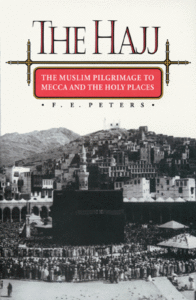
Review: The Hajj, by FE Peters

Francis Edward Peters (F.E. Peters) is Professor Emeritus of History, Religion and Middle Eastern and Islamic Studies at New York University (NYU) and he has written a great review of the Haj through the ages, from its pre-Islamic beginnings to the way it was in 1926. He ends the book in 1926, so the current hugely enlarged, incredibly safer, more convenient, and in may ways, totally transformed Haj is not covered in this book.
The most intetesting part of the book for me was the first; the discussion of what pre-Islamic Haj looked like and how its rituals were modified (and combined with another pre-Islamic pilgrimage, the Umrah) to creat the current Islamic Haj. This is also the most frustrating section of the book, but that is not FE Peter’s fault. We just do not have a lot information about what happened before Islam. Pagan Arabia was completely converted to Islam within one generation, and the attitude of the new religion towards the past was generally negative and dismissive. A mostly illiterate culture, it has left us with almost nothing except a few poems (preserved, ironically, because the later interpreters of the Quran felt that their language could help unlock the meaning of words and phrases in the Quran that these later generations had difficulty understanding) and whatever (generally negative and dismissive) references survive in Islamist historiography. Of course, we can learn some things from the Quran itself, but these frequently tend to be in the form of “answers without a question”, which must have been completely transparent to the first generation, but whose meaning required some explanation and interpretation by later generations. Most of this is supplied by the exegetical and historical works written in the next 2-400 years, but it can be impossible to separate fact from posthoc mythmaking. Anyway, this is what we have, and FE Peters makes a heroic effort to sift through it to find what can still be found. Continue reading Review: The Hajj, by FE Peters

Brown Pundits