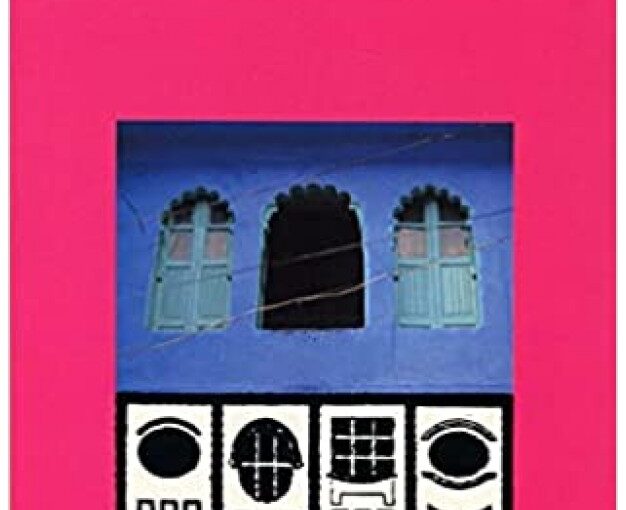
Indian Ink: Literary Insights into Colonialism and Identity

[Tom Stoppard passed away yesterday (November 29) at the age of 88.  In that context, I’m cross-posting this essay I wrote on his play Indian Ink which had a major impact on me] 

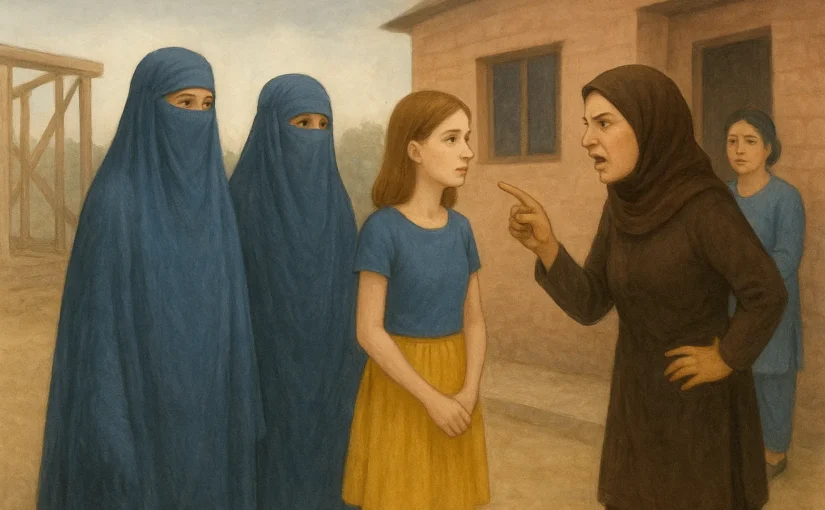
Flora: You are an Indian artist, aren’t you? Stick up for yourself. Why do you like everything English?

Das: I do not like everything English.

Flora: Yes, you do. You’re enthralled. Chelsea, Bloomsbury, Oliver Twist, Goldflake cigarettes, Winsor and Newton
 even painting in oils, that’s not Indian. You’re trying to paint me from my point of view instead of yours—what you think is my point of view. You deserve the bloody Empire!

(Tom Stoppard, Indian Ink, pg. 43)

Great works of art often reveal insights about history in ways that are more accessible than academic historical accounts. One work that was especially powerful in doing so for me is Tom Stoppard’s play Indian Ink. Ever since I first read this play some years ago, it has provoked me to think about the colonial experience in India as well as issues of identity and nationalism more generally.

In the tradition of Forster’s A Passage to India and Scott’s The Raj Quartet, Indian Ink examines the colonial experience through focusing on the relationship between one particular couple. Set in two time periods (1930s India and 1980s England), the play tells the story of Flora Crewe, an English poet visiting India, and Nirad Das, an Indian artist who is painting her portrait. Over the course of the play, Flora and Nirad’s relationship changes from a formal, distant one to a more intimate one. However, their relationship also reveals major points of tension and of culture clash. Nirad constantly feels the need to impress Flora with his knowledge of England and of English culture, while Flora wants him to be himself. As the quote that I started this post with shows, she wants him to paint her from his own point of view. He eventually does so, painting a nude portrait of her in the style of a Rajput miniature. Flora recognizes that he is working in his own tradition and has stopped trying to ape the English. She tells him “This one is for yourself
 I’m pleased. It has rasa” (74).

The play also makes interesting points about the reinterpretation of history, something that is a part of national and ethnic conflicts even today, both in South Asia and in other parts of the world. For example, in the modern portion of the play, Anish (Nirad’s son) and Mrs. Swan (Flora’s sister) discuss the events of 1857, which Anish refers to as “the first War of Independence” and Mrs. Swan insists on calling the Mutiny (17). History is written by the victors and later reinterpreted by various political groups to suit their own agendas. For example, in modern India, the BJP reinterprets the Mughals as a foreign occupying force, religiously motivated by their negative feelings towards Hinduism. Other historians argue that this perspective is not an appropriate way to view the Mughals, many of whom assimilated and became “Indian.” History remains a powerful force that can be used for various politically motivated ends. Stoppard’s play forces the audience to question the truth of any of these interpretations. Continue reading Indian Ink: Literary Insights into Colonialism and Identity
The Cosmos of Ustaad Saami

By Syed Hasnain Nawab in DAWN 

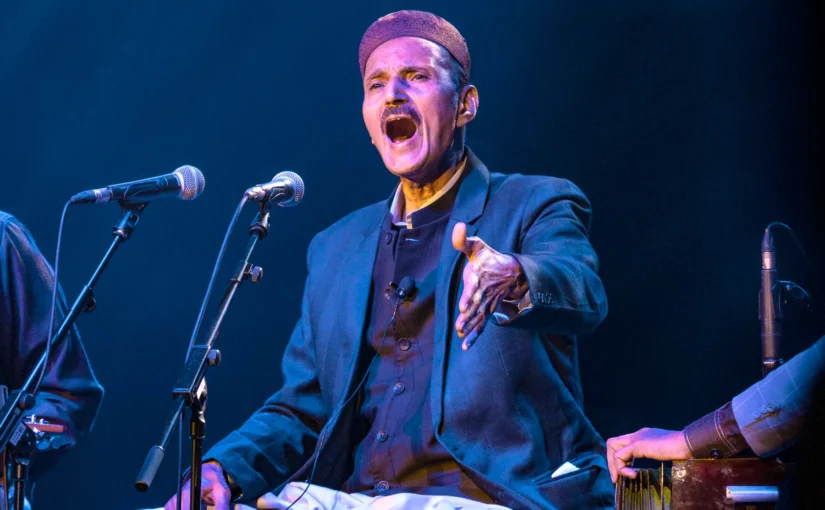
[Note: Ustaad Naseeruddin Saami and his sons–The Saami Brothers– won the Patron’s Award at the 2025 Aga Khan Music Awards, held in London on November 22]

Hailing from Delhi’s famed Qawwal Bachcha gharana [musical lineage], Jaan traces his musical ancestry back to the likes of the 19th century Delhi gharana luminary Tanras Khan and Mian Saamat bin Ibrahim — with the latter being the principal disciple of Amir Khusrau. As the Saamis put it, their ancestors were chosen not by happenstance but by what the family believes to be Divine designation, stating, “Knowledge is given to whoever has a right to it, who deserves it. This is chosen and sent by God.”

In this vein, Jaan sees himself and his sons not simply as musicians but as carriers of a spiritual directive. Traditionally, these gharanas have maintained and safeguarded their expansive knowledge by transmitting centuries’ worth of musical heritage and experimentation seena-ba-seena [from ustaad to pupil].

Continue reading The Cosmos of Ustaad Saami

On “The Haraam Bit”: Free Speech, Trolling, and Our Red Lines

This post titled “The ‘haraam’ bit” sparked pushback both on the site and in our internal chat. This note sets out the problem, our editorial responsibility (as X.T.M I have overwritten this post), and what this means for BP.

1. What happened

An anonymous author (Bombay Badshah who has used a number of pseudonyms) posted a list of Pakistani-origin porn performers and highlighted a scene where a British Pakistani actress jokes about “haraam” and foreskin. He framed it as an “interesting observation.” The issue was not that he mentioned porn. It was how he used it.

2. Why the post was unacceptable Continue reading On “The Haraam Bit”: Free Speech, Trolling, and Our Red Lines

Raja Mohan on Indian Foreign Policy and the Rebalancing of Asia

In this episode of Asia Inside Out, Rorry Daniels, Managing Director of the Asia Society Policy Institute (ASPI), speaks with Raja Mohan, ASPI Non-Resident Distinguished Fellow and author of the forthcoming India and the Rebalancing of Asia. Daniels and Mohan discuss India’s relationship China, the U.S., and Russia; regional headwinds impacting New Delhi; and India’s strategic vision for its role in a changing Asia.

Aasiya–Translation from the Urdu

Here is an excerpt from another story from Bilal Hassan Minto’s Model Town:

There are people who might have felt the neighborhood was against Apa Sughra  just like that, without a reason. They could have wondered how anyone could be against a woman so devout that she had fired her cleaning lady Alice on a matter of principle when she found her drinking water from glasses reserved for Apa Sughra’s Muslim household. A woman so righteous that she had summarily dismissed Susan because her husband supplied alcohol to a Muslim. But such people who question our hatred of Apa Sughra are ignorant of the facts.

We had not always been against her. When she rented the house next door, Ammi sent her both meals that first day because her kitchen wouldn’t be ready. So obviously, we hadn’t hated her from the very beginning. Quite apart from all the terrible things we found out later, what she did to her own daughter Pari, soon after moving to our neighborhood, was enough for us  to condemn her, vilify her, and treat her with hostility. Pari was not at all to blame for the incident. Whoever heard of it said “What did the poor girl do wrong?” Naveed Bhai had been really angry and said Apa Sughra needed to be taught a lesson but Ammi strictly forbade him, saying there was no need to mess with that witch. It’s a different matter that I suspected Naveed Bhai didn’t have any way to do anything to Apa Sughra even if Ammi hadn’t said so. I thought he was just boasting.

Ever since Apa Sughra began living in our neighborhood we had noticed she didn’t allow her twin daughters, Fari and Pari, out of the house at all. Meeting us was out of the question; they weren’t even allowed to play with the neighborhood girls. We always thought the poor things were locked in the house after school. What did they do all day? Did they play with each other or was that not allowed either? And if they were so constrained, why did Apa Sughra even send them to school? Why was she educating them? Continue reading Aasiya–Translation from the Urdu

Why India’s National Calendar Needs Urgent Correction

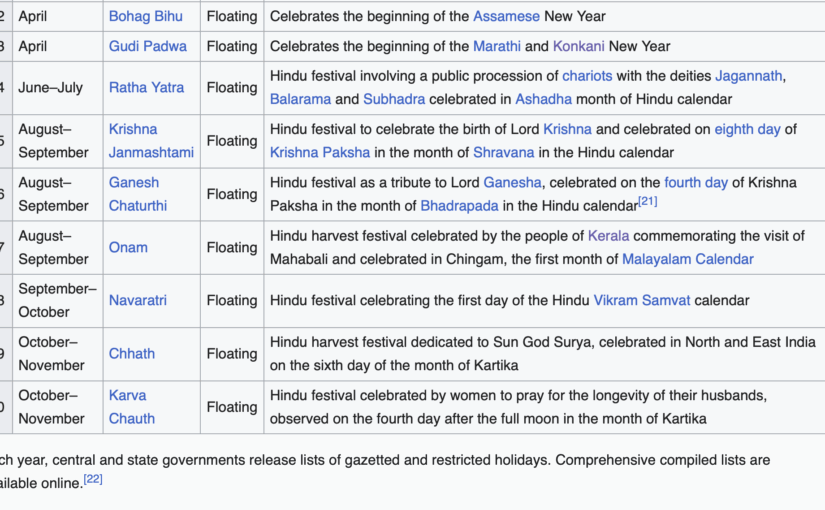
India’s national holidays should reflect its civilisation. They do not. Five Abrahamic festivals sit at the centre of the calendar, while most indigenous ones sit on an “optional” list. This is a distortion, not pluralism.

National holidays are public signals. They show what a country holds to be central. When non-indigenous festivals are guaranteed space and indigenous ones are not, the state sends a clear message: it is unsure of its own foundations.

This was a mistake made at independence. India had full freedom to shape its symbols. Instead of anchoring the calendar in its own tradition, the new state tried to avoid offence. That caution hardened into policy, even though no society builds confidence by sidelining itself. Continue reading Why India’s National Calendar Needs Urgent Correction

Why 2014 happened in 2014

I just read a comment by Kabir about how 2014 changed Nehru’s India drastically ( I do not agree but that’s not for now). But this poses another question.

As XTM’s post pointed out/alluded Hindutva was inevitable and the natural outcome of Pakistan. But why did it take 67 years of Hindutva to assert itself.

In my mind the answer is pretty straightforward and two fold.

1. Gandhi’s murder at hands of a Hindutvavadi.

2. Sluggish economical growth of the socialist era (also called wrongly the Hindu rate of growth).

I would love to hear comments on the question posed above.

Why 2014 happened in 2014?

Why Zia, Munir, Ayub, and Even Modi, Are Jinnah’s Children

The heirs of Jinnah are not liberal Pakistani nationalists or English-speaking Karachi elites.

His true heirs are:

  • Zia-ul-Haq
  • Asim Munir and the modern Pakistan Army
  • Ayub Khan
  • And Narendra Modi

This is not provocation. It is structural observation.


I. Jinnah Created a Logic That Outlived His Liberal Aesthetics Continue reading Why Zia, Munir, Ayub, and Even Modi, Are Jinnah’s Children

Doctor Walter (Translation from Urdu)

During the pandemic, I experimented with translating Bilal Hassan Minto’s Model Town (Sanjh 2015)—a collection of Urdu short stories told from the perspective of a preadolescent boy growing up in Lahore’s Model Town neighborhood during the late 1970s (at the beginning of General Zia’s Martial Law). This was my first attempt at translation so I’m not sure how successful it was but I did learn a lot from the attempt.

The story I’m sharing here is called “Dr Walter”. One of the main themes of the story is the discrimination faced by minorities in Pakistan (in this case Christians).

When the Walters’ house was going up, we — Talat, Aqib, Qamar, Mazhar and I — hung around the construction site in the evenings and romped on the sand and gravel piles. At the time, most houses in Model Town had been built by Hindus before the Partition and abandoned when they fled in disorder to India so that some Muslim, trying to take over their houses, or for no reason at all, wouldn’t behead them or sprinkle oil on them and set them on fire or stab them in the stomach with a sharp knife. This precipitous departure left many unclaimed plots on which new houses were built from time to time. When construction of the Walters’ house began near us, a minor frisson of excitement entered our slow-moving lives.

Horsing around, boring tunnels in the sandpiles, Mazhar had asked a laborer:

“Whose house is this?”

“Sai,” he had said, meaning “Isai.” Christians. People who follow Jesus Christ as first among the Prophets of God, just as the Jews consider Moses. Well, what someone believes or not and why are mysterious and dangerous things about which I can’t say anything, but even before the laborer told us, we had a sense that these people were of some other religion because several signs suggested they weren’t our sort.

At this time, the obnoxious General Zia had not descended on our country like a curse and new revelations about our religion, Islam, hadn’t begun to mushroom. No one in their wildest dreams could have imagined that prayers would become mandatory in offices or that women wouldn’t be able to appear on television without covering their heads, or that punishments would be meted out to people seen eating or drinking during Ramzan. And, more surprising than all these, that every day, before the entire country, news on TV would be delivered in Arabic. All this was about to happen, just some days after the Walters built their house near us. Continue reading Doctor Walter (Translation from Urdu)

Brown Pundits