Some interesting links:
Trump says US will ‘permanently pause’ migration from ‘all third world countries’
Maulana Abul Kalam Azad|The Tragic Genius Who Tried to Save United India| Inqalaab (in Urdu)
Some interesting links:
Trump says US will ‘permanently pause’ migration from ‘all third world countries’
Maulana Abul Kalam Azad|The Tragic Genius Who Tried to Save United India| Inqalaab (in Urdu)
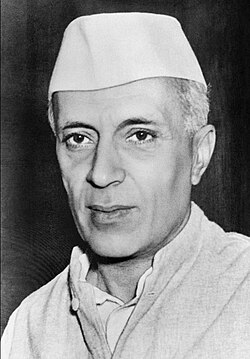
I just read a comment by Kabir about how 2014 changed Nehru’s India drastically ( I do not agree but that’s not for now). But this poses another question.
As XTM’s post pointed out/alluded Hindutva was inevitable and the natural outcome of Pakistan. But why did it take 67 years of Hindutva to assert itself.
In my mind the answer is pretty straightforward and two fold.
1. Gandhi’s murder at hands of a Hindutvavadi.
2. Sluggish economical growth of the socialist era (also called wrongly the Hindu rate of growth).
I would love to hear comments on the question posed above.
Why 2014 happened in 2014?
The heirs of Jinnah are not liberal Pakistani nationalists or English-speaking Karachi elites.
His true heirs are:
This is not provocation. It is structural observation.
I. Jinnah Created a Logic That Outlived His Liberal Aesthetics Continue reading Why Zia, Munir, Ayub, and Even Modi, Are Jinnah’s Children
During the pandemic, I experimented with translating Bilal Hassan Minto’s Model Town (Sanjh 2015)—a collection of Urdu short stories told from the perspective of a preadolescent boy growing up in Lahore’s Model Town neighborhood during the late 1970s (at the beginning of General Zia’s Martial Law). This was my first attempt at translation so I’m not sure how successful it was but I did learn a lot from the attempt.
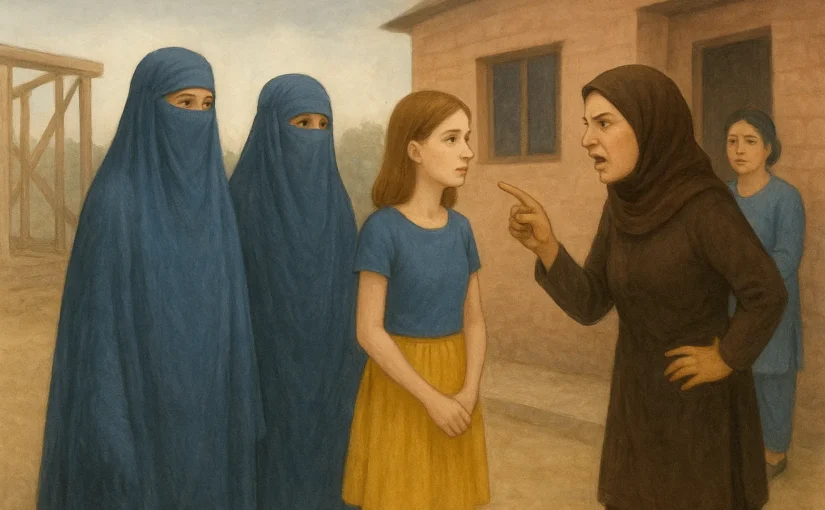
The story I’m sharing here is called “Dr Walter”. One of the main themes of the story is the discrimination faced by minorities in Pakistan (in this case Christians).
When the Walters’ house was going up, we — Talat, Aqib, Qamar, Mazhar and I — hung around the construction site in the evenings and romped on the sand and gravel piles. At the time, most houses in Model Town had been built by Hindus before the Partition and abandoned when they fled in disorder to India so that some Muslim, trying to take over their houses, or for no reason at all, wouldn’t behead them or sprinkle oil on them and set them on fire or stab them in the stomach with a sharp knife. This precipitous departure left many unclaimed plots on which new houses were built from time to time. When construction of the Walters’ house began near us, a minor frisson of excitement entered our slow-moving lives.
Horsing around, boring tunnels in the sandpiles, Mazhar had asked a laborer:
“Whose house is this?”
“Sai,” he had said, meaning “Isai.” Christians. People who follow Jesus Christ as first among the Prophets of God, just as the Jews consider Moses. Well, what someone believes or not and why are mysterious and dangerous things about which I can’t say anything, but even before the laborer told us, we had a sense that these people were of some other religion because several signs suggested they weren’t our sort.
At this time, the obnoxious General Zia had not descended on our country like a curse and new revelations about our religion, Islam, hadn’t begun to mushroom. No one in their wildest dreams could have imagined that prayers would become mandatory in offices or that women wouldn’t be able to appear on television without covering their heads, or that punishments would be meted out to people seen eating or drinking during Ramzan. And, more surprising than all these, that every day, before the entire country, news on TV would be delivered in Arabic. All this was about to happen, just some days after the Walters built their house near us. Continue reading Doctor Walter (Translation from Urdu)
Kabir’s defence of Nehru as the moral compass of the Indian republic reveals something deeper than nostalgia for secularism. It exposes how much of India’s founding moment was shaped by a single man whose class background insulated him from the material and psychological stakes of Partition; stakes that Gandhi, Jinnah, Bose, Ambedkar, and even Savarkar understood far more viscerally.
Nehru was unique among the major players of his era. He was the only one born into national leadership, the only one who inherited a political position, and the only one whose life had been marked not by struggle but by access. While others were shaped by jail, exile, poverty, or ideological intensity, Nehru was shaped by privilege, and privilege has its own blind spots.
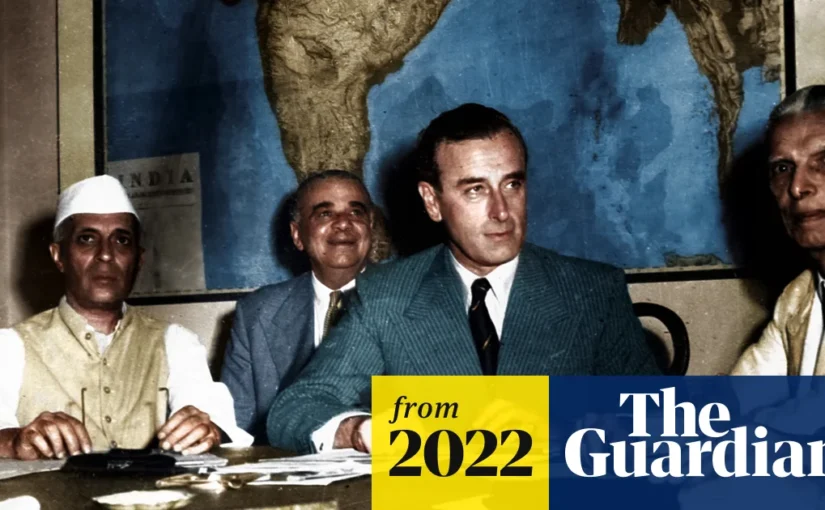
This matters because 1947 was not a moment for abstract idealism. It was a moment for negotiation between communities whose elites no longer trusted one another. On that task, Nehru was the least prepared of the principal actors.
I. Nehru’s Privilege Was a Constraint, Not a Qualification
Continue reading Nehru, Privilege, and the Missed Settlement of 1947
A far-right senator, Pauline Hansen, recently walked into the Australian Senate wearing a burqa. Muslim MPs (one of whom wearing a hijab) angrily called it racist, bigoted, Islamophobic. They were right. But they also dodged the underlying question: What does citizenship mean when communities fracture along religious lines?
The same evasion dominates debates about Indian Muslims after 1947. One camp says: “They stayed, they’re citizens, case closed.” The other mutters about loyalty tests and fifth columns. Both positions are intellectually lazy. Neither grapples with what Partition actually did to the social contract.
This isn’t about defending bigotry. It’s about refusing to let bigots monopolize legitimate questions.
I. The Contract That Never Closed Continue reading The Unfinished Contract II: Citizenship, Partition, and the Questions Liberalism Won’t Ask
I was speaking recently with a cousin who grew up in India. Their family has been Bahá’í for generations, but their older relatives once lived as Sunni merchants in Old Delhi. When they visited their grandparents as a child, they noticed something striking: in many lanes of Old Delhi, long after Independence, the sentiment was not Indian nationalism but Pakistan-leaning nostalgia. This was not hidden. It was ambient.
That single observation exposes something almost no one in Indian liberal discourse wants to say aloud: post-Partition India inherited a large Muslim population whose political loyalties were, at best, ambivalent. That is not a moral judgement. It is a historical one.
And once you notice this, a second truth becomes obvious: Kabir’s secularist vision of an emotionally unified India makes sense only in a world where 1947 never happened.
Continue reading The Partition of Elites: India, Pakistan, and the Unfinished Trauma of 1947
In light of Omar stepping down from active management of BP, i wanted to share this note. As I have immense respect and gratitude towards Omar I wouldn’t want the brand he and others have built up (and i have contributed a bit) over last decade and half to just go downhill. Despite the success of Substack and X (and video platforms) I feel the BP blog presents nice niche with its moderate reach and past history of extremely insightful authors and commentators – I feel BP is a community/blog worth maintaining into the coming years (and hopefully decades).
Given the recent fracas on the blog and in between its authors and commentators, I think we ought to indulge in some moderation – how much is the question that can only be addressed as we go ahead.
In light of this i hope to:
As I have mentioned above I do have pretty liberal standards with speech. Giving a concrete example – I did not find the jibe “subhuman” or jibe as Elitist/Islamist/Brahmanical/Fascist (ideological) as crossing a Red-Line in general. Context is important and one off comment of such nature doesn’t alarm me (It might be a redline for someone else i do not disagree) – even if directed at me. After all isnt a Troll also a subhuman ? but we are fine to call people we disagree with as low IQ trolls all the time without getting offended. Having said this – different standards ought to apply to authors but i would leave it to XTM (though i would drop him a line)
I hope i am able to stay regularly active on this space as and when time permits. As XTM has said multiple times, moderating in a thankless mandate and i hope i can slightly reduce his burden going forward.
I received a message from a publicist this week. The name caught my eye because I knew the scholar from Cambridge years ago. The subject of the email was simple: a new book on Pāṇini and the old claim that something in his system “doesn’t work.”
For two and a half millennia, scholars have argued that Pāṇini’s grammar, the first true computational system for language, contains a flaw. His treatise gives a compact system for generating correct Sanskrit forms. But in cases where two rules seem to apply at the same time, most readers assumed the system breaks. Textbooks describe this as a “conflict problem.” Generations of commentators tried to patch it with exceptions, hierarchies, or interpretive workarounds.
The new book, Pāṇini’s Perfect Rule (December 2025), argues that the flaw was never there. The author, Rishi Rajpopat, claims the system already contains a rule for solving the conflict. According to him, Pāṇini didn’t leave a hole; modern readers simply looked in the wrong place. If his reading is right, the entire architecture of the grammar becomes visible as a single machine; elegant, compact, and self-consistent.
There are two parts to this story. Continue reading Pāṇini, the “Glitch,” and a Note From an Old Cambridge Friend
This blog was created by Razib Khan and I joined it shortly afterwards. It has gone through some changes over time. For a period, I was the only “administrator” active on it, but I have not been devoting much time to it recently. As a result the blog had become rather inactive, but recently one of our early “founders” (XTM) has come back and taken a more active role in the blog and has revived activity on it.
Unfortunately, there were some clashes between authors and commentators recently and I am afraid that such has been my lack of attention that I have not even read most of the posts in question. So I think it is time to face the facts and admit that I am not going to be able to take a more active role and should therefore withdraw from responsibilities I am not able to fulfil. I hope to remain an author here and I hope to do more podcasts as well. Razib and whoever he designates/invites/allows will continue to run the blog and I wish them the best. I hope it remains a place where diverse voices from the Indian subcontinent can continue to debate the issues that are important for people of Indian origin (and people in general) all over the world.
I hope the authors I brought on will continue to write and comment as well.
How many fires are there, how many suns?
How many dawns? How many waters?
I ask this, O fathers, not to challenge.
O Sages, I ask it to know
(RigVeda Book 10, hymn 88)