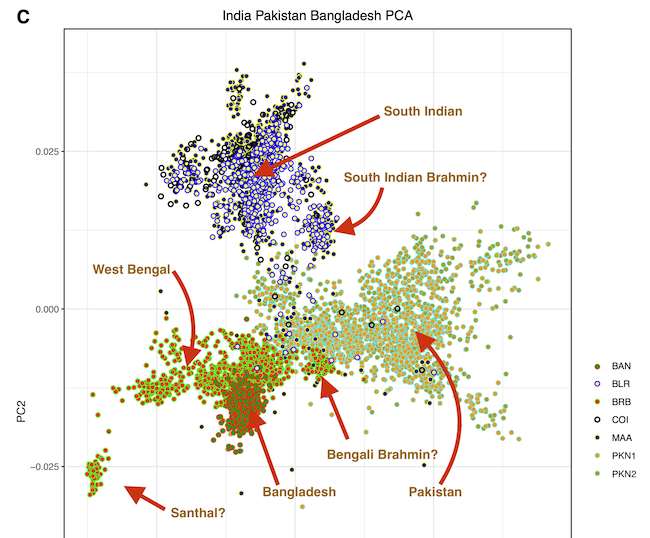
The full version of this paper is out, South Asian medical cohorts reveal strong founder effects and high rates of homozygosity. It’s not the best for understanding population structure because they focus on within South Asia variation, but it does seem to confirm that among Bengalis there is a cline from west to east, irrespective of religion (see the discussion where they note that Muslims in the west cluster with westerners). I found a PCA in the supplements where I added some explanatory notes. It’s really hard to parse their figures because they really didn’t care, and the Genomes Asia Consortium doesn’t release their data… (their browser sucks)
History and Evolution of Malayalam Cinema
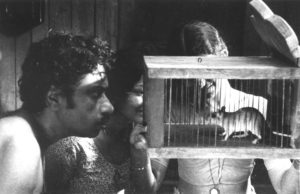
Arun talks to Maneesh on the history and evolution of Malayalam cinema.
What makes Malayalam cinema different from Tamil and Telegu cinema, the influence of communism on its early years and how the OTT phenomenon is helping a generation of film makers take Malayalam cinema to a new audience.

Modinomics: Why India is Rising

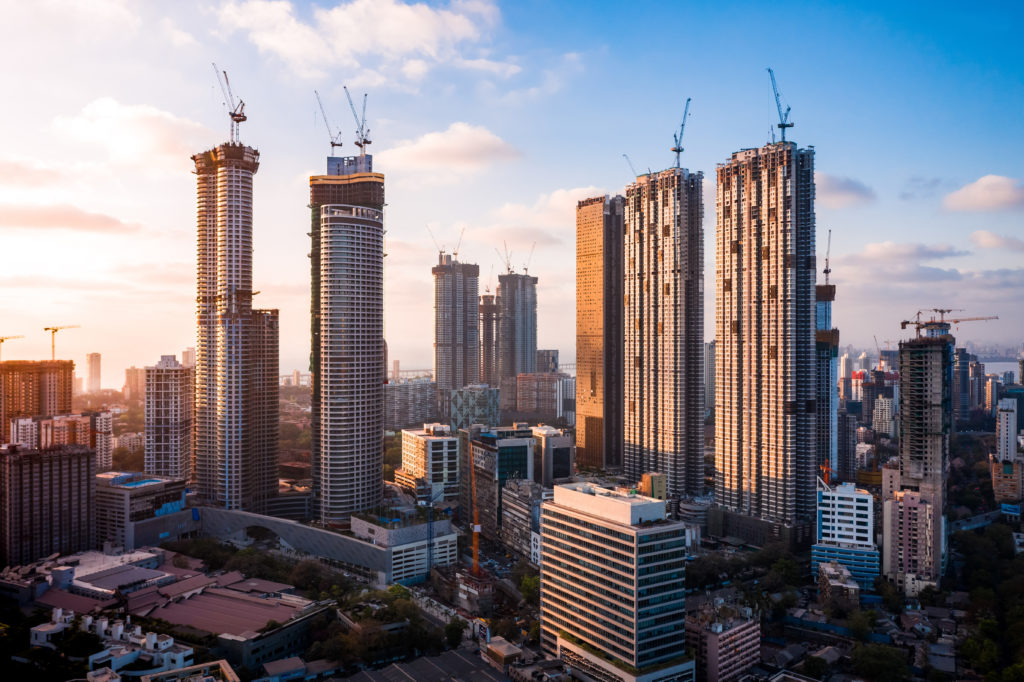
India is changing. For years the BJP has been banging drums, tolling bells, and blowing conches to signal a New India. A mammoth mandate in 2019 was an early smoke signal for the fire that had erupted in the Indian market, but now a flurry of foreign praise answers the call of the drums, bells, and conches previously labeled as empty and enemy propaganda. Ironically, the newly found foreign admirers just a few years back cried wolf as they predicted India to turn into a hellscape due to what they saw as economic mismanagement, not listening to “experts,” religious tensions, some random picture they saw on the internet, or any other reason a comprador elite would pass on from the home country. What changed?
There are plenty of articles about India’s rise, but very few about why. The reason for this is that they would have to associate with someone untouchable in their ivory towers. The government primarily responsible for this rise is not only the arch-nemesis of the narrators of India to the West but also has a terribly difficult time presenting their case in a manner that doesn’t involve frothing at the mouth. There have been many mistakes made along the way. There are many critiques worth their weight. But one has to start acknowledging that something special is occurring in India. Let’s explore why.
Judicial Jitters in Pakistan, continued..
Two pieces from Dr Hamid Hussain on the higher judiciary in Pakistan. Well worth a read. Third piece is awaited.
What follows was written by Dr Hussain.
Societies in general are becoming polarized and Pakistan is no exception. In times when main source of information is tweets, face book posts and a vlog by a youtuber, no one has the time or inclination to try to get information. Everyone picks his own set of facts that fits into his pre-conceived idea. Facts are not shaping the opinion but it is the other way around where facts are adjusted to one’s opinion.
Judiciary has emerged as an important player in the power play. In the last few months, I have made an attempt to write about the subject that was a new ground for me. I got educated and enlightened by many well informed folks. This is first of the three part series on the subject matter. Only for those interested in the background of unfolding events.
“Neither to laugh; nor cry
Just to understand” Spinoza
Hamid Continue reading Judicial Jitters in Pakistan, continued..
On Centenarian Kissinger
Author’s Note: This is not an academic or objective essay; rather a personalised opinion on the soon-to-be centenarian former secretary of state.
On one occasion, a joke was made on television about how Fidel Castro survived attempts to have him removed by US presidents as well as the downfall of USSR, who served as his main supporter. In 2023, a soon-to-be centenarian Dr. Henry Kissinger would be grinning and telling Castro’s soul to, as they say, “Hold his beer.” If the AI generator were asked to picturise “American foreign policy”, it would not be shocking if Henry Kissinger’s portrait or painting appeared.

For decades, he was open and honest about his opinions on American foreign policy based on the pursuit of both national interest and power. In his own words: “A country that demands moral perfection of itself as a test of its foreign policy will achieve neither perfection nor security.” Kissinger has proven to be rich ground for historians and publishers. Along with business books about him as a deal-maker, there are also personality studies, tell-alls from former coworkers, and collections of his quotes.
Simultaneously, Kissinger had long been criticised by many as a ruthless realist. The critics would often quote Kissinger’s own words “when policy becomes excessively moralistic it may turn quixotic or dangerous”. Those words don’t seem all that offensive in retrospect after seeing so-called American moralist decisions made in places like Libya, Syria, Iraq, and Afghanistan. The critics would respond by citing Bangladesh and Chile as examples of how Kissinger was no better.
Weimar-Chile Connection
For the last few years, Kissinger seems to no longer arouse widespread contempt. Instead, some individuals have since expressed some sympathy for him, tying Kissinger’s ruthlessness to his status as a former resident of Weimar Germany. Born Heinz Kissinger on May 27, 1923, to an Orthodox Jewish school teacher in Fürth, Bavaria. In 1938, shortly before Kristallnacht, Kissinger and his family escaped to America, as did several German Jewish families. Continue reading On Centenarian Kissinger

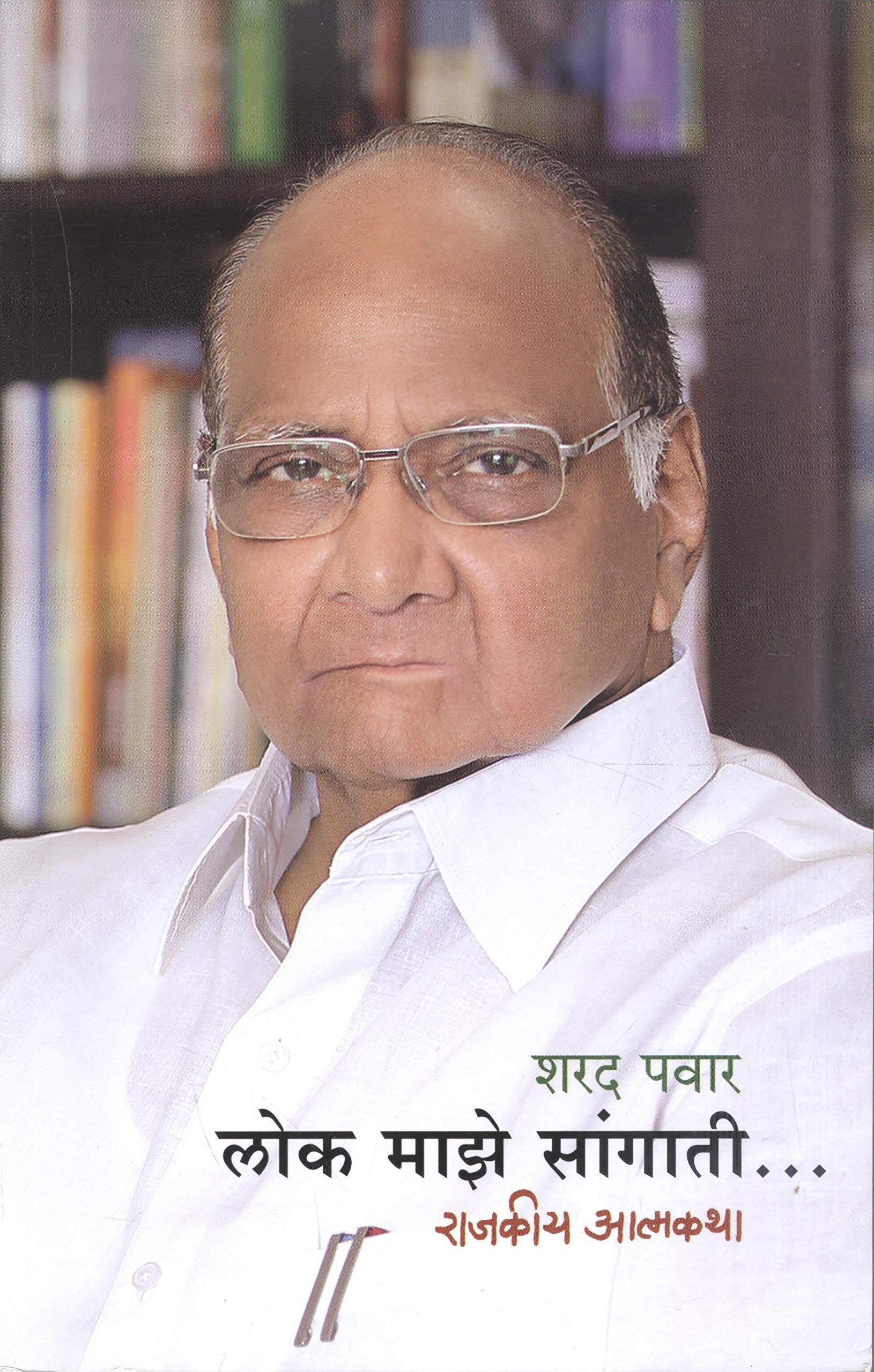
Book Review: लोक माझे सांगाती

This was only the second Autobiography I have read and I enjoyed it a lot.
Naturally no one should expect any autobiography to be frank and thorough, much more so incase of the autobiography being of an active politician.
Mr Pawar’s vision for development which often doesn’t get discussed gets due credit in the book. His putting his ideological commitment over electoral gains in the “Namantar” controversy, speech on Women’s rights and the anger at the Dabhol-Enron project stood out of the book for me.
His lack of explanations for his miscalculations (like supporting Sonia Gandhi in 90s), corruption allegations sticks out like a sore thumb. His (now) wrong predictions post 2015 and somewhat myopic view on Hindu-Muslim problems could highlight the shortcomings of his brand of Progressivism.
To really understand an autobiography, one must always read between and beyond the lines. Mr Pawar has also been linked with outfits like like Sambhaji brigade, especially in the 21st century. But brigade and their notoriety do not find a single mention in his book. Nor does the eponymous
second Chattrapati (unless i am mistaken).
In the final passage, Mr Pawar mentions his close friendship with the radical Muslim rationalist – Hamid Dalwai. Incidentally, after the tragic and early death of Hamid Dalwai, it was Sharad Pawar who ensured Mr Dalwai’s final wishes of cremation were followed, against his family/communities wishes. Given this history, its highly ironic that the NCP has among its ranks some leaders who couldnt be further from Mr Dalwai in their speech and action.
In end the reader is forced to acknowledge both the genius and underachievement of a brilliant career which wouldn’t contain national premiership. (YET)
Midjourney v 5 and various Indian ethnicities
The image names can tell you the ethnicities. See if you can guess ahead of time.
Continue reading Midjourney v 5 and various Indian ethnicities
Open Thread – 05/14/2023 – Brown Pundits
Finished my Iran sequence, Iran through the ages: civilization’s eternal crossroads, Pre-Persian Iran: from the invention of agriculture to the Aryan onslaught and We are all Zoroastrians: how Persian empires of the mind touched all humanity and One door closes, another opens: the Persian Empire’s end and the rise of the Persianate world.
Major Amin on the current crisis, May 2023
Another Browncast is up. You can listen on Libsyn, Apple, Spotify, and Stitcher (and a variety of other platforms). Probably the easiest way to keep up the podcast since we don’t have a regular schedule is to subscribe to one of the links above!
In this episode I talk to Major Amin, well knows to our listeners. Just a short chat about what is going on.
Pakistan Crisis: The Arrest of Imran Khan
Another Browncast is up. You can listen on Libsyn, Apple, Spotify, and Stitcher (and a variety of other platforms). Probably the easiest way to keep up the podcast since we don’t have a regular schedule is to subscribe to one of the links above!
In this episode I talk to Maneesh about the latest crisis in Pakistan. We start with a little background and then discuss what is happening right now and what we may expect in the future. Comments welcome.
I promised to link some good articles:
Best summary of how we got to this point: What Imran Khan’s Ascent did to Pakistan
Good as always from Dr Mohammed Taqi (@mazdaki on twitter) https://thewire.in/south-asia/imran-khans-arrest-will-exacerbate-pakistans-multi-system-meltdown
Probably the best news and analysis show on Pakistani TV these days (as in well prepared, logical, usually objective) is Shahzeb Khanzada.
The corps commander’s peacock