Episode 6: North India from 200 BC to 200 AD

Another Browncast is up. You can listen on LibsynAppleSpotify, and Stitcher (and a variety of other platforms). Probably the easiest way to keep up the podcast since we don’t have a regular schedule is to subscribe to one of the links above!

The History of the Indian sub-continent continues.  Shrikanth and Maneesh are joined by Jay Vardhan Singh to talk about all things North of the Vindhyas in the period 200 BC to 200 AD. Tales of Bactrians in modern day central India, descendants of King Ashoka and of a king whose name ended up on an unfortunate Aircraft. Kalyan, a suburb of Mumbai, makes an appearance too.

@shrikanth_krish   @jayvtweets  @maneesht

References and Source Material:

GENERAL BOOKS
1. Between the Empires: Society in India 300 BCE to 400 CE by Patrick Olivelle (Editor)
2. The age of imperial unity (The history and culture of the Indian people Vol 2)
3. Comprehensive History of India Vol.2, The Mauryas and the Satavahanas, Edited by K. A. Nilakanta Sastra
4. Political History of Ancient India, from the Accession of Parikshit to the Extinction of the Gupta Dynasty by Hem Chandra Raychaudhuri

LATER MAURYANS
1. Aśoka and the decline of the Mauryas by Romila Thapar

INDO-GREEKS
1. The Indo-Greeks by A. K. Narain
2. The Greek Experience of India: From Alexander to the Indo-Greeks by Richard Stoneman
3. The Greeks in India by George Woodcock
4. The Yavana Invader of the Gangetic Basin by Kailash Chandra Ojha (ARTICLE)

SHAKAS, PARTHIANS AND KUSHANAS
1. History of Civilization of Central Asia, Vol – II
2. The Empire of the Steppes: A History of Central Asia by René Grousset, Naomi Walford
3. The Dynastic Arts of the Kushans by John M. Rosenfield
4. ReOrienting the Sasanians: East Iran in Late Antiquity by Khodadad Rezakhani
5. The Age of the Parthians Edited By The Idea of Iran Volume II Vesta Sarkhosh Curtis and Sarah Stewart
6. The Khyber Pass: A History of Empire and Invasion by Paddy Docherty
7. Empires of Ancient Eurasia: The First Silk Roads Era, 100 BCE – 250 CE by Craig Benjamin
8. Mathurā: The Cultural Heritage
9. India under the Kushanas by B.N. Puri
10. From the Kushans to the Western Turks by Khodadad Rezakhani (ARTICLE)

SATAVAHANAS AND WESTERN KSHATRAPS
1. Formative Phase of the Western Deccan Satavahanas and Kshaharatas by Ajay Mitra Shastri (ARTICLE)
2. Satavahana Chronology: A Re-examination by M. K. Dhavalikar (ARTICLE)

KHARAVELA
1. Epigraphica Indica Vol. XX
2. The Mahameghavahana dynasty by Shri Amar Chand (ARTICLE)
3. Bahasatimita of the Hathigumpha inscription by N.K Sahu (ARTICLE)

The article of Vidya Dahejia
http://vidyadehejia.com/wp-content/uploads/2015/08/Dehejia-Collective-Popular-Patronage.pdf

Reference of Indian Steel exported to Rome
https://archive.org/details/in.ernet.dli.2015.234409/page/n155/mode/2up?view=theater

“Age of Imperial Unity”  – Volume 2 in the series on “History and Culture of the Indian People”. Jai has covered it in his list
Age of the Kushanas – A Numismatic study (Bhaskar Chatopadhyay)
A blogpost on Spitzer manuscript that we discussed in the call –
Geography – by Strabo
Book of Later Han
Yuga Purana – John E Mitchiner
Malavikagnimitram – Kalidasa
Manusmriti with commentary of Medathiti – Ganganatha Jha
The Questions of King Milinda
Inscriptions –
Hathigumpha inscription of Kharavela : https://en.wikipedia.org/wiki/Hathigumpha_inscription
Yavanarajya inscription of Mathura : https://en.wikipedia.org/wiki/Yavanarajya_inscription
Kanishka’s Rabatak inscription : https://en.wikipedia.org/wiki/Rabatak_inscription
Heliodorus inscription on Garuda Pillar : https://en.wikipedia.org/wiki/Heliodorus_pillar

https://www.youtube.com/JayVardhanSingh
 

Friendship in a time of evil

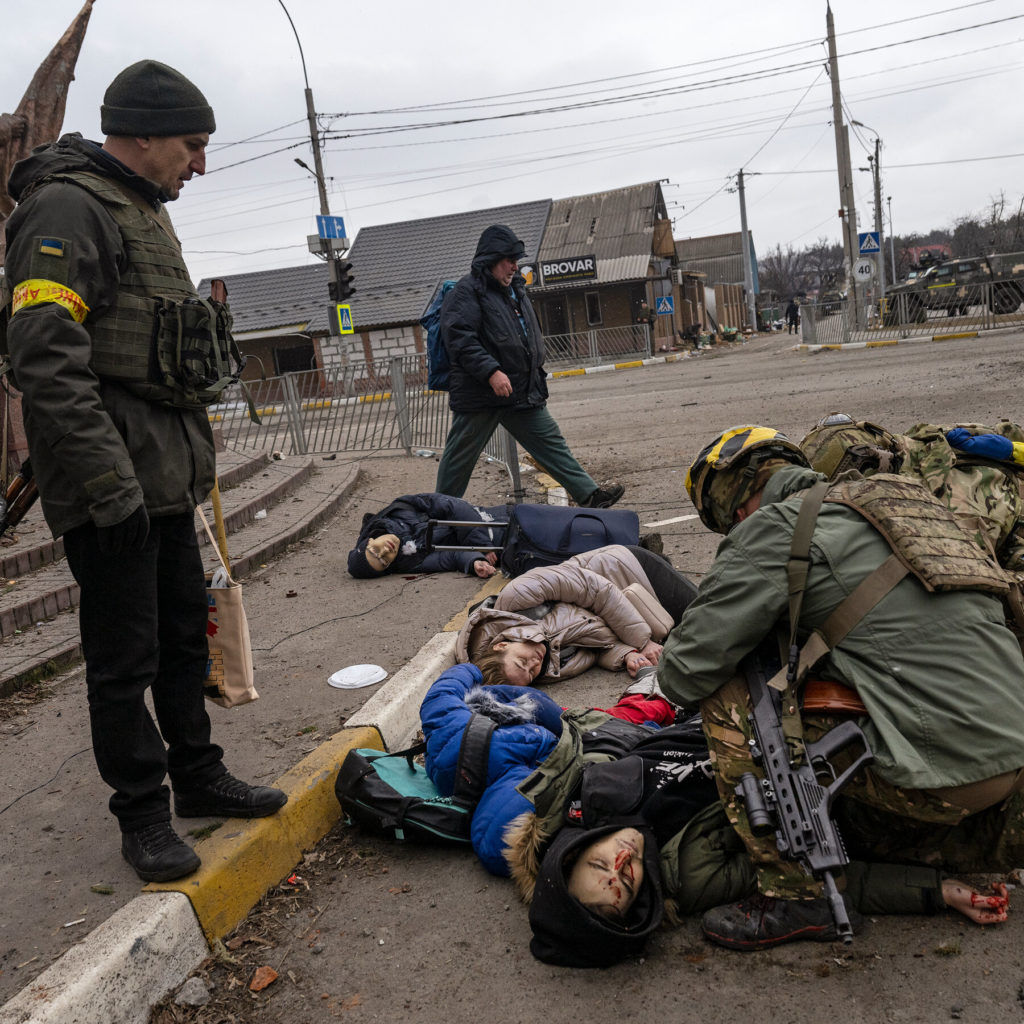
The shooting of this family in Ukraine is all over the front pages. Many Americans bemoan the humanitarian disaster. Russian restaurants are being boycotted in the US (many of the staff and owners are Ukrainian!).

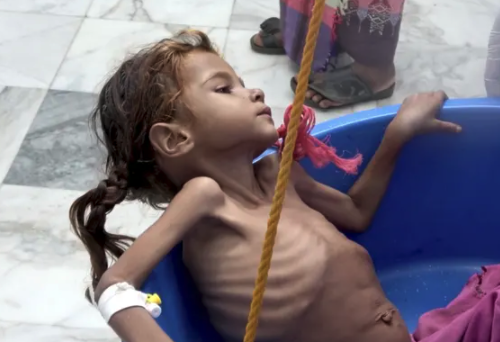
Below is a photo of a starving Yemeni child:

A bit under 100,000 children have starved in Yemen in the last 4 years due to a civil war, fueled in part by tacit American backing of the Saudi regime, which has been exacerbating and intervening in the conflict.

Why do we pay attention in one case and not the other?

  1. Nuclear war risks
  2. The Russian invasion of Ukraine violates longheld post-World War 2 norms
  3. Ukraine is in Europe, and the West cares about the West (or the aspirant West)

This is all fine. I’m very scared of #1 and horrified by the existential risks and economic havoc that Putin’s choice to actually invade has wrought on the world. But I find the arguments of a sui generis or exceptional humanitarian situation in Ukraine implausible. People don’t want to admit that their feelings are shaped by cultural or racial affinity, or that it is pure self-interest in relation to nuclear war or maintenance of world order. So they make this the “next Holocaust.”

A lot of non-Europeans are skeptical of this posturing. At my other blog, I put up a post about why Bangladeshis have a soft spot for Russia, which might explain their reluctance to condemn the invasion of Ukraine. The same obviously applies to India to a great extent.

Russian Invasion of Ukraine, part 1


Another Browncast is up. You can listen on LibsynAppleSpotify, and Stitcher (and a variety of other platforms). Probably the easiest way to keep up the podcast since we don’t have a regular schedule is to subscribe to one of the links above!

In this episode Amey, Conrad and I (Omar Ali) talk to Karol Karpinski about the  crisis, and particularly about the Eastern European perspective on it. This is sort of the counterpoint to our earlier recording with Major Amin (where he presented the hard Russian Nationalist viewpoint on the crisis). As usual, add your comments.. We hope to record another episode dedicated specifically to the question of sanctions; what is being done, how effective are they, and so on.

Posing as a South Asia expert: Brahminical patriarchy edition


This research article will be submitted in the new journal Intersectional Gender and South Asian studies. Dedicated to VisionIAS - especially Smriti Shah

Roots of divergence between Bangladesh and the rest of South Asia


South Asia in general has been a diverse place demographically as well as geographically. Unlike the myth of ancient civilization conjured up by well-meaning anti-colonialists in the 19th and 20th centuries, South Asia neither had a coherent identity nor a dominant mass religion. It only became a political unit after the forceful amalgamation of different polities under the Colonial British Raj. Since getting independence, Bangladesh has diverged a great deal not only from former West Pakistan but also from India. Not only in economical terms but also in terms of women empowerment. Unlike most democracies, Bangladesh has been governed by women for a significant duration of time since its independence.

What explains this divergence? Especially between North Western South Asia and North Central South Asia on one side and Eastern Central South Asia, Western Central South Asia and South Eastern South Asia on other ? Continue reading Posing as a South Asia expert: Brahminical patriarchy edition

History of India Series: Episode 5 – The Magadh Era: From Bimbisara to Ashoka

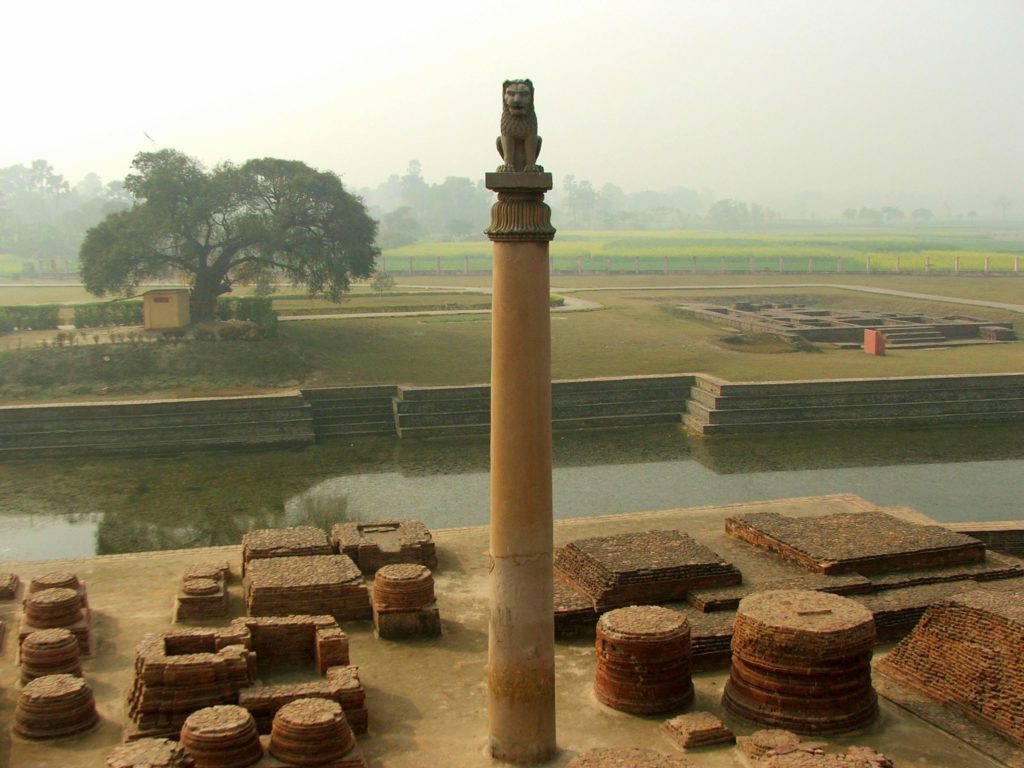
CC BY-SA 2.5 Bpilgrim (talk · contribs) - Own work
CC BY-SA 2.5 Bpilgrim (talk · contribs) – Own work

The History podcast passes through the Magadh era. Mukunda Raghavan and Gaurav Lele talk to us about the sub-continent at the end of the Vedic age and take us all the way to the ruler whose symbols are part of the Modern Indian Republics mythology. Alexander and Vishnugupta Chankaya make an appearance and we speculate on the first recorded caesarean birth.

@raghman36 @gaurav_lele @maneesht

Sources and References:
Books and Blogs
 Upinder Singh – Ancient India.
 Upinder Singh – Political violence in Ancient India.
 Upinder Singh – Culture of Contradictions.
 Romila Thapar – Ancient History
 RS Sharma- India’s Ancient Past
 Javarava’s Raves:  (Blogposts publications etc)
 Greater Magadha – Johannes Brockhorst
 Live History India (Paid + unpaid)
 Early Hinduism — the epic stratification | by Gaurav Lele | Medium
 Free Web Sites – Buddhism – LibGuides at Michigan State University Libraries (msu.edu)
 Excerpts from  : King, Governance, and Law in Ancient India: Kautilya & Arthasastra
PODCASTS:
 The History of India Podcast – Kit Patrick
 Echoes of India Podcast – Aniruddha Kanasetti

Browncast: Major Amin on the Ukraine Crisis

Major Amin – Brown Pundits

Another Browncast is up. You can listen on LibsynAppleSpotify, and Stitcher (and a variety of other platforms). Probably the easiest way to keep up the podcast since we don’t have a regular schedule is to subscribe to one of the links above!

In this episode we talk to our regular guest, Major Amin. Major Amin is a military historian with long experience of working in Afghanistan and Russia. As a fan of military history he is also a huge fan of the Russian Army, the entity that executed such historic operations as Uranus and Bagration. This bias shows in the podcast today and many listeners will find things they vigorously disagree with, but his views probably reflect a lot of Putin’s (or Russian nationalist’s) own thinking in this affair. In any case, as always he is brutally frank and frequently provocative. Enjoy, and add your comments..

Reason for Russia-Ukraine War: Why did Russia attack Ukraine? Timeline of events that led to Russia Ukraine Invasion

Auto generated Transcript: (unedited, full of errors, but those in a hurry may get the drift) Continue reading Browncast: Major Amin on the Ukraine Crisis

Browncast: Salman Rashid, Travel and History Writer

Image

Another Browncast is up. You can listen on LibsynAppleSpotify, and Stitcher (and a variety of other platforms). Probably the easiest way to keep up the podcast since we don’t have a regular schedule is to subscribe to one of the links above!

In this episode Omar and Maneesh Taneja chat with Pakistani travel writer and history buff Salman Rashid. Salman has a very popular youtube channel  and tweets as odysseuslahori  . We chat about partition, pakistan, history and whatever else comes up.

Browncast: Indic explorer on Hinduism, Dharma, etc

Image

Another Browncast is up. You can listen on LibsynAppleSpotify, and Stitcher (and a variety of other platforms). Probably the easiest way to keep up the podcast since we don’t have a regular schedule is to subscribe to one of the links above!

In conversation with Indic explorer, Mukunda and Omar discuss a lot of things related to all things “Indic” . Items include how to define Hinduism, why it does not get the respect it deserves and why its most ardent fans may need to “up their game”.. .

Indic (who prefers to remain anonymous for now) can be found on Twitter at @theindicexplor1

Ferry From Talaimannar in SL to Rameshwaran, India

Ferry was from Talaimannar to Rameshwaran Island and part of rail link from Colombo to Madras (I think). There was a small ferry for each vehicle from Rameshwaran Island to Mainland India.

22 miles, the same distance from Dover to Calais. Couple of guys have swum it too.  One such was Kumar Anandan, swimming from Sri Lanka to India and back in 51 hours, in 1971. While attempting to swim the English Channel on 6 August 1984 he collapsed and died due to heavy currents.  Other trivia; Kumar Anandan hailed from Valvettithurai, the village of the Thalaivar, i.e. Prabhakaran.

Almost all Tea Estate indentured workers were brought by Ferry and had to walk thru thick jungle to Tea estates in the hill country. Quite a few died, no records were kept.

The Brits did not give the Estate indentured labor Ceylon Citizenship. Because that would mean they would be under Ceylon Labor Laws which were quite reasonable. Would defeat the whole purpose of getting slaves in all but name.
It became an issue after independence. The estate Tamils were almost 15% of the population. Half were repatriated back to India, with even Ceylon Tamils voting for the move.

Google Map
https://www.google.lk/maps/place/Rameswaram,+Tamil+Nadu+623526,+India/@9.1918773,79.0877435,10z/data=!4m5!3m4!1s0x3b01e3c4e61cf2b3:0xd667f9b98bbd63a1!8m2!3d9.2876254!4d79.3129291

https://scroll.in/magazine/1000673/boat-mail-remembering-the-train-and-streamer-service-from-india-to-ceylon


Brown Pundits