Friendship in a time of evil

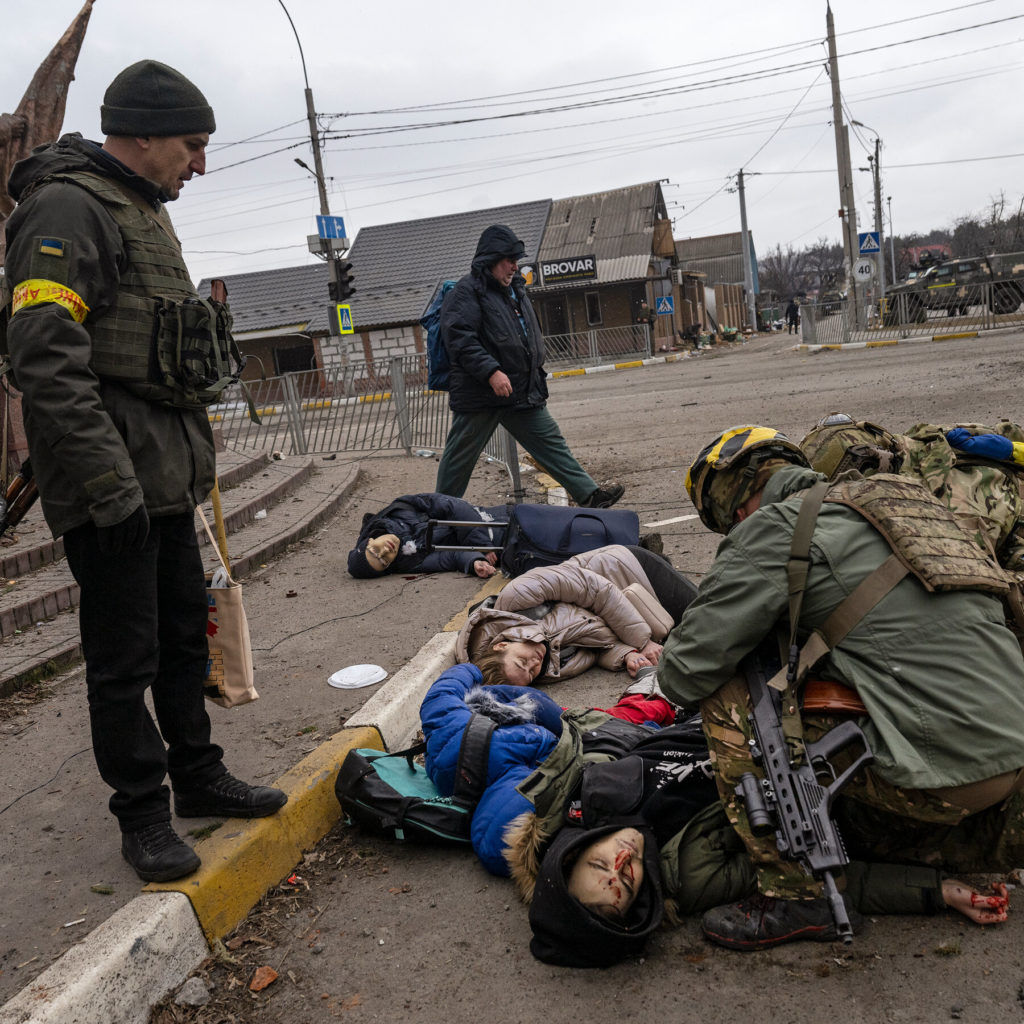
The shooting of this family in Ukraine is all over the front pages. Many Americans bemoan the humanitarian disaster. Russian restaurants are being boycotted in the US (many of the staff and owners are Ukrainian!).

Below is a photo of a starving Yemeni child:
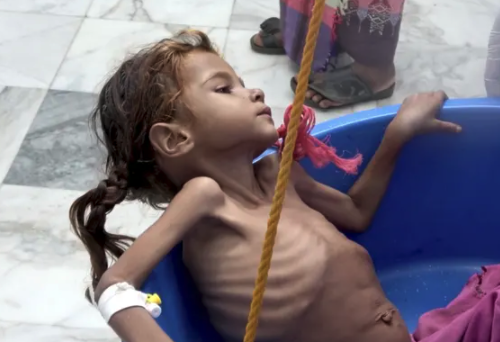
A bit under 100,000 children have starved in Yemen in the last 4 years due to a civil war, fueled in part by tacit American backing of the Saudi regime, which has been exacerbating and intervening in the conflict.

Why do we pay attention in one case and not the other?

  1. Nuclear war risks
  2. The Russian invasion of Ukraine violates longheld post-World War 2 norms
  3. Ukraine is in Europe, and the West cares about the West (or the aspirant West)

This is all fine. I’m very scared of #1 and horrified by the existential risks and economic havoc that Putin’s choice to actually invade has wrought on the world. But I find the arguments of a sui generis or exceptional humanitarian situation in Ukraine implausible. People don’t want to admit that their feelings are shaped by cultural or racial affinity, or that it is pure self-interest in relation to nuclear war or maintenance of world order. So they make this the “next Holocaust.”

A lot of non-Europeans are skeptical of this posturing. At my other blog, I put up a post about why Bangladeshis have a soft spot for Russia, which might explain their reluctance to condemn the invasion of Ukraine. The same obviously applies to India to a great extent.

Russian Invasion of Ukraine, part 1


Another Browncast is up. You can listen on LibsynAppleSpotify, and Stitcher (and a variety of other platforms). Probably the easiest way to keep up the podcast since we don’t have a regular schedule is to subscribe to one of the links above!

In this episode Amey, Conrad and I (Omar Ali) talk to Karol Karpinski about the  crisis, and particularly about the Eastern European perspective on it. This is sort of the counterpoint to our earlier recording with Major Amin (where he presented the hard Russian Nationalist viewpoint on the crisis). As usual, add your comments.. We hope to record another episode dedicated specifically to the question of sanctions; what is being done, how effective are they, and so on.

Browncast: Major Amin on the Ukraine Crisis

Major Amin – Brown Pundits

Another Browncast is up. You can listen on LibsynAppleSpotify, and Stitcher (and a variety of other platforms). Probably the easiest way to keep up the podcast since we don’t have a regular schedule is to subscribe to one of the links above!

In this episode we talk to our regular guest, Major Amin. Major Amin is a military historian with long experience of working in Afghanistan and Russia. As a fan of military history he is also a huge fan of the Russian Army, the entity that executed such historic operations as Uranus and Bagration. This bias shows in the podcast today and many listeners will find things they vigorously disagree with, but his views probably reflect a lot of Putin’s (or Russian nationalist’s) own thinking in this affair. In any case, as always he is brutally frank and frequently provocative. Enjoy, and add your comments..

Reason for Russia-Ukraine War: Why did Russia attack Ukraine? Timeline of events that led to Russia Ukraine Invasion

Auto generated Transcript: (unedited, full of errors, but those in a hurry may get the drift) Continue reading Browncast: Major Amin on the Ukraine Crisis

Is There a Method to Erdogan’s Madness?

Pakistani economist DMKM (he tweets as @2paisay) tries to find out why Erdogan is keeping interest rates low in Turkey. Add your thoughts in the comments. Original article is on his blog here

TL;DR – The answer to the questions posed in the title/subtitle is “I don’t know”.


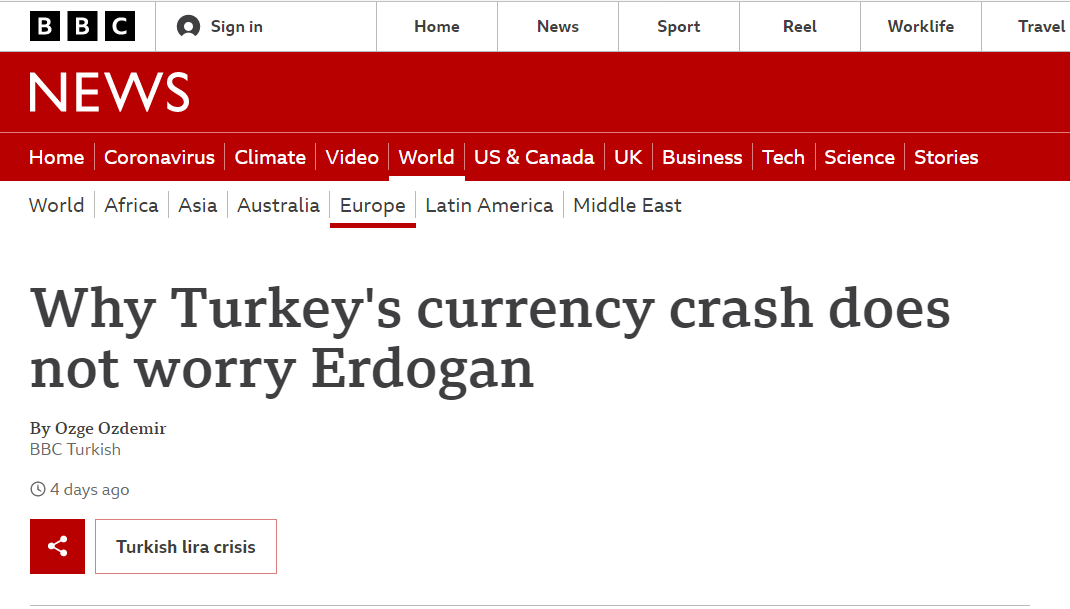
Someone sent me the below BBC article.

I read the article keenly, hoping to find the answer to the question posed in the title of the report, but I couldn’t. It is a very good question: what is Erdoğan really trying to achieve?

Keeping the interest rate low is severely affecting the Turkish currency. The value of the Turkish Lira has almost halved since Jan 2021. It was around 7 Turkish Lira to a dollar, and now it is almost 14 Turkish Lira to a dollar. That is a huge decline in less than a year.

Turkey’s youth compare their living standards with those in other countries and do not like what they see.

“For a young person in the US or Europe, it’s easy to buy an iPhone with their salary,” says one 18-year-old. “Even if I work for months and months, I cannot afford it. I don’t deserve that.”

This generation is poised to play an important role in politics in Turkey, ruled by Mr Erdogan’s Justice and Development Party (AKP) since 2002.

Almost nine million Turks born since the late 1990s will be eligible to vote in the next election in 2023 and that could spell trouble for the AKP.


What reason does Erdogan provide for the low rates? Continue reading Is There a Method to Erdogan’s Madness?

Capsule Review: The Verge, by Patrick Wyman


The verge is a short and very readable account of an early phase in the rise of modern Europe, from 1490 to 1530 or so. Wyman has selected a cast of characters including Columbus, Ferdinand and Isabella, Martin Luther, the banker Jacob Fugger, various printers, Emperor Charles V and Suleyman the magnificent; and he uses their stories to weave a story of how the foundations of modern Europe (and by extension, of modernity itself) were laid by the fortuitous intersection of many small and big changes. The invention of printing, the rise of modern finance, the rise of professional military men, the reformation, all these played a role in creating the modern states of Western Europe; states that soon outclassed all competitors and eventually dominated the entire globe. If there is one factor that gets star billing in this book, it is the financial innovations that allowed Western European monarchies to tap more capital in more innovative ways, but the whole point is that no one magic factor drove the great divergence; many different factors came together to set the stage for it. The book is very well written and Wyman has a eye for interesting anecdotes and factoids that keep the reader engaged and interested. Well worth a read.

If you are interested in learning more, Razib Khan has a good review in the National Review: https://www.nationalreview.com/2021/0… (less)

Capsule Review: The Jewish Brigade

The Jewish Brigade is a graphic novel from Dead Reckoning, a division of the Naval Institute Press. It is the (fictional) story of two soldiers in the Jewish Brigade of the British army, an actual unit that was raised in 1944 and that fought for a few months in Italy before the war ended. After service in occupied Europe for a while, the brigade was disbanded in 1946. Some of its members helped organize assistance for Jewish holocaust survivors in Europe, including arranging travel to Palestine for some of them. Many of these volunteers ended up in the Haganah and the Jewish army that fought the first Arab-Israeli war in 1948. The author has used this historical background to create the 3 stories that make up this graphic novel.

In the first two, our heroes are members of the Jewish Brigade in occupied Europe immediately after the end of the war in May 1945; as they search for their own kin and run into other survivors they witness fresh horrors as Jews who survived the holocaust sometimes face a hostile reception from their old neighbors and remain in danger of being killed by random Nazis, anti-semites and sundry violent thugs who roam war ravaged Europe at this point. Our heroes help some survivors, face new tragedies and even execute (without trial of course) some Nazis in the hellscape that is postwar central Europe. The book does a great job of reminding us that for many people the war did not end in May 1945 and many violent and cruel tragedies took place as the “unfinished business” of mankind’s greatest war slowly wound down.

The book is a work of fiction of course, and it is undoubtedly also a work of propaganda, with strong Zionist undertones. In the third section, set in Palestine, the propaganda becomes even more strident and one-sided (the heroes are Jews, the villains are Arabs and British officials who fail to support the Zionist project) and if that sort of thing turn you off, then this may not be the book for you. On the other hand, if you want to get a good introduction to the chaos that followed the war and the many gruesome and violent tragedies that happened well after the war was officially over, this is not a bad place to start.

The art work and writing are quite good, but the story is not always easy to follow and some characters appear and then disappear without the reader finding out what happened to them. The three pieces are loosely connected, but can be read separately and will still work. Overall, well worth a read, as long as you keep in mind that it IS propaganda, even if it is mostly on the side of the good guys.

(I got this book as a review copy from Dead Reckoning).

South Asian ancestry in Tajikistan

Genetic continuity of Indo-Iranian speakers since the Iron Age in southern Central Asia:

To model Tajiks, all 2-ways admixture models were excluded and we obtained one 3-ways admixture model (p-value = 0.49) implying around 17% ancestry from XiongNu, almost 75% ancestry from Turkmenistan_IA, and around 8% ancestry from a South Asian individual (Indian_GreatAndaman_100BP) representing a deep ancestry in South Asia.

Finally, we used DATES18 206 to estimate the number of generations since the admixture events. We  obtained 35±15 generations for the admixture between Turkmenistan_IA and XiongNu-like populations at the origins of the Yaghnobis, i.e. an admixture event dating back to ~1019±447 years ago considering 29 years per generation. For Tajiks (TJE, TJY, TJA) we obtained dates from ~ 546 ±138 years ago (18.8± 4.7 generations) to ~ 907 ± 617 years ago (31.2 ± 21.3 generations) for the West/East admixture. We also obtained a date of ~944 ±300 years ago for the admixture with the South Asian population.

Looks like most of the admixture from the Indian subcontinent dates to the period around 1000 AD, when the Ghaznavids were enslaving large numbers of Indians. This ancestry shows up in Afghanistan and eastern Iran.

Brown Pundits