
Please keep the other posts on topic. Use this for talking about whatever you want to talk about.
Tag: Identity and culture
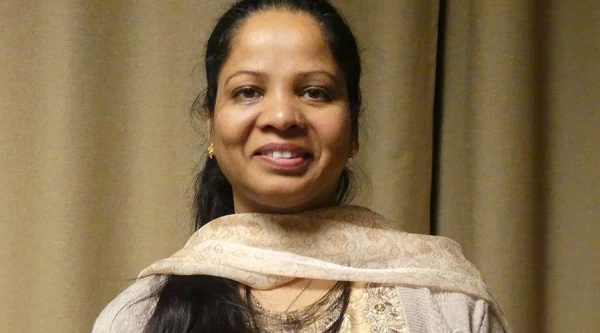
Why I Repeated Aasia Bibi’s Alleged Words
Kabir was right to question why I repeated the remarks Aasia Bibi was accused of making. The point did not require repeating them. But the principle did.
I try to be respectful towards all religions. I’ve even been accused of being too sympathetic to Islam and to Pakistani narratives. But many people still do not grasp that the rage some believers feel when they think their Prophet has been insulted is the rage I feel when a powerless Christian woman spends years on death row for something she did not do—or had every moral right to say.
Aasia Bibi is the clearest example in our era of what happens when a blasphemy taboo becomes a blasphemy law.
And what happens when a blasphemy law becomes a political weapon.
If we cannot speak the very words that put her in prison, then the injustice done to her cannot be fully confronted. Sanitising the allegation only sanitises the cruelty.
This is the core of the matter:
Freedom of expression is meaningless unless it protects speech that some consider offensive or sacred.
It cannot protect only polite dissent. It must also protect speech that religious authority hates.
I don’t indulge in theatrics or gratuitous insults. But the principle has to be clear: in a free society, no religion, none, can demand immunity from criticism, satire, or even irreverence. If believers wish to revere, they are free to do so; if others do not, they are free not to.
What troubles me is the growing chorus of Western liberal Muslims and “hijabi feminist” activists who demand respect under the banner of “Islamophobia,” while simultaneously insisting that Muhammad must never be depicted, mocked, or even discussed without ritualised reverence. This is simply a diplomatic version of the same rule that keeps women like Aasia in prison: the Prophet’s honour is more important than human freedom.
And the moral inconsistency is glaring.
There is deafening anger over Gaza. There is a whisper, at best, over Aasia Bibi. For some, outrage is selective, calibrated to global cause-identity. Aasia is inconvenient because she reveals an uncomfortable truth about the political uses of piety.
This is why I repeated the alleged words. Because the principle they engage is non-negotiable:
In a free society, all ideas, including religious ones, must be open to criticism.
No faith gets to write exceptions into the law.
Aasia Bibi paid for that principle with a decade of her life.
The least I can do is speak the words that she was punished for—even if only to show how absurd it was to punish her at all.
Tweet of the Day
All white people are racist. America is racist. To deny this isn’t just racist, it’s irrational. https://t.co/2K2Kj9fnh0
— saira rao 🍉 (@sairasameerarao) November 16, 2018
I personally believe we are all racist, classist and *bigoted* to some extent.
It is our evolutionary makeup that prefers our *tiny* tribe to the whole mess of humanity and only something as powerful as religious belief binds us into a larger consciousness.
The West has been secular for a good century (maybe even longer) and the Western left has adopted a curious mix of neo-Puritanism and Platonism.
They want straight white men to constantly purge and guard their inner thoughts against any type of “ism.”
Thankfully our Brown pallour acts as a sort of shield since frankly the larger society isn’t particularly interested in what we have to say and furthermore we can’t be accused of privilege yet.
I see Western civ consuming itself over absurdities (even now a centre-right individuals knows how to police one’s thoughts on certain topics) while the Rest begin their long march onward and upward.
While angry and vocal Muslim minorities mingle with these left reaction; the Eastern powers (Chindia) are only growing by the day.
It may be small, it may be imperceptible leaps but the day will come when Lewis Hamilton will have his visa revoked for making such comments about India’s poverty.
China has already abandoned Western ideological scaffolding and gone back to some hybridised Confucian ideal of government.
It will only be a matter of time when India sheds so much of this false & imported secularism and adopt a Hindu framework of tolerance.
India’s majority greviance is that the Hindu majority are constantly making concessions to a Muslim minority while across the border Pakistan is reshaping itself. 5 more years of Modi and the Overton window will shift where Rahul Gandhi will have to cast himself a pukka and proper Hindu instead of some Nehruvian secularist/socialist.
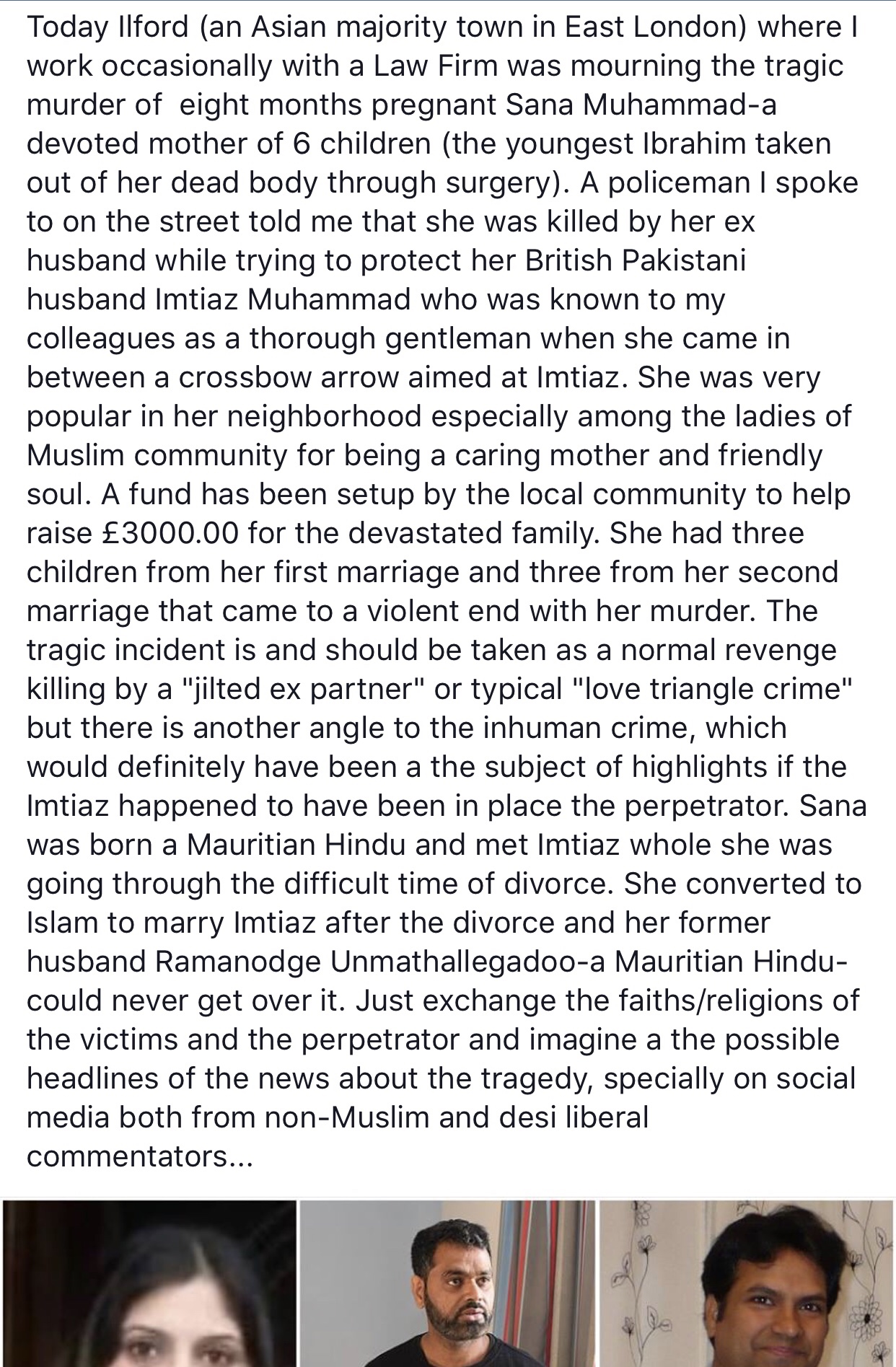
Hindu Wife killed by ex for marrying Muslim man
There was the sad news today of a mother of 5 being killed by a crossbow. At first I thought it was a local British Pakistani affair.
However it seems this was a bit of a twist as seen below. The lady who passed away was a Hindu lady who converted to Islam to marry her second husband (she had three kids with each husband and her last child was delivered off her dead body).
It’s obviously true that if it had been the other way around the “Muslim” angle would have been hyped up.
Indian culture started when the British arrived: tales of shadology
When looking at Google Scholar after reading the paper on South Asian pigmentation, I came across this work, The Unfair Selection: A Study on Skin Color Bias in Arranged Indian Marriages:
Underlying the growing popularity of skin-lightening or fairness cosmetics in India is one of the most baseless biases experienced and practiced. Yet, the overriding importance of skin-color especially in context of marriage has been largely unaddressed. This exploratory study examined the influence of skin-color on preference for potential marriage partner. A 2 × 2 (gender × skin-color) between-group experimental design was used. Mothers (N = 108) of individuals of marriageable age group were presented with an option of five marital profiles containing education and work information only. The participants were shown profiles of either males or females depending on whether they had a son or a daughter. Once a profile was chosen, the participant was either shown a photograph of highly attractive fair girl/boy or a highly attractive dark girl/boy. The light-skinned and dark-skinned photograph was of the same person, except their skin tones were manipulated with the use of computer software. Participants were asked to rate how strongly would they recommend the girl/boy as potential bride/groom for their children. As expected, fair-skinned highly attractive people received higher ratings than dark-skinned highly attractive people. However, contrary to our expectations, ratings received for dark-skinned woman were not significantly lower than the ratings received for dark-skinned man. This study shows that the color of skin has the potential to even overpower traits such as general competency and physical attractiveness in both men and women.
The subjects are from the Indian capital. The surprising result is no sex difference. I’m not too interested in the paper’s primary result, but the introduction and discussion, which frames the preference for light skin historically, is of interest.
From the introduction:
While Black scholars in the Unites States have thoroughly examined the link between racism and colorism, there is paucity of information tracing the historical roots of skin-color discrimination in India (Parameswaran & Cardoza, 2009a). Internalization of superiority of fair/white skin has been related to the combined influences of colonialism, caste system,
and globalization. Many South-Asian countries like India, Pakistan, Sri Lanka, Nepal, and so on were ruled by the British for around 200 years; “white” race was the ruler and the “dark” native were the ruled. This led to internalization of superiority and power of the “white” skin and inferiority and powerlessness of the “dark skin” (Speight, 2007). Internalized racism reveals itself in a variety of situations from work environment to social situations where people of color reject or denigrate those with dark-skin. The caste system in India is likely to have given impetus to the notion of superiority of fair skin-color brought by colonial rule (Parameswaran & Cardoza, 2009b; Shankar & Subish, 2016). Higher castes have been perceived to be “fairer” and superior while lower castes have been perceived to be “darker” and inferior. Today, in postcolonial world, globalization has led to increased spread and acceptance of Western beauty ideals in Asian and African cultures (Hunter, 2011; Peltzer, Pengpid, & James, 2016).
First, the Muslim West and Central Asians who arrived in South Asia, described it as a pattern where white people conquered black people. These people were quite aware that South Asians were not black in the way Sub-Saharan Africans were. There were black Africans in the armies of the Muslims, as the Siddi community demonstrates. Nor did the Iranians, let alone the Turks, consider themselves to be of the same people as the Europeans.
But when it came to the metric of skin color, the Muslim ruling class of South Asia was disproportionately very light in complexion and described themselves often as white. The natives were described often, though not always, as black (though more often obviously as “Hindus” or whatnot). When Europeans arrived they did not come as conquerors, but as supplicants to the great Mughal and the other powers. They perceived themselves to be white, just like the elite Muslims, as opposed to the dark-skinned native Indian population, which was mostly, though not exclusively, non-Muslim.
As the 19th century proceeded Europeans, and in particular the British, developed a refined, narrow, and simultaneously biological and cultural conception of whiteness which excluded West and Central Asian Muslims. But this was a process and does not negate the fact that the ruling elite of South Asia was disproportionate of the Muslim religion and very light-skinned in comparison to the populace as a whole for many more centuries than British rule occurred.
Second, “higher castes” are not perceived to be lighter in complexion. The data is clear: higher castes are on the whole on average lighter in complexion. Just as people from the north, and west, of the subcontinent, are lighter in complexion than people from the south and east. This is not a perception dictated by ideology, but biology.
As for whether Brahmins have become “higher” castes recently, my understanding is that they have always been a high caste, and that the British did not give them their high casteness. To be frank, Indian social heirarchies do not need the imprimateur of white Europeans to come into existence, ex nihlo.
And genetics makes it clear that castes seem to have been separated and distinct for around ~2,000 years or so in South Asia. Even before the Muslims!
Now, I don’t know enough about South Asian history and culture to comment on this part:
Thus, skin-color is related to social hierarchy in India; fair skin is often considered to be a mark of higher social standing. However, it is important to note that historically and culturally, dark not white skin was considered to be ideal and desirable in India. Some notable examples are the popularity of God Krishna (literally black) and Draupadi (also called Krishnaa), a character from the epic Mahabharata. Krishna is worshipped in many parts of India whereas Draupadi was considered to be one of the most desirable women in the world. The transformation of ideal skin-color from dark to fair can be traced to the influence of caste system, British imperialism, and global hegemony of whiteness. The caste system also called varna (literally color) accounts for the perceived superiority of fair skin over dark. Owing to the association of fairer skin with upper caste and darker skin with lower castes, skin-color came to signify the social position of an individual in our society. In addition, the racist construction of “dark native” by the British seems to have become a part of our unconscious and is often projected as strong dislike for the “dark other” (Parameswaran & Cardoza, 2009b).
I would be curious about the idea that dark skin was preferred to light skin. The historical genetics makes it clear that lighter invasive populations seem to have arrived and placed themselves on top of darker populations, with some mixing before caste crystallization.
Finally:
The popularity of some dark-skin colored Bollywood actresses like Bipasha Basu, Kajol, Deepika Padukone, and so on suggests that masses are likely to accept a dark-skinned woman if she is perceived as highly attractive.
I do understand that Indian actresses use make-up (or lightening cream) to make their complexion seem fairer than it would otherwise be…but it is clear none of these actresses are actually dark-skinned in the broader South Asian context. They are at best of average complexion.
Now, perhaps you will tell me that I spend time only with kala-batchas or something, I really don’t know. But this whole paper is soaked in postcolonial anti-Western delusional discourse…and then it ends in the shadological delusion that these average complexioned actresses are actually dark skinned! Average South Asians are not light brown, they are medium brown. Medium brown actresses are not dark-skinned, they are dark-skinned for actresses (which is fine, but a different thing than being representative of the population).
Go to Google Images and type “dark-skinned Indian actress” and then “dark-skinned black actress.” In the latter case, the actresses are genuinely dark-skinned. In the former case, only a minority are actresses with the complexion of Sharon Muthu.
Skin color of South Asian groups
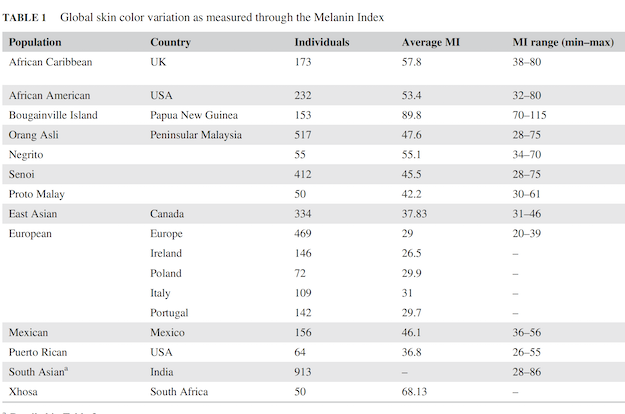
 A massive new review, Shades of complexity: New perspectives on the evolution and genetic architecture of human skin, pointed me to another paper on South Asian skin color, The influences of genes, the environment, and social factors on the evolution of skin color diversity in India. I was very interested because South Asians have been telling me about complexion my whole life. Usually, it is to suggest that their group is lighter than some other group. So I thought it would be interesting to post some data.
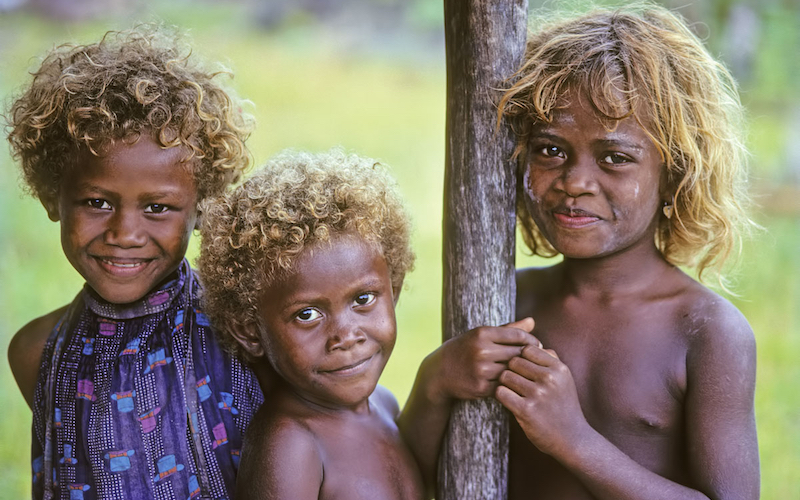
The figure at the top shows melanin indexes for a host of populations. The lower the value, the lighter the skin. So you see that Irish samples above have a melanin index of 26.5, while Italians have one of 31. East Asians in Canada have a melanin index of 38. Predominantly African ancestry populations have melanin indices >50, while the very dark Melanesian people of the Solomon Islands have a melanin index of about 90.
I’ve collected the Indian data from the paper:
Race, class and birthday dinners..
In case you missed Anan’s post it was LV’s birthday this week. We went to a different part of the country and on the birthday night went to a very nice French restaurant.
The reason I mention this is a curious incident. There were three sets of diners; us, another older Anglo-American couple (I couldn’t grab the accent) and a group of 11 much older gentleman.
They were all white, WASPs (I hear them mention Italian and Jews) and in their 60’s. They were loud and interesting enough that we could overhear much of their conversation (country club Republican not a fan of Trump but decidedly pro-Kavanaugh).
As the evening wore on they became a bit more raucous (understandable for a group of 11) and they went on about hunting and the politics at their club (we were at corner ends apart and a column separated us so the fact that so much could be overhead is a testament to their volume).
Even the other couple were a bit weary of the crowd . However what happened next was an egregious breach of etiquette; the “chef” appeared and started dancing about the table. He engaged in general revelry and everyone at the restaurant was a bit surprised that the chef was so pally with this table.
It turned out it was one of the guest playacting on his way from the toilet. The reason this was such a faux pas is that this restaurant is very well-known for being a husband and wife team. The husband is the chef and the wife is front of the house.
It was by default a way to insult her husband since even though it was innocuous it just was not the done thing at such establishments.
I later mentioned to V that since my natural instincts are quite sympathetic to Waspy Republicans (I only moonlight on social media as a Social Justice Ghazi) I didn’t mind them to much.
However I imagine that if it had been a table of 11 Pakistani men up to the same antics I would have immediately been livid and ashamed of them “letting down our people.” I also suspect the matron would have done much the same even if it was a large table.
It’s always good to expose one’s own hypocrisies and biases and examine them. I suspect since I am on the periphery of Asianess and on the edge of white society; I’m always trying to knit two very different identities together, sometimes spectacularly sometimes abysmally.
It also goes to show that much as I feel British; I am very buttoned up in Britain. I always want to put my best foot forward (model minority syndrome) which is why I rag on the Mirpuris. When I am back home in South Asia I don’t need to *prove* my social status to anyone, it is simply assumed.
Racism at its best
I just heard this story.
One of Cambridge’s best colleges has a pretty good bar. The bar did a Diwali special and accordingly the Indian girls wearing saris thronged the dance floor.
At that point one of the students (Coloniser ethnicity) whispered to another “this actually looks like Pakistan.”
Why does India need so much Coloniser Validation?
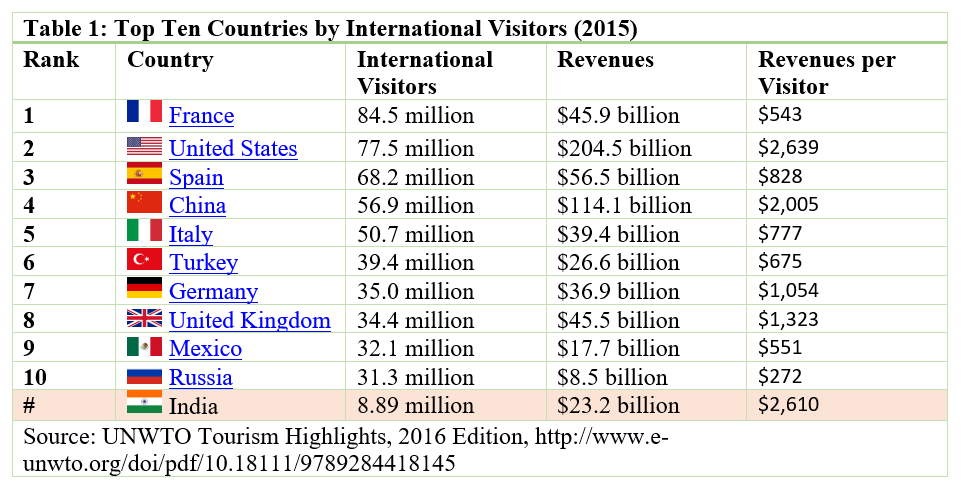
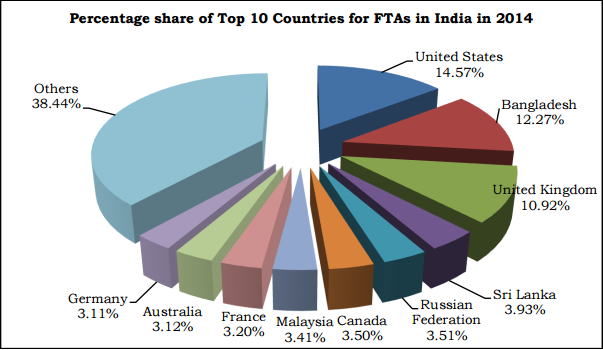
/the Incredible India Ads feature Colonisers “rediscovering” India (Maharani of Manhattan). The Chinese don’t seem to have that attitude towards Westerners and Tibet received 30 millions in 9 months (imagine Kashmir getting those numbers).
Open Thread – Brown Pundits
Please keep the other posts on topic. Use this for talking about whatever you want to talk about.