On ethnicity


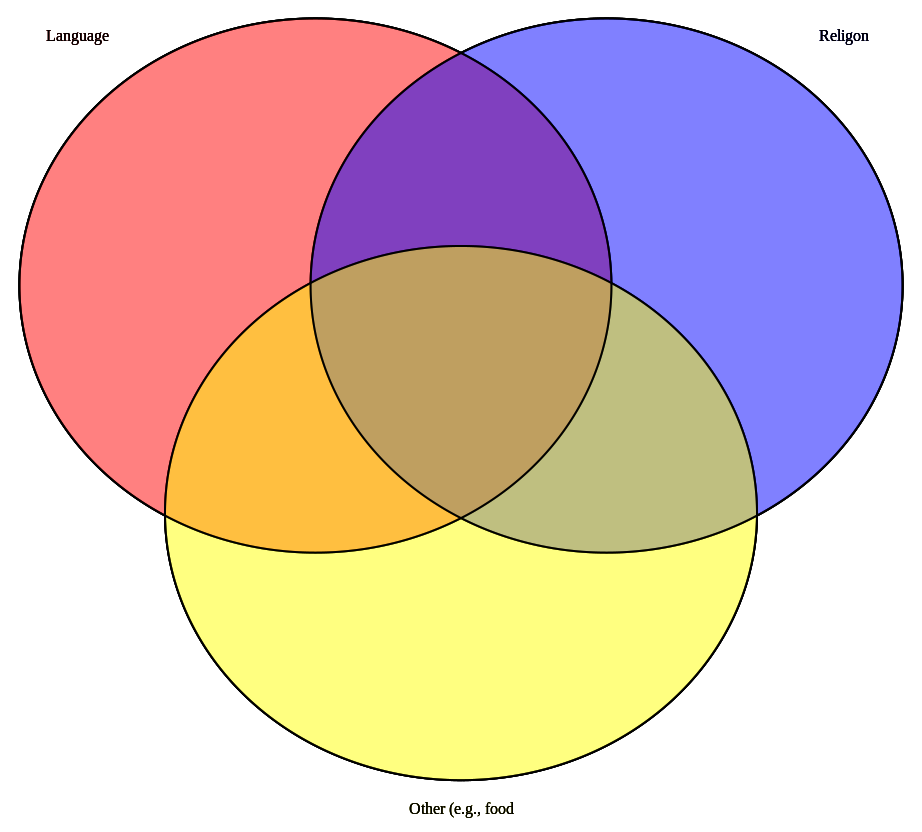
A really strange conversation on ethnicity broke out below. The primacy of lots of different variables was argued.

My family arrived in the USA ~1980 when there were not too many South Asians compared to today. Additionally, they have lived in major urban areas, small towns, and medium-sized cities. My parents grew up in (East) Pakistan, married and had their first children in Bangladesh, but have spent most of their lives now in the United States of America. Both speak English with a strong accent and are moderately religious Muslims. You wouldn’t call them secular, but neither are they visibly or ostentatiously Muslim. In American politics, they are staunch Democrats, while if they have an opinion on Bangladeshi politics they are Awami League (the ratio of discussion of American to Bangladesh politics in my family growing up was about 100 to 1 in favor the former).

Today my parents’ social circle, in a relatively large urban area, are Bangladeshis. Most of these people (almost all in fact) arrived in the United States much later than they did. But in the 1980s my parents had a much smaller pool of social acquaintances who were Bangladeshi. In the early 1980s, there were 15,000 Bangladeshis in New York City. Today there are probably closer to 200,000.

Here are some things I will observe in relation to my parents’ more diverse social circles in the 1980s. First, they were overwhelmingly South Asian. Those who were not South Asian were usually married in, and usually white. Second, a core group consisted of Bangladeshis. But the next group probably consisted by Indian Bengalis. A somewhat more established community. In fact, the boundary between Bangladeshis and Indian Bengalis were somewhat fluid. The two groups spoke the same language, and there was a large dietary overlap.

Next in order to the Indian Bengalis were a variety of other social clusters of South Asians that they met through various acquaintances and friends. For example, one cluster of friends consisted mostly of people from the Indian state of Andhra Pradesh, but with a large minority from other parts of India. Because there was ethnolinguistic diversity in this social group generally everyone spoke English, rather than Telugu, which was the most numerous language.

Another group consisted of people from Pakistan and Indian Muslims. This group also had some other token Bangladeshis. The unifying factor in this group was that all were South Asian Muslims. The de-unifying factor in this group is that the non-Bengalis would sometimes make the proactive case for Urdu as a unifying language, which my parents and the other Bengalis always objected to (because of their age, almost all the Bengalis in the group could follow the conversation in Urdu, since they grew up in Pakistan).

One issue in social circumstances with Pakistanis is that my parents found the food less palatable. This was a very important criterion for them for social interactions and a primary reason why sometimes they preferred going to parties thrown by their Hindu Bengali friends in preference to their Pakistan Muslim friends. By “less palatable”, I mean here that Pakistani cuisine was not “comfort food” for them.

My parents went to a multi-ethnic mosque several times a year. From what I could tell the South Asians kept to themselves, the Arabs kept to themselves, the Turks kept to themselves, etc. There was no real deep interaction. My parents never had any close Muslim friends who were not South Asian. In fact, we went to dinner with Chinese people (my father’s colleagues) more often than we went to dinner at a non-South Asian Muslim’s house.

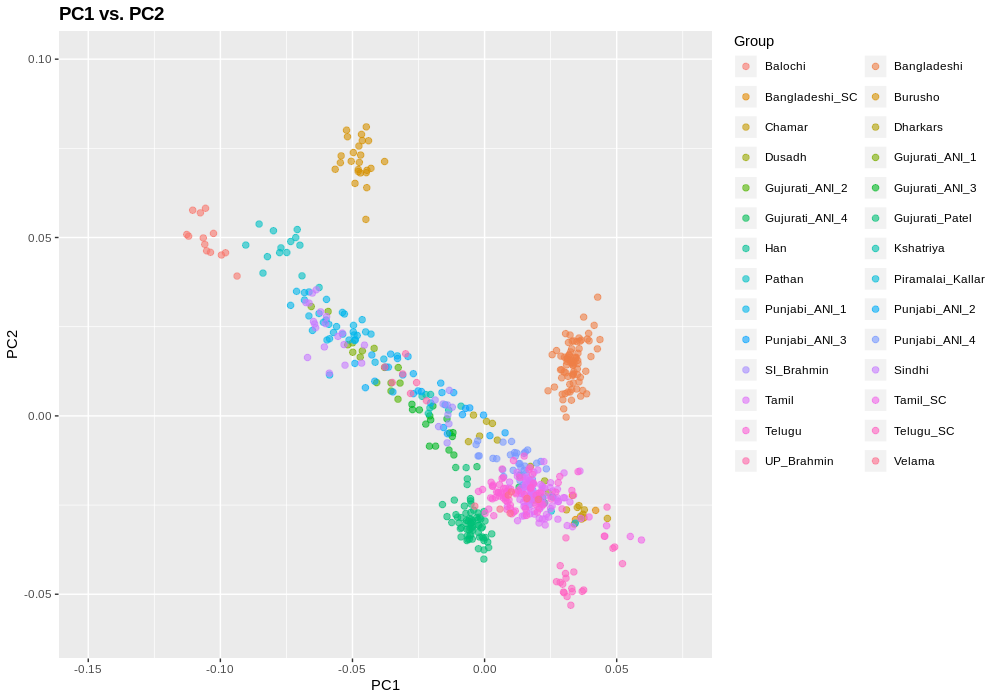
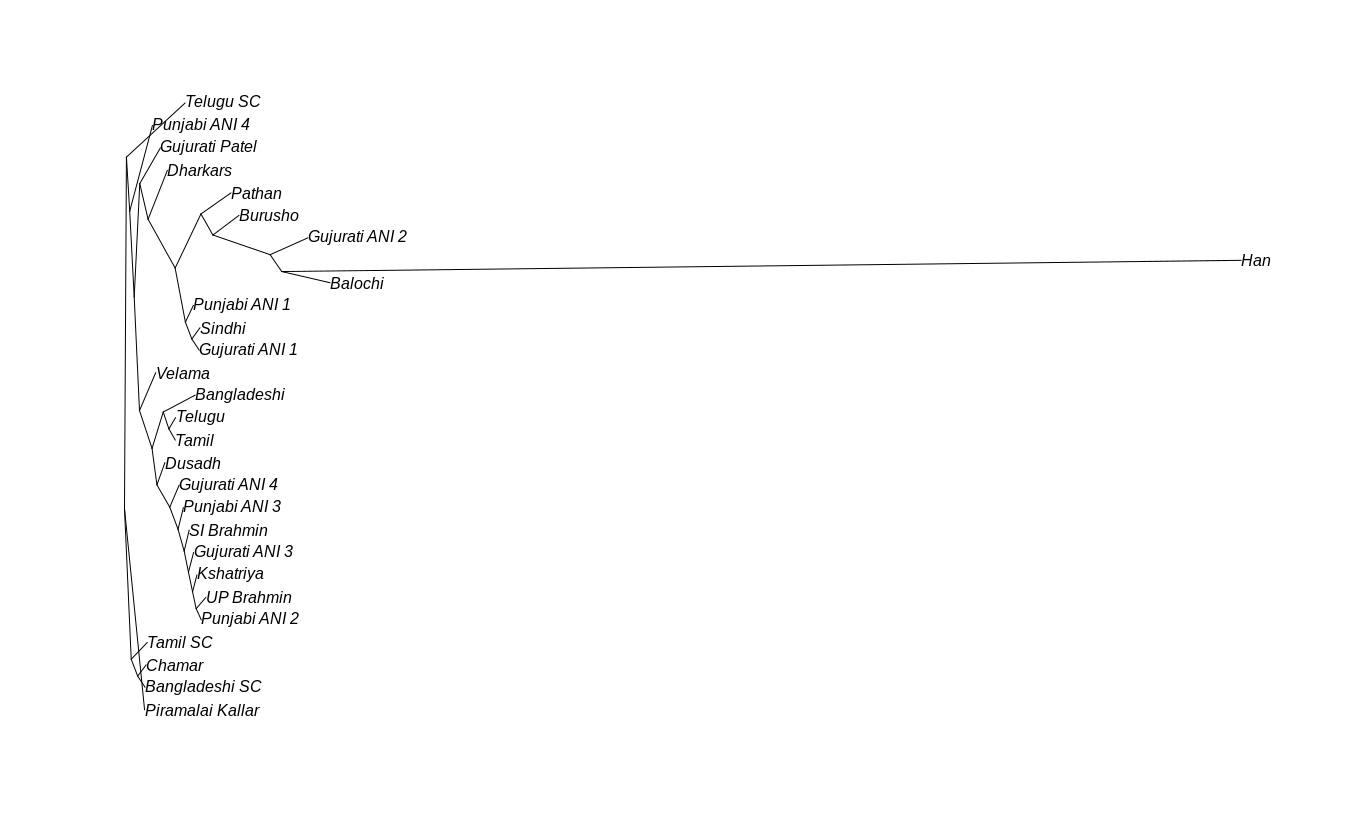
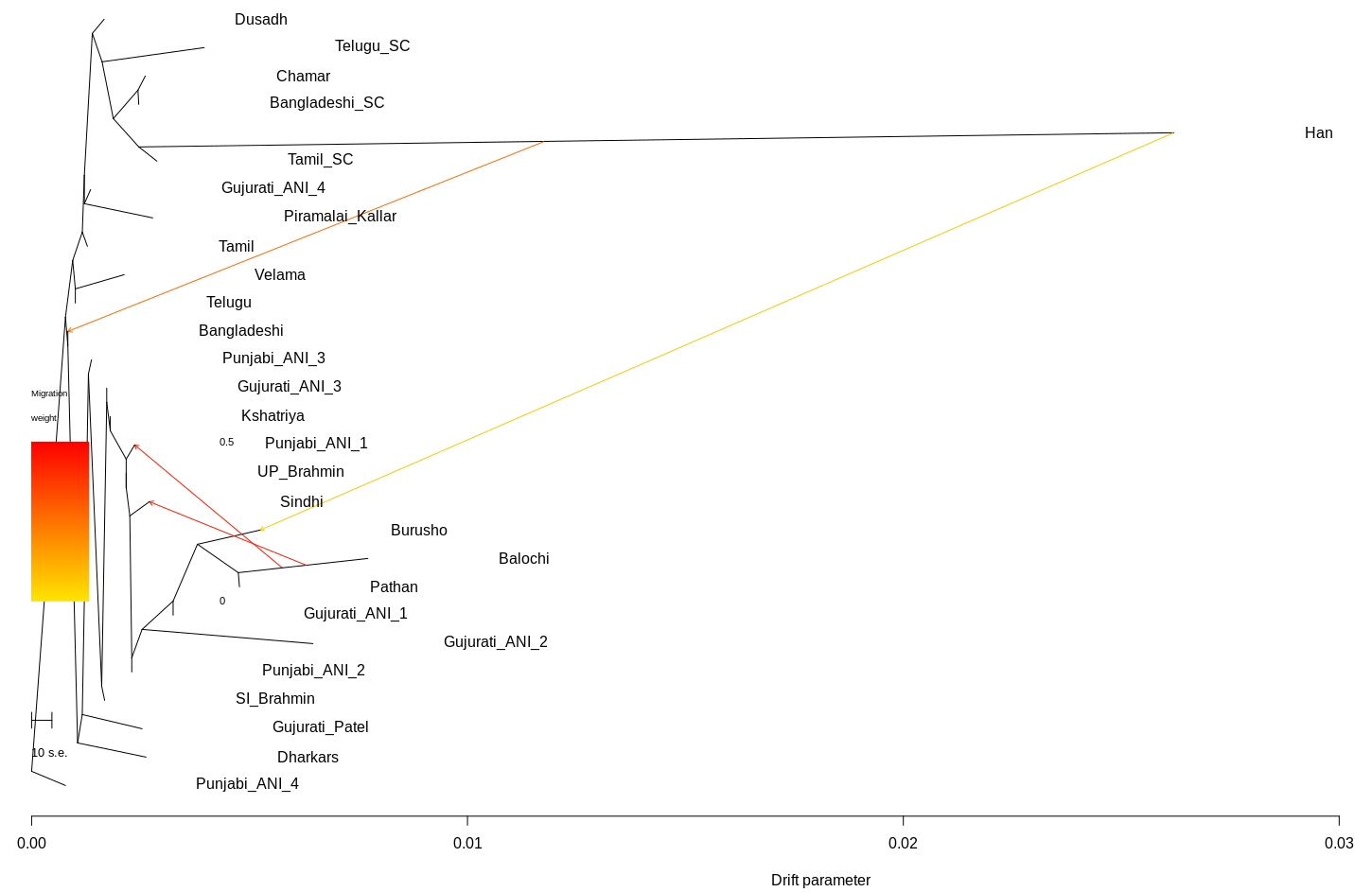
That’s about it from me. Below are some genetic plots.
Thoughts on the Open thread

I thought I would share some of my thoughts on the open thread:

(1.) with regards to ethnicity; there is no doubt there is a post 1947 fork. For instance most Sindhi Hindus do not know that there are Sindhis in Pakistan and vice versa. Sindhi identity is super-strong to each religious group but it doesn’t transcend it.

(2.) It most likely has roots in pre-1947 where the Hindu minority (which was substantial) was the majority in the urban areas (I believe they were the majority in Karachi). As soon as Partition happened their role was essentially swapped for Urdu-speaking Muhajir. Sindhi Muslims are definitely not winners from Partition; Sindh has a whole suffered tremendously. The relocation of the capital from Karachi, for political reasons, was another blow to the province.

(3.) Ethnicity and religion have a start relationship in South Asia and guides most intermarriages. For instance I wouldn’t feel comfortable to marry a Muslim and my choice of marital partners were accordingly limited even though I’m ethnically from a much more Islamicate background. However I remember my Gujarati Ismaili boss telling me his mother was relieved that he was marrying a Gujarati (his wife was a Hindu) so that’s an instance where ethnicity trumped religion in marital preferences (the same goes for me; marrying another Bahai was not a priority for me).

(4.) with regards to Indian Muslim; my experiences are thus. When I go to India if I were to tell a Hindu I’m of Pakistani heritage while they may not hate me but they would be uncomfortable. It’s a bit like being African-American in the US; everyone loves Will Smith but not the kid from the ghetto. It’s a bit like that.

(5.) Of course I have noticed a stark generational divide in India; the uncles and aunties were Congress but the kids are now BJP. There is a latent Islamophobia coupled with Islamophilia; most Indians will interact and be close to Muslims at some point in their lives. Like all things it’s a complicated tapestry.

(6.) the difference between Indian Muslims and Indian Hindus (anecdotally) is their antipathy to Pakistan. It simply not there to the same extent among Indian Muslims; I’ll happily tell them that I’m of Pakistan descent whereas generally with Hindus I’ll tell them I’m Parsi-Persian simply to diffuse tensions. Vidhi calls this “dial the Muslim up, dial the Muslim down” and my best friend call me a chameleon but these are simply my observations.

(7.) Pakistan does hold a fascination for all Indians; it’s not simply just another country. The culture, the music, the heritage and the history have a particular pull on India so much antipathy is towards the State of Pakistan. Pakistan and the Indus have a strong weight on the immediate region simply because it is a border region between many different cultural zones. After Afghanistan got wrecked that exoticness shifted to Pakistan; however this is why I advocate AfPak confederation simply because two Stans are stronger than one. On a personal note I do think a SAARC Confederation is a way to go (Iran has a split identity since 30% of the country east of the two Dasht’s are tied in South and Central Asi) but initially various countries can couple up as a first step. Maybe instead of religious identity we should try Pan-Aryanism; whoops I think someone’s already tried that before ?

(8.) I think if India were to approach 10k USD per capital (with decent HDI & Gini coefficient) it would be a Asian hyperpower. It’s not only by virtue of her large population and economy but because the strong civilisational heritage can rapidly translate into global influence.

Pakistan General Elections 2018 – The Silver Linings:

A friend of mine posted this to Facebook and I’m reproducing it below. It’s interesting that Pakistan has a FPTP, like the UK, US, India & Canada. That means that there’s an inbuilt bias for a 2-Party system. At any rate the below is an interesting read. Apparently a Shi’ite lady (PTI) beat a sectarian outfit.

-An absolutely brilliant and inspiring election campaign by Mohammad Jibran Nasir, where he refused to bow down to extremist pressure (ZackNote: he is a Shi’ite and has a bold stance on the Ahmediyya) and never once indulged in condemnation of any community or mud-slinging against any party. It won him 6,462 and 6,109 votes from NA-247 and PS-111 respectively, which in today’s political climate is a huge achievement.

-The first Hindu to be elected to the National Assembly on a general seat: PPP candidate Dr Mahesh Kumar Malani from Tharparkar (NA-222).

-Two leaders of the Pashtun Tahafuz Movement – Ali Wazir and Mohsin Dawar – winning National Assembly seats from South Waziristan and being able to represent the PTM in Parliament.

-Rana Sanaullah, Chaudhry Nisar and Maulana Fazal ur Rehman types being voted out. Just go now, bye.

-The overall underwhelming performance of religious parties such as Tehreek Labaik Pakistan despite all the pre-election hype they had created.

-An over 50% voter turnout despite the targeted attacks that killed three candidates in the election run-up and a suicide attack outside a polling station in Quetta on election day.

-Avoiding a hung Parliament, which would have meant further instability and focus away from governance in Pakistan.

A stellar victory speech by Imran Khan, hitting all the right notes. Much cause for holding on to hope and a reminder of all the crucial work that is to be done.

Now onwards and upwards Pakistan ??

FM

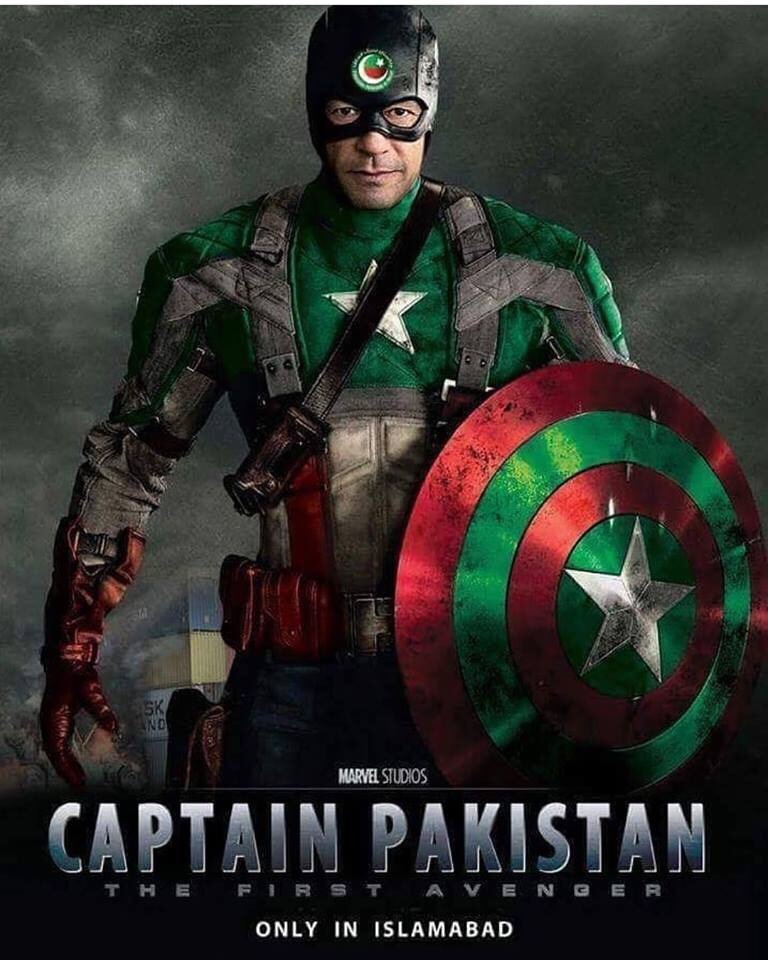
Captain Pakistan and the Faustian Pact

Imran Khan of course has made a Faustian bargain and Mephistopheles is probably some shady top-brass general. A few points:

(1.) PTI + Army is the “National” pan-ethnic party of Pakistan that relies on the young frustrated nationalistic religious (but not fanatic) Pakistanis active on social media. As said it’s the BJP equivalent but since Pakistan is an Islamic Republic; the populist right-wing stance is of a different stance.

(2.) PPP & PML are the provincial parties and will have to work some sort of grand coalition deal to survive. The ethnic messy substratum layer of Pakistan that Partition and Paknationalism has tried so hard to erase will form half the country. Pakistani politics must adapt and will be interesting.

(3.) there is no doubt that there has been vote fudging; close seats haven’t been declared. I would imagine there is a PTI wave and approximately 10-20 seat victories are questionable however the PTI has arrived.

(4.) I personally find Imran Khan odd (like the Donald) as Vidhi quipped “Pakistan, like the US, has a thrice married leader.” I find Maryam or Fati much more palatable since women present a gentler side of our Islamic Republic..

(5.) I do think that today has been a victory for Pakistan. Democracy with Mughal characteristics has won the day. I jest but on a serious note; the democratic process is taking seed in Pakistan and the fact that the military are being push behind the scenes is a force for good.

(6.) this is very offensive; after 1948 & 1971, any more meddling in Pakistani sovereign territory is simply unacceptable and I say this as someone who is on the Barkha Dutta/Arundhati Roya spectrum of Pakistan (believe it or not so is Kabir).

(7.) Pakistan’s economy is in a right mess let’s see if Mr. Clean can fix it up but the biggest reason is of course Mephistopheles himself. I’ve seen the Marlow play twice (once with the Game of Thrones chap & Marlow descendant Kit H) and I genuinely can’t remember how the play ends. I’m not going to google it but let the suspense play out; let see how the reality tv version goes..

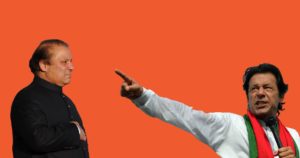
Is PTI the BJP of Pakistan and Imran Khan, Modi

To be honest to compare the political cultures of Pakistan and India is insulting to the latter.

For instance the condemnable lynching of the Muslim cowherd has been loudly and clearly condemned by the Indian political and media establishment whereas Aasia Bibi is still in jail.

It is furthermore arguable that the more right wing parties in India are still more liberal than the left wing parties in Pakistan since the Indian Right, by and large, accepts the Nehruvian settlement whereas the Pakistani left accepts the Islamic Republic.

Notwithstanding these caveats (after commentators complained of the anti-Indian bias on BP I want to make sure I check myself); if we are to map the Indian and Pakistan political scenes I do see some symmetry between IK & Modi.

One striking one is that they both have rather weird sex lives and haven’t been able to make marriage work for them individually.

Tough times ahead for Pakistan if Imran Khan does get to power. However I will say this that like Modi he does seem rather incorruptible perhaps because he doesn’t have a dynasty.

I would never accept Jemima’s sons in a dynastic setting; Pakistan has a hard enough time dealing with Benazir’s brood. The advantage the Sharifs have with their children is that their children (Maryam et al) exude a Pakistaniness that only comes from being immersed in the environment. Bilawal suffers from the Rahul syndrome (to make another Indo-Pak comparison).

Why do nonmuslims treat muslims so badly (b)?

Canada’s parliament passed Motion 103 by a vote of 201–91 on March 23, 2017. The vote is nonbinding and some might allege that Tarek Fatah [an important leader of the global minority and liberal muslim movement] is over-concerned with it. This bill was pushed by the nonmuslim post modernist global intelligentsia in collaboration with the Arabist Lobby and soft Islamists as a way to support soft Islamists against moderate and minority muslims. Many of the Canadians duped into supporting Motion 103 are well intentioned useful idiots.

Tarek argues that Motion 103–which he believes is on the pathway to bringing blasphemy and apostasy laws to Canada–is precisely what most of Canada’s muslim immigrants came to Canada to run away from. I would add that this brings chills of fear down the spines of Canadian muslims and muslims who want to move to Canada. If Motion 103  ever became binding, it could be used to severely limit the freedom of art, thought, intuition and feeling of Sufis, twelvers, sixers, other minority muslims, moderate Sunnis, atheist muslims, ex-muslims; on the grounds that their practices, songs and sayings are Islamophobic and offensive to “muslims.”

Tarek Fatah said:

  • “it is almost as if you say Hindu or white man is an abuse now a days.”
  • when the muslims [Umayyad dynasty] tried to kill all remaining blood descendants of Mohammed’s pbuh family, the only country that protected the prophet’s pbuh family was Hindustan. For which Hindustan was attacked.
  • the holy Koran is not currently sequenced in the order Allah and Gabriel revealed it to the holy prophet.
  • Usman [and Fatimah] assembled the holy Koran in its current order twenty years after the holy prophet pbuh passed away.
  • Usman burnt three hundred copies of the holy Koran that didn’t exactly match his preferred written Koran.
  • muslims murdered the first four rightly guided muslim Caliphs.
  • the guys we are expected to follow got murdered by the very guys telling us we should follow them
  • my Hindu, Christian and Jewish friends make jokes . . . but when I do I can be killed
  • Hindus laugh all the time because Hindus have 50 million Gods so Hindus can pick a God and make fun of Him (the God they picked) because the other guy doesn’t even know that is a God.
  • [Hindus] have 50,000 books. No one can read them all. So no one knows how to get offended.
  • Just by holding the Koran [in a public talk] someone can get offended
  • Our greatest [muslim] saints . . .  are celebrated by Sikhs and Hindus, not by muslims
  • Hindus are too busy getting MBAs or becoming CEOs to notice
  • All Islamaphobes in Iran die
  • Mansur Al Hallaj was beheaded for speaking the truth in Iraq 922 AD.
  • Nizammuddin Auliya said I have two doors in my house, when the mullah and the king enter from the front door I leave because evil comes from the front door with the ruler and the mullah come together [I would strongly recommend that everyone visit his Dargah in Delhi during their next trip. It is a life altering visit.]
  • There is a fatwa against the same microphone which is used to broadcast the morning prayer across the world.
  • Holy Land Foundation trial revealed that the Muslim Brotherhood or Ikhwan internally said in 1991 that “these are our organizations that we run under different names”:
    • Islamic Society of North America or ISNA
    • Muslim Student Association or MSA that has a presence in every urban high school in Canada and the United States
    • The Muslim Association of Scientists
    • seven others
  • We are waging a civilization jihad against western civilization by infiltrating and destroying from within
  • Not a single Indian muslim volunteered to fight on behalf of the Mukti Bahini [this is unfair . . . they were asked not to volunteer by Indira so that the Bangladeshi freedom struggle was not discredited. The mistake is Indira’s if there is a mistake.]
  • War between Mullah’s Islam and Allah’s Islam
    • There was no “Mullah’s Islam” during the life of the prophet pbuh.
  • The middle east was the only part of the world to not side against the Nazis in WWII.
    • many Nazis went to Egypt and Saudi Arabia in 1945
  • Soviet muslims defeated Hitler in WWII
  • Islam owes a lot to the Eastern Orthodox Church, to the Zorastrians and to the Hindus
  • Islam is Judaism planted on pagan Arab culture
  • We will eliminate Jihad in India before we do it anywhere else.

    • India is the only country where a muslim can speak the truth and survive [I would add the United States]

  • Despite a bounty on Tarek Fatah’s head with an Imam saying I will slit your throat was conquered by a million Indian muslims protecting Tarek Fatah.

Continue reading Why do nonmuslims treat muslims so badly (b)?

Pakistan Elections 2018

Pakistan heads to the polls on July 25th. I happen to be in the middle of a move, so I have not been posting much but a short note on the election is certainly due. Back in 2013 Pakistan had its first peaceful democratic transfer of power and it looked like some sort of democracy was finally taking root, with the military still exercising disproportionate influence but with an elected government running most of the country according to its own priorities. Unfortunately, the trend line has since reversed and done so in spectacular fashion. There are many theories about why this particular reversal happened, with some people blaming the party in power (the nominally right of center PMLN) and others the overweening ambitions of GHQ (*General Headquarters. The army). Whatever the triggers, it seems that at some point the army high command decided that it could not coexist with Mian Nawaz Sharif and his politically ambitious daughter (Maryam Nawaz Sharif) and for the last year and a half the army, primarily acting through its intelligence agencies (for the rough stuff) and ISPR (the PR wing of the army, now expanded into a vast public relations operation with a serving general in charge) has been on a crusade against the PMLN in general and Mian Nawaz Sharif (MNS) and his daughter in particular.

The operation has not gone according to plan; it seems clear that the army expected that MNS would give up the fight easily and the PMLN (a party once put together with the help of the army and including many professional turncoats) in any case will get the hint and push him out and replace him with his more cooperative younger brother (Mian Shahbaz Sharif, MSS). But MNS has refused to back down and most of the party has chosen to stand by him. The army has been forced to resort to more and more blatant attempts at political engineering but every escalation has been met by even more stubborn and public resistance from MNS, culminating in his return to the country after being sentenced to a long prison term in a corruption case where legal norms were openly flouted and the fairness of the judiciary was seriously compromised. Multiple national and international observers have already commented on the kind of tactics being used to corner the PMLN and to give an unfair advantage to Imran Khan’s PTI and I won’t go into those details (see links for more on that), but this level of blatant military intervention has also stiffened the resistance of the PMLN and seems to have energized their supporters. At the same time, the combination of 24/7 one-sided propaganda in the Pakistani media and the behind the scenes pressures applied by intelligence agencies has not been without effect, with several candidates disqualified, others induced to switch sides and all facing the possibility of more engineering on election day. The end result is that there is great uncertainty on the eve of the election. Polls generally indicate a close contest, but the unknown unknowns make any guess hazardous.

That said, it is the job of pundits to make predictions, so I will make mine. We will see how it turns out tomorrow. Continue reading Pakistan Elections 2018

A Profile in Courage

I am not adding anything extra with this short news item, I think the news speaks eloquently and voluminously by itself. I just want to add that I feel utterly humble when I consider how much courage and determination people like  Jibran Nasir possess to do what he is doing day after day in a place like Pakistan.

Rare secular candidate in Pakistan hounded by angry mob

Labaik spokesman Ejaz Ashrafi said his party “did not send anyone to do this”, adding that people running in elections should declare their faith.

Nasir gained nationwide prominence in 2014 after staging protests against the Red Mosque, the Islamabad center of a militant network with links to Pakistani Taliban strongholds in the northwest and in neighboring Afghanistan.

The mosque was the site of a military standoff in 2007, but within two years its chief cleric was freed from detention and was once again calling for strict Islamic rule across Pakistan.

The mosque campaign earned Nasir a phone call and death threats from a high-ranking Taliban commander.

“We are doing it for the millions of Pakistanis … who right now are forced to choose amongst the lesser of evils, who are willing to embrace different political leaders with all their biases and religious bigotry,” he said.

“Every day I am carrying on with my mission, they are making a fool of themselves.”

https://www.reuters.com/article/us-pakistan-election-independent/rare-secular-candidate-in-pakistan-hounded-by-angry-mobs-idUSKBN1KD1L7

Important WhatsApp Forward on the State of Pakistani politics

This is one of the few times that the Army has dramatically underestimated the will of the Pakistani people. Even though I dislike democratic parties in Pakistan; I stand with the Sharifs. The arguments that they are the only corrupt forces in Pakistan is laughable and derisive.

This has to break the back of the Army and I think the time has come to return to the barracks. The fear of Balkanisation in Pakistan is constantly stirred up by the Army to justify its interference.

Pakistanis are not interested in continued aggression with India and frankly there is only force in Pakistan that perpetuates it. I’m very upset with the Military since I dislike hypocrisy.

Imran Khan is a moron, the Bhuttos are just not a serious force (BB forgot to localise her kids) and it’s only the Sharifs that have that tactile touch to rally the population.

General State

A sinister game is underway to install Imran Khan and his ilk. This is the same man who has labeled a sizable number of people of Punjab as donkeys. His right hand man in KP, Pervez Khattak has said in a rally that “wherever I see flags of PPP and other parties flying over homes, I immediately come to know that the residence is occupied by children of prostitutes.” What Imran Khan’s ticket holder Aamir Liaqat has said about Maryam Nawaz is so disgusting that it cannot even be repeated here! This is the mindset which is going to rule this country in the coming days as DG ISPR has already indicated that this year is the year of change. Continue reading Important WhatsApp Forward on the State of Pakistani politics

Croatia..

It’s been a fairly hectic week since I was Vidhi’s +1 at ICML (international conference of machine learning). It took place in Sweden and I wanted to share some intelligent thoughts about it but as always it’s difficult to go deep when on the move.

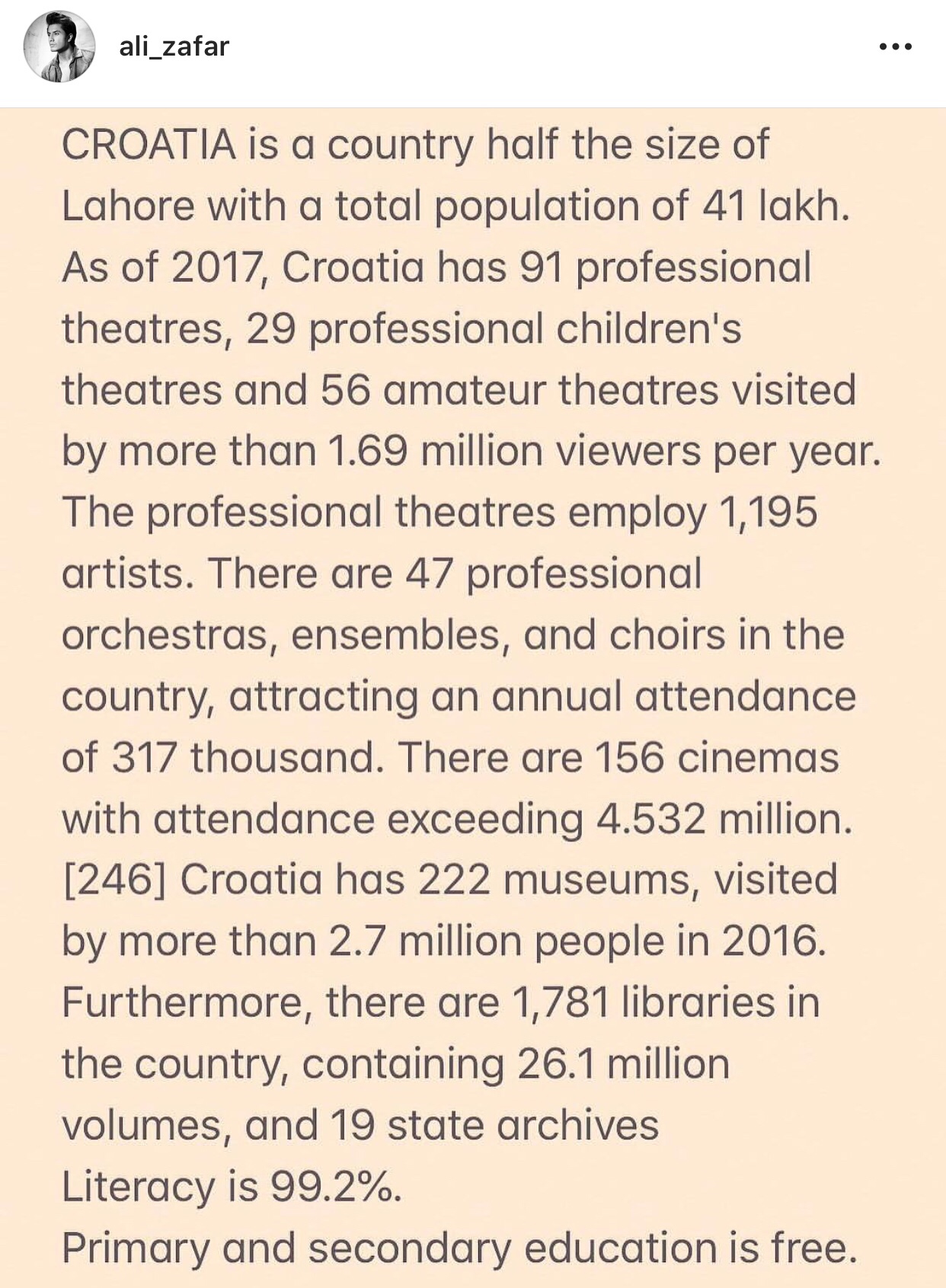
Being married to a Sindhi scientist is quite amusing but it leaves me little time to blog.I was really moved by the above post by Ali Zafar; Pakistan shouldn’t be as f*cked up as it is and really needs to do better. Croatia’s spirited play at the World Cup hints at a very cohesive nation state; Pakistan must avoid the fate of Yugoslavia..

I’ve been tracking the movement of the Sharifs and I must say I’m very very impressed by their decision to go back to Pakistan; it’s a rare moment when Punjabi politicians stand up to the Punjabi establishment. The army has overplayed its hand when it’s lost my support; I don’t like the hypocritical singling out of the Sharifs especially when Nawaz is pro-business, pro-India and pro-peace…

Brown Pundits