Browncast episode 71: Stand Up Comic Rajiv Satyal

Another BP Podcast is up. You can listen on LibsyniTunesSpotify,  and Stitcher. Probably the easiest way to keep up the podcast since we don’t have a regular schedule is to subscribe at one of the links above.

You can also support the podcast as a patron. The primary benefit now is that you get the podcasts considerably earlier than everyone else.

Would appreciate more positive reviews! It’s been a really really long time that we’ve been on 30 iTunes positive reviews. I notice that Alton Brown’s Browncast has 30 reviews on Stitcher alone! Help make us the biggest browncast there is!

In this episode I talk to Rajiv Satyal, an Indian-American comic who is becoming increasingly visible on the standup circuit. We discuss his background and his thoughts about comedy, politics, identity, cancel culture and whatever else comes up.

Browncast Episode 70, Urbane Cowboys on the Right

Another BP Podcast is up. You can listen on LibsyniTunesSpotify,  and Stitcher. Probably the easiest way to keep up the podcast since we don’t have a regular schedule is to subscribe at one of the links above.

You can also support the podcast as a patron. The primary benefit now is that you get the podcasts considerably earlier than everyone else.

Would appreciate more positive reviews! It’s been a really really long time that we’ve been on 30 iTunes positive reviews. I notice that Alton Brown’s Browncast has 30 reviews on Stitcher alone! Help make us the biggest browncast there is!

This week I (Razib) talk to Josiah & Doug of The Urbane Cowboys about the American Right. We hit impeachment, Syria, and The Dispatch.

If you enjoy the Browncast, I do recommend The Urbane Cowboys!

Browncast Episode 69, You’re Southern South Asian!

Another BP Podcast is up. You can listen on LibsyniTunesSpotify,  and Stitcher. Probably the easiest way to keep up the podcast since we don’t have a regular schedule is to subscribe at one of the links above.

You can also support the podcast as a patron. The primary benefit now is that you get the podcasts considerably earlier than everyone else. I am toying with the idea of doing a patron Youtube Livestream chat, if people are interested, in the next few weeks.

Would appreciate more positive reviews!

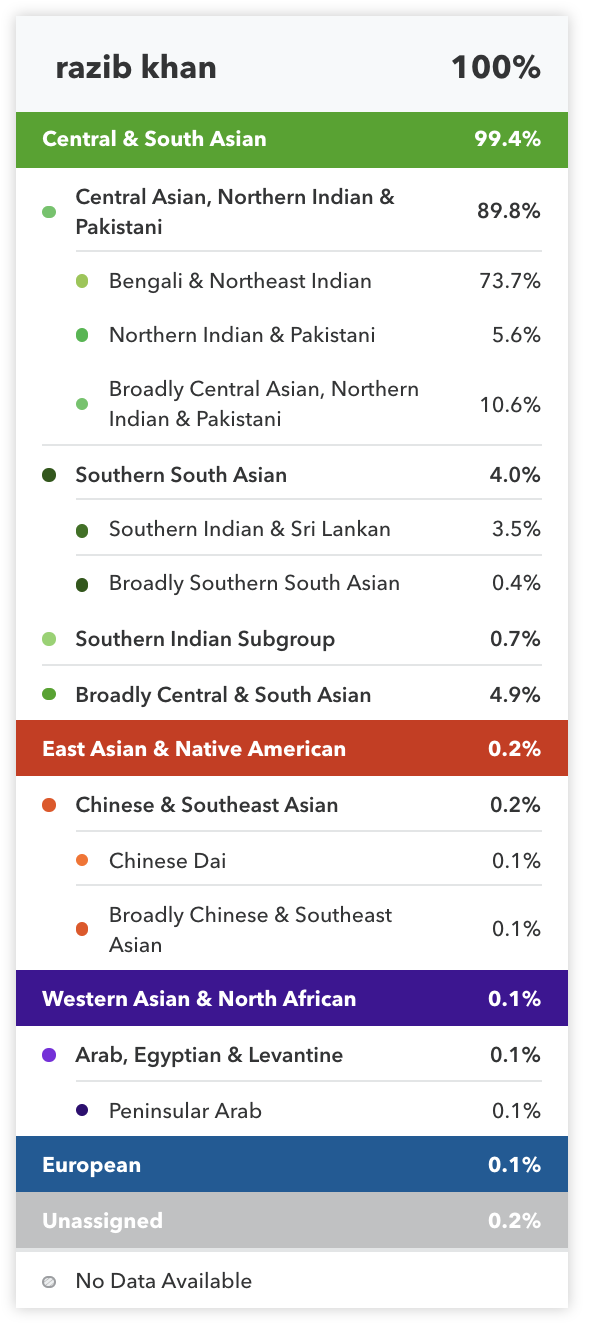
This episode Razib and previous guest Surya Yalamanchili talk about the updated ancestry composition for South Asians from 23andMe. For nearly a decade we’ve all been 95% “Broadly South Asian.” Now most of you are part Bengali!

Film Review: What Will People Say?

**Caution: Spoilers Ahead**
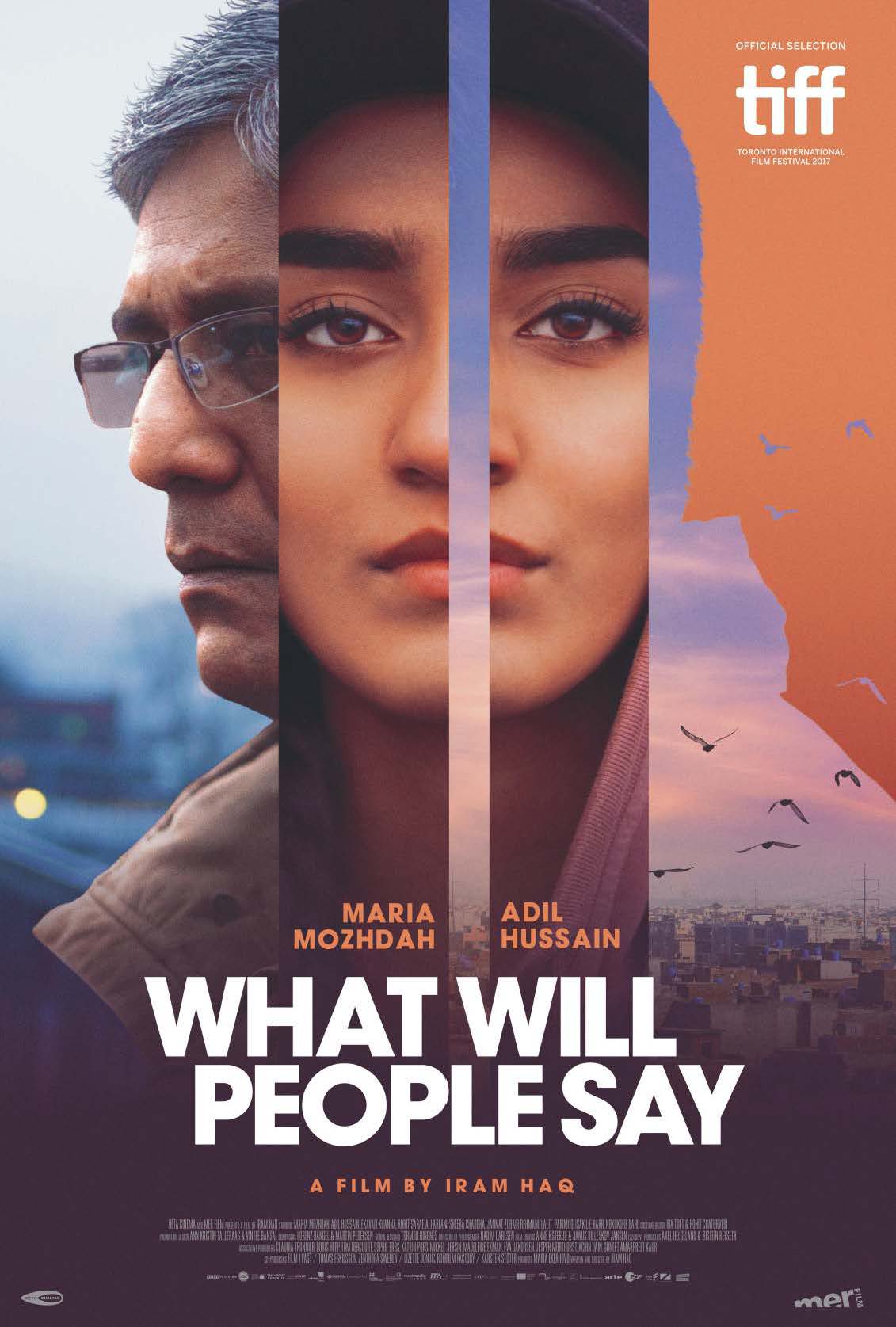
Image result for what will people say film

I was watching the film ‘What will people say’ (courtesy, Kanopy), an official selection at the Toronto film festival in 2018. It is a story familiar to anyone who grew up in Pakistan or in a desi family abroad. A young, second-generation Pakistani teenage girl (Nisha) in Norway wants to live her life like any other teenager in her peer group but is restricted by her parents. Like most rebellious teenagers anywhere in the world, she finds ways to do what she wants to do (go out partying with a friend in the middle of the night) but stops just shy of having physical relations with one of her guy friends. One such day, she gets caught by her father who finds one of her male Norwegian friends in her room and starts beating him and then turns his fury on her. A neighbor calls the police and Nisha is escorted to a safe place by Norway’s version of the CPS.

After spending a night at CPS, Nisha’s mother calls her to tell her that everything will be okay and that her father will pick her up from CPS in a few minutes. Nisha, being a teenager, falls for this trap. She ends up on a flight to Pakistan with her father. Her father leaves her at his sister’s house and returns to Norway the next day. Nisha tries to contact someone in Norway but she has no access to international calling or internet. Her first night, she tries to run away in the streets but comes back to find her aunt at the door telling her that the nearest airports in 350 Kilometers away. At another instance, she tries to send a message to one of her Norwegian friends via facebook through a net cafe but is caught and her Norwegian passport is burned. She spends eight months at that place. While she is there, she falls for one of her male cousins living in the same house.

One night, they are caught kissing at night by local police who beat him mercilessly and ask her to strip at gunpoint. The police then ask the guy to fondle her in front of them, all while taking photos of them. The couple is then dragged to their house and police demand money in exchange for deleting those photos. Nisha’s father is summoned from Norway by the Pakistani relatives and she is sent back. While Nisha’s father is in Pakistan, he spits at her face and then takes her in a taxi to the top of a mountain and orders her to jump from there. She tries to plead with him while he throttles her and tries to push her. He is unable to, and they end up back in Norway.

There is a family meal and her mother tells her that they are giving her a final chance. The prospect of her becoming a doctor is brought up and that it would be one way in which the honor of family can be redeemed. Some of the dialogues used by her mother upon her return are,

People don’t even invite is to weddings anymore.
I wish you were stillborn”.

Within a few days of her return, she comes back from school to find that there is a ‘match’ ready to happen. The boy (Adnan) is a doctor in Canada and from a Pakistani family. Adnan’s aunt is visiting Nisha’s house and he is present via Skype.

Her father muses out loud that she can study and later work once she is in Canada. The boy’s aunt says ‘No, there is no need for studies or work. Adnan earns plenty of money. She’ll later be busy enough with children and the house”.

Nisha’s mother agrees with this statement.

After a brief chat, the ‘match’ is finalized and they are officially “engaged”. Sweets are consumed by everybody present (they are Pakistani, after all). The boy’s aunt then says, “Nisha, we are doing it only for your wellbeing”. The following night, Nisha, who had been rooming with her younger sister, decides to run away from the house again. It is snowing outside and before she leaves, her younger sister (who is about 6-9 years old) wakes up and sees her leave but doesn’t say a word. Once she has climbed down from her third story apartment, she walks towards the street outside their apartment complex and looks back. Her father is standing in the window, looking at her. Their eyes meet for a few moments and then Nisha takes off in the snow, running far away from the house. The End.

I thought the movie was generally well-made. There is some exoticization of Pakistan, as one expects in most films for a primarily western audience. The narrow streets, old houses, mountains in the background and a dilapidated bus, with Khawaja-siras (transgender people) selling boiled eggs to passengers, the old school vegetable and fruit market, classrooms without whiteboards and households without domestic servants. I read later that the story is loosely based on the life of its director, Iram Haq.

The premise, as I said earlier, is familiar to a Pakistani or a Pakistani-origin person. The rank hypocrisy of Pakistani society, the guilt-trapping (Pakistani parents’ favorite sport), violence in the name of honor and efforts to ‘save face’ in the community are daily realities of a desi household. While honor killings get splashed as headlines (deservedly), there is a lot of ‘micro-violence’ that happens every day in a middle-class Pakistani household with young girls (I’m talking about a representative sample). Some of the statements that I have bolded and put in quotation marks in the synopsis are familiar tropes of Pakistani parents, once they find out that the human being they created is not a robot that they can program. The situation, however, is much more dire for girls than it is for boys. Particularly when it happens abroad. One of my mentors used to say that Pakistanis in the diaspora tend to be normal people until their daughters start growing up. If it were up to Pakistani parents, they would bottle up puberty of their children and throw it away in the trash, instead of dealing with it like people everywhere else.

I write this not just as a commentator but as a witness. Both of my sisters, at different times in their lives, were ‘disciplined’ when they developed an interest in men that my parents had not chosen for them to marry. Sister number one was a teenager and had a crush on one of her teachers (which is the most teenager thing that I can think of). The guy in question used to visit our house for coaching (a normal occurrence for our household, to be clear) and he belonged to a lower-middle-class background. Once the ‘crush’ was discovered, he was banished from our house and my sister was warned never to mention his name again, or there would be dire consequences. She was 16 at the time. Around the time that she turned 17, she was engaged to a cousin who was studying abroad at the time. She got married at 18 and has lived abroad ever since. She has always been an obedient and slightly-passive child and has done okay in life, despite the obvious disadvantage.

Sister number 2 has always been a more outwardly emotional and strong character. Her first ‘issue’ arose during teenage years when she was found talking too many times with one of the male cousins. She would also ‘dress up’ (as much as one could in a provincial Punjabi town) when she went to coaching centers in the city during her high school years. Later, when she was in college, she needed some help with coursework and an acquaintance who worked in that profession was asked to help. The acquaintance deputed one of his juniors to help my sister. Fast forwards a few years and they were romantically involved. My parents were having none of that. They tried to ‘arrange’ her marriage at different places but she would stage some sort of stunt (act cold/be sarcastic/or just being rude) to get out of it. She tried to kill herself at least twice during this period. She was probably physically beaten more than once as well (I was at boarding school between 2000-2006 and in med school for 5 years after that so I only heard these things second-hand). I had met the dude in question and found him to be okay, nothing too spectacular or bad. As the firstborn male, I held a certain role in the family so I first cajoled my mother (who hated the guy partially because he was 10-12 years older than my sister and partially because he came from a lower-middle-class family and my sister has always had ‘high’ ambitions) and later my father (who felt guilty for having introduced the couple in the first place) and sister number 2 finally got married to him.

Were my parents monsters or merely representing the middle class, small-town, religious morality that they themselves grew up in? I don’t know the answer to that question. They are otherwise very decent, educated, ‘honorable’, pious people and a neutral observer meeting them for the first time won’t be able to see anything wrong outwardly. The pathos inflicting my parents is not restricted to them, it is shared by everyone around them, most of the society is rotten. And it’s not getting any better with time.

P.S A book that deals with issues of ‘honor’ in the Pakistani diaspora, particularly in Britain, is ‘Maps for lost lovers’ by Nadeem Aslam. One can also glean some knowledge about this from certain portions of the movie ‘Blinded by the Light’.

Browncast Episode 67, Conversation with freelance academic Justin Murphy

Another BP Podcast is up. You can listen on LibsyniTunesSpotify,  and Stitcher. Probably the easiest way to keep up the podcast since we don’t have a regular schedule is to subscribe at one of the links above.

You can also support the podcast as a patron. The primary benefit now is that you get the podcasts considerably earlier than everyone else. I am toying with the idea of doing a patron Youtube Livestream chat, if people are interested, in the next few weeks.

Would appreciate more positive reviews!

This episode we talked to Justin Murphy. A very online “post-academic,” Murphy was until recently a political scientist in the UK. Today he has a popular YouTube channel and has relocated to the USA (where he’s from).

We talked about being an academic-without-institution, the recent embracing of his Roman Catholic background, and the general trends in culture, online and offline.

Living in a post-biracial America

Where Does Affirmative Action Leave Asian-Americans?

For the purposes of this article, Alex Chen, an 18-year-old senior at the Bronx High School of Science in New York City, is the “typical Asian student.” Alex has a 98 percent average at one of the city’s elite public high schools, scored a 1,580 on the SAT and, as far as he knows, has earned the respect of his teachers. Alex is also the vice president of technology for the Bronx Science chapter of the National Honor Society, the director of graphics and marketing for TeenHacks L.I. (“the first hackathon for teens in Long Island”), a member of the cross-country team, the vice president of the school’s painting club, the president of the Get Your Life Together club (visitors from various businesses come talk to students) and the senator for his homeroom. In his free time, he plays Pokémon and goes on long jogs through Van Cortlandt Park in the Bronx. His parents, Qiao and Su, emigrated from China in the ’90s and worked their way through commuter colleges in Queens. They live along with Alex’s little brother in a modest apartment in outer Queens….

The piece is very long. It mostly focuses on East Asians for various reasons. But one thing that I think confronts South Asians is that many of us are quite dark-skinned, and though not African American, are more liminal physically to that identity than East Asians. To be entirely frank one perverse, but predictable, aspect of American-style affirmative action is that a dark-skinned South Asian doesn’t obtain the same status and benefits as a white person of Latin American origin.

Is it time for Asian Americans and Latino Americans to ask to be considered “white”? (c)

This is the next article in the series “Is it time for Asian Americans and Latino Americans to ask to be considered “white”, “Is it time for Asian Americans and Latino Americans to ask to be considered “white” (a)”,  Razib’s  “Hasan Minhaj’s Patriot Act on Affirmative Action“, and “Is it time for Asian Americans and Latino Americans to ask to be considered “white” (b)”.

A growing part of the global caucasian intelligentsia are attacking Hong Kong protesters as far right fascists. This is part of a growing trend among xenophobic caucasians attacking Asians for “white supremacy”, “nazism”, “racism”, “oppression”, “patriarchy”, “imperialism”, “colonialism”, “hegemony”, “exploitation.”

Why is this happening? Is it just jealousy? Is it that many caucasians fear that “darkies” own a growing percentage of global wealth, earn a growing percentage of global income? Is it fear that “darkies” have growing competence, capacity, merit, mental health, intelligence? Is it fear about improving “darkie” academic outcomes?

I am not sure. Can everyone share their thoughts?

How should us “darkies” react?

I believe in loving and respecting our enemy with all our hearts, all our souls, all our minds and all our might. This includes everyone who is disrespectful, not loving, racist, bigoted, prejudiced, white supremacist, Nazi, facist, oppressive, hegemonic, exploitative, patriarchal towards us. And everyone who accuses us of being disrespectful, not loving, racist, bigoted, prejudiced, white supremicist, Nazi, facist, oppressive, hegemonic, exploitative, patriarchal. And everyone who labels and mislabels us. And everyone who falsely accuses us.

Everyone has the right to freedom of art and thought. If we truly love and respect others, then how can we not respect their right to disrespect and not love us?

The sweetness of love will gradually melt their hearts.

Some might say that this works for most people who are mean to others, but is insufficient for dangerous people. For particularly dangerous people, we can combine the deepest of love and respect with dialogue. And for the most dangerous people, we can combine love, respect, and dialogue with other things.

Can there be any other way?

This topic is one of the reasons The Brown Pundits Podcast would like to interview Irshad Manji:

Irshad Manji has touched the sweetness of the heart, the silence that is always with us. And while I agree with her that we should respect and love others, and not label others. I don’t think we have the right to limit the freedom of art and thought of others by asking them not to label and mislabel us.

One example that inspires me is how Krishna dealt with harsh bigotry, criticism, false allegations, others mislabeling him, disrespect, bigotry, prejudice, white supremacy, Nazism, fascism, oppression, hegemony, exploitation, patriarchy. Krishna insisted that others be allowed to criticize Krishna.

I would be curious to listen to Irshad Manji’s thoughts about this.

Brown down under

This Land Is a Sanctuary for Aboriginal Women. Bulldozers May Soon Come:

Mr. Djab Mara greeted them by burning cherry ballart leaves to cleanse their spirits. Then his partner, Ms. Mahomet, an Arrernte woman, invited the young visitors to view the same tree Ms. Jakobi had unknowingly driven by all her life.

The Arrernte are a group which occupies the center of Australia. How’d she get the name “Mahomet.” I’m 99% sure I know, Afghan cameleers in Australia:

A fourth-generation descendant of a Baluch cameleer who settled in Geraldton, Western Australia, set up a sheep station and married an Aboriginal woman, is proud of her heritage on both sides. She says that it was difficult for her ancestor to acquire permanent residence and permission to marry, but the Afghans were honourable men who preferred to marry rather than rape local women.

America does a good job assimilating immigrants


If you are lucky, you are not aware that Priyanka Chopra got “called out” by a young Pakistani woman for “encouraging nuclear war against Pakistan.”

On the face of it seems very unlikely that Chopra was doing anything more than making a vanilla patriotic statement during a very tense time (I assume literally no one except for insane people would have wanted nuclear war in any case or even a conventional war!).

Though the initial stories referred to a “Pakistani woman”, you can tell by the accent that she was raised in the USA. In fact, she was naturalized as an American citizen at a very young age (she posted the certificate on her Facebook page). To be honest, even when I heard her referred to as Pakistani (she refers to herself as such), I was a bit skeptical and suspected perhaps she was actually American because this sort of self-righteous grandstanding is what America teaches the current generation.

Ayesha Malik is self-centered, ignorant, and milking an issue of genuine geopolitical concern to elevate her own individual profile as a beauty vlogger. Very American.

Notes on podcast & blog

– A greater and greater portion of the traffic on this weblog is mobile (about 60% now). That’s why I redesigned it a while back. This mobile traffic is clearly driven by Indian traffic, which is overwhelmingly mobile.

– There has been a major dropoff in positive reviews on Apple Podcasts and Stitcher. Please leave some positive reviews.

– The downloads are about 50% American (USA). About 10% from India. The balance is other nations.

– I’m still doing all the editing, which is one reason the sound quality is…variable. If you want that to change, you probably should become a patron. Once we hit around $200/month I think we can afford an editor I know who does good work (she edits The Insight). Right now it is costing me $40 a month to host the podcasts and get a good Zencastr account.

But really the opportunity cost of time is the major issue for me. I enjoy recording podcasts. I generally am ambivalent about editing (it’s kind of interesting to listen, but I have to focus on other things besides content).

– This weblog now regularly gets more traffic than my primary weblog, Gene Expression.

Brown Pundits