The Hindification of East India

The Saffron Block

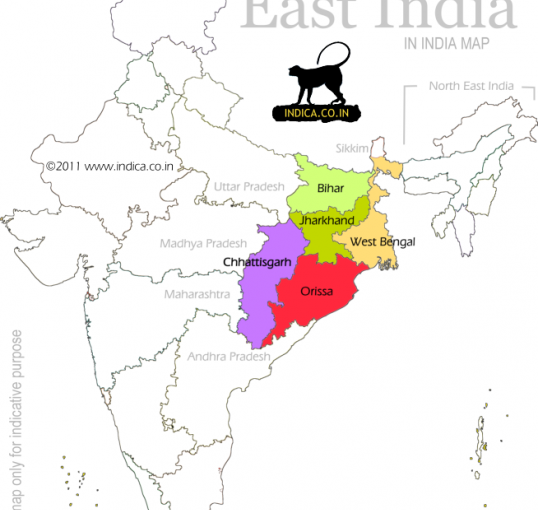
The map of East India has changed colour. Bihar fell to the NDA in November 2025 with 202 of 243 seats, and Samrat Choudhary now sits as the first BJP Chief Minister Bihar has ever had. Odisha went saffron in 2024 under Mohan Charan Majhi. On 4 May 2026 Mamata Banerjee lost Bengal after fifteen years; the BJP took 206 seats and will form its first government in Kolkata. Himanta Biswa Sarma returned in Assam with 82 seats, a two-thirds majority and a third consecutive term. The old Bengal Presidency, once the largest province of British India, is now a single saffron block.

This is the completion, by ballot, of a partition the British attempted by map.

1905

In 1905 Curzon split Bengal. The eastern half was to be Muslim and centred on Dhaka; the western half was to be joined to Bihar and Orissa, which made the Bengalis a linguistic minority in their own province. The Bengali Hindu elite, the bhadralok who ran Bengal’s commerce and letters, fought it bitterly. They did not want to be drowned by Bihari and Oriya numbers. In 1911 the British relented and reunited Bengal.

The Biharis, for their part, had spent two decades campaigning to escape Bengali domination. The 1912 reorganisation that gave them their own province, jointly with Orissa, was their reward.

Linguistic identity then was the prime axis. Hindu and Muslim mattered, but not as much as Bengali, Bihari, Oriya.

The Historical Axis Flipped

A century on, that axis has flipped. The Bengali, the Bihari, the Oriya and the Assamese are voting as Hindus, and they are voting for the same party. The two-nation theory, which Bengal once threw off, is doing its work the long way round.

Hindi,, Hindu, Hindustan

Continue reading The Hindification of East India

Men of State, and the Great Mahatma

A Precedent Post on Gandhi, Ambedkar, and the Authority to Speak

Kabir is right to push back on the deliberately provocative, “pure evil.” It misses what QeA & Nehru were and what Gandhi & Ambedkar were.

This post sets four Precedents.

One. QeA and Nehru were men of state. Neither evil, neither saint. To be evaluated by the standards appropriate to men who build and run states.

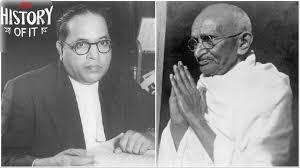
Two. Gandhi was a man of Dharma. He is a saint. Comparing him with QeA and Nehru on their terms is a category error.

Three. Ambedkar is the fourth figure. Not a man of state in the QeA or Nehru sense; not a man of Dharma in the Gandhian sense. He is a constitutional saint, in the Mahatma’s register.

Nehru and QeA may be criticised. They may not be disrespected. Gandhi and Ambedkar are a different order. Discussion of them on this blog proceeds from profound respect for their achievement: the redemption of the soul of India after a thousand years of slavery.

*Thousand years of slavery is not Precedent but rhetorical flourish. It is worth noting that all of the Pakistani commentators on BP would be subordinated “Hindustani Muslims” in the hierarchical world of the Mughals, who explicitly favoured foreign-born Turani and Irani nobles over the converted Indian majority.

Four. SD is not to be quoted on this blog. Initials only where strictly necessary. Reasons at section XII.

Part I. The Distinction

I. The Man of State

The modern state is a Westphalian inheritance: territory, a monopoly of violence, legal personality. A man of state operates inside that frame. He does not step outside it.

QeA was a man of state. He was perhaps the finest constitutional negotiator the subcontinent produced in the twentieth century. He read the Government of India Act the way a master reads a score. In his Fourteen Points of 1929, drafted in response to the Nehru Report’s dismissal of the Muslim minority, he foresaw with brutal clarity that a Westminster majority in a plural society could become a permanent tyranny once the demographic count was fixed.

According to Mohammad Ali Jinnah, โ€œThe Committee has adopted a narrow minded policy to ruin the political future of the Muslims. I regret to declare that the report is extremely ambiguous and does not deserve to be implemented.โ€

There is a reason Pakistanis venerate him to the extent they do. Without QeA, the Muslims of the subcontinent would have remained a set of regional identities & class interests: Punjabi, United Provinces aristocrats, Bengali. He forged a single Islamicate identity out of them and politicised it into a state. In the history of the Ummah, and indeed the world, this is almost unique.

The Two Nation Theory was not his starting point. In 1916, at Lucknow, Sarojini Naidu called him the Ambassador of Hindu-Muslim Unity, and the phrase was earned. He reached for the Two Nation Theory two decades later, when the softer constitutional instruments had been closed off by Congress intransigence and Viceregal haste.

The tragedy of QeA is that the state he called into being never settled its founding question. A secular Muslim who ate pork and drank whisky summoned an Islamic state and then, on 11 August 1947, tried to unsummon it in a speech that Pakistan has spent the rest of its history editing out of its school curriculum. The confusion was structural from day one. It is structural still.

II. The Architect and the Scaffold

Nehru was a man of state of a different temperament. Harrow, Cambridge, Inner Temple. Fabian socialist. Scientific temper. Where QeA built a state around a community, Nehru built one around an idea: that a civilisation as old as India could be poured into a parliamentary republic and would accept the mould. It largely did. We owe him this.

Continue reading Men of State, and the Great Mahatma

Op Sindoor Was Not a Pakistani Defeat: Precedents Two Days From Pahalgam

Two days from the tragic anniversary of Pahalgam (may those brave Martyrs rest in Peace for their sacrifice for Dharma). A useful moment to set down precedents, because a year out the narrative has hardened in places it should not have, and we would like the comments to stress-test these before they calcify further.

Precedent one. Operation Sindoor was not a Pakistani defeat.

Pakistan entered 2025 as a failed state. It exits the Pahalgam year as a diplomatic champion. Whatever happened in the skies over those days in May, the outcome in global perception is unambiguous. A military operation is never only a military operation. It is also how the world reads it, and on that ledger the result is not the one Delhi wanted. No Pakistani commentator across the spectrum treats Sindoor as a setback. Our Pakistani readers can confirm this in the thread, and we invite them to. The Indian premise that Pakistan might now re-engage to recover from some imagined humiliation makes zero sense. The humiliation is not where Indian commentary locates it.

Precedent two. The Crescent commentariat cannot have it both ways.

There is a pernicious Pakistani trait, most visible in the diaspora and the Anglophone class at home. They live distinctly Western lifestyles. They then want Islam for all. Live your beliefs. It is a genuinely offensive thing to cheer on the Iranian revolution, a revolution deeply devastating to the Iranian people, from an American suburb or a DHA drawing room. Only a Pakistani commentator could manage the trick of celebrating the Islamic Republic while exempting themselves from its consequences.

In the Iranian diaspora, religious Shias are quietly ostracised. Persian pride, across pre-Islamic, Islamic and post-Islamic registers, is astonishing in its depth. Some of us, the Baha’is for instance, integrate all three.

The TNT move, which imports Islamist preferences onto others while the class that holds them escapes the reality (QeA typifies this), is the opposite.

Precedent three. The rediscovery of Hinduism is coming, and it will come from South Punjab and Sindh. Continue reading Op Sindoor Was Not a Pakistani Defeat: Precedents Two Days From Pahalgam

Review: The Scattered Court: Hindustani Music in Colonial Bengal by Richard David Williams

In an attempt to shift the focus from geopolitics, I am sharing this review of a book by Richard David Williams (my professor at SOAS).ย 

This piece was originally published in South Asia Multidisciplinary Academic Journal (SAMAJ) in January 2025.ย 

Richard David Williamsโ€™s The Scattered Court: Hindustani Music in Colonial Bengal examines the Calcutta-based court-in-exile of Nawab Wajid Ali Shah (1822-1887), the last ruler of Awadh who was deposed by the British in 1856. The book is based on Williamsโ€™s doctoral thesis โ€œHindustani music between Awadh and Bengal, c. 1758-1905.โ€ It develops a social history of how Hindustani classical music and dance responded to the transition from the Mughal Empire to British colonialism. Using previously unexplored sources in Urdu, Bengali, and Hindi, Williams aims to demonstrate the importance of Wajid Ali Shahโ€™s exile in Calcutta in enabling the rise of that city as a celebrated center of Hindustani music. As he writes in the introduction:

Establishing the connections between Lucknow in Hindustan and Calcutta in Bengal challenges the notion of distant, regional performance cultures, and underlines the importance of aesthetics and the performing arts to mobile elite societies. Since Lucknow is associated with late Mughal or nawabi society, and Calcutta with colonial modernity, examining the relationship between the two cities sheds light on forms of continuity and transition over the nineteenth century, as artists and their patrons navigated political ruptures and social transformations (p. 3).

Most previous studies of Wajid Ali Shah treat his thirty years of exile as a footnote to the culture of Lucknow.1 In contrast, Williams focuses on the court-in-exile at Matiyaburj (located in southwestern Calcutta) in order to examine the impact of the nawabโ€™s presence in Calcutta on the development of Hindustani music in Bengal. He examines the circulation of musicians between the transposed court and musical soirees in North Calcutta. Through his reconstruction of musical life at Matiyaburj, Williams demonstrates that the nawabโ€™s musical innovations continued in Bengal and that he was engaged with his surrounding environmentโ€”for example, by composing lyrics in a mixed Bengali-Hindustani register. Continue reading Review: The Scattered Court: Hindustani Music in Colonial Bengal by Richard David Williams

Brown Pundits