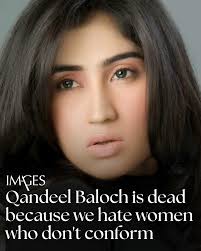
Since we have been having quite an impassioned debate about gender relations in Pakistan (as an aside that thread has close to 300 comments and has become unwieldy to navigate), I thought I would briefly follow up on a few points here.
Firstly, I want to state up front that I do not agree with Q’s repeated invocations of “Onlyfans”. Yes, he is technically on my team (the “Crescentiate”) but I am able to call him out when it is necessary. I would expect the other team (the “Saffroniate”) to also be able to call each other out when it is justified (as for example in the case of one of their members making a direct threat of violence). BP would be a much nicer place if some of the really egregious trolling (mostly by BB) is brought under control.
Q is of course entitled to his views and I suppose that our views differ mostly because I was raised almost entirely in the US. I was also not raised in a particularly conservative family. As an anecdote, my mother has never covered her head. When I was a young adolescent and had a bit of religious fervor and asked her to do so, I was given the firm response that I was living in her house and she would do exactly as she pleased. The conversation obviously came to an end there.
Back to “OnlyFans”: I believe in the right of consenting adults to do whatever they want with their own bodies. This doesn’t mean that I wouldn’t negatively judge someone who chose to start an OnlyFans. It is, after all, a kind of sex work and I don’t really understand why someone with education and opportunities would choose to get into this line of work. That said, it is of course the individual’s choice.
Q is correct that Pakistan is a conservative society and that the normative expectation is that women are kept out of the public sphere. The woman’s domain is seen to be the home. “Chador aur char divari” (I would translate this as the veil and the four walls) is an important concept in Pakistani interpretations of Islam.
Some links of relevance:
1) Sindh govt issues Aurat March NOC with conditions for participants’ clothing, slogans
According to the NOC, Aurat March organisers are “bound to comply with all laws in force” and shall be responsible for the “internal cordon security of the participants”.
It further stated that “all participants/organisers shall ensure peaceful conduct” during the march.
The NOC prohibited “anti-state slogans, banners, speeches or activities”, as well as “anti-religion slogans, placards or objectionable remarks”. It also ordered that “no hateful, provocative, unethical or anti-social content shall be displayed on charts, banners or flexes”.
“Participation, support or representation by any banned outfit /proscribed organisation such as BYC (Baloch Yakjehti Committee), JQSM (Jeay Sindh Qaumi Mahaz) shall strictly not be allowed,” the NOC read.
The district administration also ordered participants not to “wear objectionable clothing” or carry out “promotion for the LGBTQ” community, which includes transgender persons.
The “Aurat March” participants have also been told that they cannot make speeches against the “ideology of Pakistan” or speak against the armed forces.
For the record, I am against this decision that the participants cannot promote the rights of the “LGBTQ” community. This is homophobic and transphobic.
2) Review: Kafeel Offers A Rare Glimpse Into How Trauma Travels Between Generations
3)India refuses to criminalize marital rape. This new series shines a light on it
(Hat tip to Nivedita for mentioning this series “Chiraiya”. Incidentally, this word is usually spelled “Chiriya” in Urdu).
The BBC article notes:
Some 6.1% of Indian women who have ever been married women have experienced sexual violence, according to government data. But despite years of campaigning by activists, India remains among three dozen countries – along with Pakistan, Afghanistan and Saudi Arabia – where marital rape is not outlawed.
Activists have filed a number of petitions in recent years in the Supreme Court calling for marital rape to be criminalised. But the government, religious groups and men’s rights activists oppose any plans to amend the Colonial-era law, which exempts a man for having forced sex with his wife if she is not a minor.
On marital rape, I just want to mention that even in the UK, this was only criminalized as late as 1991, which is surprisingly late. As I mentioned in my review of John Galsworthy’s The Forsyte Saga, marital rape plays a major role in the plot of this novel and was not at all considered a crime during the Edwardian era (the time period in which the novel is set).