There are currently 104 people who have responded in various degrees to the reader survey.
If I limit to South Asians only, the modal reader is an Indian national, though not overwhelmingly so:
There are currently 104 people who have responded in various degrees to the reader survey.
If I limit to South Asians only, the modal reader is an Indian national, though not overwhelmingly so:
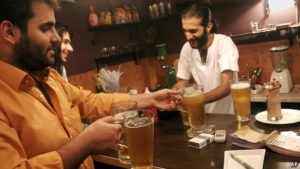
The Washington Post has an article by Khalid Diab about the complications that arise around the issue of obtaining alcohol during Ramadan. Excerpts are posted later. As Shahab Ahmed points out in his magnum opus (What is Islam), drinking alcohol is prohibited in Islam, but it is also an established feature of Islamicate culture; i.e. not only is it regularly used (by a minority), it is celebrated in poems and songs, there are rituals associated with its use, everyone knows someone who drinks and drinkers have their own (albeit not always comfortable) place in society. In some countries (Saudi Arabia, Iran) it is strictly prohibited and users can expect serious penalties if caught, but even in those countries a great deal of regular communal drinking does go on. A few more countries (like Pakistan) have prohibition, but with more exceptions than exist in Iran and Saudi Arabia (non-Muslims and foreigners can buy alcohol, some high end hotels have bars, and so on). In several other countries (Egypt, Tunisia, Indonesia, etc) alcohol is widely available and can be purchased in supermarkets and even in small roadside kiosks (what would be called a Khoka in Pakistan). But in all these countries, there is a visible change during Ramadan: many regular drinkers voluntarily give up alcohol for the month and those who continue to drink may go deeper underground than usual. I have friends who cannot go to sleep without one (or several) nightcaps, but who will not touch drop during Ramadan. They invariably get drunk on Eid.
Some excerpts from Khalid Diab’s article follow:
Although alcohol is considered haram (prohibited or sinful) by the majority of Muslims, a significant minority drinks, and those who do often outdrink their Western counterparts. Among drinkers, Chad and a number of other Muslim-majority countries top the global ranking for alcohol consumption.

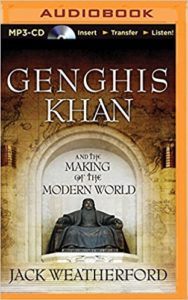
Jack Weatherford is an anthropologist who has spent many years researching the Mongols in general and Genghis Khan in particular. The book is a very sympathetic portrayal of Genghis Khan and his descendants and their impact on world history. It is a very easy read and is an excellent summary of the rise of this amazing man and his (relatively few; a total population of less than a million) people to greatness. And there can be no doubt that Temujin is one of the most remarkable characters in world history; one of those (few) heroes about whom you can confidently say that without them, the history of his people would have been VERY different indeed. He is a one-man refutation of the idea that individuals, no matter how prominent, do not really matter and all we need to study are the aggregate/impersonal/stochastic processes that drive history. Continue reading Book Review: Genghis Khan and the Making of the Modern World
There have been a few comments with accusations of Genocide, Ethnic Cleansing of Tamils by the Sri Lankan Govt.
First the numbers which are thrown around.
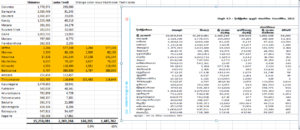
Lankan Tamils Living among Sinhalese
65% of the Sri Lankan Tamils live in Sinhalese majority areas. After adding up, I was shocked as I was expecting somewhere around 30%.
The numbers are from the 2012 census. The third column (in Sinhala) are the Indian/Upcountry Tamils. In comparison less than 1% Sinhalese live in Tamil majority regions.
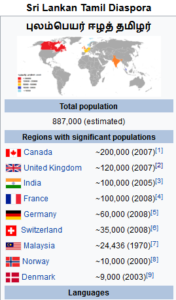
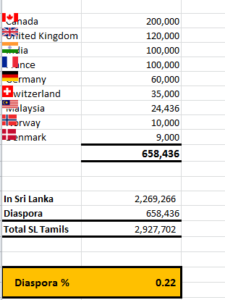
Diaspora Sri Lankan Tamils
A number that has been thrown is 30% of Sri Lankan Tamils live outside the country. The numbers say that it is 22%.
Not all of the Diaspora are refugees
a) Some migrate for economic and education reasons
b) The LTTE one child policy. The LTTE required one child per family to become cannon fodder. If the family had money, the LTTE would arrange to smuggle the child out to a Western country as a refugee. Thereafter the refugee would have to make monthly donations too.
Religious War
The SL Army or the Budhists would never intentionally destroy a Hindu Temple. The Buddhist, specially those in the Army make vows and pray to Hindu gods for their protection. Buddha cannot provide protection (like a God), he is a teacher in the Theravada Tradition. No question Hindu temples were shelled in the North and East when the LTTE used them as shields. During the last couple of years the Army has been engaged in rebuilding and repairing Hindu Temples
ex LTTE leaders as Govt Ministers
Chief Minister of Sri Lanka’s Eastern Province Sivanesathurai Chandrakanthan, popularly known as Pillayan and Vinayagamoorthy Muralitharan, also known as ‘Colonel’ Karuna was a deputy minister in the Rajapakse govt. Karuna was responsible for killing of 600 Sinhalese and Muslim police officers who surrendered to the LTTE. Ahh the vagaries of power politics.
Some Links, all by Tamil authors.
Mass expulsion of Muslims from Batticoloa, Mannar and Jaffna
http://dbsjeyaraj.com/dbsj/archives/26412
Rajini Rajasingham Thiranagama: Unforgettable Symbol of Sri Lanka’s Tamil Tragedy
http://dbsjeyaraj.com/dbsj/archives/33112
The Broken Palmyra, the Tamil Crisis in Sri Lanka, An Inside Account 1992by Rajan Hoole (Author), Daya Soma sundaram (Author), K. A. Sritharan (Author), Rajani Thiranagama (Author)
https://www.amazon.com/Broken-Palmyra-Crisis-Inside-Account/dp/B000OGS3MW/
Sinhalization of the North and the Tamilzation of the South
http://www.srilankaguardian.org/2011/06/sinhalization-of-north-and-tamilzation.html
Other articles by Sebastian Rasalingam
https://www.slguardian.org/category/clms/columnists/sebastian-rasalingam/page/2/
Sauvrav said “ I did my schooling in Orissa and there is no mention of any thing remotely Sri Lankan in their school textbooks. The other day i was talking to a friend who is a oriya and he laughed it off as myth”
Many references to Kalinga in Sri Lanka primarily the Mahavamsa and Culavamsa and the Rock edicts of Nissanka Malla (1187–1196)
The Coming of Vijaya (Mahavamsa Chapter 6)
In the country of the Vangas[1] in the Vanga capital there lived once a king of the Vangas. The daughter of the king of the Kalingas was that king’s consort.
http://mahavamsa.org/mahavamsa/original-version/06-coming-vijaya/
Nissanka Malla (1187–1196)
Son of Queen Parvati and King Jayagopa. This is mentioned in a rock inscription made by Nissanka Malla at Galpota. This inscription describes Jayagopa as being the reigning king of Sinhapura. Nissanka Malla had two wives named Kalinga Subadradevi and Gangavamsa Kalyanamahadevi.[2] He was also a son-in-law or nephew of Parākramabāhu
Magha of Kalinga (Culavamsa CHAPTER LXXX: THE SIXTEEN KINGS 58-62)
of the day lotuses ? that is of peace ? (a man) by name Magha, an unjust king sprung from the Kalinga line, in whom reflection was fooled by his great delusion, landed as leader of four and twenty thousand warriors from the Kalinga country and conquered the island of Lanka. The great scorching fire ? King Magha ? commanded his countless flames of fire ? his warriors ? to harass the great forest ? the kingdom of Lanka3. While thus his great warriors oppressed the people, boasting cruelly everywhere: “We are Kerala warriors”, they tore from the people their garments, their ornaments and the like, corrupted the good morals of the
The reference is raw OCR
http://books.lakdiva.org/culavamsa/vol_1.html
Mahavamsa and Culavamsa are one of the longest continuous histories. Oral tradition since 3rd century BC and written down in 6th century AD. It has a consistent dating system, i.e from the death of the Buddha. To quote “It is very important in dating the consecration of the Maurya emperor Asoka,”
Asoka had been lost in India. He was found and identified and dated using the Mahavamsa.
To quote from the Mahavamsa Chapter 5; This Chapter references the Moriyas, Bindusara and Chandragupta among others.
Be it known, that two hundred and eighteen years had passed from the nibbana of the Master unto Asoka’s consecration.
Excerpt from a review of Allens two books by my Uni batch mate Sunil Koswatta.
James Prinsep (1799-1840) in his excursions in North India, he and his colleagues like Alexander Cunningham, had come across many an inscription where the letters were clearly inscribed but the Indian scholars whom he and others before him had consulted had been unable to help as they had completely lost knowledge of the alphabet in which these inscriptions were written.
It is said that during medieval times Firoz Shah Tugluk who shifted the Asokan pillars from Topra and Meerut to Delhi invited scholars to read them and none was able to do so.
By this time, scholars studying Indian antiquities had progressed a great deal in the study of Sanskrit, the great classical language of India, and understanding what the inscriptions had recorded did not pose much of a problem. It was clear to Prinsep that the authority who had got these inscriptions installed was a King (raja) calling himself Devanampiya, literally meaning ” the beloved of the gods.” But what was baffling Prinsep and his associates of the Bengal RAS was, who was this Devanampiya Raja?
From his readings of the Mahavamsa and its commentary, the Mahavamsa Tika, Turnour knew of a king named Devanampiya Tissa. This fact was intimated to Prinsep who, not knowing the details contained initially believed that the edicts in North India had been installed by the Sri Lankan king in his overwhelming devotion to the new faith. Not long afterwards Prinsep came across an inscription of a grandson of that Devanampiya Raja and realized that the personage in question was an Indian ruler. Turnor in the meantime having read the Buddhist mission to Lanka, communicated to Prinsep that the Devanampiya Raja of the Indian inscriptions was none other than Dharmasoka, the “patron” of Devanampiya Tissa who had bestowed many gifts, including a second consecration on Mayuryan models and the title Devanampiya on his colleague, the ruler of the small island kingdom called Tambapanni off the southern tip of Jambudvipa.
http://www.dailymirror.lk/news-features/The-Buddha-and-the-Sahibs/131-158316
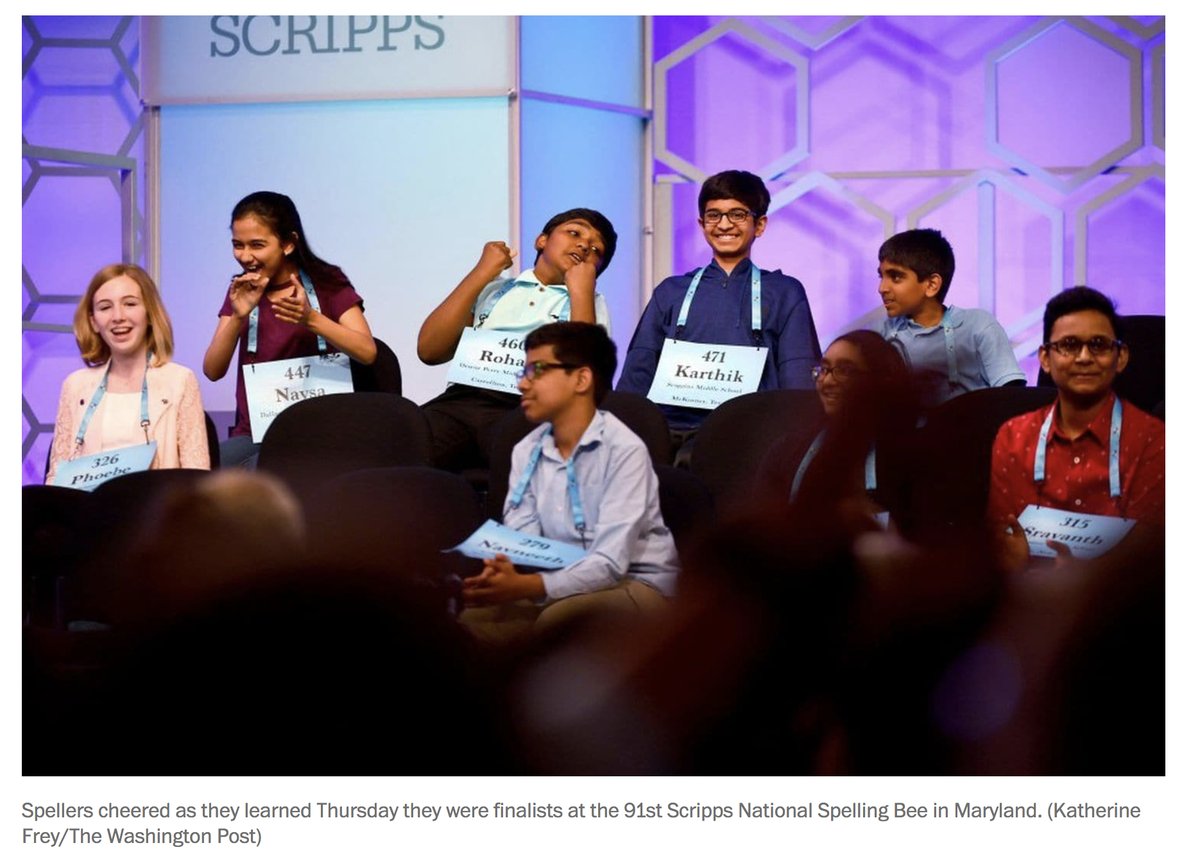
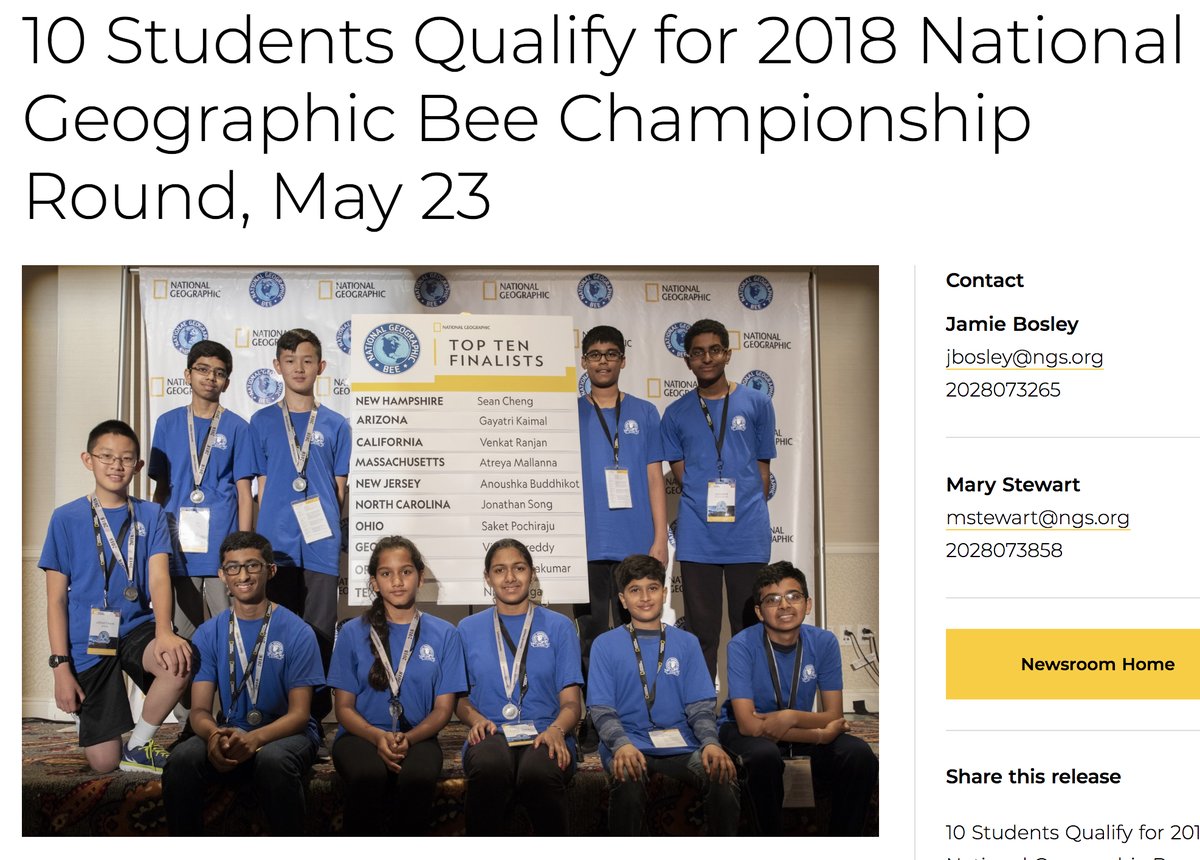
Though Texas doesn’t get all the glory! The National Geo Bee was won by a kid from Northern California.