From the pre-print of the Narasimhan et al paper, we got hold of 3 ancient Bronze Age samples which the authors contend, based on their genetic ancestry (which had significant levels of AASI ancestry and no Anatolian Neolithic farmer ancestry (ANF)) to have been South Asian in origin.
Since these 3 samples were found outside of the geographical expanse of the Harappan civilization (2 from Shahr-i-Sokhta in Eastern Iran & 1 from Gonur (BMAC) in Turkmenistan), they have been designated as Indus Periphery samples – implicitly under the assumption that they were migrants from the Harappan civilization.
It has been a long time since the Narasimhan et al preprint had come out in 31st March 2018, and we still await the peer-reviewed publication of the paper. However, there are a few things we already know about the final paper. One of these is the fact that the final paper, in comparison to its preprint, will have significantly greater number of samples from Eastern Iran and Central Asia, including as many as 14 Indus Periphery samples.
This is exciting stuff !
More specifically, 10 of these Indus Periphery samples are from Shahr-i-Sokhta are from Eastern Iran and 4 from the site of Gonur in BMAC.
This is a very important information !
Let me explain how it is so.
The Indus Periphery samples have been assumed to be Harappan migrants from South Asia into Eastern Iran and Central Asia, an assumption which is largely correct.
However, the Narasimhan et al paper went one step further and argued that these 3 Indus Periphery samples can be taken as a good sample representation of the entire Harappan genetic diversity which spread over a vast geographical expanse from Afghanistan in the West to Western UP in India in the East and upto the northern half of Gujarat in the South.
Clearly, the mature Harappan civilization had emerged by the assimilation of several distinct but interacting early Harappan cultures. The Early Harappan period is broadly defined by 4 cultural groups –
- The Damb Sadat or Quetta ware tradition of northern Baluchistan and southern Afghanistan,
- the Amri-Nal tradition of the southern Baluchistan and Sindh but also extending into Gujarat (Dholavira is considered a type site of this culture)
- The Kot Diji tradition of the Greater Punjab region
- The Sothi-Siswal tradition of North Rajasthan, Haryana, Western UP and also parts of Punjab.
The Kot Diji and Sothi-Siswal traditions were clearly the dominant cultural traditions in the formation of the Mature Harappan civilization and their sites were also typically larger in size than the other 2 traditions.
There are also greater nuances even within this broad 4-way classification. Therefore it is rather simplistic to assume that the 3 Indus Periphery samples give us a good estimation of the genetic diversity of the Harappans, without identifying the likely geographical origins of these Indus Periphery samples within South Asia.
And the fact that we have 10 Indus Periphery samples from Shahr-i-Sokhta and 4 from Gonur helps us a great deal in narrowing down their geographical origins within South Asia.
Archaeological evidence clearly shows that the site of Shahr-i-Sokhta only began to emerge around 3200 BC (very close in time to 1 Indus Periphery sample from this site which dates to around 3100 BC). And there is a lot of cultural similarities with the Chalcolithic cultural traditions of Baluchistan in the East, which has lead archaeologists to argue that there likely was migration from Baluchistan into Shahr-i-Sokhta.
To put it more directly and clearly, there was a significantly large input from the Chalcolithic people of Baluchistan in the formation of Shahr-i-Sokhta, including migration of people. The ancient DNA evidence has now confirmed it by showing the presence of as many as 10 Indus Periphery samples in Shahr-i-Sokhta (where perhaps the total no. of aDNA samples are unlikely to be more than 20-25).
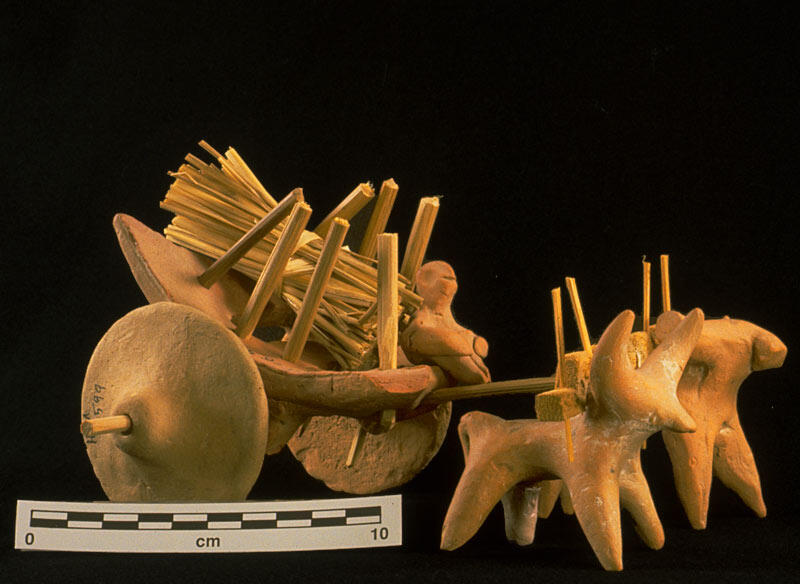
By the way, hundreds of cattle figurines were discovered from the site of Shahr-i-Sokhta, and all the securely indentified figurines of cattle (more than 600 of them) are of the South Asian Zebu cattle.
The place in South Asia which was most directly involved in the formation of Shahr-i-Sokhta was Baluchistan and therefore it is quite safe to say that the Indus Periphery samples in Shahr-i-Sokhta are also migrants from Chalcolithic cultures of Baluchistan.
Furthermore, Shahr-i-Sokhta and the cultures of Eastern Iran in general and quite possibly Baluchistan as well, are said to have in turn significantly influenced the cultural formation of BMAC. So the 4 Indus Periphery samples from the BMAC site of Gonur could very well have been from these regions in Baluchistan or Eastern Iran in the South.
Now that we have identified the most likely place of origin of the Indus Periphery people within South Asia, let us understand the implications of this in terms of the genetic data.




:max_bytes(150000):strip_icc()/red_junglefowl-5968fedd5f9b582c356ab7fb.jpg)









/https://public-media.si-cdn.com/filer/5e/20/5e20f146-9fe0-4937-9068-2ed746676d70/10-a-game-designer.jpg)






/GettyImages-172430480-5c54686f46e0fb00013a202d.jpg)









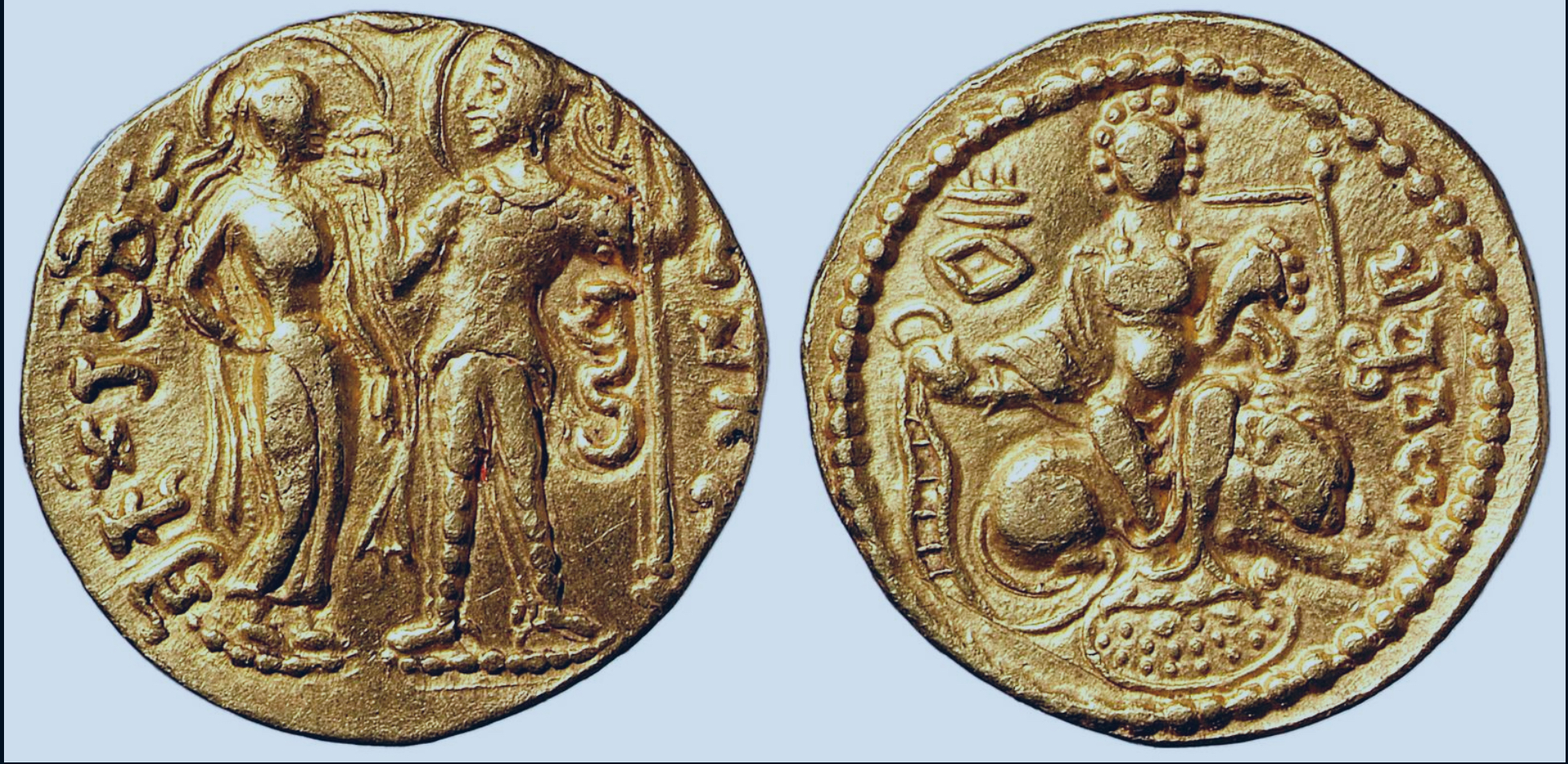 Gold coin of Chandragupta I with his wife Kumaradevi