The Cosmos of Ustaad Saami

By Syed Hasnain Nawab in DAWN 

[Note: Ustaad Naseeruddin Saami and his sons–The Saami Brothers– won the Patron’s Award at the 2025 Aga Khan Music Awards, held in London on November 22]

Hailing from Delhi’s famed Qawwal Bachcha gharana [musical lineage], Jaan traces his musical ancestry back to the likes of the 19th century Delhi gharana luminary Tanras Khan and Mian Saamat bin Ibrahim — with the latter being the principal disciple of Amir Khusrau. As the Saamis put it, their ancestors were chosen not by happenstance but by what the family believes to be Divine designation, stating, “Knowledge is given to whoever has a right to it, who deserves it. This is chosen and sent by God.”

In this vein, Jaan sees himself and his sons not simply as musicians but as carriers of a spiritual directive. Traditionally, these gharanas have maintained and safeguarded their expansive knowledge by transmitting centuries’ worth of musical heritage and experimentation seena-ba-seena [from ustaad to pupil].

Continue reading The Cosmos of Ustaad Saami

Raja Mohan on Indian Foreign Policy and the Rebalancing of Asia

In this episode of Asia Inside Out, Rorry Daniels, Managing Director of the Asia Society Policy Institute (ASPI), speaks with Raja Mohan, ASPI Non-Resident Distinguished Fellow and author of the forthcoming India and the Rebalancing of Asia. Daniels and Mohan discuss India’s relationship China, the U.S., and Russia; regional headwinds impacting New Delhi; and India’s strategic vision for its role in a changing Asia.

Aasiya–Translation from the Urdu

Here is an excerpt from another story from Bilal Hassan Minto’s Model Town:

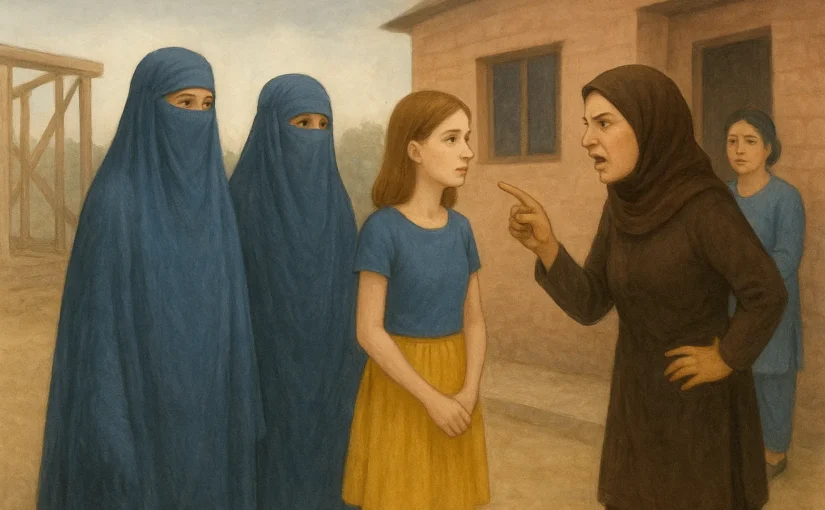
There are people who might have felt the neighborhood was against Apa Sughra  just like that, without a reason. They could have wondered how anyone could be against a woman so devout that she had fired her cleaning lady Alice on a matter of principle when she found her drinking water from glasses reserved for Apa Sughra’s Muslim household. A woman so righteous that she had summarily dismissed Susan because her husband supplied alcohol to a Muslim. But such people who question our hatred of Apa Sughra are ignorant of the facts.

We had not always been against her. When she rented the house next door, Ammi sent her both meals that first day because her kitchen wouldn’t be ready. So obviously, we hadn’t hated her from the very beginning. Quite apart from all the terrible things we found out later, what she did to her own daughter Pari, soon after moving to our neighborhood, was enough for us  to condemn her, vilify her, and treat her with hostility. Pari was not at all to blame for the incident. Whoever heard of it said “What did the poor girl do wrong?” Naveed Bhai had been really angry and said Apa Sughra needed to be taught a lesson but Ammi strictly forbade him, saying there was no need to mess with that witch. It’s a different matter that I suspected Naveed Bhai didn’t have any way to do anything to Apa Sughra even if Ammi hadn’t said so. I thought he was just boasting.

Ever since Apa Sughra began living in our neighborhood we had noticed she didn’t allow her twin daughters, Fari and Pari, out of the house at all. Meeting us was out of the question; they weren’t even allowed to play with the neighborhood girls. We always thought the poor things were locked in the house after school. What did they do all day? Did they play with each other or was that not allowed either? And if they were so constrained, why did Apa Sughra even send them to school? Why was she educating them? Continue reading Aasiya–Translation from the Urdu

Doctor Walter (Translation from Urdu)

During the pandemic, I experimented with translating Bilal Hassan Minto’s Model Town (Sanjh 2015)—a collection of Urdu short stories told from the perspective of a preadolescent boy growing up in Lahore’s Model Town neighborhood during the late 1970s (at the beginning of General Zia’s Martial Law). This was my first attempt at translation so I’m not sure how successful it was but I did learn a lot from the attempt.

The story I’m sharing here is called “Dr Walter”. One of the main themes of the story is the discrimination faced by minorities in Pakistan (in this case Christians).

When the Walters’ house was going up, we — Talat, Aqib, Qamar, Mazhar and I — hung around the construction site in the evenings and romped on the sand and gravel piles. At the time, most houses in Model Town had been built by Hindus before the Partition and abandoned when they fled in disorder to India so that some Muslim, trying to take over their houses, or for no reason at all, wouldn’t behead them or sprinkle oil on them and set them on fire or stab them in the stomach with a sharp knife. This precipitous departure left many unclaimed plots on which new houses were built from time to time. When construction of the Walters’ house began near us, a minor frisson of excitement entered our slow-moving lives.

Horsing around, boring tunnels in the sandpiles, Mazhar had asked a laborer:

“Whose house is this?”

“Sai,” he had said, meaning “Isai.” Christians. People who follow Jesus Christ as first among the Prophets of God, just as the Jews consider Moses. Well, what someone believes or not and why are mysterious and dangerous things about which I can’t say anything, but even before the laborer told us, we had a sense that these people were of some other religion because several signs suggested they weren’t our sort.

At this time, the obnoxious General Zia had not descended on our country like a curse and new revelations about our religion, Islam, hadn’t begun to mushroom. No one in their wildest dreams could have imagined that prayers would become mandatory in offices or that women wouldn’t be able to appear on television without covering their heads, or that punishments would be meted out to people seen eating or drinking during Ramzan. And, more surprising than all these, that every day, before the entire country, news on TV would be delivered in Arabic. All this was about to happen, just some days after the Walters built their house near us. Continue reading Doctor Walter (Translation from Urdu)


This is Not the India We Joined in 1947: MP Aga Syed Ruhullah Mehdi


In this in-depth conversation, Aga Syed Ruhullah Mehdi, current Member of Parliament hailing from National Conference in Jammu Kashmir. He was also the former Cabinet Minister of Jammu and Kashmir. He shares his unfiltered thoughts on the abrogation of Article 370, the political transformation of India, and the struggles faced by the people of Jammu and Kashmir. Ruhullah Mehdi discusses the foundation of Kashmir’s accession to India, emphasizing how Article 370 served as a unique bond that granted Jammu and Kashmir protections similar to those provided to regions like Himachal Pradesh, Lakshadweep, and the North-East. He passionately criticises the BJP-led government for reneging on the promises made in 1947, accusing them of steering the country toward becoming a “Hindu Pakistan.” Drawing from his personal and political experiences, Mehdi reflects on his journey in public life. He raises critical questions about the cultural and political invasion of Kashmir under the guise of tourism, the targeted killings that have devastated both Kashmiri Pandits and Muslims, and the ongoing challenges to preserving Kashmiri identity amidst the RSS’s ideological agenda.

Why Bihar Is More Than Its Stereotypes with Sagar

A calm and clear conversation with Sagar, senior staff writer at The Caravan. We speak about why Bihar is more than a broken state, how caste politics really works on the ground, and how election season gets distorted by the memification of leaders who should not be elevated in the first place. He explains the gap between lived reality and the stories told by mainstream media, the truth behind the jungle raj label, and why Bihar has been misread for so long. Tune in for a grounded look at a state that carries more history, complexity, and dignity than the usual headlines allow.

Why India needs to understand the new Pakistan| A Frontline Webinar

A very important interview with Ramanathan Kumar, former R&AW Pakistan desk head.  Those Indians who truly want to understand the implications of the 27th Amendment to Pakistan’s Constitution must listen to this podcast. 

In the latest edition of Frontline webinars, independent journalist Amit Baruah is in conversation with former R&AW Pakistan desk head Ramanathan Kumar. The two dissect the implications of Pakistan’s recently passed 27th Constitutional Amendment—a sweeping overhaul that elevates army chief Asim Munir to a new “Chief of Defence Forces” role, places all three armed services under his command, and grants him lifetime legal immunity. Passed by a two-thirds parliamentary majority, the amendment also restructures Pakistan’s judiciary: it removes the Supreme Court’s power over constitutional matters and establishes a new Federal Constitutional Court whose judges will be appointed by the executive. Critics argue that these changes represent a dramatic consolidation of military power and a sharp erosion of judicial independence.

For India, this is not just about Pakistan’s internal politics—it fundamentally reshapes the balance of power in the region. With a trigger-happy Field Marshal protected for life and commanding the entire military, Pakistan’s civil-military equilibrium could tilt decisively toward a more authoritarian and militarised state. Ramanathan Kumar and Amit Baruah explore how the amendment raises serious questions about democratic checks, legal accountability, and how India should recalibrate its approach to a new Pakistan.


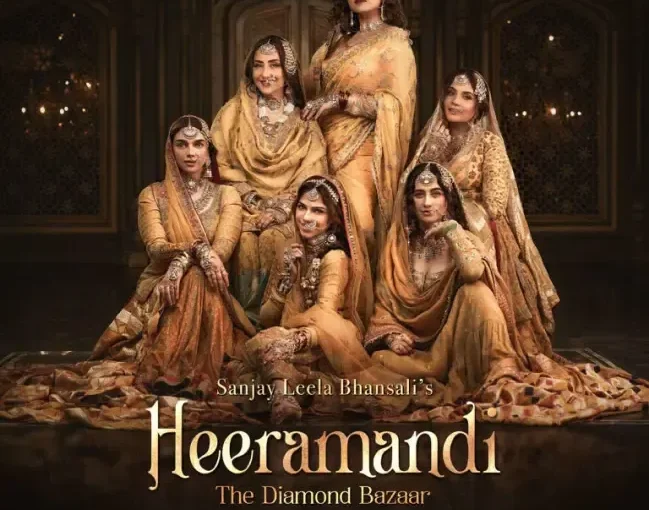
Review: Sanjay Leela Bhansali’s Heeramandi

Since “Recovering News Junkie” mentioned Heeramandi in his latest post, I am reproducing this review from my SubStack.   Regarding the specific criticism that that Heeramandi was a “Pakistani and not an Indian story”, I think the main issue people pointed out was that it is a-historical for a miniseries set in 1940s Lahore to not have a single character who supports the Muslim League or espouses the cause of Pakistan.  A secondary issue was that–despite the setting in Lahore– the courtesans were speaking the Urdu of Lucknow rather than Punjabi. 

As a student of Hindustani classical music and someone fascinated by courtesan culture, I eagerly anticipated Sanjay Leela Bhansali’s new miniseries Heeramandi (available to stream on Netflix starting May 1). Bhansali is known for directing opulent costume dramas such as Devdas (2002), Bajirao Mastani (2015) and Padmaavat (2018). In the tradition of these earlier films, Heeramandi boasts an all-star cast led by Manisha Koriala and Sonakshi Sinha. The costumes and production design are also noteworthy.

Set in Lahore in the twilight years of the British Raj, the series focuses on the lives of the tawaifs who live in the Heera Mandi neighborhood of the city. Also known as Shahi Mohalla (Royal Neighborhood), this area is located south of the Lahore Fort and was originally a residential neighborhood for attendants and servants of the royal court. It became particularly associated with the tawaifs, who received patronage from the nobility.

In today’s Pakistan the word “tawaif” has come to be associated with prostitution. However, the word originally denoted elite courtesans who were highly-skilled singers and dancers trained in the arts of poetry and conversation. Aristocrats would send their sons to tawaifs to be trained in manners and etiquette. These women were often wealthy and, because of their unmarried status, were able to move around freely. They were particularly known for their renditions of thumris–a semi-classical genre of Hindustani music associated primarily with the emotional expression of romantic longing. However, their status was degraded with the advent of British colonialism because the British regarded them as “nautch girls” or prostitutes. The new Indian middle-class also came under the influence of Victorian morality and began to perceive their own musical traditions as decadent and immoral. This led to the Anti-Nautch Movement and to efforts by reformers such as Pandit Bhatkhande to cleanse Hindustani music of its disreputable associations. Continue reading Review: Sanjay Leela Bhansali’s Heeramandi

The Poetry Has Gone From Our Lives, but Hate Cannot Last Forever| The Wire Talks

Thirty years ago, Saeed Akhtar Mirza made his final feature film, Naseem, about an aging Urdu poet, played by Kaifi Azmi, and set in the days preceding the demolition of the Babri Masjid. The film opened with a title card which said, “That one act of demolition wrote the epitaph of an age that has passed, perhaps never to return!” “ The Babri Masjid epitomized the final collapse, you know, of an idea of India, of a sovereign, secular, democratic republic, equal for all, equality and justice. You saw it collapse in front of your eyes.” He said. “I was in despair but I was also angry when I made the film,” Mirza said in a podcast conversation with Sidharth Bhatia. He has not made any feature film since, though he still makes documentaries and has written two books. Mirza spoke about how the “Hindu-Muslim binary was stupid” and said that those who promoted it hadn’t read any history. Their idea of history is “fundamentally flawed” he said.

Brown Pundits