Revisiting Somnath–A Review

Since we have been recently discussing history, I am sharing this review of Romila Thapar’s Somanatha: The Many Voices of a History (Verso 2005). 

In 1026, Sultan Mahmud of Ghazni raided the Hindu temple of Somnath (located in the present-day Indian state of Gujarat). In retrospect, this event has had tremendous repercussions for contemporary South Asian history and is traditionally regarded as marking Hindu-Muslim animosity in the region from the outset. To this day, perceptions of Mahmud continue to be polarizing. While many Indians regard him as an iconoclastic invader bent upon loot and plunder, their counterparts in Pakistan view him as a conqueror who “established the standard of Islam on heathen land.” The Pakistani attitude is perhaps best exemplified by the fact that the country’s military has named the Ghaznavi missile in honor of Mahmud. However, despite this conventional understanding, modern historians are attempting to question the received wisdom surrounding Somnath.

One of the modern scholars attempting to arrive at a new understanding of Somnath is Romila Thapar, considered among India’s most eminent historians. In her book Somanatha: The Many Voices of a History (Verso 2005), Thapar argues that the dominant view that Mahmud’s raid caused great psychological trauma to the Hindu community is largely a colonial construction that gained prominence during the British Raj. She goes beyond the Turko-Persian histories favored by colonial historians to examine contemporaneous Sanskrit inscriptions, biographies of kings and merchants, and popular narratives. Studying these sources complicates the traditional view, posing important questions about how one version of the event became hegemonic. Continue reading Revisiting Somnath–A Review

Review: Manboobs by Komail Aijazuddin

As a followup to the discussion of gender and sexual norms in Pakistan, I am sharing this book review of Komail Aijazuddin’s Manboobs: A Memoir of Musicals, Visas, Hope and Cake. 

A painting by Komail Aijazuddin depicting two boys embracing in Aitchison College uniform

Manboobs–Komail Aijazuddin’s new memoir–joins a short list of books describing the experience of being a queer South Asian man. Aijazuddin–a Pakistani-American visual artist and writer–tells the story of growing up as an effeminate and overweight boy in 1990s Lahore and of his later life first studying in and then immigrating to the US. He describes the dilemma of being perceived as too gay in Pakistan and too Pakistani for the US gay community. In the US–especially in the immediate aftermath of 9/11– Aijazuddin feels he is perceived first and foremost as a brown skinned Muslim and thus doesn’t fit in with the mainstream gay community. At the same time, he faces difficulties adjusting to adult life in Pakistan since–as an unmarried man living apart from his parents–he is treated with a certain amount of suspicion. He also has to face the increasing fundamentalism of Pakistani society in the early 2000s. This latter aspect comes through most strongly when he describes his father’s reaction to the murder of Salman Taseer–the incumbent Governor of Punjab at the time of his assassination.

The book opens with little Komail wearing his mother’s high heels and singing along with a video of the Broadway musical A Chorus Line. He describes wanting to play Ariel in The Little Mermaid and being forced to play Prince Eric instead because of his gender. Later, he details how he is bullied at “The Academy” (which Pakistanis will recognize as the prestigious Aitchison College) because of his lack of interest in playing sports. These experiences will be relatable to effeminate boys everywhere. As a fan of musical theatre, I was particularly intrigued by Aijazuddin’s use of Broadway references. For example, he describes the temptation to quote from Evita during a hookup with an Argentinian student in college. Musical theatre aficionados will appreciate these little in-jokes. Continue reading Review: Manboobs by Komail Aijazuddin

Humsafar and Shakespeare

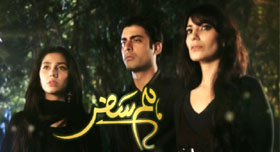
Since we were recently discussing gender norms in Pakistan, I am sharing this TV review I wrote some years ago. “Humsafar” was one of the most popular Pakistani TV dramas and it revolved around the theme of gender relations. This continues to be a major theme in Pakistani dramas. Part of the reason that I don’t watch Pakistani TV is that the dramas are largely full of crying women and toxic men. However–according to a family friend of mine who writes TV plays— this is actually what the (largely female) audience wants. 

It’s also interesting to note that “Humsafar” is the drama that made Fawad Khan and Mahira Khan a star couple on Pakistani TV. (They are not married. “Khan” is a very common last name in Pakistan). 


Since last September, one TV serial has taken Pakistan by storm, becoming a major topic for conversation and forcing people to reschedule social occasions so that they don’t clash with the program’s time slot. Entitled Humsafar (Companion), the drama has made stars out of its leading couple, Fawad Afzal Khan and Mahira Khan.  The play is a typical melodrama, centering around the relationship between Ashar and Khirad and the intrigues that drive them apart, intrigues created by Ashar’s controlling mother, Farida. Yet somehow, this hackneyed plot line has had the entire nation hooked for six months.

To briefly summarize the plot: Ashar is the son of a rich man living in Karachi and working in his father’s company.  His cousin, Khirad, meanwhile lives a middle-class life with her mother in Hyderabad. Khirad’s mother finds out that she has cancer and calls her brother (Ashar’s father) and asks him to help her. Her brother brings her to Karachi and gets her treatment, but it is too late. As she waits to die, she begs her brother to get her daughter married so that she is assured a secure future. Her brother agrees, telling her that he will marry Khirad to his own son.  Ashar agrees to honor his father’s promise, but his mother, Farida, is totally against the marriage, believing that Khirad is beneath her son’s standard. Farida has also hoped that her own niece, Sara, will become Ashar’s wife. Sara loves Ashar and believes that she will eventually marry him.  However, under threat of divorce, Farida is forced to accept the marriage. While her husband is alive, she pretends to accept Khirad but as soon as he passes away she begins plotting to get rid of her. Her plot involves making Ashar believe that Khirad has been unfaithful to him. Ashar is made to witness a scene in which Khirad is alone in the kitchen with another man who is holding her dupatta in his hands. Farida immediately accuses Khirad of infidelity, and though Khirad begs Ashar to believe she is innocent, he rejects her. Farida than throws Khirad (who is pregnant, unknown to Ashar) out of the house in the middle of the night.  Khirad writes a letter to Ashar, telling him that what he saw was orchestrated by his mother, and that she is pregnant. However, Ashar doesn’t read this letter until much later.

Khirad gives birth to a daughter, Hareem, and the story moves ahead four years.  Hareem has a congenital heart condition, and Khirad comes to Ashar to tell him that he has a daughter who needs open-heart surgery.  She herself shows no desire to reconcile with him, but simply wants him to do his duty towards his child.  Ashar takes the responsibility of getting the child treated, and mother and daughter move into Ashar’s house. Ashar begins to fall in love with Khirad again, but Khirad decides that once Hareem is well, she will leave her with her father, and go back to Hyderabad, believing that Ashar can provide her daughter with a much better life than she can. When she leaves, Ashar discovers her letter of four years ago and learns the truth. He rushes after Khirad to bring her back. Meanwhile Sara has realized that she was manipulated by her aunt and that Ashar will never love her. She commits suicide. Ashar returns and confronts his mother, who subsequently has a nervous breakdown. Ashar and Khirad reconcile. Continue reading Humsafar and Shakespeare

Passive Aggression is bullying

Just a short note on passive aggression.  I really didn’t want to do this but having been forced to call out passive aggression directed towards me multiple times now–from a commenter who shall remain nameless– I feel it is worthwhile to provide a definition of the phenomenon.

According to Wikipedia, passive aggressive personality disorder:

can be described as a personality trait marked by a pervasive pattern of negative attitudes and characterized by passive, sometimes obstructionist resistance to complying with expectations in interpersonal or occupational situations. This includes behaviors such as condescension, belittling, snubbing, subtly insulting insinuations, contrarianism, etc….

Passive aggression is a form of bullying–particularly when the person concerned has repeatedly been asked to desist from this behavior.

I also want to take this opportunity to–once and for all– clarify the way I moderate my posts.  Anti-Pakistan commentary is an absolute red line.  I am not going to belabor here what “anti-Pakistan” entails but suffice it to say I know it when I see it. Since these are my posts, there is no court of appeal beyond my subjective judgement.  Generally, if you can make your point without insulting the Pakistan Army or the Field Marshal, you are on safe ground.

The word “Islamist” is considered a slur–particularly when used towards me– and is an absolute red line.  I do not tolerate people getting personal with me or questioning my center-left credentials.

In general, any arguments made that are neither anti-Pakistan nor personal attacks are acceptable and will be engaged with respectfully. I have no problems with people expressing views that I disagree with as long as that expression is done in a civilized manner.

Finally, if your views go against the academic consensus on any subject, be prepared to have them challenged on those grounds.  It is preferable to cite your sources whenever possible.


A Brief History of Hindustani Music

As a follow up to some comments on the thread on Afghan musicians, I am sharing this brief history of Hindustani music. 

Hindustani (North Indian) Classical Music is one of the most beautiful products of the Indo-Islamic culture of North India (including today’s Pakistan and Bangladesh). It would not exist in its current form without the Muslim influence, having evolved in the Mughal courts after it left the precincts of the temples, which is where Hindu music was originally based. I do not know much about Carnatic Music or South India in general so I will restrict my observations to the North Indian system only.

It is my aim in this post to briefly outline the history of Hindustani music. If there is interest, I can then go back and fill in the details as and when I get time.

Like all Indian Music, Hindustani Classical originated during the Vedic period. It was at this time that the distinction between “Gandharva” (ritual music) and “gana” (incidental music) became clear. One of the most ancient treatises on the performing arts in India is the “Natya Shastra”, attributed to the sage Bharata Muni and dated to between 200 BCE and 200 CE. The text consists of 36 chapters with a cumulative total of 6000 poetic verses describing performance arts. The subjects covered by the treatise include dramatic composition, structure of a play, and the construction of a stage to host it, genres of acting, body movements, make up and costumes, role and goals of an art director, the musical scales, musical instruments and the integration of music with art performance. The treatise is also notable for its aesthetic “Rasa” theory. It is in this text that the seven basic notes (the saptak) are named: Sadja (Sa), Rsabha (Re), Gandhara (Ga), Madhyama (Ma), Panchama (Pa), Dhaivata (Dha), and Nishad (Ni). These note names are still used today, equivalent to the Western Do, Re, Mi, Fa, Sol, La, Ti.

With the arrival of the Muslim rulers of North India, music emerged from the temples and became part of the entertainment of the royal courts. While for Hindus, music was preeminently religious in subject matter and spirit, for the Muslims it was a purely secular art. Hazrat Amir Khusrow (1253-1325) was a Sufi musician, poet and scholar. He was a mystic and a spiritual disciple of Nizamuddin Auliya of Delhi (1238-1325). Born near Etah in modern day Uttar Pradesh, he was the son of Amir Saif ud Din Mahmud, a man of Turkic extraction and his Indian Rajput wife, Bibi Daulatnaz. Khusrow grew up in the house of his maternal grandfather, Rawat Arz (known by his title as Imad-ul-Mulk). He grew up very close to the traditions and culture of Indian society and was not alienated from it in the way that the ruling Turkic classes may have been. Continue reading A Brief History of Hindustani Music

Millions in India stripped of vote before critical state election, as government seeks to ‘purify’ electoral roll

I’m trying to stay away from commenting too much about India’s internal affairs. But this is too important not to mention.

From The Guardian:

Millions of people in the Indian state of West Bengal have been stripped of their vote ahead of a critical state election this week, after a controversial electoral revision described by critics as a “bloodless political genocide” and mass disenfranchisement of minorities.

In West Bengal, a total of 9.1 million names have been deleted from the register, more than 10% of the electorate. While many were dead or duplicates, about 2.7 million people have challenged their expulsions, but still been removed.

The process of revising the electoral roll, known as Special Intensive Revision (SIR), has been taking place in states and territories across India, justified by the Narendra Modi government as a way to stop “infiltrators” – a pejorative term largely referring to illegal Muslim Bangladeshi immigrants – from voting.

The divisive exercise by the central Bharatiya Janata party (BJP) government to “purify” the electoral roll – in the words of home minister Amit Shah – has led to a chorus of fury.

And:

SY Quraishi, the former election commissioner of India, was among those who raised concerns over the justification and the processes of SIR, both in West Bengal and other states, and said it raised serious questions over the election commission’s role.

“I feel very awkward and hesitant about commenting on my successor, but as a citizen, I see what is happening and I must speak out,” he said. “The SIR is completely unnecessary, it is designed to harass. Administratively it is a disaster and the intentions are not noble.

He added: “It took us 30 years to achieve 99% accuracy in the rolls. They expect to exceed this in three months. Why this frantic rush if the main objective is accuracy?”

For the “largest democracy in the world” to be removing voters from electoral rolls in such a rushed manner is a transparent attempt to shape political outcomes. One must note the BJP has never been able to achieve a foothold in West Bengal.

There has been a lot of criticism on BP about Pakistan’s lack of democratic credentials. Much of this criticism is justified. It is a fact that Pakistan has had three military coups in its history while India has largely remained an uninterrupted democracy–with the exception of the Emergency. However, this “Special Intensive Revision” indicates democratic backsliding.


Review: The Anarchy: The Relentless Rise of the East India Company

Since there has been some discussion of the Dalrymples recently, I am sharing this book review. 

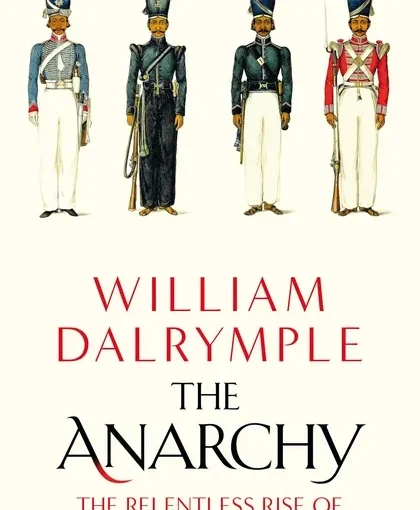
William Dalrymple is one of the foremost historians of colonial India, known for works such as White Mughals, The Last Mughal, and Return of a King. His latest work—The Anarchy: The Relentless Rise of The East India Company (Bloomsbury 2019)—continues in the tradition of popular history, telling the story of the East India Company’s conquest of India following Lord Clive’s 1757 victory over Siraj ud-Daula, the Nawab of Bengal, at the Battle of Plassey. The book ends with the Company’s conquest of Delhi in 1803 and the defeat of the Marathas—the last Indian power capable of resisting the British. The Company would rule India until the aftermath of the Sepoy Mutiny of 1857, when governance was transferred directly to the British Crown.

While we commonly speak of the “British conquest of India”, Dalrymple notes that it was not the British government that colonized India, but a private corporation, solely interested in maximizing its shareholders’ profit. In the Epilogue, he succinctly explains his book’s thesis, writing:

The East India Company remains today history’s most ominous warning about the potential for the abuse of corporate power–and the insidious means by which the interests of shareholders can seemingly become those of the state. For as recent American adventures in Iraq have shown, our world is far from post-imperial, and quite probably never will be. Instead Empire is transforming itself into forms of global power that use campaign contributions and commercial lobbying, multinational finance systems and global markets, corporate influence and the predictive data harvesting of the new surveillance-capitalism rather than–or sometimes alongside–overt military conquest, occupation or direct economic domination to effect its ends (397).

Continue reading Review: The Anarchy: The Relentless Rise of the East India Company

Afghan Music in Exile: Artists at Risk and Art in Danger

An extreme form of political censorship of music in Afghanistan not only threatens the life of musicians but also the very survival of Afghan musical traditions. Many artists have fled the country to seek refuge in Europe, North America, Iran and Pakistan. In Afghanistan, the sound of music has vanished and its transmission is severely interrupted. In an impulse lecture, Marko Kölbl will discuss the ban on music in Afghanistan, its impact within the country, and introduce Afghan artists and their music practice in exile, offering perspectives from various parts of the world. Moderated by Arieb Azhar, a follow-up discussion will then reflect on the situation of Afghan musicians in exile from an global perspective and assess urgent needs for Afghan artists and strategies in safeguarding Afghan musical practices outside the country.

I recently met Marko when he visited Lahore. I sang for him and he played the piano for me and my family.  I also gifted him a copy of my book  A New Explanation for the Decline of Hindustani Music in Pakistan. 


Jinnah was not “pure evil”

Admin Note: This is a Precedent Thread (with regard to QeA).

BB made a comment calling the Quaid-e-Azam “pure evil“.  This is a-historical and triggering to Pakistanis.

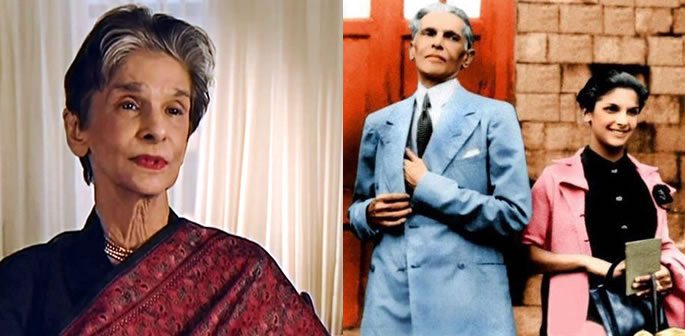
Partition is a topic that demands nuance. To call the Quaid (or Pandit Nehru) “pure evil” just reveals a lack of historical knowledge.  Quaid-e-Azam was not Hitler. He was not sending people to gas chambers.  Historians probably wouldn’t even call Hitler “pure evil” but perhaps that’s the historical figure about whom the strongest case can be made.

I will take the opportunity to quote from my own writing:

In hindsight, perhaps the decision to Partition India was not the best one, yet there is no way that Jinnah could have known what form the future Indian Constitution would take or Pakistan’s struggles in establishing its identity and defining what it means to be a Muslim homeland. The only character in the play who seems to see what the politics of exclusion will lead to is Maulana Azad, who argues passionately against Jinnah’s “two nation theory” and later begs Nehru to avoid Partition at any cost. Azad is worried about the Muslims who will be left behind in the Hindu majority provinces that will remain part of India. He also firmly believes that once one starts on the road to a politics based on differences, there is no telling when the process will end. The creation of Bangladesh in 1971 showed that religion was not enough to hold Pakistan together and that ethnicity is also an extremely important factor. Ethnic conflict remains a fault line in today’s Pakistan, as well as to a lesser extent in India. Thus it can be forcefully argued that Azad was right in saying that Partition would not really solve anything.

Overall, “Tryst” is an extremely thought provoking play that compels the audience to reflect on the complex history of the years leading up to Indian independence. What a united India would have been like is a hypothetical question that can never be successfully answered, yet the play shows us that Partition was by no means inevitable and was very much an outcome of specific historical circumstances and personality clashes between flawed individuals

I will also refer readers to my review of Sam Dalrymple’s excellent book Shattered Lands: Five Partitions and the Making of Modern Asia. Continue reading Jinnah was not “pure evil”

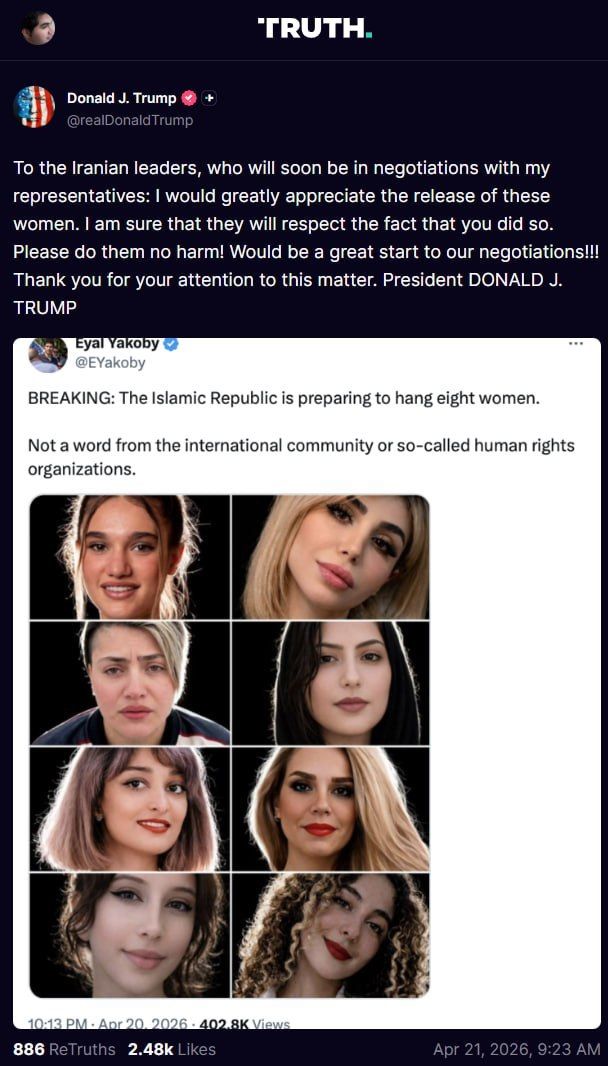
US-Iran War

1) Trump says truce expires ‘Wednesday evening Washington time’. 

US President Donald Trump has signalled an extension in the ceasefire with Iran, which was set to end on April 21 8pm ET.

He told Bloomberg in a phone interview that the truce expires on “Wednesday evening Washington time”.

But the president also said it’s “highly unlikely that I’d extend it” if no deal is reached before then, the report said.

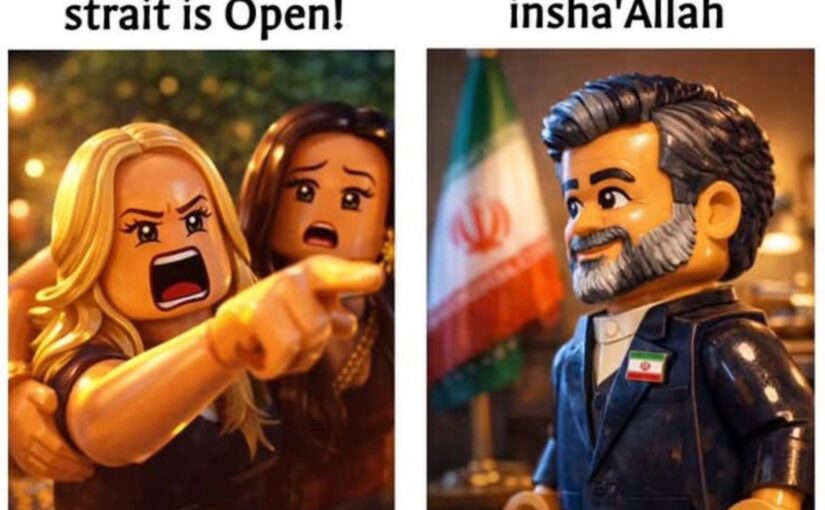
It seemed that a second round of talks was going to happen.  Islamabad’s Red Zone is locked down in anticipation of the arrival of the American delegation.  JD Vance was supposedly returning to Islamabad.  But the US seizure of an Iran-flagged ship and Iran’s closing of the Strait of Hormuz once again seems to have changed things.

2) Basharat Peer on Kashmir, Haider, Homebound, Iran, Modi, Erdogan & Why Democracies Break

[Note: Basharat Peer’s Curfewed Night is one of the classic books about growing up as a Kashmiri Muslim in Indian-Administered Kashmir in the 1990s.

I’ve met Basharat Peer when he spoke at LUMS some years ago. He signed my copy of his book. ]

3) Remembering Asha Bhosle: A View From Pakistan 

Both countries’ polities remain locked in an unending war and demonise each other in all forms of despicable ways and continue to pull up walls and disinformation through propaganda, movies and fake news about one another. Still, can you stop me from loving Amir Khan, Shah Rukh Khan, or Ranbir Kapoor? And Asha ji’s voice?

There is a generation or two who remember better times and continue to love our classical and Bollywood film phases. You can’t erase our experiences. Pakistanis have grown up loving Indian movies and their singers and actors.

Looking at the comments under the Geo TV notice by PEMRA is a testament of the sanity that foundationally prevails in Pakistani society.

We might rally around our government when it is under attack from outside forces, but we will not deny our shared love and admiration of iconic artists of the subcontinent. That would be denying our own culture.


Brown Pundits