
Please keep the other posts on topic. Use this for talking about whatever you want to talk about.
Author: Razib Khan
Modernization leading toward confessionalization
From the comments:
I think what’s underappreciated is that hindu nationalism is partly caused by the collapse of the caste system. I know that may not intuitively make sense at first, but compared to when I was a boy the caste system has significantly weakened. People are finally starting to look at each other as hindus rather than by caste – and this has never been the case in the past. Obviously caste is still here and we all have a long way to go but it is substantially weakened and weaker than its ever been. I believe this is the major cause for the rise of hindu nationalism.
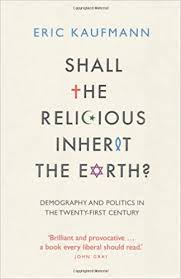 One of the strange things that surprises many people is that modernization often produces stronger and more robust confessional identities. In Eric Kaufmann’s Shall the Religious Inherit the Earth? Demography and Politics in the Twenty-First Century he talks about the fact that urbanization and increased access to educational opportunities for the rural middle-class in Muslim countries resulted in gains in power to Islamist movements. The reasons are manifold, but one issue is that local power blocs centered around customary and traditional relationships and patronage networks were disrupted by development. In a flatter and more deracinated landscape simple and universal Islamist messages were appealing.
You see the same process happening in Indonesia. Traditional Islam among the Javanese is syncretistic. But its power and strength are in the solidities of the rural cultural order which has deep local roots. Development and migration to urban areas result in a shift toward more world-normative (santri) Islam which is not contingent on local cultural and social frameworks.
In this model then the economic liberalization ushered in by the Congress Party in the early 1990s sowed the seeds for the emergence of a broad-based Hindu nationalism, as economic dynamism and urbanization begins to erode the older caste-based solidities.
The Indian cultural Left is in India, but not of India
 A comment on Twitter about the lack of the Islamic world’s own Arundhati Roys, and therefore the lack of Leftism. My own reaction is that this is wrong. There is plenty of Leftism in the Islamic world, just not the sort of cultural criticism that Arundhati Roy specializes in.
To give an example, the PLO has several Communist member parties, and its largest element, Fatah, is Left-nationalist. Though the high-tide of Marxism in the Islamic world, and the developing world in general, was in the 1970s, the ghost of Left-nationalism haunts us to this day (the Syrian Ba’ath party has its origins on the Left, though today it is basically an Assad family enterprise). India, there remains to this day a militant Marxist movement.
So what’s going on with people like Arundhati Roy? I think the best way to understand her is that she is part of the global English-speaking intelligentsia, and as such caught up in cultural currents which are beyond, and above, her Indian milieu. She applies the tools and concerns which are validated among the global cultural Left to an Indian context.
It’s not just an English-speaking phenomenon. There is a global elite cultural movement united by share mores and disposition. Consider the movements for gay rights in East Asia, which seem to be clearly shaped by Western precursors. But, I think the Indian English-speaking elite exhibits the tendency to imitate and replicate far faster than in other developing societies because of its shared cultural presuppositions and linguistic fluency with the Anglosphere.
The maritime origins of the Munda
A reader pointing me to a paper whose hypothesis is novel to me. But, I have to say that reading the paper, I am now convinced this is highly likely. The paper is The Munda Maritime Hypothesis:
On the basis of historical linguistic and language geographic evidence, the authors advance the novel hypothesis that the Munda languages originated on the east coast of India after their Austroasiatic precursor arrived via a maritime route from Southeast Asia, 3,500 to 4,000 years ago. Based on the linguistic evidence, we argue that pre-Proto-Munda arose in Mainland Southeast Asia after the spread of rice agriculture in the late Neolithic period, sometime after 4,500 years ago. A small Austroasiatic population then brought pre-Proto-Munda by means of a maritime route across the Bay of Bengal to the Mahanadi Delta region – an important hub location for maritime trade in historic and pre-historic times. The interaction with a local South Asian population gave rise to proto-Munda and the Munda branch of Austroasiatic. The Maritime Hypothesis accounts for the linguistic evidence better than other scenarios such as an Indian origin of Austroasiatic or a migration from Southeast Asia through the Brahmaputra basin. The available evidence from archaeology and genetics further supports the hypothesis of a small founder population of Austroasiatic speakers arriving in Odisha from Southeast Asia before the Aryan conquest in the Iron-Age.
For me, the Brahmaputra migration always implied that Bangladeshis should have lots of Munda ancestry. And yet that is not clear from genetics (though a few individuals are shifted in that direction). In contrast, they do have a strong affinity to the Khasi. This paper proposes that the Khasi are quite distinct from the Munda.
Rather, the Munda are placed further south, and their arrival in South Asia was through maritime means. One of the possibilities suggested is a relation to the Aslian subgroup of Austro-Asiatic languages in central Malaysia. This could actually help explain the enrichment for AASI in the Munda: the indigenous Negritos of Malaysia are similar to the people of the Andaman islands!
Remember, the arrival of Austro-Asiatic farmers in northern Vietnam dates to ~4,000 years ago. The Munda could be relative latecomers to South Asia…
Browncast Episode 67, Conversation with freelance academic Justin Murphy
 Another BP Podcast is up. You can listen on Libsyn, iTunes, Spotify, and Stitcher. Probably the easiest way to keep up the podcast since we don’t have a regular schedule is to subscribe at one of the links above.
You can also support the podcast as a patron. The primary benefit now is that you get the podcasts considerably earlier than everyone else. I am toying with the idea of doing a patron Youtube Livestream chat, if people are interested, in the next few weeks.
Would appreciate more positive reviews!
This episode we talked to Justin Murphy. A very online “post-academic,” Murphy was until recently a political scientist in the UK. Today he has a popular YouTube channel and has relocated to the USA (where he’s from).
We talked about being an academic-without-institution, the recent embracing of his Roman Catholic background, and the general trends in culture, online and offline.
Open Thread – Brown Pundits
Please keep the other posts on topic. Use this for talking about whatever you want to talk about.
The Sintashta were swarthy
 One of the things that I’ve always been curious about is why some Indian populations are not fairer in complexion if they had so much steppe. The logic here is that the “most steppe population” are peoples such as the Lithuanians, and these are very fair-skinned groups. If, for example, North Indian Brahmins were ~30% steppe, and these steppe people looked like Lithuanians, wouldn’t we see more blondes in northern India?
I’ve posted on this before, but after today’s conversation with Vagheesh, I checked the data on his Sintashta samples on the Hiris-Plex pigmentation panel. Pigmentation prediction in ancient populations are pretty sketchy…but the Sintashta are actually not that different from many modern Northeast Europeans.
Spot-checking some major loci where Europeans are very distinct, such as KITLG, OCA2-HERC2, and SLC45A2, it is clear to me that the Sintashta were much more darkly complected than modern Northern Europeans.
To give a concrete example, rs16891982 in SLC45A2 is at 2% minor allele frequency in British 1000 Genomes samples (3% in Tuscans, 18% in Spaniards). The minor allele frequency is 12.5% in 64 Sintashta chromosomes.
The derived SNP associated with blonde hair in Northern Europeans, and found at about 20% frequency in those populations, was found in none of the 32 calls where that position was returned.
I doubt the Sintashta were very dark. Rather, their pigmentation was probably more in the range of Southern Europeans like Sardinians if I had to bet.
(one of the implications here is that the results which indicate strong selection for lighter complexion in Northern Europeans into historical times are probably detecting something real)
Browncast Episode 66, ancient India and DNA with Vagheesh Narasimhan
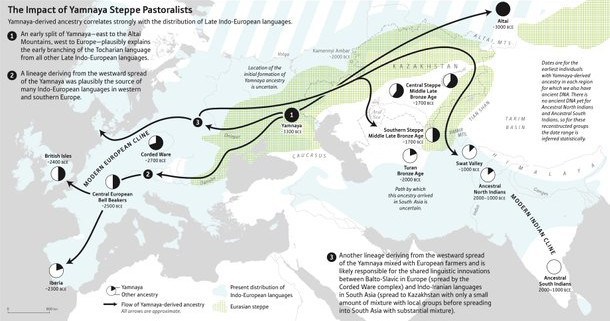 Another BP Podcast is up. You can listen on Libsyn, iTunes, Spotify, and Stitcher. Probably the easiest way to keep up the podcast since we don’t have a regular schedule is to subscribe at one of the links above.
You can also support the podcast as a patron. The primary benefit now is that you get the podcasts considerably earlier than everyone else. I am toying with the idea of doing a patron Youtube Livestream chat, if people are interested, in the next few weeks.
Would appreciate more positive reviews!
 This show is an interview with Vagheesh Narasimhan. The two papers are freely available at his website. Many of the papers mentioned are at the Reich lab website (free). We do mention a Southeast Asia ancient DNA paper that is from the Willerslev group.
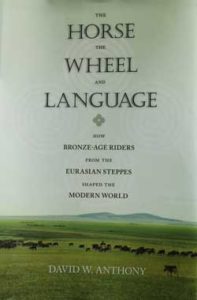
I do recommend The Horse The Wheel and Language. It’s a little out of date but take it seriously, not literally.
Kushal Mehra’s interview with Niraj Rai worth a listen.
An article on the reception to the research within India.
Kushal Mehra interviews Niraj Rai
Definitely watchable, and Kushal actually lets Niraj talk at length! Though the Hindi sections are Greek to me.
On the whole Rai and I agree on the genetic data. But there are disagreements that I have on interpretations of the words like “invasion.” I had long imagined the genetic and cultural impact of Aryans to be somewhere between the Anglo-Saxon and Vandals. In the former case, there was a large impact (though most of the genomes of modern Britons date to the pre-German Britons!). In the latter case, we have a historical record of a literal invasion, a folk-wandering of Vandals (along with a rump of the Alans) into North Africa. But the genetic and long-term cultural impact was minimal.
Finally, there is a lot of discussion about the R1a paper that Indian researchers have been working on for years showing lots of diversity within South Asia, and supposed basal lineages. This paper has been talked about for many years, so I’ll believe its publication is imminent when it is published.
Note: talking to Vageesh in 30 minutes.
Calvinism, atheism, and Hinduism
This apology is simply not enough. You tweeted nearly verbatim, the last words of the suicide bomber of #pulwama. Considering how egregiously hateful these words are, and how important it is for @NPR to maintain at least a veneer of neutrality in India, we expect next steps. https://t.co/oiJOjARu4v pic.twitter.com/n0Mv9NWFKK
— Suhag A. Shukla (@SuhagAShukla) September 11, 2019
 A journalist associated with NPR made some prejudiced comments about Hinduism, and she is probably going to get in trouble. By the name, her background is that of a South Asian Muslim.
One of my immediate reactions is that this sort of comment about Hinduism is very common among South Asian Muslims. Growing up people would joke about Hindus drinking piss and obsessing over cow dung all the time. This is a widespread private comment, and this woman’s mask just dropped in public.
But, there is another aspect that emerged in discussion with a Hindu reader of this blog: the Muslims making these sort of jokes were not the very pious, but the more liberal and secular sort. Extremely religious Muslims did not talk about Hinduism in jocular terms, because they feared Hinduism.
This actually goes back something foundational in the Abrahamic religions, and that is the Hebrew suspicion and fear of foreign gods. Note that in the Hebrew Bible the Israelites repeatedly turned away from Jehovah, and sacrificed to the gods of the Canaanites. These religions and cults were tempting. The original Hebrews were clearly henotheistic, not monotheistic in a deep metaphysical sense. They did not reject the existence of other gods but were devoted to a particular god, their own tribal god.
In the Greco-Roman period, Jewish and Christian thought took the next step: they demonized the gods who were not their God. When I say they demonized the gods who were not their God, I mean demonized in a literal sense. The early Christians believed that the pagans worshipped demons, who were deceiving humans as to their true nature. These religions were not false religions because people worshipped the non-existent, but because they worshipped evil or deceptive beings who were not the true God.
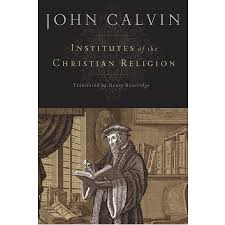
There are still Christians who hold to the old ways. Some evangelical Protestants believe they are in a spiritual “war” with devils who are all around us. Which brings me to Calvinism. There is a line of argumentation that John Calvin and his heirs “rationalized” Christianity to such an extent that they drained the demons and supernatural from the universe. They were atheists and materialists except for the exception of their one God and his retinue. This was a sharp break with the older Christian tradition, whereby the gods of other religions were false gods, but real gods (after a fashion).
I don’t know what I think about this argument, though it seems plausible. But, the sort of Muslim who makes fun of Hindus has been shaped by this way of thinking. They do not fear Hinduism. They do not think that Hindus believe in anything real. Their gods are no-gods. In contrast, many devout Muslims believe Hindus worship devils.