
Please keep the other posts on topic. Use this for talking about whatever you want to talk about.
Author: Razib Khan
Notes on podcast & blog
 – A greater and greater portion of the traffic on this weblog is mobile (about 60% now). That’s why I redesigned it a while back. This mobile traffic is clearly driven by Indian traffic, which is overwhelmingly mobile.
– There has been a major dropoff in positive reviews on Apple Podcasts and Stitcher. Please leave some positive reviews.
– The downloads are about 50% American (USA). About 10% from India. The balance is other nations.
– I’m still doing all the editing, which is one reason the sound quality is…variable. If you want that to change, you probably should become a patron. Once we hit around $200/month I think we can afford an editor I know who does good work (she edits The Insight). Right now it is costing me $40 a month to host the podcasts and get a good Zencastr account.
But really the opportunity cost of time is the major issue for me. I enjoy recording podcasts. I generally am ambivalent about editing (it’s kind of interesting to listen, but I have to focus on other things besides content).
– This weblog now regularly gets more traffic than my primary weblog, Gene Expression.
Appropriation of “black and brown”
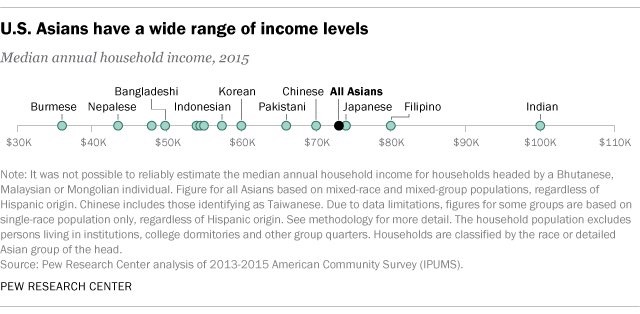
Language evolves, and social media has made certain phrases mainstream where they were relatively unknown. The fragment “black and brown”, often used in conjunction with “folks,” connotes certain issues and politics in 2019. It probably emerged as a term because there are 35% more Latinos than black Americans and the two form a minority social and political block.
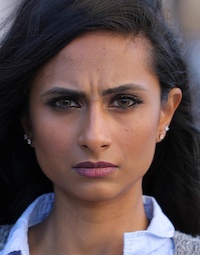 But sometimes terms made can be remade and refashioned. An Indian American friend in Silicon Valley noticed a few weeks ago that some Indian American activists and public intellectuals are using the term “black and brown” to include Indian Americans. This is rather easy because Indian Americans are literally brown. And in fact, they are browner on the whole than most Latinos.
A plain reading of language suggests that including Indian Americans into this catchall category is perfectly reasonable. They are brown people who have been subject to racism and are marginal to the narrative of America. On the other hand, on various social metrics, Indian Americans do quite well. If the term “black and brown” exists to mobilize economically, socially, and racially, marginalized people, then Indian Americans, along with white Latinos, are edge cases of note. They are racially marginal, but economically and socially far less so.
To a great extent, the utilization of the term “black and brown” by progressive Indian American intellectuals and activists inclusive of their own identity strikes me as an appropriation of the term away from its intended ends. I can’t imagine that this won’t be noticed at some point. That being said, this is exclusively a matter of the Left, where intersection/racial coalitions are a major dynamic.
But, that means it is relevant to Indian Americans, who align themselves with the Democratic party on the whole (even if they are mostly moderately engaged immigrants, the Indian Americans born or raised in the United States are highly engaged and vocal).
Genetics of Kashmiris
People keep asking about this. But there was a paper, A Genome-Wide Search for Greek and Jewish Admixture in the Kashmiri Population. Basically, they aren’t anything you wouldn’t expect.
Episode 63: Zack Ajmal, Pakistani American in Pakistan
 Another BP Podcast is up. You can listen on Libsyn, iTunes, Spotify, and Stitcher. Probably the easiest way to keep up the podcast since we don’t have a regular schedule is to subscribe at one of the links above.
You can also support the podcast as a patron. The primary benefit now is that you get the podcasts considerably earlier than everyone else. I am toying with the idea of doing a patron Youtube Livestream chat, if people are interested, in the next few weeks.
Would appreciate more positive reviews!
This episode is a conversation with Zack Ajmal, a Pakistani American who recently visited Pakistan. Zack and I have known each other since 2002, and he was behind the Harappa DNA Project.
Kashmir “open thread”
Nothing to say of substance myself. What do I know compared to you geniuses? That being said, I’m a little surprised how dumb the American media is ( basically they seem to fall back on the same sources).
Like they used to say back in the day, “it’s yours”….
A matter of representation
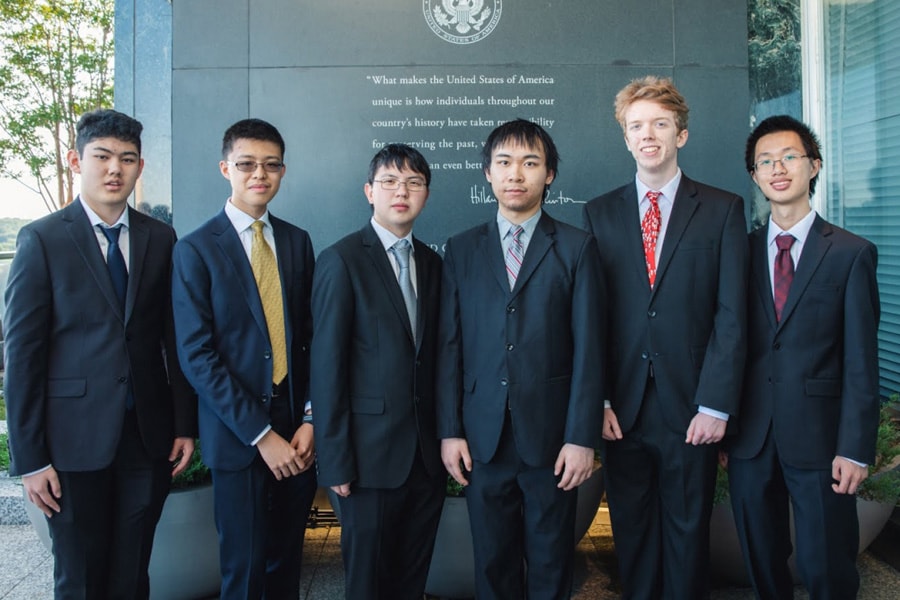
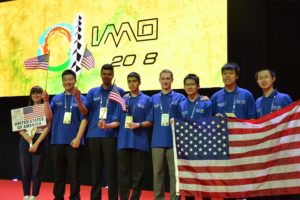 Several readers have brought it up in the comments, and it even cropped up in a secret message group I’m in, so I need to talk about this issue I guess. There is a serious lack of representation in the 2019 winning team from the United State of America in the International Math Olympiad. Except for a token Tocharian, it looks as if every member of the team is of East Asian heritage.
Contrast this with the much more diverse team from 2018, just last year. There were two South Asians on the team! In 2017, there was a <<<Bengali>>> American and a Tocharian on the team.
We’re moving backward. Do better.
Little Qatar playing the Soviet Union in our time
It’s cool how Jake Tapper compares occupied Palestinians to white nationalists while he’s actually giving them a platform on his own show (Richard Spencer most recently). Collect your man @cnn.
— Sana Saeed (@SanaSaeed) August 5, 2019
There is a little Twitter tiff going on because of what seems like a misunderstanding (misrepresentation?) of what Jake Tapper said on his CNN show on Sunday. The source of the misunderstanding (or, as Tapper stated, the lie) is a journalist at AJ+.
AJ+, of course, is the English-language social media-oriented arm of Al Jazeera. Al Jazeera is controlled by the government of Qatar, an authoritarian monarchy. Not only is Qatar authoritarian, but it is a very explicit caste society.
As a person of South Asian descent, I am quite aware that the United States gives me a far better “fair-go” than an of the Gulf monarchies would, including Qatar. Money is fungible, but the reality is that the funds in Sana Saeed’s bank account almost certainly derive in some way from the exploitation of South Asian laborers in Qatar.
To get a sense of Qatar, you can read this article, Lamborghinis, Burkas, Sex Party Invites And ‘Chop Chop Square’: A New York Lawyer’s 15 Years In The Middle East. It’s basically a hit piece. There’s nothing surprising or novel about the facts reported. It was probably written to satisfy our Gulf allies in the UAE and Saudi Arabia. Both of these states run on exploited labor and operate as caste societies (well, Saudi Arabia less so since it has indigenized more).
Qatar’s game kind of reminds me of the Soviet Union during the Cold War. The Soviets, correctly, pointed out America racism. But, they did not shine much of a light on their own prejudices and brutality toward ethnic minorities (they literally engaged in ethnic cleansing several times for reasons of geopolitics). And, Communist anti-racism was fundamentally shallow, as evidenced by the well-known racism among the populace of the post-Communist states.
As with my post on Mehdi Hasan, my point is not to say that people getting their paychecks indirectly from the exploitation of South Asian laborers shouldn’t be able to express opinions. But, considering that they are employed by a media outfit controlled by a mildly racist and very authoritarian regime, perhaps one should be a bit more skeptical of their good faith.
I mean, if Israel is an apartheid state, what would they call Qatar?
Addendum: Also, AJ+ journalists should chill on the guilt-by-association. Their Arabia language channel platforms some really nasty people.
Memory outlives flesh
 In the comments below a reader asks a legitimate question: why the focus on Indo-Aryans when the most probably model suggests that even among the most “Aryan” of South Asian groups the ancestry attributable to the Andronovo-Sintashta people are only on the order of 30%? In most of northern South Asia, the fraction is probably closer to 10%, and it is far lower in the south (there is a concomitant varna gradient as well).
The exact point estimate will change, but it is almost assured that most of the ancestry of Indo-Aryan speaking South Asians is going to derive from the people who were resident within the Indian subcontinent when the Indo-Aryans arrived. So why the arguments and debates about Indo-Arans?
To understand this I will move the discussion out of a South Asian context first:
O most valiant and blessed martyrs! O truly called and elected unto the glory of Our Lord Jesus Christ! Which glory he that magnifies, honors and adores, ought to read these witnesses likewise, as being no less than the old, unto the Church’s edification; that these new wonders also may testify that one and the same Holy Spirit works ever until now, and with Him God the Father Almighty, and His Son Jesus Christ Our Lord, to Whom is glory and power unending for ever and ever. Amen.
– Perpetua
The above is the conclusion of the witness and statement of St. Perpetua, a young Christian woman martyred by the Roman authorities on account of her faith. For over 1,000 years Christians have identified with and drawn strength from Perpetua. Young Catholic women in Poland cry to this day when they read her story. The story of Perpetua is their story in some deep way.
When Perpetua was being sent to her death, the ancestors of the Polish women who identify so great with her were pagans, practicing slash and burn agriculture south of the Baltic shore. They were worshipping and venerating gods which in fact held a distant relationship to those of the Rig Veda!
Many of us may laugh at the fact that Pakistanis venerate Muhammad bin Qasim , when if he were alive today he likely have contempt for the “black crows” which bow down before the Arab god (Qasim lived before a more universalistic Islam emerged, and when the sect was very much a cult of the Arabs of the Arabs). Similarly, the origin priests of the Indo-Aryans would probably look with confusion and bewilderment at the “black” people speaking with their voice.
But speak they do! The power of the Indo-Aryans is the power of memory over flesh. In the Bible, Ruth states that “thy people shall be my people, and thy God my God: Where thou diest, will I die, and there will I be buried…”
What language did the mleccha speak? I am convinced that some of them surely spoke dialects related to those of southern India, though the existence of Burushashki points to greater complexities than we may imagine. What gods did they worship? There are suppositions one can make about the non-Aryan elements of Indian culture. They are likely numerous, constitutive to an understanding of Indian culture, but they are the background. The frame.
In the foreground is the name and the speech of the Aryans. The very words which roll off our tongues, and the memories of the heroes of yore. The Aryans obtained their cultural immortality by implanting in the other peoples of the Indian subcontinent their speech, their mythos, and their very identity.
The first ancient DNA from R1a1a-Z93 6,000 years ago in Ukraine (with lactase persistence!)
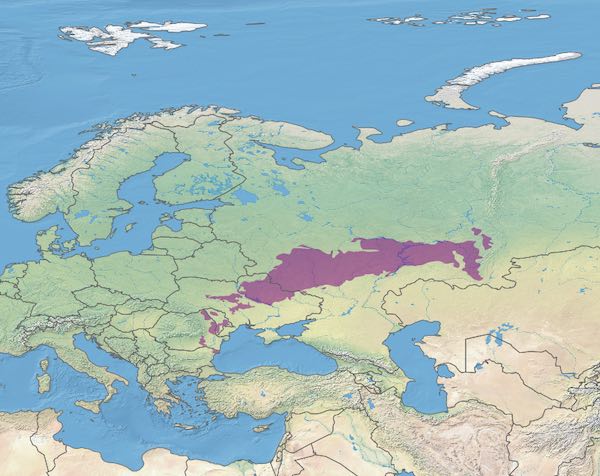
A new paper for David Anthony mentions something which I had missed:
The currently oldest sample with Anatolian Farmer ancestry in the steppes in an individual at Aleksandriya, a Sredni Stog cemetery on the Donets in eastern Ukraine. Sredni Stog has often been discussed as a possible Yamnaya ancestor in Ukraine (Anthony 2007: 239-254). The single published grave is dated about 4000 BC (4045–3974 calBC/ 5215±20 BP/ PSUAMS-2832) and shows 20% Anatolian Farmer ancestry and 80% Khvalynsk-type steppe ancestry (CHG&EHG). His Y-chromosome haplogroup was R1a-Z93, similar to the later Sintashta culture and to South Asian Indo-Aryans, and he is the earliest known sample to show the genetic adaptation to lactase persistence (I3910-T).
The sample goes back to 2017 paper.
As you know the R1a1a-Z93 is the sub-branch of R1a1a that is common outside Europe (Central Asia & South Asia). A previous sample was dated to 3,800 years ago from a Sbruna sample, and it is rather common on the Central Asian steppe of the period as evidenced by ancient DNA. The details of its intrusion (or lack thereof  as some might say) into South Asia have not been fully elucidated by ancient DNA, but they likely will be soon.
Additionally, the I3910-T mutation is known to share identity-by-descent between people in South Asia and in Europe. That is, the mutation in both populations is due to a common ancestor.