The limits of semantics; Hindus before Hinduism

When I was a 20-year old atheist I would read books on the philosophy of religion and explore arguments for and against the existence of god(s). Though I was never naive enough to think that just if people could be exposed to arguments against the argument for design people would be atheists, I wouldn’t have rejected it out of hand.

This is not a view I hold on to in any way because I believe religion as a social-cultural phenomenon is too complex and multi-faceted to reduce to a set of philosophical propositions. The “god of philosophers” ultimately misses the point of the reason so many people believe in god, and what sustain’s religion. But because the philosophers write the histories and dominate the priestly class, they have rewritten religion in their image.

A more complex view has to be brought to bear when we talk about ideas such as the “invention of Hinduism” by the British. If one limits the term “Hindu” to its utilization to point to a self-conscious and concise confessional community unitary across South Asia and disjoint from that of Muslims, Christians, Jews, Zoroastrians, etc., then one can assent to the proposition that the “Hindu identity” was “invented” relatively late in history.

But this is a piss-poor resolution to understanding the dynamics of human cultural evolution in South Asia.

As I have noted before, 1,000 years ago al-Biruni presented and anthropological understanding of the religion of Hindus that is totally recognizable and comprehensible to us. I say here “religion of Hindus” because he was referring here to the people of India, Hindus, rather than a religion called Hinduism. This is a shading which refines the descriptions with more precision, but if you actually read al-Beruni you notice that the term “Hinduism” is pure semantic sugar. It doesn’t add much substance, though it tightens up the style. He clearly outlines a religious system and communal identities which we would recognize today as Hindu.

For the philosophers and intellectuals, religion can be reduced down to particular parameters. My own view is that when people say a “Western view” of religion, they are actually alluding to the conception that arose out of the Calvinist framework, which strongly informed the American conception in relation to church-state interaction (and, in some ways, modern atheism is the child of the demystified Calvinist cosmology). Even within the West, this highly rational, confessional, and individualistic, understanding of religion is an artifact of the past few centuries, and not normative across all Christian traditions and societies.

When it comes to this weblog the usage of terms always needs to be framed in the context of their times. If you speak of the “Sunni-Shia” conflict of the 7th-century, you need to realize this is highly anachronistic. Sunni Islam, as we understand it, only developed organically over the centuries in reaction to the claims of the party of Ali and his scions, those who became Shia. Similarly, if one talks about “Hindus” in the context of Maurya India, one realizes that one is bracketing a host of philosophical schools and religious sensibilities which are at variance with Buddhism and Jainism. One can argue whether the term “Hindu” is more or less informative, but one should also understand that one can extract significance from the term even before its 19-century maturation.*

* I would be personally cautious about using the word “Hindu” before the Gupta period, but think that it makes sense after that, even if there was no a self-conscious Hindu religion for many centuries after. Your mileage may vary.

The limits of semantics; Hindus before Hinduism

When I was a 20-year old atheist I would read books on the philosophy of religion and explore arguments for and against the existence of god(s). Though I was never naive enough to think that just if people could be exposed to arguments against the argument for design people would be atheists, I wouldn’t have rejected it out of hand.

This is not a view I hold on to in any way because I believe religion as a social-cultural phenomenon is too complex and multi-faceted to reduce to a set of philosophical propositions. The “god of philosophers” ultimately misses the point of the reason so many people believe in god, and what sustain’s religion. But because the philosophers write the histories and dominate the priestly class, they have rewritten religion in their image.

A more complex view has to be brought to bear when we talk about ideas such as the “invention of Hinduism” by the British. If one limits the term “Hindu” to its utilization to point to a self-conscious and concise confessional community unitary across South Asia and disjoint from that of Muslims, Christians, Jews, Zoroastrians, etc., then one can assent to the proposition that the “Hindu identity” was “invented” relatively late in history.

But this is a piss-poor resolution to understanding the dynamics of human cultural evolution in South Asia.

As I have noted before, 1,000 years ago al-Biruni presented and anthropological understanding of the religion of Hindus that is totally recognizable and comprehensible to us. I say here “religion of Hindus” because he was referring here to the people of India, Hindus, rather than a religion called Hinduism. This is a shading which refines the descriptions with more precision, but if you actually read al-Beruni you notice that the term “Hinduism” is pure semantic sugar. It doesn’t add much substance, though it tightens up the style. He clearly outlines a religious system and communal identities which we would recognize today as Hindu.

For the philosophers and intellectuals, religion can be reduced down to particular parameters. My own view is that when people say a “Western view” of religion, they are actually alluding to the conception that arose out of the Calvinist framework, which strongly informed the American conception in relation to church-state interaction (and, in some ways, modern atheism is the child of the demystified Calvinist cosmology). Even within the West, this highly rational, confessional, and individualistic, understanding of religion is an artifact of the past few centuries, and not normative across all Christian traditions and societies.

When it comes to this weblog the usage of terms always needs to be framed in the context of their times. If you speak of the “Sunni-Shia” conflict of the 7th-century, you need to realize this is highly anachronistic. Sunni Islam, as we understand it, only developed organically over the centuries in reaction to the claims of the party of Ali and his scions, those who became Shia. Similarly, if one talks about “Hindus” in the context of Maurya India, one realizes that one is bracketing a host of philosophical schools and religious sensibilities which are at variance with Buddhism and Jainism. One can argue whether the term “Hindu” is more or less informative, but one should also understand that one can extract significance from the term even before its 19-century maturation.*

* I would be personally cautious about using the word “Hindu” before the Gupta period, but think that it makes sense after that, even if there was no a self-conscious Hindu religion for many centuries after. Your mileage may vary.

Open Thread – Brown Pundits

Please keep the other posts on topic. Use this for talking about whatever you want to talk about.

An American twist on “joint-family” (?)

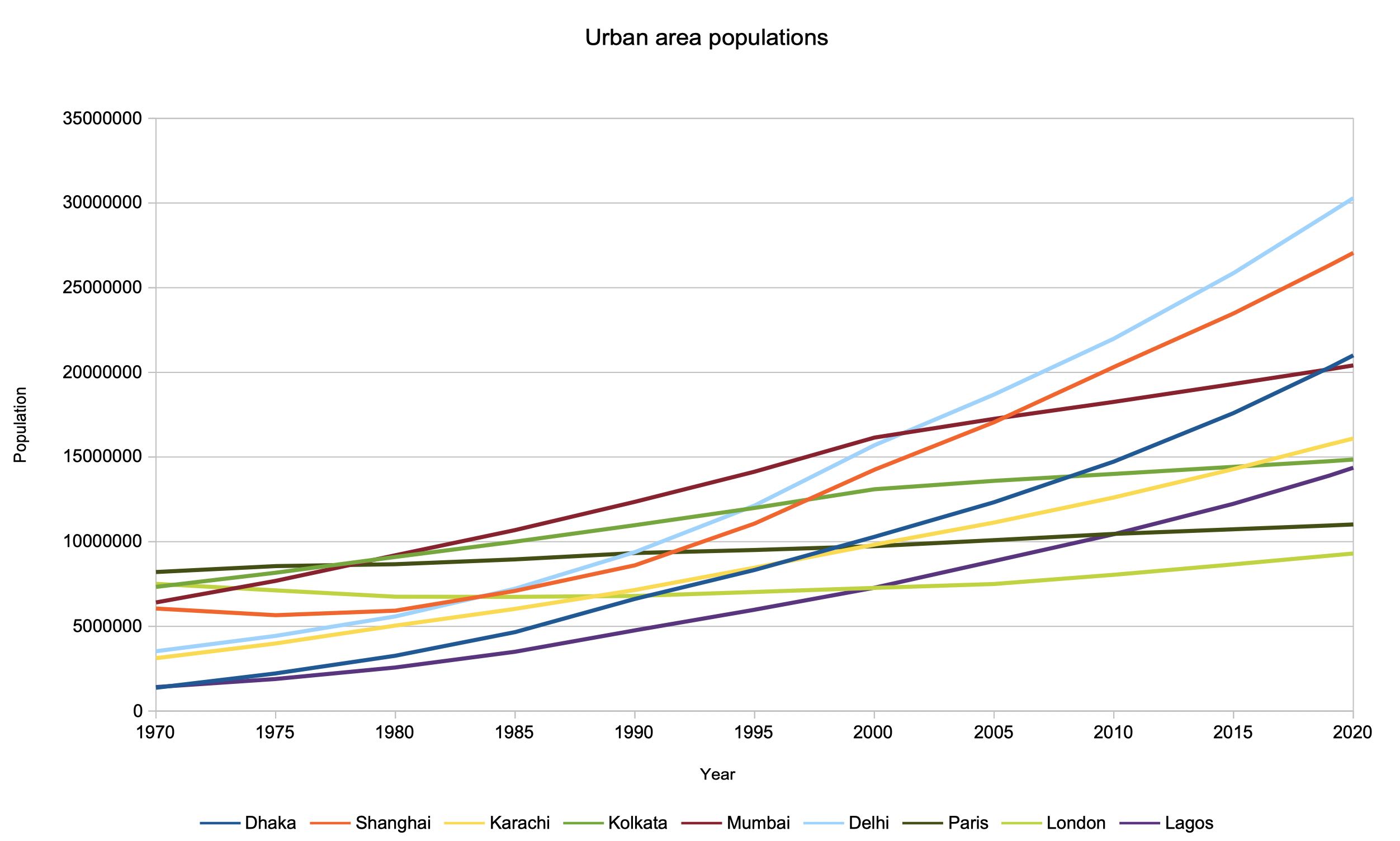
Urbanization in the 21st-century

The world turned upside down


They are told it’s the Kali Yuga, and they rejoice!
The Dharma and the Dao are needful
As they are what not to do!
Striving to virtue is sin,
Abnegation of indulgence the ultimate betrayal of self.
There is no god above to glorify,
Just a feeling to glory in….

The world turned upside down


They are told it’s the Kali Yuga, and they rejoice!
The Dharma and the Dao are needful
As they are what not to do!
Striving to virtue is sin,
Abnegation of indulgence the ultimate betrayal of self.
There is no god above to glorify,
Just a feeling to glory in….

Genetic change, cultural coherency, and social structure

A stupid commenter (SC) below keeps opining that the high frequency of R1a across South Asia is due to non-paternity events (NPE). I’m not quite sure SC knows what NPE is. It is, “when someone who is presumed to be an individual’s father is not in fact the biological father.” The hypothesis presented seems to be that outside of the Northwest of the subcontinent, the high frequency of R1a among non-Brahmin populations is a function of cuckoldry.

I think this is a stupid hypothesis for several reasons.

  1. Star phylogenies tend to extend outside of their core sociocultural group (e.g., R1b in Basques)
  2. NPE events outside of ethnicity seem rare given how endogamous South Asian jatis are.
  3. NPE in Eurasian societies seem to be 1-3%.
  4. There isn’t autosomal variation in ancestry within South Asia jatis usually. E.g., autosomally Tamil Brahmins or Chamars don’t vary much. This is in contrast with Mexican Americans or African Americans, who show a great deal of biogeographic variation in ancestry because they are a recently admixed population.

But, in the interests of making lemonade out of SC’s lemon, it’s interesting to observe other cases of disjunction between genome-wide ancestry and Y chromosomes. For example, let’s look at the Hui, Chinese-speaking Muslims.

The most likely origin of these Muslims is during the Yuan dynasty. So about 750 years ago. They were probably originally Central Asian, and so a mix of West and East Eurasian. Around 40% West Eurasian Y chromosomes from the beginning is not totally unreasonable if Islamicized Turks were a substantial proportion of the Muslims. If 5% of their total genome is West Eurasian, it’s probably reasonable to assume that 10% of their total genome derives from Muslims, if the original Muslims about half West Eurasian and half East Eurasian in ancestry.

750 years is 30 generations. My back of the envelope calculations suggests that 7.75% exogamy with Han Chinese per generation would result in a 50% West Eurasian population become a 5% West Eurasian population.  Another way to frame this is about ~90% of the ancestry of the original founding group has been replaced. But what about the Y chromosomes? Even assuming 100% West Eurasian Y chromosomes, the decrease has not been of similar magnitude.

The answer is simple: the dilution could have been mostly female-mediated. China is a patrilineal society, and Central Asian Muslims are also patrilineal. Though there are exceptions (there is a Hui branch of the Kong family due to one of the descendants marrying a Muslim woman and converting to Islam), it seems reasonable to infer most of the gene-flow into the Muslim community was through women. And, women do not have Y chromosomes, and so do not replace that lineage, though they do contribute to the total genome.

This is not an isolated case. There are populations around Lake Chad which carry ~1% Eurasian autosomal ancestry, but with Y chromosomal fractions of R1b, which is Eurasian, on the order of ~20%.

The opposite case can also occur. Because of male-biased European gene-flow to Latin America, populations such as in Argentina can have a very high fraction of indigenous mtDNA, passed from mothers to their offspring, despite the total genome being mostly European.

Which brings us back to South Asia. Though R1a is associated with “upper caste” populations, the reality is that it is widely distributed in South Asia. Including tribal groups such as the Chenchus and Bhils.

The Chenchus are an interesting case. The only groups nearby with high frequencies of R1a would be South Indian Brahmins, who are genetically very distinct. In fact, Brahmins from the four southernmost states of the peninsula are very similar in their proportions of distinct biogeographic components. And, there is not much inter-individual variation. The Chenchus, in contrast, seem to be typical ASI-shifted tribal people from South India.

In an NPE model the ~25% R1a ancestry is due the fathering of sons by Brahmin males, who were raised by their Chenchu mothers as Chenchu (and presumably raised by Chenche males as their own sons). The problem is that then ~12.5% of the ancestry of Chenchu should be Brahmin. This introduces a noticeable steppe shift, and though 12.5% is a small fraction, one should be able to detect it. Additionally, if the R1a entered the population through introgression every generation, there should be variation in ancestry among the Chenchus as a function of biogeography.

I simply don’t see this in the data for the Chenchu. What could explain their high fraction of R1a?

There are two things to consider. First, these marginalized groups often have low effective population sizes due to extreme endogamy. This means the power of drift at a single locus, such as the Y, is strong in these groups. It is not unreasonable to posit some groups, such as the Chenchu, would drift to a higher frequency.

The second dynamic is the one alluded to above: the Chenchu descend from a compound of groups, and a core paternal lineage of R1a bearers was assimilated into a larger population. I see the expansion of R1a across South Asia as greatly synchronous with the development of the ethnolinguistic landscape we see around us. Tribal groups such as the Chenchu are not primal, but part of an ethnolinguistic tapestry which crystallized in the period after the fall of the IVC and the reemergence of India into history in the 6th century BCE.

Note: Will delete dumb comments

Genetic change, cultural coherency, and social structure

A stupid commenter (SC) below keeps opining that the high frequency of R1a across South Asia is due to non-paternity events (NPE). I’m not quite sure SC knows what NPE is. It is, “when someone who is presumed to be an individual’s father is not in fact the biological father.” The hypothesis presented seems to be that outside of the Northwest of the subcontinent, the high frequency of R1a among non-Brahmin populations is a function of cuckoldry.

I think this is a stupid hypothesis for several reasons.

  1. Star phylogenies tend to extend outside of their core sociocultural group (e.g., R1b in Basques)
  2. NPE events outside of ethnicity seem rare given how endogamous South Asian jatis are.
  3. NPE in Eurasian societies seem to be 1-3%.
  4. There isn’t autosomal variation in ancestry within South Asia jatis usually. E.g., autosomally Tamil Brahmins or Chamars don’t vary much. This is in contrast with Mexican Americans or African Americans, who show a great deal of biogeographic variation in ancestry because they are a recently admixed population.

But, in the interests of making lemonade out of SC’s lemon, it’s interesting to observe other cases of disjunction between genome-wide ancestry and Y chromosomes. For example, let’s look at the Hui, Chinese-speaking Muslims.

The most likely origin of these Muslims is during the Yuan dynasty. So about 750 years ago. They were probably originally Central Asian, and so a mix of West and East Eurasian. Around 40% West Eurasian Y chromosomes from the beginning is not totally unreasonable if Islamicized Turks were a substantial proportion of the Muslims. If 5% of their total genome is West Eurasian, it’s probably reasonable to assume that 10% of their total genome derives from Muslims, if the original Muslims about half West Eurasian and half East Eurasian in ancestry.

750 years is 30 generations. My back of the envelope calculations suggests that 7.75% exogamy with Han Chinese per generation would result in a 50% West Eurasian population become a 5% West Eurasian population.  Another way to frame this is about ~90% of the ancestry of the original founding group has been replaced. But what about the Y chromosomes? Even assuming 100% West Eurasian Y chromosomes, the decrease has not been of similar magnitude.

The answer is simple: the dilution could have been mostly female-mediated. China is a patrilineal society, and Central Asian Muslims are also patrilineal. Though there are exceptions (there is a Hui branch of the Kong family due to one of the descendants marrying a Muslim woman and converting to Islam), it seems reasonable to infer most of the gene-flow into the Muslim community was through women. And, women do not have Y chromosomes, and so do not replace that lineage, though they do contribute to the total genome.

This is not an isolated case. There are populations around Lake Chad which carry ~1% Eurasian autosomal ancestry, but with Y chromosomal fractions of R1b, which is Eurasian, on the order of ~20%.

The opposite case can also occur. Because of male-biased European gene-flow to Latin America, populations such as in Argentina can have a very high fraction of indigenous mtDNA, passed from mothers to their offspring, despite the total genome being mostly European.

Which brings us back to South Asia. Though R1a is associated with “upper caste” populations, the reality is that it is widely distributed in South Asia. Including tribal groups such as the Chenchus and Bhils.

The Chenchus are an interesting case. The only groups nearby with high frequencies of R1a would be South Indian Brahmins, who are genetically very distinct. In fact, Brahmins from the four southernmost states of the peninsula are very similar in their proportions of distinct biogeographic components. And, there is not much inter-individual variation. The Chenchus, in contrast, seem to be typical ASI-shifted tribal people from South India.

In an NPE model the ~25% R1a ancestry is due the fathering of sons by Brahmin males, who were raised by their Chenchu mothers as Chenchu (and presumably raised by Chenche males as their own sons). The problem is that then ~12.5% of the ancestry of Chenchu should be Brahmin. This introduces a noticeable steppe shift, and though 12.5% is a small fraction, one should be able to detect it. Additionally, if the R1a entered the population through introgression every generation, there should be variation in ancestry among the Chenchus as a function of biogeography.

I simply don’t see this in the data for the Chenchu. What could explain their high fraction of R1a?

There are two things to consider. First, these marginalized groups often have low effective population sizes due to extreme endogamy. This means the power of drift at a single locus, such as the Y, is strong in these groups. It is not unreasonable to posit some groups, such as the Chenchu, would drift to a higher frequency.

The second dynamic is the one alluded to above: the Chenchu descend from a compound of groups, and a core paternal lineage of R1a bearers was assimilated into a larger population. I see the expansion of R1a across South Asia as greatly synchronous with the development of the ethnolinguistic landscape we see around us. Tribal groups such as the Chenchu are not primal, but part of an ethnolinguistic tapestry which crystallized in the period after the fall of the IVC and the reemergence of India into history in the 6th century BCE.

Note: Will delete dumb comments

Why the Diaspora is not as interesting to me

A friend of the podcast mentioned with a bit of surprise that so much of it was focused on India as opposed to the Indian Diaspora (you can substitute “South Asia(n)” into “India(n)”). When this weblog was started at the end of 2010 it was probably more Diasporic in orientation. That was the era when Sepia Mutiny was winding down, after all.

Today I’m not as interested in Diasporic topics for two reasons. First, the Diasporic identity in the USA is pretty stable and clear. Most Indian Americans are basically Americans with their own particular cultural twist or accent.  This is widely understood. In particular, culturally young Indian Americans have assimilated to the same broad identity as liberal white Americans (with some exceptions). The big questions of who and what brown Americans are going to be seem to have been answered.

The second issue is that India is a bigger deal today than it was in the 2000s. From a purely anthropological perspective, what’s going on with 1.3 billion Indians (+ 400 million other assorted South Asians) is more interesting to me than the concerns of tens of millions of Diasporic browns.

(the exception is something like an interview with an India American going through the modern arranged marriage; in contrast, telling me you only date other South Asians is not too interesting, as it’s basically what everyone else does, but brown)

Why the Diaspora is not as interesting to me

A friend of the podcast mentioned with a bit of surprise that so much of it was focused on India as opposed to the Indian Diaspora (you can substitute “South Asia(n)” into “India(n)”). When this weblog was started at the end of 2010 it was probably more Diasporic in orientation. That was the era when Sepia Mutiny was winding down, after all.

Today I’m not as interested in Diasporic topics for two reasons. First, the Diasporic identity in the USA is pretty stable and clear. Most Indian Americans are basically Americans with their own particular cultural twist or accent.  This is widely understood. In particular, culturally young Indian Americans have assimilated to the same broad identity as liberal white Americans (with some exceptions). The big questions of who and what brown Americans are going to be seem to have been answered.

The second issue is that India is a bigger deal today than it was in the 2000s. From a purely anthropological perspective, what’s going on with 1.3 billion Indians (+ 400 million other assorted South Asians) is more interesting to me than the concerns of tens of millions of Diasporic browns.

(the exception is something like an interview with an India American going through the modern arranged marriage; in contrast, telling me you only date other South Asians is not too interesting, as it’s basically what everyone else does, but brown)

Open Thread – Brown Pundits

Please keep the other posts on topic. Use this for talking about whatever you want to talk about.

What The All-Father Means


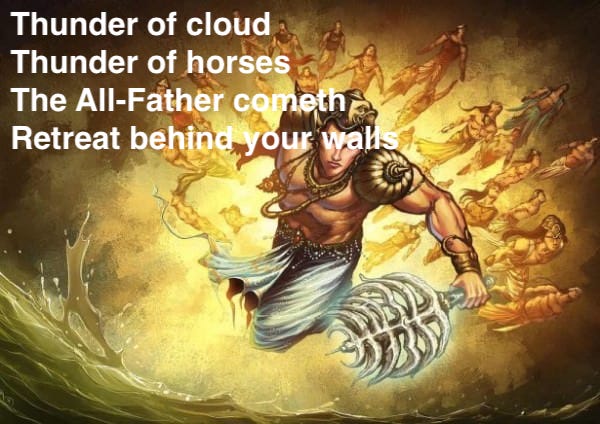
Readers of this weblog may sometimes notice that I break out in pompous and self-important declarations of being a “scion of the All-Father.” This is basically a joke. But, it’s a joke that draws from a legitimate basis of science and mythology. The “All-Father” is another name for Odin. I’m really talking about Indra, who is probably more like Thor. And obviously, Norse paganism is only distantly related to the mythology of the Indo-Aryans. As someone more familiar with the lineaments of Northern European mythology than Indian, of course, it’s easier for me to draw on the motifs of the former to relate to the latter.

R1a distribution

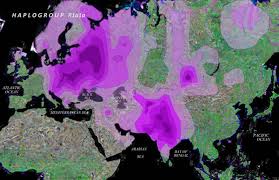
The scientific component has to do with R1a. Specifically, R1a1a, defined by the M17 mutation (discovered by my boss at my day-job 20 years ago). There are two very closely related “clades,” that is, families of pedigrees, of this Y chromosomal lineage, passed from father to son. One of them defines mostly European R1a1a, Eastern Europeans, and to a lesser extent Western Europeans. Another branch is found mostly in Central and South Asia.

When I first saw this distribution around the year 2000 it left me scratching my head. Of course, I knew about the Indo-European languages. But I had always assumed that the demographic impact of the original Indo-Europeans was relatively marginal. And yet this Y chromosome was found at frequencies in the 10-50% range across vast swaths of Eurasia.

Much of the 2000s was spent on arguments as to whether R1a was indigenous to South Asia or to Central Eurasia. Ultimately these arguments were not resolvable due to limitations of the data. To calibrate dates and diversity researchers relied on microsatellites, which are useful due to their high mutation rates, but also erratic for the same reason (not only were confidence intervals wide, some of the assumptions of the model parameters were guesses).

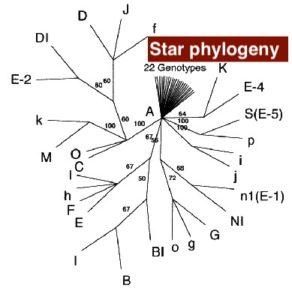
In the early 2010s, whole-genome sequences of Y chromosomes came online. It became very clear that the most common R1a1a lineages exhibited the “star phylogeny.” Demographically, what this means is that men carrying this lineage underwent very rapid population expansion for a short period of time. So rapid that a “father” lineage would give rise to numerous “son” lineages one mutational step away

You can see in the figure that node “A” has given rise to a “star phylogeny.” A large number of individuals are one mutational step away from that genotype. A more normal phylogeny would produce a complex structured tree which accrues mutations across the various branches gradually.

In the South Asian context, a paper from 2004, Independent origins of Indian caste and tribal paternal lineages, introduced a result which prefigured what we now know:

Analyses of molecular variance also suggest that caste groups are more homogeneous for Y chromosome variation than tribal groups, since the variance among caste groups (sampled from all over India) is 3-fold less than that observed among tribal groups and 2-fold less than that observed among all Indian populations grouped together (Table 3). Moreover, if only north caste groups are considered, the variance among populations is not significantly different from zero (Table 3), indicating that spread over the Indian subcontinent although they are located up to ∼1500 km away from each other, these populations have highly homogeneous Y chromosome compositions.

The implications of the lack of structure of R1a on the Indo-Gangetic plain is always something that struck me. It suggested that the paternal lineages only recently expanded since they didn’ have time to build up distinct regional mutations. In contrast, the adivasi populations had a wider distribution of Y chromosomal haplogroups, and they exhibit a lot deeper diverged lineages.

Which brings me to the personal angle. In the spring of 2010, I did my first personal genomic test. I got my Y and mtDNA results back first. It turned out my Y was R1a1a, and my mtDNA was U2b. I was surprised by both. Eastern Bengali has the highest fraction of mtDNA macrohaplogroup M in the world. R1a1a was less surprising. But, it was very strange to have a concrete, personal, connection to this lineage which had been on my mind for a decade or so.

My funny attachment to my haplogroup is probably a function of my upbringing. Growing up as brown in the United States, I wasn’t exposed to Indian culture, nor was I well versed in the details of South Asian communalism. My family is pretty conventional in being upper-middle-class Bengali Muslims, so there is not a jati identity or anything like that I could identify with (and though my parents are Muslim, they are not extremely so, therefore religious identity was a background and not foreground variable). When I looked at my overall genome in 2010 it was clear I didn’t have the “runs of homozygosity” that characterize many people from South Asian backgrounds who come from endogamous communities. I know some of my ancestors were Kayasthas, and my father has some Brahmin ancestry, but the most distinctive thing about me in hindsight is I’m a typical east Bengali with more than a usual dollop of East Asian ancestry (my family is from Comilla).

My Y chromosomal haplogroup, in contrast, is something clear, distinct, and precise. It is an anchor, something which I use to channel my preoccupations and concerns. I don’t have Omar’s Gujar tribal ancestry, or Zach’s Muhajir/Persian origins. I’m just a brown American whose parents did not instill him a patriotism about the “motherland” (Bangladesh), because they themselves didn’t even live a decade in that nation. Though there is a spectrum, it is clear that many South Asian Americans are less “coconut” than I am, and are attuned to fine differences of status, origin, and background. Growing up around only white people my identity was racialized, not ethnicized.

I have never felt superior or inferior to any community or ethnicity of South Asian because I never belonged to any community, have weak ethnic identity, and don’t believe in any religion. The religious prejudices I do have are probably Anglo-Protestant ones against Catholicism, because of the implicit assumptions and background facts of America’s Whig culture.

What R1a1a symbolizes to me is that I have a concrete connection to a semi-historical phenomenon between the end of prehistory and before the written word, which we have not grasped or understood very well. Though it is true R1a1a is found at higher concentrations in “upper castes,” as well as in the north and west of the subcontinent, and among Indo-Aryan speakers, the reality is it is found in almost every community in South Asia (the main exception being among Tibeto-Burmans and Munda). There are many communities, such as Chenchus, which have very little steppe ancestry but retain a substantial proportion of R1a1a.

For obvious reasons this haplogroup is associated with Indo-Aryans (the earliest find of R1a1a-Z93 is from the Bronze Age Volga Srubna culture), but its reach is far beyond current areas of Indo-Aryan speech. Its ubiquity is a testament to a broader South Asia cultural matrix that emerged in the centuries after 1500 BC, from north to south.

This is of course not a moral judgment. The expansion of this paternal lineage at the expense of others likely occurred through a process of aggression and social exclusion. This is nothing to be proud of…or ashamed of. It’s just a description.

What The All-Father Means


Readers of this weblog may sometimes notice that I break out in pompous and self-important declarations of being a “scion of the All-Father.” This is basically a joke. But, it’s a joke that draws from a legitimate basis of science and mythology. The “All-Father” is another name for Odin. I’m really talking about Indra, who is probably more like Thor. And obviously, Norse paganism is only distantly related to the mythology of the Indo-Aryans. As someone more familiar with the lineaments of Northern European mythology than Indian, of course, it’s easier for me to draw on the motifs of the former to relate to the latter.

R1a distribution

The scientific component has to do with R1a. Specifically, R1a1a, defined by the M17 mutation (discovered by my boss at my day-job 20 years ago). There are two very closely related “clades,” that is, families of pedigrees, of this Y chromosomal lineage, passed from father to son. One of them defines mostly European R1a1a, Eastern Europeans, and to a lesser extent Western Europeans. Another branch is found mostly in Central and South Asia.

When I first saw this distribution around the year 2000 it left me scratching my head. Of course, I knew about the Indo-European languages. But I had always assumed that the demographic impact of the original Indo-Europeans was relatively marginal. And yet this Y chromosome was found at frequencies in the 10-50% range across vast swaths of Eurasia.

Much of the 2000s was spent on arguments as to whether R1a was indigenous to South Asia or to Central Eurasia. Ultimately these arguments were not resolvable due to limitations of the data. To calibrate dates and diversity researchers relied on microsatellites, which are useful due to their high mutation rates, but also erratic for the same reason (not only were confidence intervals wide, some of the assumptions of the model parameters were guesses).

In the early 2010s, whole-genome sequences of Y chromosomes came online. It became very clear that the most common R1a1a lineages exhibited the “star phylogeny.” Demographically, what this means is that men carrying this lineage underwent very rapid population expansion for a short period of time. So rapid that a “father” lineage would give rise to numerous “son” lineages one mutational step away

You can see in the figure that node “A” has given rise to a “star phylogeny.” A large number of individuals are one mutational step away from that genotype. A more normal phylogeny would produce a complex structured tree which accrues mutations across the various branches gradually.

In the South Asian context, a paper from 2004, Independent origins of Indian caste and tribal paternal lineages, introduced a result which prefigured what we now know:

Analyses of molecular variance also suggest that caste groups are more homogeneous for Y chromosome variation than tribal groups, since the variance among caste groups (sampled from all over India) is 3-fold less than that observed among tribal groups and 2-fold less than that observed among all Indian populations grouped together (Table 3). Moreover, if only north caste groups are considered, the variance among populations is not significantly different from zero (Table 3), indicating that spread over the Indian subcontinent although they are located up to ∼1500 km away from each other, these populations have highly homogeneous Y chromosome compositions.

The implications of the lack of structure of R1a on the Indo-Gangetic plain is always something that struck me. It suggested that the paternal lineages only recently expanded since they didn’ have time to build up distinct regional mutations. In contrast, the adivasi populations had a wider distribution of Y chromosomal haplogroups, and they exhibit a lot deeper diverged lineages.

Which brings me to the personal angle. In the spring of 2010, I did my first personal genomic test. I got my Y and mtDNA results back first. It turned out my Y was R1a1a, and my mtDNA was U2b. I was surprised by both. Eastern Bengali has the highest fraction of mtDNA macrohaplogroup M in the world. R1a1a was less surprising. But, it was very strange to have a concrete, personal, connection to this lineage which had been on my mind for a decade or so.

My funny attachment to my haplogroup is probably a function of my upbringing. Growing up as brown in the United States, I wasn’t exposed to Indian culture, nor was I well versed in the details of South Asian communalism. My family is pretty conventional in being upper-middle-class Bengali Muslims, so there is not a jati identity or anything like that I could identify with (and though my parents are Muslim, they are not extremely so, therefore religious identity was a background and not foreground variable). When I looked at my overall genome in 2010 it was clear I didn’t have the “runs of homozygosity” that characterize many people from South Asian backgrounds who come from endogamous communities. I know some of my ancestors were Kayasthas, and my father has some Brahmin ancestry, but the most distinctive thing about me in hindsight is I’m a typical east Bengali with more than a usual dollop of East Asian ancestry (my family is from Comilla).

My Y chromosomal haplogroup, in contrast, is something clear, distinct, and precise. It is an anchor, something which I use to channel my preoccupations and concerns. I don’t have Omar’s Gujar tribal ancestry, or Zach’s Muhajir/Persian origins. I’m just a brown American whose parents did not instill him a patriotism about the “motherland” (Bangladesh), because they themselves didn’t even live a decade in that nation. Though there is a spectrum, it is clear that many South Asian Americans are less “coconut” than I am, and are attuned to fine differences of status, origin, and background. Growing up around only white people my identity was racialized, not ethnicized.

I have never felt superior or inferior to any community or ethnicity of South Asian because I never belonged to any community, have weak ethnic identity, and don’t believe in any religion. The religious prejudices I do have are probably Anglo-Protestant ones against Catholicism, because of the implicit assumptions and background facts of America’s Whig culture.

What R1a1a symbolizes to me is that I have a concrete connection to a semi-historical phenomenon between the end of prehistory and before the written word, which we have not grasped or understood very well. Though it is true R1a1a is found at higher concentrations in “upper castes,” as well as in the north and west of the subcontinent, and among Indo-Aryan speakers, the reality is it is found in almost every community in South Asia (the main exception being among Tibeto-Burmans and Munda). There are many communities, such as Chenchus, which have very little steppe ancestry but retain a substantial proportion of R1a1a.

For obvious reasons this haplogroup is associated with Indo-Aryans (the earliest find of R1a1a-Z93 is from the Bronze Age Volga Srubna culture), but its reach is far beyond current areas of Indo-Aryan speech. Its ubiquity is a testament to a broader South Asia cultural matrix that emerged in the centuries after 1500 BC, from north to south.

This is of course not a moral judgment. The expansion of this paternal lineage at the expense of others likely occurred through a process of aggression and social exclusion. This is nothing to be proud of…or ashamed of. It’s just a description.

Between Marx and the mullah

There is a lot of talk on this weblog about deaths in premodern conflicts. I want to clarify a few points, at least from my perspective.

Both ancient DNA and conventional history and archaeology indicate that massive population turnovers occurred in the past. If you read a book like Genghis Khan: His Conquests, His Empire, His Legacy, you note that there is plenty of record of massacres and killings in targeted fashion during the Mongol expansion. The chaos and demographic collapse induced by the Mongols have been implicated in reforestation across vast swaths of Central Eurasia (which may then have produced climate change!).

We can also look to the deep past, and the more recent past. Latin America is characterized by incredible admixture between people of disparate ancestries. This is due in large part to 1) demographic collapse on the part of native peoples 2) migration of settlers from Iberia 3) transportation of slaves from Africa.

The evidence from Europe and South Asia is also strongly suggestive of massive population replacements. Depending on your model parameters about 50-75% of the ancestors of modern Northern Europeans who were alive 5,000 years ago had descendants who were intrusive to Northern Europe. Another way to say this is that 50-75% of the ancestors of modern Danes did not live in Denmark or nearby regions 5,000 years ago. A similar number for South Asia seems to be in the 10-30% range (again, depends on your model parameters).

This elicits the question: was there genocide?

The evidence from Latin America is clear. Though there was targeted genocide on the part of the Iberian conquerors, on the whole, the deaths were mostly due to the introduction of Eurasian diseases that resulted in a cascade of consequences which resulted in famine (the Black Legend is propaganda which has influenced our modern perceptions). When a human population lives on the Malthusian margin, small perturbations can result in death due to starvation. In the case of Latin America, it is known that incapacitation of a large enough proportion of prime-age adults due to illness resulted in famine, as crops were not planted or harvested in quantities necessary to sustain villages.

In other words, population collapse was a function of reduction in labor inputs into agriculture.

And, the reality is that the Iberian conquerors, who were often younger sons of aristocratic lineages, were not inclined to engage in mass-slaughter due to the reality of their aspiration of becoming rentiers. The importation of African slaves was to a great extent a direct consequence of shortages of exploitable labor (along with the humanitarian concerns of enslaving natives). Contrast this to the situation in the Phillippines or India, where Asian peoples provided resources to support leisure-seeking European elites.

A second fact is that premodern states were not capable of the sort of coordinated genocide that has been seen in the 20th-century. They lacked the weaponry, information technology, and organizational capacity to be particularly efficient. I don’t think it’s a coincidence that the coordinated genocides against Christian groups in the Ottoman and post-Ottoman realm occurred in the modern period (Armenians and Assyrians). The older Ottoman state was neither efficient enough nor did it have the means, to engage in total exterminationism (I also believe that 19th-century European-style nationalism probably made exterminationist feelings more ‘justified’ as well).

Probably the best premodern instance of ethnic cleansing we have on record is the Spanish expulsion of the Moriscos, which occurred on the basis of presumed blood lineage, not belief (e.g., many sincere Christian Moriscos were expelled as well!). But, that effort was incomplete and patchy, effective in some areas, totally ineffective in others, and haphazard in the criteria utilized (e.g., many people with Morisco ancestry were not expelled, while families which had been sincere Christians for generations were expelled).

Which brings me back to the earlier cases. What happened in Europe and India to induce population change?

There are several things going on in my opinion. First, not all late Neolithic/early Bronze Age societies had developed an ideology of elite exploitation to the level that we’d take for granted in the modern world. By this, I mean that the leaders of these agro-pastoralist societies may not have viewed farmers of different ethnicities as potential subjects, and so wealth. In conflicts between hunter-gatherer populations often warfare results in very high mortality rates, with young children and young women of the losers assimilated into the winners. There was no ideology of group assimilation for young men into an alien population, and in societies without specialized professions and economic systems, these men might not be seen as valuable in any sense except as consumption slaves (servants for powerful people, not economic producers).

In other words, conflicts between primitive societies can be thought of as “animal conflicts,” where two groups fight over resources and don’t view the losers of the other group as resources. In contrast, societies over the past few thousand years have tended to see the defeat of the enemy as a potential for elites to accrue new subjects from which they can extract rents. This was one of the arguments made to Genghis Khan by one of his Khitai advisors as to why he should not clear the land of northern China of people so as to create pastures for horses and sheep. People were more valuable than horses and sheep. He would be richer with more people.

Of course, these are people with spears (and later swords). I don’t think that most of the demographic collapse was due to direct killing. Rather, people living on the Malthusian margin, especially the sort of late Neolithic farming that was likely marginal in Northern Europe, were likely subject to the same famine dynamics as occurred in the New World. The IVC zone in South Asia was clearly more advanced, but it too many have been relatively fragile in comparison to the agricultural regimes of later South Asian societies.

The final issue is looping back to Muslims. Did they commit genocide? Did they exterminate the local populations? Probably. But, 95-99% of the ancestry of South Asian Muslims is the same as that of South Asian Hindus of the same region. Unlike the incursion of Indo-Aryans, the arrival of Muslims, mostly Turks, Afghans, and Persians did not have a major demographic perturbation in a direct sense (indirectly, technology and organizational skills introduced by Muslim elites may have resulted in disparate demographic growth of different regions in South Asia; e.g., Eaton’s argument for the expansion into eastern Bengal).

Additionally, Islam as a dominant ideology developed during the high-tide of rent-seeking elites. Though Muhammad’s status as a merchant meant that the religion was never constitutively anti-mercantile, conquest elites invariably aimed to extract wealth out of conquered populations. Arguably, the development of Islam is a direct consequence of how lightly Christianized Arab conquest elites developing an ideology which justified their extraction of rents (“protection taxes”) from conquered populations,  as well as maintaining their separateness and distinctness.

In the Indian context, many will point out that Islamic chroniclers note the despoilation and slaughter upon the local population. I would suggest that one be cautious about the propagandistic nature of ancient conflict and war (this begins with the Battle of Kadesh). Ancient chroniclers seem to have exaggerated numbers and effectiveness routinely. At least in the early modern period, most casualties due to battlefield injuries were the consequence of infection, not immediate trauma. Similarly, I suspect that the depopulation of an invaded region was more likely a consequence of the disruption of local social fabrics more than direct killing with arrows, swords, and spears (killing people expends a lot of energy and is risky).

Because of the nature of this blog, of course, this post ends with the arrival of Muslims to India. The stupid and the disingenuous (or a mix of both) seem to fix on two extreme positions:

  1. Muslims arrived and ushered in an orgy of slaughter driven primarily by the motive of oppressing the kuffar
  2.  Turks arrived in India, and like earlier invaders aimed to extract resources and dominate the location population
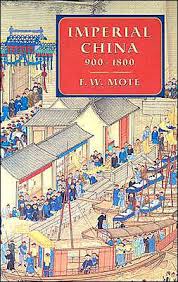
These caricatures serve ideologies but don’t describe reality. Both materialist and non-materialist motives need to be considered. The chroniclers of the arrival of self-conscious Muslim military forces to South Asia clearly wished to present it as an ideological and religious act. These were ghazis, just as far to the west, the Ottomans began as ghazis. But it is also impossible not to notice the family resemblance of Muslim Turks moving into South Asia in the centuries after 1000 A.D. with the invasions and conquest of China by Turkic, Mongolic and Tungusic peoples in the centuries after 1000 A.D.

Not surprisingly, the Khitai, Jurchen, and Mongols, all made some ideological claims for their acts of aggression of conquest, often post facto and tenuously. The Khitai and Jurchen integrated themselves into the Han Chinese worldview and presented themselves more worthy stewards of the Mandate of Heaven than the Song rulers of China. The Mongols also did this, though perhaps even more foregrounded was their own peculiar ideology than their sky god had given the whole world to them to subjugate (the Mongol Yuan dynasty also gave special consideration to Tibetan Buddhism, which alienated their Han subjects).

But of course, we would notice that the major consequence of the Mongol Yuan dynasty was the transfer of resources from Han Chinese elites to arriviste Mongol elites. The overthrow of the Yuan resulted in the expulsion of the killing of many of these hated Mongol landlords. Ideological rationales were given, but the memories of Han elite dispossession were fresh.
And yet despite the fig-leaf that ideology provides, differences may result from such distinctions. The Khitai and the Mongols were more punctilious is differentiating themselves from their Han subjects than the Jurchen. They maintained their separateness due to their reduced respect and veneration of Confucian norms. And, notably, the philo-Sinic Jurchen were assimilated into the Han to a far greater extent than the Khitai and the Mongols.

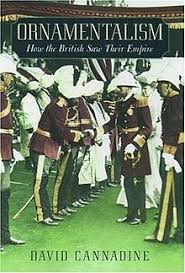
Similarly, in South Asia, the ideological distinctions between the rentier class of Turks and West Asian Muslims, and native Indians was sufficient for the absorptive process to halt. Synthesis occurred. But amalgamation did not proceed to completion. In David Cannadine’s Ornamentalism the author argues that the religious difference was also the key reason that the Indian elite, Muslim, Sikh, and Hindu, did not intermarry with the British gentry.

The various arcs of history cannot be easily defined by grade-school level Marxism, or internet Hindu level psychoanalysis. In all regions that self-conscious Muslim conquest elites established themselves, their sense of distinctness, superiority, and God-given right to rule are clear. But, all these groups, whether it be the slaving regimes of Arabs in East Africa, the Ottomans in the Balkans, and yes, Muslims in South Asia, exhibited a strong orientation toward pragmatic exploitation of the riches of the regions which they conquered.

Addendum: I’m going to delete stupid comments. This means if you leave a 2,000-word comment that’s stupid, it will be for naught.

Between Marx and the mullah

There is a lot of talk on this weblog about deaths in premodern conflicts. I want to clarify a few points, at least from my perspective.

Both ancient DNA and conventional history and archaeology indicate that massive population turnovers occurred in the past. If you read a book like Genghis Khan: His Conquests, His Empire, His Legacy, you note that there is plenty of record of massacres and killings in targeted fashion during the Mongol expansion. The chaos and demographic collapse induced by the Mongols have been implicated in reforestation across vast swaths of Central Eurasia (which may then have produced climate change!).

We can also look to the deep past, and the more recent past. Latin America is characterized by incredible admixture between people of disparate ancestries. This is due in large part to 1) demographic collapse on the part of native peoples 2) migration of settlers from Iberia 3) transportation of slaves from Africa.

The evidence from Europe and South Asia is also strongly suggestive of massive population replacements. Depending on your model parameters about 50-75% of the ancestors of modern Northern Europeans who were alive 5,000 years ago had descendants who were intrusive to Northern Europe. Another way to say this is that 50-75% of the ancestors of modern Danes did not live in Denmark or nearby regions 5,000 years ago. A similar number for South Asia seems to be in the 10-30% range (again, depends on your model parameters).

This elicits the question: was there genocide?

The evidence from Latin America is clear. Though there was targeted genocide on the part of the Iberian conquerors, on the whole, the deaths were mostly due to the introduction of Eurasian diseases that resulted in a cascade of consequences which resulted in famine (the Black Legend is propaganda which has influenced our modern perceptions). When a human population lives on the Malthusian margin, small perturbations can result in death due to starvation. In the case of Latin America, it is known that incapacitation of a large enough proportion of prime-age adults due to illness resulted in famine, as crops were not planted or harvested in quantities necessary to sustain villages.

In other words, population collapse was a function of reduction in labor inputs into agriculture.

And, the reality is that the Iberian conquerors, who were often younger sons of aristocratic lineages, were not inclined to engage in mass-slaughter due to the reality of their aspiration of becoming rentiers. The importation of African slaves was to a great extent a direct consequence of shortages of exploitable labor (along with the humanitarian concerns of enslaving natives). Contrast this to the situation in the Phillippines or India, where Asian peoples provided resources to support leisure-seeking European elites.

A second fact is that premodern states were not capable of the sort of coordinated genocide that has been seen in the 20th-century. They lacked the weaponry, information technology, and organizational capacity to be particularly efficient. I don’t think it’s a coincidence that the coordinated genocides against Christian groups in the Ottoman and post-Ottoman realm occurred in the modern period (Armenians and Assyrians). The older Ottoman state was neither efficient enough nor did it have the means, to engage in total exterminationism (I also believe that 19th-century European-style nationalism probably made exterminationist feelings more ‘justified’ as well).

Probably the best premodern instance of ethnic cleansing we have on record is the Spanish expulsion of the Moriscos, which occurred on the basis of presumed blood lineage, not belief (e.g., many sincere Christian Moriscos were expelled as well!). But, that effort was incomplete and patchy, effective in some areas, totally ineffective in others, and haphazard in the criteria utilized (e.g., many people with Morisco ancestry were not expelled, while families which had been sincere Christians for generations were expelled).

Which brings me back to the earlier cases. What happened in Europe and India to induce population change?

There are several things going on in my opinion. First, not all late Neolithic/early Bronze Age societies had developed an ideology of elite exploitation to the level that we’d take for granted in the modern world. By this, I mean that the leaders of these agro-pastoralist societies may not have viewed farmers of different ethnicities as potential subjects, and so wealth. In conflicts between hunter-gatherer populations often warfare results in very high mortality rates, with young children and young women of the losers assimilated into the winners. There was no ideology of group assimilation for young men into an alien population, and in societies without specialized professions and economic systems, these men might not be seen as valuable in any sense except as consumption slaves (servants for powerful people, not economic producers).

In other words, conflicts between primitive societies can be thought of as “animal conflicts,” where two groups fight over resources and don’t view the losers of the other group as resources. In contrast, societies over the past few thousand years have tended to see the defeat of the enemy as a potential for elites to accrue new subjects from which they can extract rents. This was one of the arguments made to Genghis Khan by one of his Khitai advisors as to why he should not clear the land of northern China of people so as to create pastures for horses and sheep. People were more valuable than horses and sheep. He would be richer with more people.

Of course, these are people with spears (and later swords). I don’t think that most of the demographic collapse was due to direct killing. Rather, people living on the Malthusian margin, especially the sort of late Neolithic farming that was likely marginal in Northern Europe, were likely subject to the same famine dynamics as occurred in the New World. The IVC zone in South Asia was clearly more advanced, but it too many have been relatively fragile in comparison to the agricultural regimes of later South Asian societies.

The final issue is looping back to Muslims. Did they commit genocide? Did they exterminate the local populations? Probably. But, 95-99% of the ancestry of South Asian Muslims is the same as that of South Asian Hindus of the same region. Unlike the incursion of Indo-Aryans, the arrival of Muslims, mostly Turks, Afghans, and Persians did not have a major demographic perturbation in a direct sense (indirectly, technology and organizational skills introduced by Muslim elites may have resulted in disparate demographic growth of different regions in South Asia; e.g., Eaton’s argument for the expansion into eastern Bengal).

Additionally, Islam as a dominant ideology developed during the high-tide of rent-seeking elites. Though Muhammad’s status as a merchant meant that the religion was never constitutively anti-mercantile, conquest elites invariably aimed to extract wealth out of conquered populations. Arguably, the development of Islam is a direct consequence of how lightly Christianized Arab conquest elites developing an ideology which justified their extraction of rents (“protection taxes”) from conquered populations,  as well as maintaining their separateness and distinctness.

In the Indian context, many will point out that Islamic chroniclers note the despoilation and slaughter upon the local population. I would suggest that one be cautious about the propagandistic nature of ancient conflict and war (this begins with the Battle of Kadesh). Ancient chroniclers seem to have exaggerated numbers and effectiveness routinely. At least in the early modern period, most casualties due to battlefield injuries were the consequence of infection, not immediate trauma. Similarly, I suspect that the depopulation of an invaded region was more likely a consequence of the disruption of local social fabrics more than direct killing with arrows, swords, and spears (killing people expends a lot of energy and is risky).

Because of the nature of this blog, of course, this post ends with the arrival of Muslims to India. The stupid and the disingenuous (or a mix of both) seem to fix on two extreme positions:

  1. Muslims arrived and ushered in an orgy of slaughter driven primarily by the motive of oppressing the kuffar
  2.  Turks arrived in India, and like earlier invaders aimed to extract resources and dominate the location population

These caricatures serve ideologies but don’t describe reality. Both materialist and non-materialist motives need to be considered. The chroniclers of the arrival of self-conscious Muslim military forces to South Asia clearly wished to present it as an ideological and religious act. These were ghazis, just as far to the west, the Ottomans began as ghazis. But it is also impossible not to notice the family resemblance of Muslim Turks moving into South Asia in the centuries after 1000 A.D. with the invasions and conquest of China by Turkic, Mongolic and Tungusic peoples in the centuries after 1000 A.D.

Not surprisingly, the Khitai, Jurchen, and Mongols, all made some ideological claims for their acts of aggression of conquest, often post facto and tenuously. The Khitai and Jurchen integrated themselves into the Han Chinese worldview and presented themselves more worthy stewards of the Mandate of Heaven than the Song rulers of China. The Mongols also did this, though perhaps even more foregrounded was their own peculiar ideology than their sky god had given the whole world to them to subjugate (the Mongol Yuan dynasty also gave special consideration to Tibetan Buddhism, which alienated their Han subjects).

But of course, we would notice that the major consequence of the Mongol Yuan dynasty was the transfer of resources from Han Chinese elites to arriviste Mongol elites. The overthrow of the Yuan resulted in the expulsion of the killing of many of these hated Mongol landlords. Ideological rationales were given, but the memories of Han elite dispossession were fresh.

And yet despite the fig-leaf that ideology provides, differences may result from such distinctions. The Khitai and the Mongols were more punctilious is differentiating themselves from their Han subjects than the Jurchen. They maintained their separateness due to their reduced respect and veneration of Confucian norms. And, notably, the philo-Sinic Jurchen were assimilated into the Han to a far greater extent than the Khitai and the Mongols.

Similarly, in South Asia, the ideological distinctions between the rentier class of Turks and West Asian Muslims, and native Indians was sufficient for the absorptive process to halt. Synthesis occurred. But amalgamation did not proceed to completion. In David Cannadine’s Ornamentalism the author argues that the religious difference was also the key reason that the Indian elite, Muslim, Sikh, and Hindu, did not intermarry with the British gentry.

The various arcs of history cannot be easily defined by grade-school level Marxism, or internet Hindu level psychoanalysis. In all regions that self-conscious Muslim conquest elites established themselves, their sense of distinctness, superiority, and God-given right to rule are clear. But, all these groups, whether it be the slaving regimes of Arabs in East Africa, the Ottomans in the Balkans, and yes, Muslims in South Asia, exhibited a strong orientation toward pragmatic exploitation of the riches of the regions which they conquered.

Addendum: I’m going to delete stupid comments. This means if you leave a 2,000-word comment that’s stupid, it will be for naught.
Brown Pundits