Yugant / युगान्त is a critical and rational analysis of Mahabharata by the Irawati Karve – the anthropologist, sociologist, educationist and writer from Maharashtra, India. She was the daughter in law of Dhondo Keshav Karve – a reformer from Maharashtra.
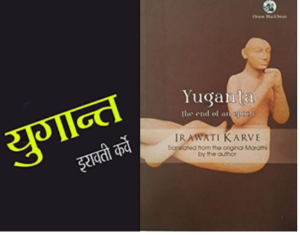 Yugant confronts various versions of Mahabharat analytically and tries to make sense of character arcs and motivations. Intelligently analyzed without religious respect but with literary respect. The motivations of Pandavas for marrying Draupadi as the Royal Queen are very well explained. The literary accounts of chats between Dhritarashtra and Gandhari & those of Draupadi’s death are very well written and move your heart. Krishna (Vasudeva) stands out not only because of the brilliance of his character but the wonderful analysis and the crisp unraveling of his motivations. The Arya (Kshatriya) Dharma is explained in Krishna and Yugant chapters. The author enthralls with deep and intelligent writing in the final chapter that resonates wonderfully even in the 21st-century internet age. The sincere and irreligious comparisons of Mahabharat Era – Arya Dharma to contemporary Hindu religion and other Prophetic Faiths are interesting. Throughout the book, the author refrains from applying current Zeitgeist as a yardstick – something which is refreshing in 21st century polarized analysis and debates which always have political undertones. Even without a direct running story arc – the arrangement of essays offers a wonderful climax – especially Krishna and Yugant chapters. With recent elevation of Heroic Karna in Indian literature and thought, a look back of the character of Karna as seen in 1950s-60s is a pleasant change.
Surprisingly the argument for conservatism offered at times by the author towards the end – is also a stimulating one. Further readings of Mahabharata (Bhandarkar critical edition) may lead to various disagreements with author’s positions at various points – but that has to be expected, especially for a text as dense and significant as Mahabharata.
Post Script:
I have not read the English edition. I cant vouch for the English version. The analysis is very well explained in the original Marathi editions. Some of her work – especially on Anthropology is hotly contested today, but IMHO her MO is very relevant even today.
A recent twitter thread on the Author:
Today is the 50th Punya Tithi of Irawati Karve.
Karve was a noted anthropologist, sociologist, educationist and writer. She founded the Anthropology Department at SPPU (Pune University).
Karve was the daughter-in-law of Bharat Ratna Maharishi Karve.https://t.co/nQPsZiPy7q pic.twitter.com/QRs4GdycVm
— Amit Paranjape (@aparanjape) August 10, 2020
This book is easily available on Amazon in India in both languages. The price on Amazon.com appears unreasonably high.
A note for Traditionally inclined Hindus – None of the analysis is reverential but it avoids the viewing of Mahabharata from western lens.