Multi Racial Multi Cultural Family in Ceylon

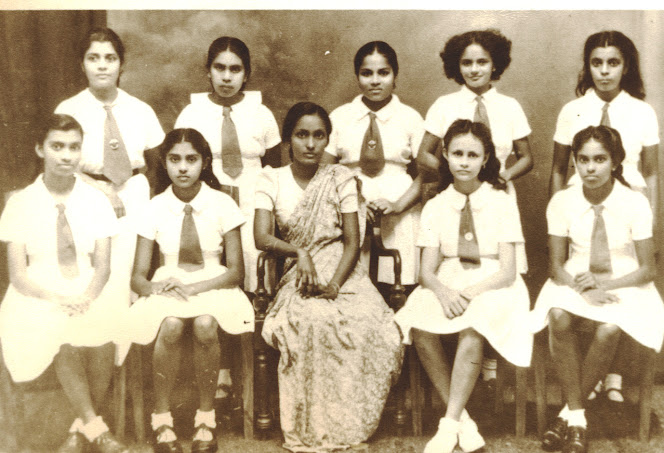
Banner Image: Photo from around 1940.
Standing far left: My mother Peace born 1926 (same age as Queen Elizabeth II) Standing one but Last with Afro, Estelle. Father a Judge from Barbados via England (African Heritage). Mother Eurasian
Seated. In Saree Miss Gnana (History Teacher, Tamil), Next to her: Miss White, Eurasian


This is about the maternal side of the family. My grandparents were one of the first inter racial marriage in the Deep South. It is also about how a children of an inter racial marriage do not belong and forge an independence of thinking (my mother and myself as examples). Even more so growing up in a cosmopolitan segment of Sri Lankan society

Let us start from the beginning. My Grandmothers mother was an Irish Nanny. Hearsay and rumor confirmed by my DNA tests. The Irish Nanny had my grandmother with my GreatGrandFather and left Ceylon. My GreatGrandfather did not have children so my grandmother was adopted by her father. Inherited all the wealth which was considerable. GreatGrandFathers family (Tillekeratnes) had been Administrators under Dutch and British times and were Sinhalese in the Deep South. Possibly were Anglicans during British times.
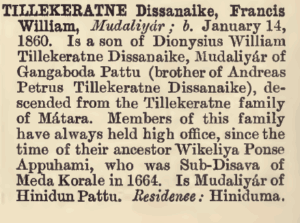

Tillekeratne Family of Matara.
From Golden Book of India and Ceylon (1900) Roper Lethbridge

My Grandmother married a Jaffna Tamil (from the North), a surveyor posted to Galle in the Deep South. My grandmother built a house in Galle so that it was convenient for work. Her ancestral home was even more deeper in the South in Matara.

Galle Town proper was very small, probably about 25,000 pre WW2. Still small about 150,000 now (2025), However, Galle was very Cosmopolitan because of the Harbor. It was the Main Harbor till the Colombo breakwater was built. My mother (and her sisters) attended a Catholic Convent, which was cosmopolitan. (a school photo and some names attached).

My mother and I dont really identify with any community in Sr Lanka. However, very Sri Lankan Nationalist. My mother never spoke about her opinions. Many in Galle thought they were Eurasians but they were not part of the Eurasian (Burgher) community. Burghers were a Fun crowd, parties dancing and Drinking (including women). (I would have liked to be part of that community) My mothers family were quite austere, their idea of nice time was probably singing hymns and big meal afterward. A lot of imported stuff from what I recall as a 6 year old. Edam Cheese, hams, sausage, puddings and homemade ice cream in churn. We inherited the ice cream churn after my grandfather died. Eventually rusted and was no longer usable.

Dual Six-Quart Ice Cream Maker
Old fashioned Ice Cream Churn.

Because we dont really “belong” to any community we dont have a need to behave as society demands. Mother would dress like a street sweeper, without footwear even to extent of going to nearby shops. On the flip side she would go to Colombo to get her dresses made. Wore platform shoes, high heels, pastel light shade dresses and sarees. (There were some in her wardrobe when we were children).
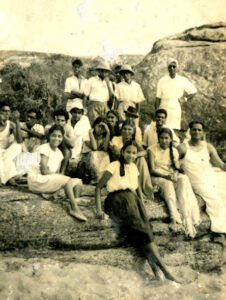

Mother in White Dress (left in image) on a Trip to Yala National when she was a teacher.  Probably around 1952
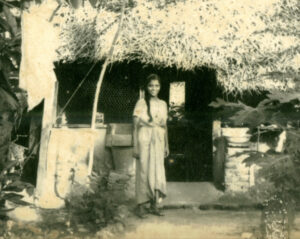

Mother in Batticola just after marriage. Parents lived there for 5 years.  I was conceived in Batticola just before they left.  Born in my grandmothers house in Galle. 

Another big issue was she traveled alone, without chaperones since an older teenager. I think she just couldn’t deal with the slow pace of Sri Lankans. One gets the impression that she was some kind dress up person. Anything but, workaholic like her father and mother. Mothers father died at 84 getting ready to go to work surveying. Most Stories told by Katrina Hamy who was about my mothers age. I think mother liked her more than her sisters, some of whom were big time gossips. Apparently even as a young teenager would come home and help in cleaning, toilets, drains washing up. Hated cooking but was a reluctant good cook when we were children. We did not have “help” as my mother didnt approve of “help”

Anecdote told by Katrna Hamy
Mother was the youngest in the family. Somewhere in her teens she took it upon herself to supervise some coconut properties that belonged to my Grandmother. She would get up at 4:00am and take the first train (5am night Mail). She was supposed to go with a chaperone. Mother does not wait for anyone. Once she is ready she leaves. The walk to the train station (about a mile) is dark and lonely. As she was walking there was a man following her. Mother probably heard the footsteps and turned and walked back to the man and he just ran. Probably thought my mother was Mohini a female demon who dresses in white.
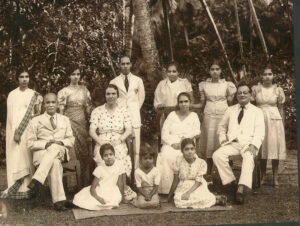

Mother family
Seated:  Sanford BeeBee (Jaffna Tamil), 2nd from Right Lilian Edith Tillekeratne (Half Sinhalese, Half Irish. note: No Jewellery). The two westerners are Mr and Mrs Graves. Missionaries
Seated on Ground. Peace BeeBee (my mother), next to her Katrina Hamy
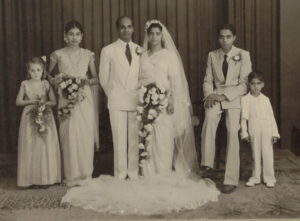

Parents Wedding Photo Galle, 1953
LR: Ms Anthin (Swedish Missionaries daughter), Sunethra neighbor and family friend, Sinhalese, AC Barr-Kumarakulasinghe (Jaffna Tamil), Peace Beebee (mother), Wilson Allegacone (fathers nephew, Tamil), Lal Liyanage (mothers nephew, Sinhalese)
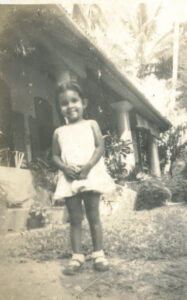

Grandmothers House in Galle


*For those who think this is boast. End of the line for my male Paternal line (about two males who carry the surname in Malaysia). The same for my grandmothers fathers line. The last in the male line was a classmate. As the Buddha says everything is Impermanent
Why we must talk about caste

Every few months (years?), Brown Pundits goes through its own small earthquake. A post lands wrong, a comment thread ignites, and the whole Commentariat erupts.

The latest rupture began with a mild jibe on caste. I pointed out, in passing, that caste shapes political instincts far more than many admit. The backlash was instant. A section of the readers declared a quiet boycott. The threads went cold. No one wanted to break ranks. The more one claims to have transcended caste, the clearer its caste blind-spots become. Silence itself becomes a shibboleth.

And when the silence hit, the blog froze. Continue reading Why we must talk about caste

Love Jihad Zohran

Congrats to Furan who was mentioned in this Five lessons for India’s Opposition from Zohran Mamdani’s triumph.

Born a Shia Muslim, he spoke to the Indian Eye of being raised in an interfaith family. “My mother’s side of the family is Hindu” he said, “and I grew up celebrating Diwali, Holi and Raksha Bandhan. Though I identify as Muslim, these Hindu traditions and practices have shaped my worldview…” His mother named him Zohran, which means the first star in the sky.

Zohran does seem to be a product of Love Jihad.


Free Speech

Free speech is inviolable, and unfortunately I can not restore the deleted thread (it’s been deleted from archives).

The notion that criticism of Pakistan, or of any country, should be off-limits on this platform contradicts everything Brown Pundits stands for. It is always better to err on the side of liberty than against it.

I am weary of the threats and emotional blackmail that appear whenever freedom is exercised. BP will continue to stand, whatever exoduses may come.

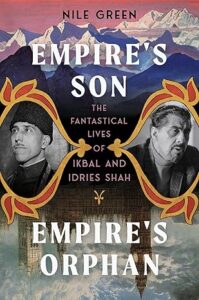
Book Review: Empire’s Son, Empire’s Orphan. Ikbal Shah and Idries Shah (of Sufis fame)


Idries Shah (1924-1996), a British citizen of Afghan and Indian origin, became world famous with his books about Sufi-ism (especially his magnum opus, “The Sufis”), selling over 15 million copies worldwide. In the course of this career, he also hinted (more than hinted, he wrote several books under other names in which he built up these claims about himself) that he was a sufi master himself, descended from an ancient and aristocratic family of Afghan Sufis who trace their descent to the Prophet Mohammed and are now bringing this ancient wisdom to the western public. His father, Syed Ikbal Shah, had settled in England and written several books about the esoteric east, but the careers of both father and son were dogged by accusations of making up stories and exaggerating their depth of knowledge about these matters. Professor Niles Green (who is the Ibn Khaldun Endowed Chair in World History at UCLA) has spent a long time researching both father and son and has now written a biography to settle this controversy and tell us who they really were.

So we learn that Ikbal Shah was a descendant of Jan Fishan Khan (famous indian actor Naseeruddin shah and retired general Zamiruddin Shah are also descended from him), an afghan who had sided with the British expedition to Kabul in the first Afghan war, and who escaped to india with the survivors of that expedition. For his loyalty, he was given a small estate in Sardhana, near Delhi. In 1857 Jan Fishan Khan again proved loyal to the British and was rewarded with the title of Nawab. It is here that Ikbal Shah grew up, and somehow decided to travel to Edinburgh to study medicine just before the first world war.

In Scotland, Ikbal fell in love with a Scotswoman and they married against the wishes of his dad, who therefore cut him off. Ikbal Shah proved to be a capable and energetic person who managed to make a life for himself in England as an expert on Afghanistan (where he had never been) to various branches of British academia and the British govt. Nile leaves us in no doubt that Ikbal Shah was a serial fantasist who made up wild stories about Bolsheviks and their operations in Afghanistan to British officials who sort of knew he was fake, but found him useful. To his credit, he was able to sell enough stories about the exotic east to survive in England and even joined the BBC during WW2 to make propaganda broadcasts for the British empire.

Ikbal Shah had three children (Omar Ali Shah, Idries Shah and Amina Shah) who grew up in the UK and Idries Shah followed in his dad’s footsteps to become an expert on the mysterious east (Omar Ali Shah also sold himself as a sufi teacher). Starting as an expert on “oriental magic”, he soon invented himself as a Sufi master and acquired several high profile fans, including the poet Robert Graves and the writer Doris Lessing. His book on sufism remains a bestseller and he wrote dozens of other books on various aspects of sufi-ism, all of which continue to sell. Nile Green regards this as more or less the result of gullible people being fooled by Shah, but the fact is that if you read the books in question (I have read several of them), they do seem to have genuine insights into human psychology and the various “teaching stories” Idries Shah claimed to have collected do indeed have the capacity to teach useful lessons for life. From within his own world, he can claim that what looks like fakery is just how this esoteric knowledge works in this world. After all, we are talking about sufi-ism and it is by no means clear how one can distinguish a sufi charlatan from a real sufi, since “genuine sufi-ism” itself thrives on mystery and misdirection, almost by design.

The fact that the brothers Idries and Omar Ali Shah falsely claimed at one point to have the oldest manuscript of the rubayat of Omar Khayyam (Professor Green makes a solid case that they made up the whole story) is itself enough to condemn them as charlatans, but as Professor Rawlinson once said ” Shah cannot be taken at face value. His own axioms preclude the very possibility.” If Sufis are enlightened beings who possess some esoteric knowledge that is not available to ordinary mortals, and if they are supposed to help you by telling you what you need, not what is “true” or false, it is by no means clear that this book and its careful examinations are the end of the matter. As Idries Shah’s epitaph states: “Do not look at my outward shape, but take what is in my hand”.  The story continues..

By the way, the title “empire’s son, empire’s orphan” is a good indicator of the fact that the professor also has to labor under the limitations of his own field. Basically, it means nothing, but if you are into postcolonial writing then it is the fashion to connect every biography to “empire” and its discontents. It adds nothing to the story, but luckily it also takes nothing away.

The Broken Compact

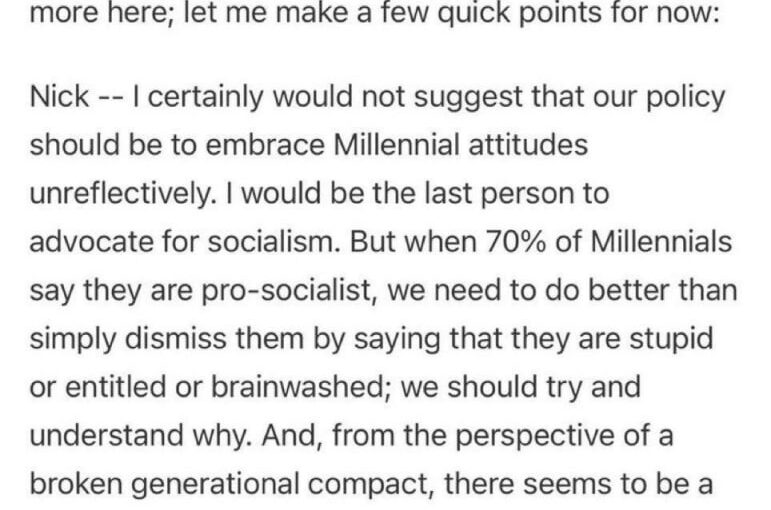
Why the India, and American, Dream No Longer Holds

It was Dr V’s birthday this weekend, and we found ourselves in the Great English countryside; those great undulating fields and hedgerows that still whisper of an older order. There’s something about England’s pastoral stillness that throws modern anxiety into relief. The calm of inherited hierarchy, the sense that everything has already been decided, makes you think of those of us who were told that nothing was fixed, that we could climb forever if we just kept studying, working and performing.

The Dreams Continue reading The Broken Compact

Islam the Religion of Peace part ii

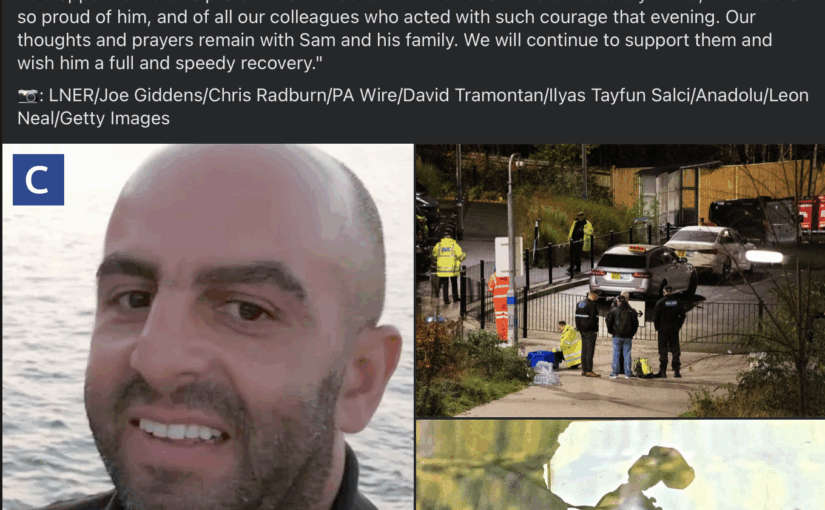
Samir Zitouni, a 48-year-old rail worker, is in critical condition after stepping between a knife-wielding attacker and passengers on a Doncaster–London train. Witnesses say he blocked the assailant from stabbing a girl and was slashed across the head and neck.

He has worked for LNER for more than twenty years. His managers call his actions “nothing short of heroic.” The attacker, Anthony Williams, has been charged with ten counts of attempted murder.

A Muslim man (most likely Algerian origin) from the Midlands saw people in danger and acted without hesitation.


Open Thread

The boycott has made Brown Pundits quieter, almost peaceful. I don’t mind it. Every few years the site reaches this point; it grows, gains noise, and starts to feel less like a hobby and more like an obligation. Then it falls back to something smaller and saner.

I’ve also realised that the Indo-Pak frame doesn’t really fit my life anymore. It was useful once because that’s where the conversation was; it gave the blog an audience. But most of that talk is stale now; the same arguments, just louder.

What interests me instead are the wider patterns: how post-colonial societies move in a world that is no longer unipolar. The Gulf’s rise, Africa’s experiments, China’s reach, India’s own breadth. How old hierarchies break down, and new ones form.

I don’t like following the news. So perhaps BP will drift in that direction. Fewer posts, less noise, more reflection. A space for thinking about what comes after the post-colonial age, when the world starts to finally balance itself again.

Brown Pundits