
Patrick Wyman interviewing a specialist on the IVC. Pretty interesting, though I’m mildly skeptical of the idea of what seems like a pre-state primitive democracy being the political system in the IVC.
Category: Razib Khan
How Indians view themselves vs. how Westerners view Indians
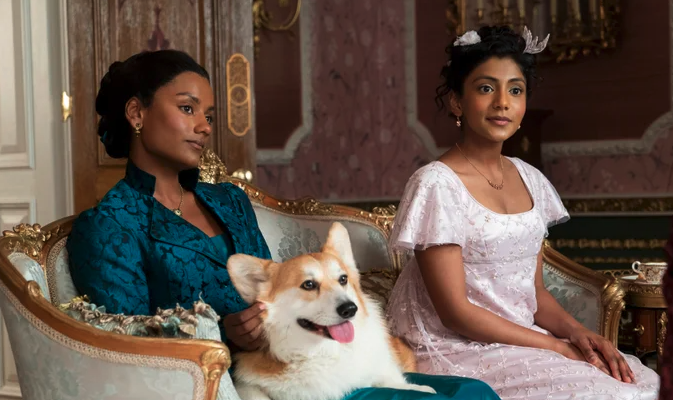
As A South Asian Woman, Seeing Two Darker-Skinned Women On Bridgerton Means Everything.
The headline is obviously a bit much. The casting of dark-skinned actresses of Indian-origin really isn’t going to change the norms of the Indian subcontinent, or the whole of Asia. But it’s an interesting window on aesthetic standards and cultural creation. Indians who I bring up this issue with routinely suggest “well, you don’t have ugly people in American films.” The implication for many people of subcontinental origin is that dark skin is ipso facto ugly (and in Asia more generally). This seems the ground truth and the rest is just commentary.
Gujurati genetics
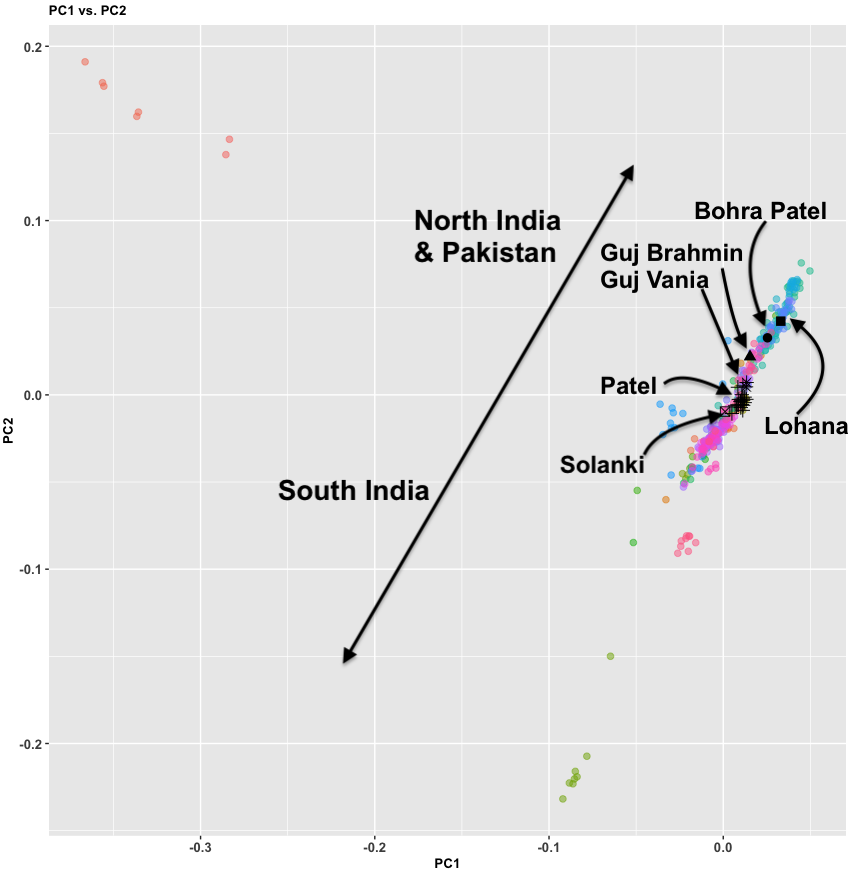
I was working on a project and decided to check Gujus. A few things
1) A few years ago a Bohra emailed me kind of irritatingly saying I underestimated the non-South Asian ancestry in Bohras. I double-checked and that seems plausible. Looking at this Bohra Patel sample I have, that seems to be clear.
2) Guju Brahmins are positioned like North Indian Brahmins.
3) Most of you know more about Lohannas than I do. I will say that the Sindhi Lohanna sample I have is even more “north-shifted” than the Guju Lohanna.
4) Patels are a numerous cluster, obviously. The two Vania samples I have are north-shifted, but very close to the Patels (Patidars)
5) I have a Solanki sample that is clearly outside of the Patel cluster and south-shifted
Brown Growl
The southwestern groups in the Indian subcontinent are enriched for “Middle Eastern” ancestry
Genetic affinities and adaptation of the South West coast populations of India:
Evolutionary event has not only transformed the genetic structure of human populations but also associated with social and cultural transformation. South Asian populations were formed as a result of such evolutionary events of migration and admixture of genetically and culturally distinct groups. Most of the genetic studies pointed to large-scale admixture event between Ancestral North Indian (ANI) and Ancestral South Indian (ASI) groups, also additional layers of recent admixture. In the present study we have analyzed 213 individuals inhabited in South West coast India with traditional warriors and feudal lord status and historically associated with recent migrations events and possible admixture with Indo-Scythians, Saka, Huns and Kushans, whose genetic links are still missing. Analysis of autosomal SNP markers suggests that these groups possibly derived their ancestry from some groups of North West India having additional Middle Eastern genetic component and also their separation history suggests very early separation from North West Indian and Gangetic plain Indo-Europeans during late bronze or Iron age, most probably following central India and Godavari basin to South West coast. Higher distribution of west Eurasian mitochondrial haplogroups also points to admixture through maternal lineage. Selection screen using genome wide genealogy approach revealed genetic signatures related to their long-term coastal food habits. Thus, our study suggests that the South West coastal groups with traditional warriors and feudal lords’ status are of a distinct lineage compared to Dravidian and Gangetic plain Indo-Europeans and are remnants of very early migrations from North West India following Godavari basin to Karnataka and Kerala.
If you do a west-to-east transect there is more “ANI” ancestry in the west of the subcontinent. This is true in the north, obviously (Punjabis to Bengalis), but less appreciated is that the same seems true in the peninsula south of the Vindhya Range. To some extend this is due to more steppe ancestry in groups like Nairs because of “gene flow” from Namboothiri Brahmins and such. But, that’s not all. As noted in this paper some of these western coastal groups clearly have an excess of “Middle Eastern” ancestry. That’s not surprising for the Jews of Cochin or even the Nasrani Christians. But what about Bunts and Nairs? There are two main ways you can explain this in my opinion:
1) A pre-steppe IVC and post-IVC era migration of “Iranian” peoples associated with the Ashmound culture has a significant impact that is most preserved in the western part of the peninsula
2) Later connections between West Asian (Arab and pre-Arab) people who were integrated into the local cultures over time (due to the matrilineal nature, at least originally, of some of these southwestern groups one can imagine how easy it would be to integrate sailors from other societies, or at least their offspring)
Open Thread – Brown Pundits – 3/18/2022

A comment on the earlier open thread:
Interested to know what Razib and Omar sahab think of Holi, any experiences Razib?
I don’t have any experience and did not know it was Holi. Thanks for telling me!
I was going to visit India for business in 2020, but then COVID-19 happened, so I have never been to India. I have only been to Bangladesh twice in the last 40 years, so it did not overlap with Holi.
Friendship in a time of evil
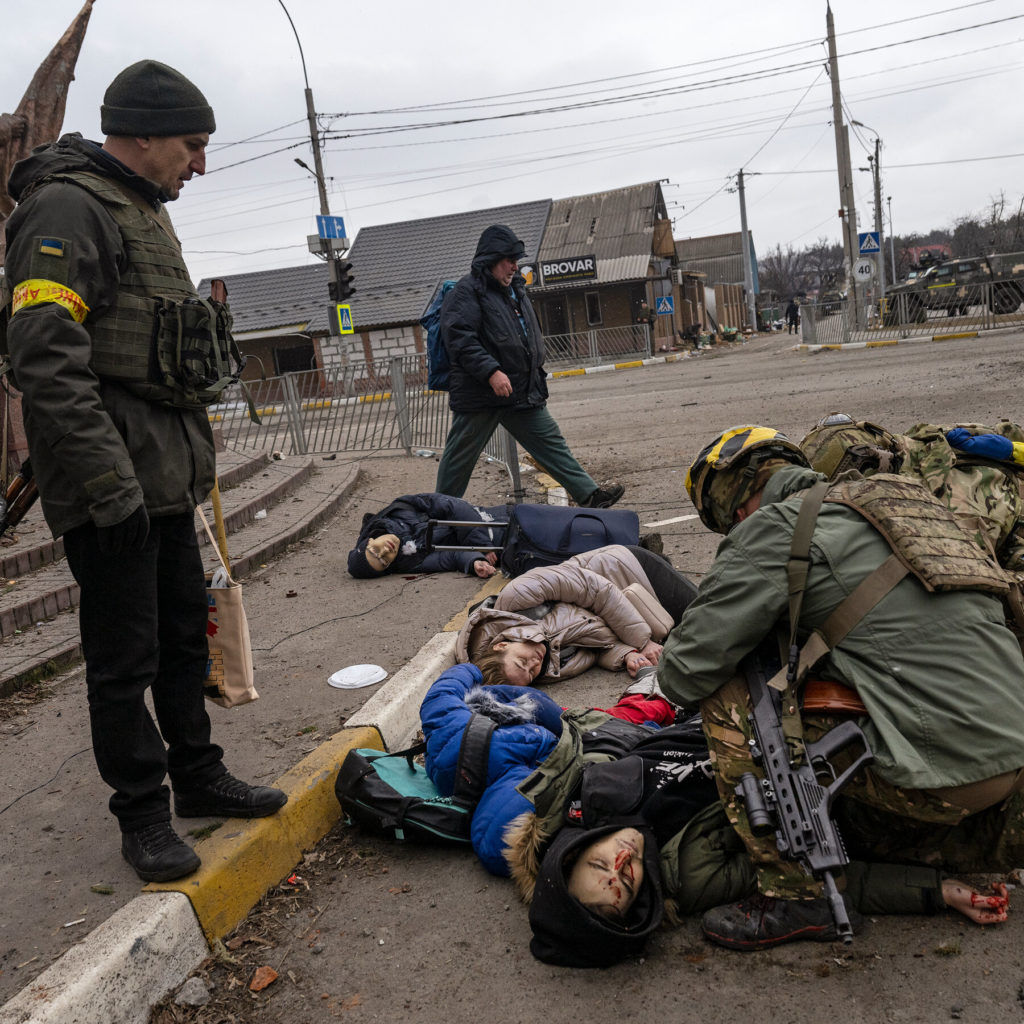
The shooting of this family in Ukraine is all over the front pages. Many Americans bemoan the humanitarian disaster. Russian restaurants are being boycotted in the US (many of the staff and owners are Ukrainian!).
Below is a photo of a starving Yemeni child:
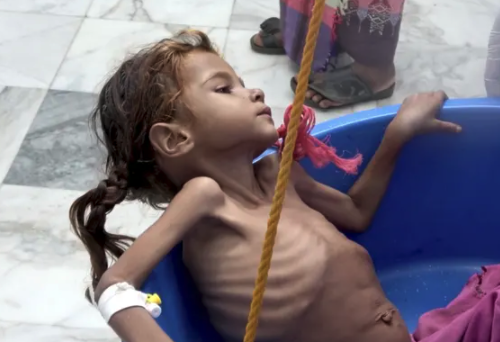
A bit under 100,000 children have starved in Yemen in the last 4 years due to a civil war, fueled in part by tacit American backing of the Saudi regime, which has been exacerbating and intervening in the conflict.
Why do we pay attention in one case and not the other?
- Nuclear war risks
- The Russian invasion of Ukraine violates longheld post-World War 2 norms
- Ukraine is in Europe, and the West cares about the West (or the aspirant West)
This is all fine. I’m very scared of #1 and horrified by the existential risks and economic havoc that Putin’s choice to actually invade has wrought on the world. But I find the arguments of a sui generis or exceptional humanitarian situation in Ukraine implausible. People don’t want to admit that their feelings are shaped by cultural or racial affinity, or that it is pure self-interest in relation to nuclear war or maintenance of world order. So they make this the “next Holocaust.”
A lot of non-Europeans are skeptical of this posturing. At my other blog, I put up a post about why Bangladeshis have a soft spot for Russia, which might explain their reluctance to condemn the invasion of Ukraine. The same obviously applies to India to a great extent.
The brown immigrant vs. the brown American
Colleges and universities across the US are moving to ban caste discrimination:
Another time, Pariyar brought up his experiences with caste discrimination during a classroom discussion about the trauma of racism and sexism. Some South Asian students in the class, he said, reacted as though caste discrimination was completely foreign to them. He felt they were effectively gaslighting him. And when he tried to organize a conference on issues of caste, Pariyar said he got little support from other South Asians.
The story starts out with the experiences of a Dalit from Nepal who seems to have immigrated to the US. Many of the instances of caste discrimination in the US seem to be from fellow Nepali immigrants. It is possible that immigrants from Nepal bring some caste attitudes? Obviously. But when you switch to the context of talking about caste with Indian Americans born or raised in the US, they may actually honestly not understand much what it means. The piece is flattening the experience of a recent immigrant with Indian Americans, and this flattening and conflation is what’s going to happen if caste becomes a protected class more broadly.
Later on in the piece:
The opponents, who included alumni, professors and community members, argued that discussions about caste unnecessarily divided South Asians and that caste discrimination no longer existed. They claimed that caste was a construct of British colonialism, even though it had existed for millennia, and insisted that the resolution would instead provoke hate against Hindus on campus.
Krystal Raynes, a student at Cal State Bakersfield who currently serves as a CSU student trustee, wasn’t familiar with caste and caste-based discrimination before that meeting. But the language and line of reasoning she heard that day rang familiar.
“It reminded me so much of the discrimination happening against Black people in America,” she said. “Black students being gaslighted, [being told] your experience isn’t discrimination, your experience isn’t oppression.”
There are a few issues here. Indians quite often engage in what we’ll call “denialism” about caste and how it shapes Indian society. When you go around claiming caste was a construct of British colonialism, and discrimination no longer exists, you’ll seem crazy to people. Even though the reality is that in the US making caste a protected class cause huge problems, obfuscating or whitewashing the reality of caste in India does not help your argument in America.
Second, Americans are really just reinterpreting caste in the context of black-white relationships in this country. It’s not about India, it’s about America, and some Indian Americans (the founder of Equality Labs) are engaging in “cultural arbitrage” to to provide a “product” that American administrators can “consume.”
Open Thread – Brown Pundits – 2/11/2022
I did a podcast with roon on shape rotators and wordcels. Check out A Song of Shapes and Words.
Allies on the Right
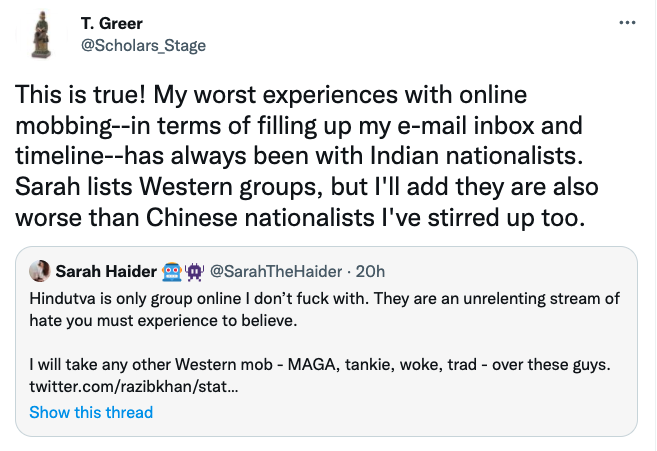
Sarah Haider and Tanner Greer both responded to my “disavowal” of sorts of the online Hindu Right. The constitutive unpleasantness is just structurally unappealing. Some reasonable Hindutva people have messaged me that “well, you can’t really be surprised they’re triggered by you, your name is Razib Khan.” My response is of course simple: if you are against me, I am against you. That is all.
(I know Tanner and he has never expressed anti-Hindu views, and his anti-China position should clue you into possibilities of coalition. Sarah has personally expressed curiosity about Hinduism when we’ve talked online)