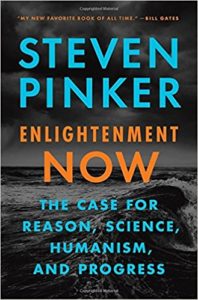
I have not so much read the book as scanned it. For most of the book he builds a case for his basic claim that life, for most people, has improved to an amazing extent in the last 200 years and we can thank science, reason and humanism for all this progress.
I assume he has to provide so much data because he knows this is an unfashionable opinion within the postmodern liberal intellectual elite and this bothers him. By listing all these facts and showing us all these graphs, he thinks he can convince even his most skeptical critics that progress is real, and that it is much more widely distributed than most people imagine. Is there something missing from his account of progress? I think there definitely is. I do not disagree with his claim that progress is real. Hunger, disease, violent death, these are not trivial concerns. The tremendous progress in these areas is real, and it is meaningful. Intellectuals who criticize Pinker by pointing to persistent or new forms of ill health, physical suffering or violence should take a break and actually read the book, they will find that he has the data and it is not bad data. Either argue about his data with better data of your own, or argue on some OTHER grounds. On THESE grounds, he is solid. Continue reading Review: Enlightenment Now. Steven Pinker.
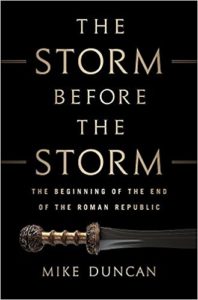
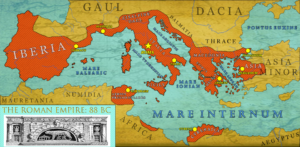
A relatively short (265 pages), fast paced and lively account of the Roman Republic from 146 BC (the fall of Carthage and Corinth) to 78 BC (the death of Sulla), covering the period in which the Republic saw major social upheaval, conflict and civil war and in which many of the constitutional checks and balances of the Republic fell by the wayside, setting the stage for the final overthrow of the Republic by Julius Ceasar and his grand nephew, Augustus Ceasar. Mike Duncan is known for his Roman history podcasts and in this book he makes the case that the decline of the mos maiorum (the “mores”) of the Roman Republic in this period of crisis was the crucial factor that led to the final fall a few decades later. WHY the mos maiorum fell apart is a big question, and it is not really answered in this book (a book that really tries to answer that question would probably be much denser and longer than this book) , but is beautifully described, and that is enough to earn 4 stars.
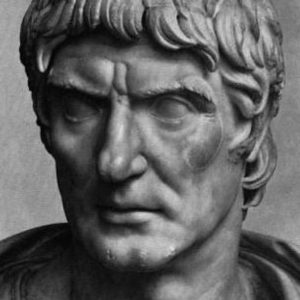
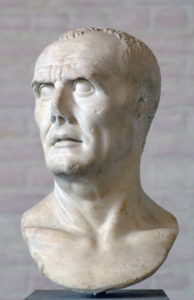
This period of Roman history and its main characters are not as prominent in popular memory as the final crisis of the Republic. Almost every educated person has heard of Julius Ceasar, the ides of March, Antony and Cleopatra, and Augustus, but relatively few people are familiar with characters such as the Gracchus brothers, Gaius Marius and Sulla, which is a tragedy, because their stories are as fascinating (if not more fascinating) than anything that happened in the final crisis of the Republic. if you are not a Roman history nerd and are not already familiar with these compelling characters, then this is a great introduction to the era and its most famous personalities. Colleen McCollough’s historical fiction (the “Masters of Rome” series) is far more detailed and richer in texture because in historical fiction she can fill in details where the historical record is silent (she is very careful to stay faithful to the historical record as far as it is known), but if you just want the story that is in the history books, this is a great place to start. Its all in here, the increasing immiseration of the peasant proprietors who were the base of the ancient Republic; the corruption that came with increasing wealth; the fight to extend citizenship to all Italians; the rise (and violent fall) of the Gracchi, aristocrats who championed the cause of the downtrodden; the incredible (and incredibly long) career of Gaius Marius, the “new man” (novus homo) who rose from outsider to outstanding general, savior of Rome and 7 time consul but just could not bear to retire; and last but not the least, the life of Lucius Cornelius Sulla, impoverished aristocrat, brilliant general, harsh conqueror and even harsher dictator, who tried to reform and re-animate the ancient Republic and actually managed to retire at the height of his power, but whose reforms failed to prevent (and whose personal example probably aggravated) the final crisis of the Republic. As you read, you cannot help wondering why 20 famous movies and TV serials have not been made about these people. Marius’s escape from Rome alone is worth at least one great movie, with more hair-raising chases, captures, escapes, betrayals and last minute twists of fortune than any fictitious adventure movie could possibly squeeze into one character’s life.
Overall, a great read, well worth a look.
If you are reasonably woke and you manage to read the last chapter, you cannot possibly give this book more than one star. On the other hand, even if you are fully woke, you can easily give this book 4 stars as long as you are able to ignore Niall Ferguson’s pro-imperial coda. The reason is straightforward; this is actually a pretty decent (and except for the end, quite balanced) history of the British empire. It is not a very long book, so it cannot cover all episodes, but most of the highlights (good AND bad) are here. No attempt is made to gloss over the genocides and cruelties, though a little bit of spin here and there is to be expected (and can be excused). I have read many books about the empire and this period of history, but this short book is as good a summary as any (at least up to the 20th century, the 20th century part is not necessarily wrong in outline, but we know so much about events in India that it is hard to ignore the lack of detail, or the airy dismissal or dissing of some of our favorite details).
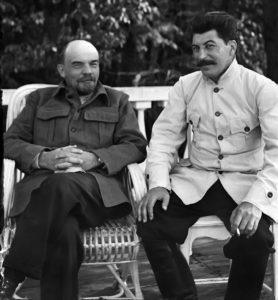
Stephen Kotkin is a historian who has written several outstanding books on Russian history and is now in the process of distilling his lifetime work into a monumental three part biography of Stalin. Volume 1 dealt with Stalin’s early life and his progress from relatively peripheral disciple of Lenin in 1917 to Lenin’s handpicked general secretary of communist party in 1922, to undisputed (though not yet completely all-powerful) boss and ruler of the Soviet Union by 1928. By the end of that volume, Stalin was firmly ensconced in this position, having successfully seen off the challenge from Trotsky, who lost out partly because almost nobody around him liked him, but mostly because he was neither as hardworking, nor as competent, iron-willed or crafty as Stalin. It is true that Trotsky imagined himself as the real “Marxist intellectual” in this fight, but the autodidact Stalin was no intellectual slouch, and Trotsky’s low opinion of him in this arena is also a (small) part of why he lost this fight; he underestimated his opponent. Of course, both of them believed fully in the Marxist-Leninist picture of history and society, complete with the necessity of class war, the central role of the proletariat and the idiocy of the peasants, so it is easy to dismiss the intellectual output of both parties as equally delusional, but that is not how it looked in the 1920s, so we should leave such retrospective wisdom out of the discussion. In any case, by 1928, Stalin had kicked Trotsky out of the Soviet Union, and had defanged or sidelined all his other rivals within the Bolshevik leadership.
A piece from military historian Dr Hamid Hussain. It includes some details (including the role played by Governor George Cunningham, a Scotsman and an “old frontier hand”) about the mobilization of Pakhtun tribesmen to attack Kashmir in 1947, an invasion covered in greater detail in a recent detailed Brownpundits article about the Kashmir war.
Following piece is outcome of several related questions about frontier policy at the time of independence in 1947, order of battle, question of British officers staying in Pakistan etc. It was linked with Kashmir incursion; a fact not noticed by most historians.
Regards,
Hamid
Frontier in 1947
Hamid Hussain
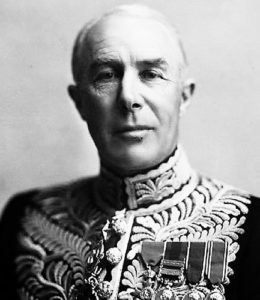
Sir George Cunningham, Governor of the NWFP
In August 1947, British departed from India after partitioning the country into two independent states. Two pillars of stability; Indian Civil Service (ICS) and Indian army were divided between two countries. Pakistan inherited the north-western frontier of India and its associated tribal question.
A tribal territory under British protection separated Indian administrative border from Afghanistan that in turn served as a buffer state between British India and Tsarist Russia; later Communist Soviet Union. East India Company encountered these tribes after the demise of Sikh Durbar in 1849 when Punjab was annexed. In the next four decades, this relationship evolved over various stages. By 1890s, Afghanistan’s borders were stabilized with demarcation of boundaries with Persia, Russia and British India.
Extracts from Major Amin’s history of the 1947-48 war.
THE 1947-48 Kashmir War
Major Agha Humayun Amin
The war of lost opportunities History is made by those who seize fleeting opportunities in the critical time span in any particular situation and relentlessly execute their plans without second thoughts, subduing inner fears, overcoming procrastination and vacillation, and above all by those who are propelled by the burning desire to defeat the enemy rather than any half hearted judiciousness and timidity. Ninety years of loyalism and too much of constitutionalism had however made the Muslims of 1947 slow in taking the initiative and too much obsessed with consequences of every situation.This attitude was excellent as long as the British were the rulers, but not for a crisis situation, in which geography, time and space, alignment of communications and weather temporarily favoured Pakistan, in case initiative and boldness was exercised and simple but audacious plans were executed in the shortest possible time!
Today, it is fashionable to blame the Indians, Mountbatten, Gracey etc as far as the 1947-48 War is concerned. A dispassionate study of the events of 1947-48 clearly proves that victory was closer in 1947 than ever again as far as the Pakistan Army was concerned. Opportunities were lost because very few people who mattered at any level apart from Mr Jinnah, Brigadier Akbar Khan and some others were really interested in doing anything! Continue reading 1947-48 Kashmir War
The following is a long extract from Major Amin’s book on the India-Pakistan wars. Other extracts will be posted later. Since this is a very long chapter, I have highlighed and italicized certain sections that the reader can jump to and get the basic story, without bothering with the details. Of course, anyone interested in the details can read the whole thing.
OPERATION GRAND SLAM
By Major Agha Humayun Amin
Background
1965 was an eventful year in Indo-Pak history. The Pakistani military ruler Ayub emerged victorious in the Presidential elections held in January 1965 amidst allegations of rigging. This factor created a desire in Ayub to improve his political image by a limited gain in the realm of foreign relations. He got an opportunity to do so in April 1965 over a minor border dispute with India in the Rann of Kutch area. The Pakistan Army dominated the skirmishes in the Rann area as a result of which a climate of overconfidence was created in the Pakistani military and political establishment.7
In May 1965 following the jubilation in Pakistan because of the Rann affair Ayub became keen to launch the proposed “Operation Gibraltar”: a proposed plan to launch guerrillas into Indian held Kashmir with the objective of creating a popular uprising, finally forcing India to, abandon Kashmir. Ayub went to Murree on 13 May 1965 to attend a briefing on the conduct of Operation Gibraltar.8 We will not go into the controversy surrounding this plan, which is basically an exercise in futility, and mud slinging initiated by some self-styled experts, motivated largely by personal rivalry and ulterior biases, since the prime aim of this article is to discuss the military significance of Operation Grand Slam and its connection with “Operation Gibraltar”. In this briefing Ayub “examined” the “Operation Gibraltar” plan prepared by Major General Akhtar Malik, the General Officer Commanding (GOC) 12 Division. The 12 Division was responsible for the defence of the entire border of Pakistan occupied Kashmir from Ladakh in the north till Chamb near the internationally recognised border to the south. It was during this briefing that Ayub suggested that the 12 Division should also capture Akhnur.9 This attack was codenamed “Operation Grand Slam”. General Musa, the then C in C Army and Altaf Gauhar the then Information Secretary and Ayub’s close confidant, the two principal defenders of Ayub have not given any explanation about what exactly was the strategic rationale of “Grand Slam” and what was its proposed timing in relation to “Operation Gibraltar”. We will discuss this aspect in detail in the last portion of this article. Continue reading Operation Grand Slam (1965 War)
Well, not really. Not a conspiracy of the sort you can take to court. A balanced and well researched look back at the nutrition wars and recent talk of a “sugar conspiracy” in this article in Science.
Historical investigations of “merchants of doubt” have been invaluable in showing that scientific uncertainty is sometimes the product of deliberate acts of deception. Such studies underscore the essential insight that the existing evidence base is powerfully shaped by social forces and political choices, and that had decisions unfolded differently, our areas of knowledge (such as genomics) and blind spots (such as obesity prevention or gun violence) would be shifted. But ahistorical accounts thwart our ability to critically evaluate the often long and zigzag process of scientific conjecture and refutation. They provide spurious cover for changes to policy by suggesting that old ideas are illegitimate. And, they advance a false impression that doing the “right” kind of science will somehow avert the messy business of making policy based on incomplete evidence, public values, and democratic politics
The core of the problem is the willingness to jump in and give “expert” advice when the evidence is so limited (for any advice); but then again, demand for advice was so strong, it was bound to be fulfilled, just as demand for finding a “conspiracy” (fat conspiracy, sugar conspiracy, whatever) is so strong. These things probably arise from deep features of human cognition and social interaction.. anyway, I think this is a balanced article, but maybe not harsh enough about the limitations of nutrition advice and the damage done by experts offering advice where the science is not yet settled..
It so happens that I happened to see the following two videos around the same time.
Pakistani journalist (he seems to be an ISPR/Pak army favorite) Wajahat Khan (aka Waj Bro) has a message for Imran Khan. It is quite hilarious, but this particular post is about his ability to speak Urdu, which is clearly rather limited. He would probably do a better job in English (and he has to rely on English a lot in this video). This is fairly typical of the children of our current elite (not necessarily of the older generation). Check it out
2. The other video appears to be from closer to the other end of the socio-economic spectrum. In this case I have no clue who the speaker is (she states she is from Kasur, and she mentions at one point that she has been “pushed into prostitution”, I have no idea what the back story is) but clearly she is not from the elite class. The thing I am focused on in this post is that while her Urdu is in fact much better than Waj Bro’s Urdu, it is also quite clearly not her mother tongue. One gets the impression she would have done better in Punjabi.
My point today has nothing to do with the politics of each video (and in the case of the second one, I have no clue who she is and what the back story is, we all know cases where the story behind the video turned out to be quite different from what is immediately apparent), I just wanted to ask what people think about the language issue in Pakistan.
Urdu is the national language and is (supposedly, ideally?) the main language of everyday use, high culture and education. But seems in trouble at both ends:
My anecdotal observation is that the children of the elite cannot speak it well (OK, most are better than Waj bro, but not by much) and are almost completely unaware of (and un-interested in) its high culture (all that great poetry, etc). Their everyday language is mostly English, Urdu being used to converse (at a very basic level) with “the lower classes”; servants, drivers and so on. Is this impression correct? what will be the long term outcome of this trend? (not a rhetorical question, I am genuinely curious and not sure about the answers, not even sure that my anecdotal observation is completely representative of the super-elite or how far it extends beyond that elite).
At the other end, the “common people” of Pakistan mostly were not born into an Urdu speaking culture. The language of their forefathers is (in almost all cases except middle class and above migrants from North India) not Urdu. The languages of these people used to be Punjabi, Sindhi, Pashto, Balochi and so on. Today, as Pakistanis, they learn Urdu in School and via the mass media and (imperfectly, but frequently, especially in Punjab) from their recently Urduized parents. Actually it seems that many (most? some?) Sindhis, Baloch and Pakhtoons are still speaking their own languages at home, but in the case of Punjabis, it is increasingly common for them to speak Urdu at home (for example, my siblings and I started out speaking Punjabi and then switched to Urdu and stayed with that). And there is no such things as learning in Punjabi or even learning Punjabi as a language at school. You can see the result in the video above. The lady in question is not doing a bad job (she even manages to throw in fragments of a verse and an Arabic quote), but she would clearly be more comfortable in Punjabi. Her children will almost certainly be more comfortable in Urdu, but what level of Urdu? Waj Bro level?
You can see where I am going. The language issue in Pakistan. Which is connected with culture, with nationalism, with modernity. What do people see as the future? (again, not a rhetorical question, I am genuinely curious to know what people think is the current situation, and where it is likely to go).
“What happens when anyone can make it appear as if anything has happened, regardless of whether or not it did?” technologist Aviv Ovadya warns/asks in this interesting journey through the existing and coming technologies for manipulating words, images, networks and people..
Aviv says:
“Alarmism can be good — you should be alarmist about this stuff,” Ovadya said one January afternoon before calmly outlining a deeply unsettling projection about the next two decades of fake news, artificial intelligence–assisted misinformation campaigns, and propaganda. “We are so screwed it’s beyond what most of us can imagine,” he said. “We were utterly screwed a year and a half ago and we’re even more screwed now. And depending how far you look into the future it just gets worse.”
That future, according to Ovadya, will arrive with a slew of slick, easy-to-use, and eventually seamless technological tools for manipulating perception and falsifying reality, for which terms have already been coined — “reality apathy,” “automated laser phishing,” and “human puppets.”
He then describes how rapidly the technologies for manipulating images, mining personal information and using AI to tailor messages specifically to each user are developing. And he fears that:
“fast-developing tools powered by artificial intelligence, machine learning, and augmented reality tech could be hijacked and used by bad actors to imitate humans and wage an information war”
Of course they will. And the technology development will not stop just because it can be put to scary uses. I cannot think of an example from history where technological development was stopped because X “enlightened individuals” predicted it would be destabilizing. (Aviv is not saying that either, I just wanted to get that out of the way). So eventually everyone will be playing with these tools, and so? Didn’t everyone start using print and then radio, and then TV and then the internet? Maybe it made it possible to coordinate people in larger numbers towards common ends (not necessarily good ones, but I mean the game of politics did not change to some new game, it just ramped up a level), but the numbers coordinated by religion/culture in the past were not trivial either, just slower moving .. The question is this: is there a point where quantitative change becomes qualitative? and what does that mean? What will be radically different? Leaders? followers? patsies? useful idiots?
This is not a rhetorical question, I am really curious what people think will change and what will not.
By the way, i read that while he was waiting for Stalin to shoot him, Bukharin was reading philosophy and this was the question that stumped him; the question of quantitative change versus qualitative change..