Rethinking privilege in the 21st-century

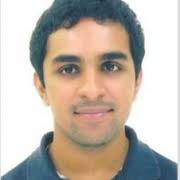
JD Vance & his wife

One of the strange admissions I will make is that I have not read Hillbilly Elegy: A Memoir of a Family and Culture in Crisis. This is J. D. Vance’s book describing the various social and cultural forces which maintain deep pockets of poverty and dysfunction across much of greater Appalachia. Vance, though a Yale-educated lawyer, is from this region, and of the deprived class.

I say strange because I happen to be cited in the book. Vance has told me that some of my writing on the historical origins of the Scots-Irish made him aware that he was not just a white American, that he had a very particular ethnicity in the broader Anglo-American context. The fact is that Vance’s politics are broadly consonant with mine, and I tend to be wary of reading books where I suspect I will agree with the overall message. I don’t find it useful to simply reiterate my own opinions, as I already hold them.

With all that said, I recently saw on Twitter that a literal Communist academic accused Vance of promoting the white genocide meme because he wrote about replacement level fertility among Americans. Just like an inquisitor sees witches behind every corner, American Leftists see a fascist and a racist everywhere they look. But that’s not the interesting point.

Vance responded that he had a mixed-race son.

I am not a specialist on J. D. Vance, so this was news to me. I didn’t know anything about his personal life. A little Google yielded the fact that Vance is married to an Indian American, a law school classmate. And, a little more research quickly yields the fact that she is from a much more privileged class background than J. D. Vance (most Americans would be!). In fact, judging by the community that she grew up in, it is highly unlikely that her family was not upper-middle-class (OK, it was easy to look up her parents and their professions, they are doing very well).

The question I pose here is that as the children of Mr. and Mrs. Vance grow up, will they perceive that they obtain privilege from their white father? Is J. D. Vance more privileged than his wife? A plain reading would probably result in the admission that this is ludicrous. The Vance children will grow up with a paternal lineage defined by hardscrabble lives, with the squandering of opportunities. In contrast, their maternal family will be descended from successful professionals. Immigrants who sunk roots in San Diego.

There is a lot of talk today about “intersectionality.” Usually, I don’t find that that is in good faith. But let’s take the intersecting parameters of the backgrounds of the Vances into account. Who is more privileged? I suppose it depends on how you define “privilege,” but my own personal take is that in fact, J.  D. Vance’s wife is more privileged by background than he is, despite her visible nonwhiteness (which no doubt does result in some discrimination).

In the years before the Civil War, popular racial supremacism arose in the American South to engender solidarity of identity for whites, from the poor masses to the rich planter elite. It was the solidarity of the “aristocracy of the skin.” This explicit racial caste system was such that the poorest white was above the status of the most accomplished black. The way in which we talk about race and class in much of American discourse seems to default back to this idea.

Many of my white academic friends (not all!) from working-class or poor backgrounds believe that because of their class status, they now have the same privilege as other white people. That the past is the past. That is, white people can move up and down the class hierarchy, and yet retain the skin privilege.  History does not shadow them in the way that it does the dusky folk.

White people are magic.

As the 21st-century progresses I think some of us, of all races, need to move beyond this way of thinking. Many South Asian academics I know personally who come from privileged backgrounds speak of themselves as a subaltern and marginal people. But there’s nothing subaltern and marginal about their lives. Empirically I think the “white people are magic” thesis is just wrong. They bleed just like the rest of us.

On being Indian

The Living Lakshmi writes on being Indian

I left India many years ago to live in Britain but having said that I have always felt deeply connected to her. I was born and raised in Madras (now Chennai) and like many Indians living abroad would attest; one feels tethered to her in ways that transcend culture or habits.

I invariably gravitate to news on India and Indians as a default, despite 12 years of living away, my Facebook and Twitter are overwhelmed with stories about India (this is of course a result of the accounts I follow).

I’ve always kept loose track of the big Bollywood releases, and have never been successful at adapting my palette to anything away from desi food. Then of course it is hard to ignore Indian politics, no matter where you live in the world; the news finds a way to your timeline or twitter feed.

I don’t think this has anything to do with patriotism, it is a default. It is the inability to shake away some aspects that are hard-wired. If you lived in India long enough to soak in her distinctive and unique qualities, you remain tethered for life.

If someone asked me to describe what it means to be Indian?

  • I would say we come in all colors, shapes and sizes, between the length and breadth of India.
  • There are innumerable dialects spoken, there are groups, sub-groups and sub-sub-groups people like to organize themselves into. These could be religions, languages or other clustering factors.
  • We don’t dress the same, speak the same or even think the same way.
  • It is quite possible to find two Indians who share nothing in common except the country they belong to.
  • This lack of tidiness has never been a cause of dismay but the very essence, the very description of India, her distinguishing trait in the world.

It’s what makes us better than our neighbors.

To try and mask over this amazingly messy, glorious, mixture would be a travesty and something that needs to be safeguarded against. This strong heterogeneity has no influence on how people interact at a micro-level. Within the country people migrate to states they didn’t hail from and find ways of flourishing, magically.

Hence, a really succinct definition of being Indian would be ‘being liberal’.

It were these — liberalism and secularism, the founding principles of the state of India. By and large Indians everywhere in urban and rural areas have lived by and embraced these principles.

In the India I grew up in, it was not important whether you were a temple or a church goer but if you can help someone make headway. There was no time or room to focus on subjects inconsequential to ones prosperity. In a country like India, to prosper is the underscoring dominating aspiration.

Have things changed in today’s India?

Here is my take: While the mainstream news will tell you otherwise, (and frankly enough virtual and physical ink has been spilled on discussing the rise of Hindu nationalism post 2019 national elections) I don’t think the government in the world’s largest and perhaps most untamed democracy can so easily sweep through and change the way people fundamentally behave.

While it is important to fight illiberalism, barbarism and racism; we cannot be so consumed by dissent that we forget to focus on issues of material significance and our growing superpower status in the world. For India, the ruling government or its leanings have always been extraneous. The individuals and the institutions have mattered much more.

As a country we have several pressing matters at hand, we are trying to make our mark alongside China as one of the world’s largest economies. We need to clean up our cities and preserve our monuments, we need to educate more people and give jobs to a lot more.

We need to make things better for millions of farmers. We need to market our culture, food, art, literature in an increasingly globalising world. We need to make better films, write better books, do better science and retain our brilliant minds.

We need to stay relevant. We need to sell more to the world so we can be more prosperous. With over a billion people in tow we cannot afford to lose this race, but we will if we continue to squabble over matters of little material significance.

There is so much we can already offer to the world and so much more to work towards. This is both our burden and our duty. Let’s not get distracted.

why Afghanistan & Pakistan must unite under a Constitutional monarchy

I do not understand why INDThings and Kabir waste their time and energy on arguing with Hindutva.

However there are some Pakistanis that are now verging on the ridiculous:

Why are some Pakistanis demanding a statue of Raja Dahir, the last Hindu king of Sindh?

I didn’t understand the desire to install the statue of the divisive Ranjit Singh. I recently saw the movie Kesari and frankly found it rather offensive that Bollywood chose to celebrate the Slave-soldiers of the Raj rather than the Pashtun freedom fighters.

I do feel a good solution to Pakistan’s identity dilemma would be a constitutional monarchy with Afghanistan (Union of the Crowns, which is what England & Scotland had from 1606-1707).

It would have to be solely Persian-speaking (I haven’t researched enough on what standard of Persian but Dari possibly approximate Sabki-Hind fairly well) but Sunni (in the manner of the Mughals being Sunni, which was eclectic but still distinct enough from the Safavids) and probably the last Afghan dynasty will do with enough Mughal Muslim nobility thrown in for good measure. This would offset the Punjabi-Sindhi dominance since frankly most of the notables would be the traditional ruling tribes of Muhajirs and Afghans (the only royal tribe in Pakistan that comes to mind are the B’s; Brahuis, Baltis and Bahawalpur).

As the last cricket World Cup showed it’s not the Radcliffe line that must be erased; after all it is a civilisational border of sort but rather the Durand line. The fact that Afghanis and Pakistanis were at each other’s throats while the Indians & Pakistanis were super-cordial demonstrates that the former is a familial relationship the latter is a formal one.

There is also a serious possibility that such a constitutional monarchy might have to accommodate the rising tide of Muslim migrants from Modistan.

Then statues of Ranjit Singh and Raja Dahir would make sense as the indigenous expression of Pakistan’s Indian provinces (Punjab & Sindh).

But like all things Pakistani, the national project is still half complete and we must look West to Turan. The Arabs only came once and only manage to transform Sindh; it was the Turanians who reshaped the map of India.

Of course this is constitutional optics and nothing would really change on the ground but the restoration of an Sunni Persian-speaking Afghan-Mughal Monarchy would solidify AfPak and tie it solidly into its Persian & Central Asian neighbours.

It would be a fitting tribute and victory to those noble Afghans who sacrificed their lives at Saraghari under the orders of the British and their Ghulams. Then we can be politically correct and build as many statues of Ranjit Singh & Raja Dahir as we like.

Comment of the Day:

Apart from not touching untouchables or not eating with them, there was no feeling in the masses that they (Dalits) were separate from us.

The best analogy of the Dalits are blacks in the American South. If you won’t touch, eat or sleep with someone how can you claim any sort of kinship or connection to them?

Let’s not also forget that they were the ones who handled excrements and corpses (I could be wrong about the latter).

As my Kashmiri activist friends said the Indian state has a “territorialist” view of Kashmir in that the land not its inhabitants are vital.

The commentator above is exhibiting the same “territorial” nationalism; the Dalits belong not because they do but rather they are a part of the all-important landmass.

In some ways Pakistan is exactly opposite since we are nation rooted in a sense of “peoplehood” as evidenced by the Muhajir migration. We don’t have the Taj, Delhi or Lucknow but they are more ours since we have an intensely spiritual (and ancestral) kinship to those lost locations.

We are watching the film Kesari by Akshay Kumar. This is where Sikh collaborators, serving the British, were holding off the Afghan attack. The Hinditva tones of the film (we are only twenty minutes in) are breath-taking and I’m shocked to see Dharma Productions backing this (Hiroo Johar was in the credits).

However one scene that took my breath away was when Akshay Kumar is moaning about freedom after being humiliated by his British officer. He tells his colleague that “first we were conquered by the Mughals, then by the British but I thirst for freedom.”

I was shocked and frankly a bit horrified. Good luck to this Brave New India where historical revision is now par for the course.

Why it is very sad that racism arose in the US but not India-

As I was watching yesterday’s excellent and profound show; it dawned on me that all of the Dalit children looked very nice. I would say pretty but then that would make me a pedophile like nos ancetres.

This by my Westernised aesthetic standard, where I like all types of beauty. Nonetheless by our Desi standards these Dalit children looked hideous because of their dusky skins and soft features.

It dawned on me that we look at caste and genetics entirely the wrong way. Continue reading Why it is very sad that racism arose in the US but not India-

What The All-Father Means


Readers of this weblog may sometimes notice that I break out in pompous and self-important declarations of being a “scion of the All-Father.” This is basically a joke. But, it’s a joke that draws from a legitimate basis of science and mythology. The “All-Father” is another name for Odin. I’m really talking about Indra, who is probably more like Thor. And obviously, Norse paganism is only distantly related to the mythology of the Indo-Aryans. As someone more familiar with the lineaments of Northern European mythology than Indian, of course, it’s easier for me to draw on the motifs of the former to relate to the latter.

R1a distribution

The scientific component has to do with R1a. Specifically, R1a1a, defined by the M17 mutation (discovered by my boss at my day-job 20 years ago). There are two very closely related “clades,” that is, families of pedigrees, of this Y chromosomal lineage, passed from father to son. One of them defines mostly European R1a1a, Eastern Europeans, and to a lesser extent Western Europeans. Another branch is found mostly in Central and South Asia.

When I first saw this distribution around the year 2000 it left me scratching my head. Of course, I knew about the Indo-European languages. But I had always assumed that the demographic impact of the original Indo-Europeans was relatively marginal. And yet this Y chromosome was found at frequencies in the 10-50% range across vast swaths of Eurasia.

Much of the 2000s was spent on arguments as to whether R1a was indigenous to South Asia or to Central Eurasia. Ultimately these arguments were not resolvable due to limitations of the data. To calibrate dates and diversity researchers relied on microsatellites, which are useful due to their high mutation rates, but also erratic for the same reason (not only were confidence intervals wide, some of the assumptions of the model parameters were guesses).

In the early 2010s, whole-genome sequences of Y chromosomes came online. It became very clear that the most common R1a1a lineages exhibited the “star phylogeny.” Demographically, what this means is that men carrying this lineage underwent very rapid population expansion for a short period of time. So rapid that a “father” lineage would give rise to numerous “son” lineages one mutational step away

You can see in the figure that node “A” has given rise to a “star phylogeny.” A large number of individuals are one mutational step away from that genotype. A more normal phylogeny would produce a complex structured tree which accrues mutations across the various branches gradually.

In the South Asian context, a paper from 2004, Independent origins of Indian caste and tribal paternal lineages, introduced a result which prefigured what we now know:

Analyses of molecular variance also suggest that caste groups are more homogeneous for Y chromosome variation than tribal groups, since the variance among caste groups (sampled from all over India) is 3-fold less than that observed among tribal groups and 2-fold less than that observed among all Indian populations grouped together (Table 3). Moreover, if only north caste groups are considered, the variance among populations is not significantly different from zero (Table 3), indicating that spread over the Indian subcontinent although they are located up to ∼1500 km away from each other, these populations have highly homogeneous Y chromosome compositions.

The implications of the lack of structure of R1a on the Indo-Gangetic plain is always something that struck me. It suggested that the paternal lineages only recently expanded since they didn’ have time to build up distinct regional mutations. In contrast, the adivasi populations had a wider distribution of Y chromosomal haplogroups, and they exhibit a lot deeper diverged lineages.

Which brings me to the personal angle. In the spring of 2010, I did my first personal genomic test. I got my Y and mtDNA results back first. It turned out my Y was R1a1a, and my mtDNA was U2b. I was surprised by both. Eastern Bengali has the highest fraction of mtDNA macrohaplogroup M in the world. R1a1a was less surprising. But, it was very strange to have a concrete, personal, connection to this lineage which had been on my mind for a decade or so.

My funny attachment to my haplogroup is probably a function of my upbringing. Growing up as brown in the United States, I wasn’t exposed to Indian culture, nor was I well versed in the details of South Asian communalism. My family is pretty conventional in being upper-middle-class Bengali Muslims, so there is not a jati identity or anything like that I could identify with (and though my parents are Muslim, they are not extremely so, therefore religious identity was a background and not foreground variable). When I looked at my overall genome in 2010 it was clear I didn’t have the “runs of homozygosity” that characterize many people from South Asian backgrounds who come from endogamous communities. I know some of my ancestors were Kayasthas, and my father has some Brahmin ancestry, but the most distinctive thing about me in hindsight is I’m a typical east Bengali with more than a usual dollop of East Asian ancestry (my family is from Comilla).

My Y chromosomal haplogroup, in contrast, is something clear, distinct, and precise. It is an anchor, something which I use to channel my preoccupations and concerns. I don’t have Omar’s Gujar tribal ancestry, or Zach’s Muhajir/Persian origins. I’m just a brown American whose parents did not instill him a patriotism about the “motherland” (Bangladesh), because they themselves didn’t even live a decade in that nation. Though there is a spectrum, it is clear that many South Asian Americans are less “coconut” than I am, and are attuned to fine differences of status, origin, and background. Growing up around only white people my identity was racialized, not ethnicized.

I have never felt superior or inferior to any community or ethnicity of South Asian because I never belonged to any community, have weak ethnic identity, and don’t believe in any religion. The religious prejudices I do have are probably Anglo-Protestant ones against Catholicism, because of the implicit assumptions and background facts of America’s Whig culture.

What R1a1a symbolizes to me is that I have a concrete connection to a semi-historical phenomenon between the end of prehistory and before the written word, which we have not grasped or understood very well. Though it is true R1a1a is found at higher concentrations in “upper castes,” as well as in the north and west of the subcontinent, and among Indo-Aryan speakers, the reality is it is found in almost every community in South Asia (the main exception being among Tibeto-Burmans and Munda). There are many communities, such as Chenchus, which have very little steppe ancestry but retain a substantial proportion of R1a1a.

For obvious reasons this haplogroup is associated with Indo-Aryans (the earliest find of R1a1a-Z93 is from the Bronze Age Volga Srubna culture), but its reach is far beyond current areas of Indo-Aryan speech. Its ubiquity is a testament to a broader South Asia cultural matrix that emerged in the centuries after 1500 BC, from north to south.

This is of course not a moral judgment. The expansion of this paternal lineage at the expense of others likely occurred through a process of aggression and social exclusion. This is nothing to be proud of…or ashamed of. It’s just a description.

The price of Unity for India’s Dravidians

My title is somewhat controversial but it’s based on a passing thought.

I was seeing Drew Binsky’s video on the Afghani diaspora in Hamburg and I found it interesting that Afghanistan’s population is only 35mm (I could have sworn it was 20mm around the turn of the century).

Even though Afghanistan has a relatively tiny population, compared to many Indian states, its influence on world affairs dwarfs them and approaches Indo-Pak.

For the 4 Dravidian states; their sub-nationalism disappears in the global stage in the face of Indian nationalism.

This isn’t to stir discord; it’s a thing of wonder that 90%+ of the world’s Hindu population is in a single state. In fact if 90% of the world’s Muslim population were in a similarly federalised state; it would be so much better (even just the contiguous bits).

However I wonder if the more exotic Indian minorities do not feel that their presence in the global stage is somewhat marred. Sovereignty, while disruptive, has a charm all of its own.

After a people who aren’t used to their nation will see that nation dwindle away due to apathy.

Many will impute that I support independence movements or further political sovereignty; far from it. But I was thinking of the British Lions model and the world of sport.

There are times when Britain competes as one (in the Olympics) and at other times devolves into the Constituent nations. In fact in most sports Ireland competes as an island (Ulster joins Ireland rather than any of the other nations) even though the political atmosphere is so messy.

Aside from IPL (and the huge shadow cricket casts on the subcontinent); it would be nice to have some sort of South Asian game or cultural event where linguistic (sub)nationalism is given priority. It would be perhaps alleviate the intense communalism of South Asia’s political setup and also provide context to the “young states” that there are some very old “nations” in South Asia, which precede them.

Maybe it’ll be a bit tricky with Punjabis, Pathans, Baloch teaming up across their various borders or even Tamils for that matter but it might also help *mature* identities as well.

I’m a trustee of a Theatre company in Cambridge and I really enjoyed the definition of a “minority”; one who self-identifies as such. In many ways that’s how I would categorise a language family/nation. Languages are also a form of subjective identity rather than just objective reality.

A language is a dialect with an army..

Brown Pundits