
Please keep the other posts on topic. Use this for talking about whatever you want to talk about.
Category: Popular
Between the saffron and scimitar
 On my other weblog I have a post, On The Instrumental Uses Of Arabic Science, which reflects on the role that the idea of science, the Islamic world, and cultural myopia, play in our deployment of particular historical facts and dynamics. That is, an idea, a concept, does not exist on an island but is embedded in a cultural environment. Several different contexts.
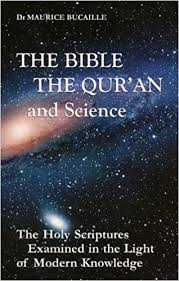 My father is a professional scientist, and a Muslim who lives in the West. In our house there was always a copy of The Bible, the Qu’ran and Science: The Holy Scriptures Examined in the Light of Modern Knowledge. To those not convinced about the beliefs of Islam, as I never was, it was not a convincing book. But it played a particular role in my father’s life of the mind as both a Muslim and a scientist. Its arguments were less important in their detail than that a French scientist had written a book showing that Islam and science were compatible and that in fact, the Koran had prefigured scientific truths.
 The intellectual achievements of medieval Islam, particularly the phase focused around the House of Wisdom, are a real thing in and of themselves. But more often they exist as tools for the implicit or explicit agendas of particular peoples with ends which are separate and distinct from an understanding of the past on its own terms.
 For many Muslims, this period defines what Islam could have been. Should have been. More traditionalist Muslims will have a relatively understated take, and perhaps attribute the passing of this period due to external forces (e.g., the collapse of central authority by the end of the 9th century). More progressive Muslims will make a bolder claim, that Islam, that Muslims, made the wrong decisions internally (al-Ghazali often emerges as a villain).
 A modernist, perhaps Whiggish, take would be that the 9th century of Islam was a “false dawn.” Illustrative of the acidic power of rationality, but an instance when it receded in the face of faith (the Mutazilites often become heroes in these tales). A more multiculturalist and contemporary progressive Western take would likely emphasize that Islamic cultural production was just as ingenious as that of the West, and its diminishment was due to the suffocating effect of colonialism.
 But there are even more exotic takes one could propose. The shift from the Umayyads in Damascus to the Abbasids in Baghdad was a shift of the Islamic world from the west to the east. The prominence of Iranian culture during the latter period was palpable. The Caliph al-Mamun was half Iranian, and almost moved the capital of the Abbasids to Merv in Khorasan. The Barmakid family were ethnically Iranian, but also originally hereditary Buddhists. The historian of Central Asia, Christopher Beckwith, has alluded to an “Indian period” of Islamic civilization when the influence from Dharmic religion and Indian culture was strong. For example, Beckwith and others have argued that the madrassa system derives from that of Central Asian viharas.
 But ultimately this post and this blog is not about Classical Islamic civilization and history. Rather, I want to pivot to the discussion of Islam and India.
This blog now gets in the range of the same amount of traffic as my other weblog. But a major difference is the source of traffic. About two times as many visitors to this weblog come from the USA as India. So Americans are dominant. But, on my other weblog, 15 times as many visitors come from the USA as India. Additionally, since this is a group weblog, I’m pretty liberal about comments, and so this weblog receives between 10 to 100 times as many comments as my other weblog. Obviously, since most people in the world are stupid, many of the comments are stupid. I try to ignore that.
 Rather, let me focus on the “hot-button” issue of Islam and India, and how it impacts people here. In the comments of this weblog. Let’s divide the comment(ers) into two stylized camps. Or actually, one person and another camp. The person is commenter Kabir, who has taken it upon himself to defend the honor of Indo-Islamic civilization. On the face of it, that’s not a major problem, but he tends to take extreme offense and demand linguistic and topical policing that’s frankly rather obnoxious (this tendency extends beyond Islam, as he is a living personification of Syme). He’s a bully without the whip. Kabir is somewhat annoying, but I can honestly always just delete his comments. He’s one person.
Iran as a modern Zoroastrian nation
After the counter-revolution the majority of Iranians have decided that they have had enough with Islam and want to return to their Zoroastrian roots. After the neo-Zoroastrians (they prefer to be called noZis) wrest back control, one of their first shock findings is that the birthplace of Zoroaster happens to be under the Naqsh-e Jahan square in Isfahan.
The noZis tear down the square and leave the rubble while they decide what to do with the site. In the interim all the medieval Muslim sites, which form the bulk of the architectural legacy of Iran, are benignly (or rather callously) neglected in favour of Persepolis (which is garishly rebuilt in what the noZis think was Darius’s court) and other “reconstructed” Sassanian/Achamenian sites (many mosques have been discovered to have been built on top of fire temples).
Ferdowsi is the only Muslim poet truly privileged in noZi Iran but even the Shahnameh is under threat because it’s written in the “alien Arabic script” and not in the purer Pahlavi script (in fact some noZis argue that there should be a switch to the more “Aryan” Latin alphabet). At any rate the majority of Iranians are back to being officially illiterate.
Modern Persian is deemed to have far too many Arabic words and so the more rustic Dari of Yazd is chosen as a base language. Considering that this Dari was spoken by insular villagers the last millennium; it’s deemed that Avestan is the only acceptable source language. Reality turns out to be a bit different; Old Persian in the Arabic script remains the dominant language of arts, calligraphy and culture while New Dari in Pahlavi becomes totally dependent on Anglo-French borrowings to become a complete language.
In the interim any Islamic poet, scientist or historian (even if Persian/Iranian) is sort of cast as the “other” and a scramble/obsession begins to discover ancient Persia’s scientific & aesthetic contributions. Some of Iran’s finest minds have been able to prove that ice cream in fact originated in Yazd.
Furthermore thousands and thousands of online noZis descend on the web to foam and obsess about Iran’s Muslim neighbours and to complain about Iran’s preferential treatment of her Muslim minority (they still maintain their own separate laws to the chagrin of the noZis).
They are also fuming at Eastern Iran’s still heavily Muslim region decision to secede into a new Khorasani state with Mashad & Herat as the capital. Iranian nationalists draw maps of Greater Iran that prominently figure Khorasan and constantly remind the Khorasanis that their Islamic identity is a myth and in fact they were Zoroastrians just a few generations back.
The Muslim intrusion into India was probably inevitable
 Taking after Edward Gibbon it is often stated in some histories that the Islamicization of Europe was probably prevented by the defeat of the Muslim armies coming up from Spain by Charles Martel at the Battle of Tours.
This is probably wrong for several reasons. First, with hindsight, it seems clear that people like to anchor on salient contingent events which seem plausible bifurcations in our timeline. This is a cognitive bias. The fact is that sally north of the Pyrenees into Francia was probably simply a probing raid, not the precursor to a full-scale invasion. At least that is the impression given by the Muslim textual records, which barely mention this battle (in contrast to the second Siege of Constantinople, which had occurred a few decades earlier). A raid is not a campaign.
 Additionally, Muslim armies and corsairs operated north of the Pyrenees and in what became southern France for several centuries after 732. The defeat at the Battle of Tours was simply another battle in the gradual rollback of Islamic depredations in the Western Mediterranean. Perhaps more important was the shift of the world-wide Islamic polity eastward with the emergence of the Abbasids in 750, and the detachment of western Muslim domains from Abbasid authority (a renegade Umayyad even reigned in Spain!).
 Finally, limits of supply-lines and ecological constraints probably meant that a protracted campaign in Europe would have met difficulties that were less relevant for North Africa and Spain. The conquest of North Africa and Spain occurred in less than a generation (the conquest of the Maghreb was an opportunity opened during a period of tumult in Byzantium in the late 7th century) and were still recent when the Battle of Tours occurred. Additionally, ecologically North Africa and much of Spain were familiar to the Arabs, and in the latter case Berbers. This is not the case with Francia and much of Northern Europe. It is not well known, but Arab armies sallied north of the Caucasus into the territory of the Khazars for several centuries, but ultimately failed in permanent conquests, probably in part due to lack of preparation and experience with harsh cold (the lack of fitness of Arab armies for the harsh winters is noted in the texts).
Remember that the conquest of much of the more frigid regions of peripheral Europe occurred under the Ottoman Turks, who were culturally an Inner Asian people from Siberia.
Which brings us to India and the beginning of widescale Muslim intrusions under Mahmud of Ghazni. I immediately pointed out below that the true conquest, as opposed to raiding, did not occur until the late 12th century. But, to be honest, I think this is a minor detail, and the fact is that Muslim incursions were inevitable, and probably like to succeed to some extent, no matter the outcome of a particular battle.
The key here is less about Islam, and more about the period between 500 AD and 1500 AD, and what you see across Eurasia in terms of the balance of power between mobile people from Inner Asia, and the agricultural civilizations. In books as distinct as War! What Is It Good For? and Strange Parallels the authors observe that in the period after 500 AD, until the rise of “gunpowder empires”, pastoralists from the Inner Asian steppe were dominant, destructive, and overwhelming military forces (the Mongol conquests were the apotheosis, but not exceptional).
In Strange Parallels, the author reminds us that only a few societies among the Eurasian oikoumene polities avoided major shocks from pastoralists. Mainland Southeast Asia, Japan, and the far west of Europe were insulated from their depredations by and large.* The reason for this was almost certainly geography: Japan was separated by a sea from the mainland, while Southeast Asia and Western Europe were ecologically difficult for pastoralists to penetrate as well as distant. In “mainland Europe” the settlement of the Hungarian basin by repeated groups of steppe pastoralists, beginning with the Scythians and ending with the Magyars, is partly a function of the fact that its broad flat expanses were the westernmost suitable pastorage for large herds of horses typical on the Eurasian steppe.
In the centuries after 500 AD, most of the major civilizations of Eurasia were impacted by migrations of nomads seeking greener pastures. In China, the northern half of the country was occupied by various groups of Turkic origin between the Han and Sui-Tang. The southern half the country maintained local rule, in part because of the difficulty of penetration by pastoralists of the Yangzi basin. In the Near East, Persia was buffeted by both Inner Asians from the north, and Arabs from the southwest. The Arabs conquered Persia and severely diminished Byzantium. Like China, the persistence of part of Byzantium is probably due to geography: Constantinople occupied a strong position on the other side of Bosporus and could be provisioned by sea when encircled. The Persian heartland was much more exposed to the Arab advance (in contrast, the conquest of Turan took many centuries).
Which brings us to India. The pastoralist eruptions that impacted Persia also affected India. But, the initial impacts were of more political than cultural relevance. Groups like the Huna were absorbed into the South Asian cultural matrix.
The arrival of the Turks and Afghans after 1000 AD was different. These people, now Muslims, were not absorbed into the South Asian cultural matrix. The reason is obvious: with Islam, they had their own high culture, one which was assimilative insofar as native converts could be somewhat integrated into the ruling class, and unassimilable from the perspective of native elites due to its ideological and ritual predelictions.
There is here a contrast to the Mongols who conquered China in the 13th century, and the Manchus who conquered it in the 17th century.
First, the raw numbers of Mongols and Manchus in comparison to Chinese was probably far less than the potential mobile Muslim populations which might have settled in India. In fact, Mongols who migrated west were eventually all assimilated into the Turkic or Persian cultural context due to the force of numbers (though they often retained genealogical awareness of part Mongol origins, as the Hazara and Timurids both did despite a Persian and Turkic cultural background).
Second, neither the Mongols or Manchus brought a hegemonic and oppositional high culture. The Mongols were predominantly shamanists, though a minority were Eastern Christians (Kubilai Khan’s mother was a member of the Church of the East, as was the norm among her tribe of Turks), and some were Muslims (the mass conversion of the Mongols to Buddhism occurred in the 16th century, prior to which they dabbled in Islam, Christianity, and Buddhism, as well as their dominant shamanism). The Manchus generally favored shamanism, or, as was the norm among northern border peoples in China, a form of Buddhism. Neither of these prevented assimilation to the Chinese substrate, a major problem for the Manchus over the centuries (like Mongol ancestry, in today’s China “Manchu” national origin is more a matter of genealogy than culture, as the Manchu language is now moribund, only a few thousand out of millions of Manchu speak it).
In regard to India I want to pinpoint a few key issues:
- Starting around 1000 AD the whole zone of pastoralist western Inner Asia began to adopt Islam as its standard religious ideology. To a great extent, West Asian Muslim societies were captured by Inner Asians, and they served Inner Asian aims and goals. Societies such as Egypt were ruled for a thousand years by Inner Asians, who created a Mamluk system which depended upon continuous migration and recruitment from Inner Asia.
- India was arguably more “exposed” to this culture than China due to geography. While Inner Asians adjacent to Muslim West Asia adopted Islam, those nearest to China tended to be shamanist or Buddhist (Magyars and Bulgars adopted Western and Eastern Christianity respectively).
- Mobile Inner Asians, of any religion, were “natural” soldiers (though to be fair, it seems a consistent pattern that Inner Asians, such as Mongols, who were shamanist were less “civilized” and often better soldiers than those who converted to “higher religions”). In the period between 500 AD and 1500 AD mobile mounted warriors had major advantages in continuous warfare against settled peoples. The main way that settled societies held the pastoralists in check was through bribery or co-option, or both. The Byzantines and Chinese deployed both, elevating frontier peoples with mobile fighting skill to their ruling castes, as well as paying nomadic groups tribute. By and large West Asian Muslim societies co-opted and were conquered by Turks (or their Caucasian federates).
- India was subject to the same dynamic as West Asian societies: pastoralists from Inner Asia continuously migrated into the subcontinent for opportunities of exploitation and domination down to the early colonial period. Each wave of migrants was more “raw,” and brought alien and alienated sensibilities, to the subcontinent.
In discussions with individuals of South Asian origin, there is some exploration of the possibility that Indians, Hindus, were naturally a less vigorous and martial people than Muslims. That Islam was a muscular and masculine ideology, while Hinduism was feminine and passive (Hindu nationalism then emerging through some dialectical process as a superior synthesis; muscular, masculine, and Hindu).
I believe that this analysis suffers mostly from the issue of confounds. In the period after 1000 AD with the exception of the Mongols under Genghis Khan, the Inner Asian intruders were all Muslim because they were drawn from the broad zone of Inner Asia where Islam was the dominant high culture. The reality is that after 1000 AD Iranian speaking peoples also were dominated by numerically smaller groups of Inner Asians. Reza Shah in the 20th century was the first major ethnic Iranian founder of a dynasty to dominate most of Iran since the Buyids and Samanids.
The difference between Iran and India is that the former eventually became majority Muslim, while the latter remained majority non-Muslim. Iran’s relative pliability can even be seen in sect, as the Turco-Kurdish Safavids forcibly converted the Persians from their predominant practice of Sunni Islam to Twelver Shia Islam in the 16th century. But of course, demographics is an important variable here. There were probably always an order of magnitude more Indians than Iranians. In Turan Turkic languages became dominant, and in Iran proper, they remain a substantial minority. In India, Turkic languages never took hold, presumably because the numbers were never sufficient. An analogy here might be made with Egypt, where the Mamluk caste drawn from non-Arabs eventually Arabicized in language and identity.
As a follow-up to my post, India as a hydra against Islam, I will suggest then a two things:
- India is not comparable to West Asia because it is a more robust civilization with more demographic heft. Like parts of Europe it “absorbed” the Islamic demographic impact without being totally captured. The difference here is not qualitative, but quantitative. There were so many more Indians than Iranians that erosion of indigenous culture took much longer and was never complete.
- Unlike parts of Europe which absorbed the Inner Asian shock, such as Russia, India never managed to reorganize and turn the tide. To some extent, the Russians adopted Inner Asian tactics with their Cossack bridges (some of the Cossacks were assimilated Muslim Tatars).
But, the emergence of the Maratha in the 18th century and the Sikh Empire in the 19th century, illustrate that a South Asian counter-reaction was occurring eventually. The reality is that this period saw the decline of Inner Asian military superiority because of mass mobilization of infantry with shock weapons (guns, artillery), which were finally decentering mounted warriors after nearly 1,500 years of supremacy. Though the later Mughals relied on cadres of Inner Asians, they were fundamentally a “gunpowder empire”, and the logic of mass mobilization means that it is unlikely that in the long term a culturally alienated elite could have persisted. The French republican armies’ defeats of rival powers showed European nation-states the power and necessity of mass mobilization.
Several years ago an Indian American friend of Hindu nationalist sympathies expressed to me the opinion that if it weren’t for the arrival of the British, the Marthas might have spearheaded the emergence of a new Indo-centric polity. At the time I was skeptical because Indians lacked access to horses, which gave Inner Asians an advantage. But now seeing the logic of massed infantry with guns, it does seem that the Inner Asian, and therefore Muslim, the advantage would eventually have given away to the force of numbers.
Of course, we’ll never get to see how history would have turned out. The British had different plans.
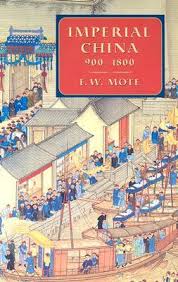
Note: This post was inspired by my reading of Imperial China 900-1800.
Addendum: I won’t tolerate stupid comments on this post in the beginning. Please understand that if I delete I think your comment was stupid. Perhaps you are smart, so try harder!
* The Mongol directed invasions of Japan, Burma, and Java, were arguably less a function of steppe pastoralism, than the militaristic Yuan co-opting and projecting the force capabilities of the Chinese state system.
The education of the people of Tianzhu
 Someone on Twitter mentioned that there were references to Shakespeare in the recent ruling to decriminalize homosexuality in India. This is reflective of the fact that some of the ambition to create “a class of persons, Indian in blood and colour, but English in taste, in opinions, in morals, and in intellect” did succeed. The English-speaking South Asian elite is not Western, but they are part of a broader conversation, a republic of letters, which is focused on the West. A public intellectual like Arundhati Roy is integrated and influential in the broader community of international, Western, intellectuals.
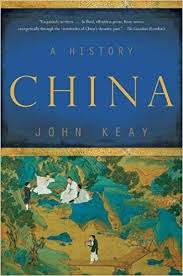 And yet looking at the trade numbers for India, you see that China has surpassed the United Kingdom. I have stated on this weblog that India has to deal with the fact that China is already the Asian hegemon. And this hegemony will only wax over the coming decades.
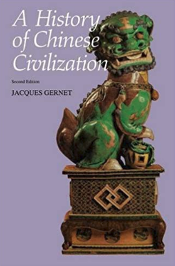 The Westernization of aspects of Indian culture is probably not going to be reversed in the 21st century. Indian English is now a native language. Cricket is the national sport. But Indians also have to look to Chinese culture and civilization, and not just economic statistics, because the maturation of the two states and societies over the next few decades is going to entail some level of interaction and exchange.
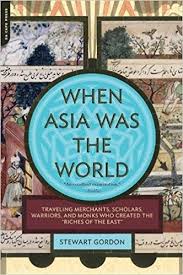 Too often conversations about comparative history that I have on this weblog entail comparisons between the West and India (Islam). There is an unfortunate lack of knowledge on Chinese history and civilization.
Fix this forthwith!
Perhaps India is not special in resisting Islamicization
 I have posted my thoughts as to why India, unlike Iran or Central Asia, resisted total Islamicization, before. It seems to be a phenomenon that demands an explanation.
And yet does it?
As I read F. W. Motte’s Imperial China 900-1800 I am struck by Han civilization’s resilience and absorptive capacity. What does that remind us of?
With some hindsight, perhaps I was asking the question because I constrained my dataset to West and South Asian societies, where India, in particular, seemed exceptional. But if you add China to the mix, then India’s robustness seems less incredible.
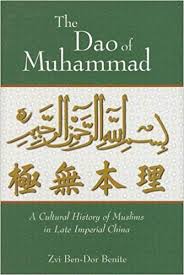 Timur died en route to China because he was keen on invading it. Many Muslims believe that Timur’s death prevented the Islamicization of the Han. After reading Imperial China I believe that this is false. Even if Timur conquered China, the Chinese would be resistant to Islam, and likely throw off the conqueror’s successors in short order.
Those conquest dynasties, such as the Manchus, who were successful in China underwent total assimilation. Those, such as the Mongols, who ultimately refused to kowtow to the verities of the Chinese, were expelled.
Taking this comparative perspective it is less surprising that so many South Asians became Muslim. Indians, “Hindus”, were ethnoculturally diverse and distinctive from each other in a way that Han Chinese never were. Muslim conversion of some elites and the targeting of oppressed castes was possible because Indian society was fractured in a way that the Han never were.
Of course, the Persians become Muslim in toto. But the Persians never had an identity to match the Han.
What the f*ck is Pakistan/PTI doing
https://www.facebook.com/photo.php?fbid=2059375517426582&set=a.181753635188789&type=3&theater

Vidhi pointed me to this but I am simply shocked by the f*cked up PTI agenda. Yet again Pakistan is treading on the path of self-destruction.
I have noticed that Sunoo Chanda is a bit “fast”; bit of touching by Farhan Saeed and Iqra Aziz, some simmering moments.
This is what happens when a culture starts defaming its martyrs to freedom like Qandeel Baloch.
I’m shocked and angry with the retrograde, shitty attitude by the Pakistani authorities. ISI have really let the Ummah down; we might just get kicked out of Turan because of this!
Thoughts on Section 377
I don’t usually like to type out posts on my cell but I’ll make an exception this time.
I first came to know about this on Karan Johar’s Instagram Feed then all the celebs followed.
India and Pakistan are going off on different trajectories. I do generally applaud the Indian model but does one have to be Western to be wealthy?
As a personal aside I’m generally in favour of licentiousness but I find the perennial identity wars in the West to be tiresome. It’s probably a side effect of the intense loneliness that liberal hyper capitalism brings about.
Culture can be more powerful than biology
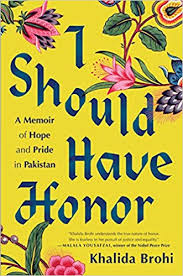 An interview with the author of I Should Have Honor: A Memoir of Hope and Pride in Pakistan. It’s a difficult listen. Basically illustrates how in some “traditional” cultures women are treated like disposable and fungible property.
As a geneticist and a father, one thing about “honor killing” that always strikes me is that it illustrates the power of environmental and cultural pressures in comparison to biology and genetics. When a father, or a brother, kills a daughter or a sister, they kill a part of themselves. Additionally, I don’t think the love and affection that fathers have toward their children is a culturally learned artifact, though some fathers are quite busy, with large broods, and distant.
And yet despite the reality of fatherly or brotherly affection, because of the cultural conditioning and incentive structures in extended family kinship networks, they still murder their daughters and sisters.
Human plasticity trumps biology!
Turan seeks peace..

ISLAMABAD, Pakistan — Concerned about Pakistan’s international isolation and faltering economy, the country’s powerful military has quietly reached out to its archrival India about resuming peace talks, but the response was tepid, according to Western diplomats and a senior Pakistani official.
The outreach, initiated by the army’s top commander, Gen. Qamar Javed Bajwa, began months before Pakistan’s national elections. Pakistan offered to resume on-and-off talks with India over their border dispute in the Kashmir region, which stalled in 2015 as violence flared up there.
A key objective for Pakistan in reaching out to India is to open barriers to trade between the countries, which would give Pakistan more access to regional markets. Any eventual peace talks over Kashmir are likely to involve an increase in bilateral trade as a confidence-building measure.
Pakistan’s Military Has Quietly Reached Out to India for Talks