
Please keep the other posts on topic. Use this for talking about whatever you want to talk about.
Category: Popular
The Urdu-Speaking Inheritance
This speech deeply touched my heart. Senator Faruqi perfectly encapsulates the sublime nature of our Urdu-speaking inheritance; defiant, liberal, just and aristocratic.
Takeaways from the golden age of Indian population genetics
There are lots of strange takes on the India Today piece, 4500-year-old DNA from Rakhigarhi reveals evidence that will unsettle Hindutva nationalists. I’m friendly with the author and saw an early draft. So I’m going to address a few things.
The genetic results are becoming more and more clear. A scaffold is building and becoming very firm. In the 2020s there will be a lot of medical genomics in India. But before that, there will be population genetics. Ancient DNA will be the cherry on the cake.
Here’s what genetics tells us. First, a component of South Asian ancestry, especially in North India, and especially in North Indian upper caste groups, seems to be the same as ancient agro-pastoralists who ranged between modern Ukraine and modern Tajikistan. Genetically, these people are very similar to certain peoples of Central and Eastern Europe of this time, though there is a varied dynamic of uptake of local Central Eurasian elements as they ranged eastward.
This ancestral component is often called “steppe.” This ancestral component is a synthesis of ancient European hunter-gatherer, Siberian, and West Asian. The steppe component seems to arrive in Central and South Asia after 2000 BC.
Second, another component of South Asian ancestry is very distinctive to the region. It is deeply but distantly related to branches of humanity which dominate Melanesia and eastern Eurasia, up into Siberia. The magnitude of the distance probably dates to ~50 thousand years ago, when the dominant element of modern humans expanded outward from West Asia, east, north, and west. These people are called “Ancient Ancestral South Indians,” or AASI. Their closest relatives today may be the natives of the Andaman Islands, but this is a very distant relationship.
AASI is the dominant component of what was once called “Ancestral South Indians,” or ASI. It turns out that “ASI” themselves were a compound synthetic population. This was long suspected by many (e.g., David W.). What was ASI a compound of? About ~75 percent of its ancestry was AASI, but the balance seems to have been a West Eurasian component related to farmers from western Iran. We can call this group “farmers.”
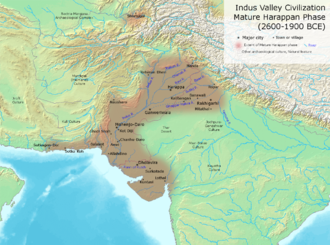 With a few samples from outside of the IVC region, and one (or two) samples from within the IVC region, geneticists are converging upon the likelihood that the profile in the greater IVC region before 2000 BC was a compound of these farmers with the AASI. But even within the IVC region, there seems to have been a range of variation in ancestry. The IVC was a huge zone. It may not have been dominated by a single ethnolinguistic group (even today there is the Burusho linguistic isolate in northern Pakistan). Note that the much smaller Mesopotamian civilization was multiethnic, with a non-Semitic south and a Semitic north (Sumer and Akkad).
The key point is that it is very likely the IVC lacked the steppe ancestral component. That it did have AASI component. And, it did have a farmer component with likely ultimate provenance in western Iran. Additionally, there were smaller components derived from pre-steppe Central Eurasian people.
While the steppe people arrived in the last 4,000 years, and at least some of the ancestors of the AASI are likely to have been in South Asia for 40,000 years, the presence of the AASI-farmer synthesis genetically is conditional on when a massive presence of western farmers came to affect the northwestern quarter of South Asia. It seems unlikely to have been before Mehrgarh was settled 8,500 years ago. The genetic inferences to estimate the time of admixture between AASI and farmer are currently imprecise, but it seems likely to have begun at least a few thousand years before 2000 BC. range of 8,500 and 6,000 years ago seems reasonable.
So 4,000 years ago the expanse of the IVC was dominated by a variable mix of farmer and AASI. One can call this “Indus Valley Indian” (IVI).
Just like ASI, there was an earlier abstract construct, “Ancestral North Indian” (ANI). Today it seems that that too was a compound. To be concise, ANI is a synthesis of steppe with IVI. The Kalash of northern Pakistan are very close genetically to ANI. This means that while ASI had West Eurasian ancestry, albeit to a minor extent. And ANI had AASI ancestry, albeit to a minor extent. The main qualitative difference is that ANI had a substantial minority of steppe ancestry.
To a great extent, the algebra of genetic composition across South Asia can be thought of as modulating these three components, farmer, steppe, and AASI.* Consider:
- Bhumihar people in Bihar tend to have more steppe than typical, but not more farmer than typical, and average amounts of AASI.
- Sindhi people in Pakistan tend to have lots of farmer, some steppe, and not much AASI.
- Reddy people in South India have lots of farmer, very little steppe, and average amounts of AASI.
- Kallar people in South India have some farmer, very little steppe, and lots of AASI.
For details of where I’m getting this, you can look at The Genomic Formation of South and Central Asia for quantities. But as a stylized fact farmer ancestry tends to peak around the Sindh. In Pakistan steppe ancestry increases as you go north. As you go east and south AASI increases pretty steadily, but there are groups further east, such as Jatts and Brahmins, who have a lot of steppe, almost as much as northern Pakistani groups. And curiously you get a pattern where some groups have more steppe and AASI, and less farmer, than is the case to the west (you see this in the Swat valley transect, as steppe & AASI increase in concert).
Going back to the history, by the time the steppe people arrived in South Asia, in the period between 2000 BC and 1000 BC, it may be that the IVI ancestry is what they mixed with predominantly. Though it is likely that the southern and eastern peripheries had “pure” AASI, by the time steppe people spread their culture to these fringes they were already thoroughly mixed with IVI populations, and so already had some AASI ancestry.
In contrast, the farmer populations likely mixed extensively with AASI in situations where the two populations were initially quite distinct.
Please note I have not used the words “Aryan” or “Dravidian.” The reason is that these are modern ethnolinguistic terms. Genetics is arriving at certain truths about population changes and connections, but we don’t have a time machine to go back to the past and determine what language people were speaking 4,000 years ago.
Our inferences rest on supposition, and a shaky synthesis of historical linguistics and archaeology and genetic demography, a synthesis which is unlikely to ever be brought together in one person due to vast chasm of disciplinary method and means.
It is highly likely that the steppe component is associated with Indo-European speaking peoples. Probably Indo-Aryan speaking peoples. The reason is that by historical time, the period after 1000 BC, Iran and Turan seem to already have been dominated by Indo-Iranian peoples. But, in the period around 2000 BC, western Iran was not Indo-Iranian. People like the Guti and the Elamites were not Indo-European, and they were not Semitic. We have some genetic transects which show that steppe ancestry did arrive in parts of Turan and Iran in the period after 2000 BC.
Where did the Dravidian languages come from? We don’t know. They could have been spoken by an AASI group. Or, they could be associated with farmers from the west. We don’t know. Ultimately, we may never know. Unlike Indo-European languages, there are no Dravidian languages outside of South Asia.
Various toponymic evidence indicates that Dravidian languages were spoken at least as far north and west as Gujurat. And Brahui exists today in Balochistan. Though I don’t have strong opinions, I think Dravidian languages probably are descended from a group of extinct languages that were present in Neolithic Iran.
Though unlike Indo-Aryan languages, Dravidian exploded onto the scene after a long period of incubation within South Asia, as part of at least one of the language groups dominant with the IVC and pre-IVC societies.
At least that’s my general assessment. I have strong opinions about the genetics. But am much more curious about what others have to say about linguistics and archaeology.
* Some groups, such as Munda and Indo-Aryan groups in Northeast India, have East Asian ancestry. Some groups in coastal Pakistan have African ancestry.
Why this kolaveri di on Indian genetics
I perused through the article linked in Razib’s previous post. I stumbled on this caption embedded in the beginning of the article:

NOT THE SAME: The Indus Valley people lacked the steppe and ancestry that marks many North Indian high castes today (Photograph by Bandeep Singh, for representational purpose only)
I find the association that the prototypical Indian is a high-caste Hindu to be in poor taste.
Genetics stories in India Today
4500-year-old DNA from Rakhigarhi reveals evidence that will unsettle Hindutva nationalists:
The ‘petrous bone’ is an inelegant but useful chunk of the human skull — basically it protects your inner ear. But that’s not all it protects. In recent years, genetic scientists working to extract DNA from ancient skeletons have discovered that, thanks to the extreme density of a particular region of the petrous bone (the bit shielding the cochlea, since you ask), they could sometimes harvest 100 times more DNA from it than from any other remaining tissue.
Now this somewhat macabre innovation may well resolve one of the most heated debates about the history of India.
And, from me, 3 strands of ancestry.
Nothing new for close readers. I would caution
1) Many Hindu nationalists really don’t care and are not perturbed by these findings. I know, because I know them.
2) I don’t know if the paper is going to be published soon. It may, but we’ve been waiting two years now.
The passing
In 1998 Bill Clinton stated:
Today, largely because of immigration, there is no majority race in Hawaii or Houston or New York City. Within five years, there will be no majority race in our largest state, California. In a little more than 50 years, there will be no majority race in the United States. No other nation in history has gone through demographic change of this magnitude in so short a time … [These immigrants] are energizing our culture and broadening our vision of the world. They are renewing our most basic values and reminding us all of what it truly means to be American.
The year 2050, or whatever date you want, is when “whites” will become a “minority.” Both words are in quotes, since what counts as “white” and “minority” matter a great deal in terms of these quantities. Clinton, like many liberal(ish) white Americans, did not look upon that future with dread or anxiety. Rather, he was, and presumably is, hopeful. At the time many people asserted that Bill Clinton was arguably the first American president who was personally comfortable with nonwhites. After all, Vernon Jordan was one of his closest friends.
And yet here are the demographics of the town where Bill & Hillary chose to settle down after the 1990s:
. The racial makeup of the CDP was 91.80% White, 0.94% African American, 0.03% Native American, 5.62% Asian, 0.02% Pacific Islander, 0.52% from other races, and 1.07% from two or more races. Hispanic or Latino of any race were 2.55% of the population.
 Bill may look forward to our bright diverse future of 2050, but he lives socially and demographically in 1950. And he’s not alone.
To me, this is the important lacunae left out in Panjak Mishra’s op-ed in The New York Times, The Religion of Whiteness Becomes a Suicide Cult. The op-ed is a testament to the fact that even a sophist must speak the truth now and then. It is certainly true that there is a discomfort and disquiet in the world as the long centuries of white supremacy, in the most literal and descriptive sense, slowly come to a close. Naturally, Mishra points the finger at figures from the past, who can’t dispute his disdain, as well as those individuals such as Donald Trump, whom the readers of The New York Times see as heralds of reaction and regression.
 But the truth is that as the “the rising tide of color against white world-supremacy” begins to crest even the “good whites,” the “progressive whites,” will begin to become uncomfortable and unmoored. The noblesse oblige of progressive whites is predicated on the reality and fact of their privilege, of their dominion over the colored races. And yet the reality is that many of these progressive whites show revealed preferences which are not much different than non-progressive whites. On the whole, they live amongst other whites, socialize with other whites, and marry other whites.
Having lived in California, around white people who are politically far more liberal than I am, I have a bit of personal experience with how these “revealed preferences” work. Rather than anecdotes, I’ll just point to this article, Ghosts of white people past: witnessing the white flight from an Asian ethnoburb.
The “passing of the great race” is a far bigger story than nationalism, racial or otherwise. It is the expiration of a whole Weltanschauung. An undermining of assumptions. The death of a world civilization, and the birth of a new one.
Open Thread
Please keep the other posts on topic. Use this for talking about whatever you want to talk about.
Crazy Rich Asians is not social work
I have not watched Crazy Rich Asians. Perhaps I will for my cultural edification. Unlike some people, I don’t care too much about “representation.” This isn’t for ideological reasons…I just have weak group identity/identification, and on an implicit level, I probably think I’m a unique enough person that no other is going to “represent” me in the media, ever. I know I’m not the only one who feels this way.
But the reality is that the Western Asian cohort in the cultural space is dominated by the aggrieved chattering class. So there is this piece in The Guardian, Where are the brown people? Crazy Rich Asians draws tepid response in Singapore. It references another piece, ‘CRAZY RICH ASIANS’ IS NOT A RADICAL WIN FOR REPRESENTATION.
About the author of the second piece:
Sangeetha Thanapal is an artist and writer working on the intersections of race, gender and body in Asia and Australia. She is the originator of the term ‘Chinese Privilege,’ which situates institutionalized racism within Singapore. Her fantasy fiction and political writing have been published by Djed Press, Brown Girl Mag and many more.
First, about “representation.” I put it in quotes because in a social justice context the word means something particular. For example, “representation” of South Koreans means Sarah bane-of-goblin-kind Jeong. Not, an evangelical Korean missionary in the Middle East. In the academy, “representation” means a good regional, racial, and gender proportionality. Not, reflecting the political and religious variation in the population.
Crazy Rich Asians are Asian, but not the representational kind of Asian. Sangeetha Thanapal though is a representational Asian: she’s cosmopolitan, educated, and woke. Ironically, her South Asianness is almost incidental. Kind of a wrapping around the real substance of her ideological affinity to a certain tendency which spans all shades.
The second issue are the specific particulars to Singapore and the relationship between East Asians and South Asians, or more generally, “Chinese” and “Indians.” It is a simple fact that Chinese people are racist against Indians for being dark, for India being a poor an underdeveloped nation, as well as differences in comportment and social mores. It is also a simple fact that Indians are racist against Chinese people, who are perceived to be strange-looking dog-eaters who lack deeper values than the acquisition of money and power.
If you want to represent the true dynamics of the Chinese and Indian relationship in Singapore, then you need to represent the racism and segregation which is mutual. Of course, there are other dimensions as well, such as the growing number of mixed-race Chindians. Unless that is, you want to “represent” your nonexistent utopian vision?
Which brings me to the big issue about objections to Crazy Rich Asians: the critiques are reductive and simplistic, even if they utilize layered and verbose textures. Singapore is dominated by a Chinese ruling class, and there is racism against minorities. But a massive influx of highly educated professional Indian immigrants in the past few decades into Singapore is why Indians now earn a bit more on average than Chinese in Singapore. But this summary is misleading too, and masks the diversity of the South Asian population, from well-off Indian immigrants to manual laborers from Bangladesh, as well as the long-established Tamil community which is itself socioeconomically diverse.
Finally, there are some things that Thanapal and others bring up as “Chinese privilege” which I don’t see as a privilege. Singapore is a mostly Chinese city, in a region where Chinese economic power is ascendant. It is entirely reasonable that the city-state should be given preference to English and Mandarin Chinese as the dual languages. Thanapal’s Tamil language is not hard-wired into her being like her dark skin and curly hair. Tamil can continue to be maintained in the traditional Tamil community, but in Chinese dominated city-state it seems reasonable that Tamils should learn the lingua franca of the majority and adopt it as their own. Mandarin can be a fine first language even if your hair is blonde or your skin is black.
Chinese Indians speak Indian languages, and when they speak English they naturally have an Indian accent.
I’m not saying my viewpoints are the “right” ones. But, for various reasons my viewpoints are not not “represented” in the mainstream international media. And I’m not the only one who feels this way. So there, I said it.
Hinduism was not invented by the British (or Muslims)
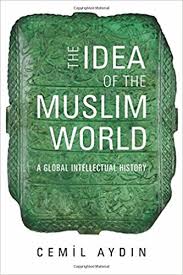 I’m reading a book titled The Idea of the Muslim World: A Global Intellectual History. It’s works within the postcolonial framework. Unlike a lot of postcolonial scholarship it isn’t bluster and rhetoric riddled with basic historical errors. The author presents a lot of interesting facts. But, as I’ve said elsewhere I disagree with the thesis of the book, which is that modern Islamic identity can be understood primarily through its interaction with European colonialism.
This isn’t to say colonialism doesn’t matter. It does matter. It’s just that Muslims are not inactive substrate upon which European agents operate. Muslims, and Islam as a civilization, has its own life, orientation, and self-conceptions, which exist somewhat apart from Europeans, and the West (I say somewhat because it is hard to understand the modern West and Islam without their coevolutionary dance over the centuries). Colonialism did not create the idea of the Muslim world de novo, it operated upon the idea of the Ummah which predated the modern West, and in fact emerged in tension with the ancient late antique Near East and Turan in the 7th and 8th centuries AD.
But this post is not about Islam. From the comments:
The big tragedy during the unmitigated disaster that was the partition upon the Hindus, many realized was that while there was a thing known as Ummah, there was no such thing as the Hindus. There are Muslims, but they are actually the largest plurality. There was no such thing as the Hindus. There was the Brahmins. There was the Namashudra. There was the Punjabi. There was the Thakur…
This to my mind is a much stronger position to defend than the ideas above in relation to Islam. To a great extent modern day, Hindu nationalism seems to be about creating an analog to the Dar-ul-Islam and Christendom for Hindus, many centuries after Muslims and Christians. But, I do think I disagree with this. It seems clear that Megasthenes, al-Biruni, and Faxian all had a sense of Indians, or Hindus as we were all called then, as a distinct, albeit variegated, people.
Hinduism as a particular confession with a creedal orientation is a relatively recent affair. Perhaps you can date it to Adi Shankara. Or even as late as Arya Samaj. That doesn’t matter. Hinduism as a distinctive civilization of Indians, with consistent particular unifying beliefs, is very ancient and dates to antiquity.
One might object that this only applies to the twice-born varna. But the Maurya were like of sudra origin. And South Indian polities welcomed Brahmins, who they clearly saw as part of their civilization, albeit different and apart.
Of course one might change the goalposts with some semantics. I myself liked to be clever and would say that Hinduism was invented by Muslims or Westerners a few years ago. But thinking more deeply, I think that that was just a stylistic pose by me, attempting to burnish my heterodoxy, as opposed to reflecting the first order substance.
Addendum: Genetics is now making it clear to me that the matrix of “Dravidian” and “Indo-Aryan” proto-India were closely connected and emerged around the same time, probably in tension, conflict, and interaction. Religious ideas we’d term “Hindu” probably didn’t exist 4,000 years ago, but the openness of South and North India to engagement and cultural exchange in the historical period is not I think coincidental, but reflects primal commonalities derived from the tumult in the centuries after the decline of the IVC.
V. S. Naipaul has died
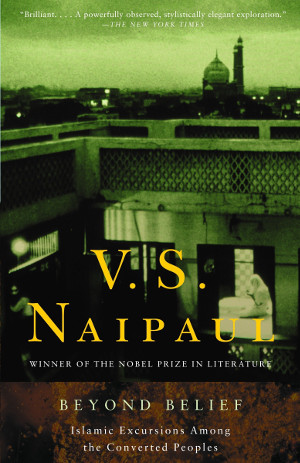 Like many I have only read Naipaul’s nonfiction. His genius, as a literary intellectual, was to distill intuitions and observations that many of us have, but compress them into more economical and clear prose.
But, in my opinion, literary intellectuals’ genius lay not in uncovering new things, but unmasking what we already knew. Therefore Naipaul never presented me a startling insight that was totally novel, and much of his analysis I later rejected upon deeper study and thought. And yet if the question is the answer, then his prose definitely opened many mental doors.
Of course, others can speak to his fiction.