RecoveringNewsJunkie · February 27, 2026 · 41 comments
This is a quote from Pakistan’s ‘defence minister’ from a couple of hours ago. There is a shooting war on the Durand line, and the PAF has bombed Kabul and Kandahar, including the airport, Taliban ministry buildings and other non-military targets.
This round of AfPak hostilities kicked off with a ‘surgical airstrike’ by Pakistan into Afghanistan that resulted in multiple civilian deaths. The Taliban retaliated by attacking Pakistani border outposts on the Durand Line, and claim to have captured more than a dozen of them, with Pakistani POWs and KIA. In response, the PAF has now bombed Kabul and Kandahar.
The Taliban, the erstwhile creation of the ISI, is now at war with Pakistan. Where does this go from here?
RecoveringNewsJunkie · February 20, 2026 · 9 comments
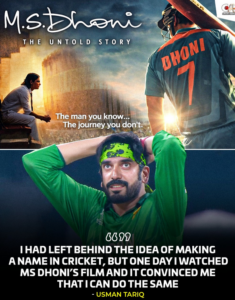
Usman Tariq Image from CricTracker
The last few days have really been dominated by a cacophony of ….tu, tu, mai, mai in the BP comment threads with competitive “patriotism” flying thick and fast. Amidst all the noise generated by …certain hostility focused agendas, its easy to lose sight of the fact that for all the problems and challenges faced by the 2 nation-states, the people that inhabit the subcontinent, still continue to have a bunch of things in common.
So allow me this …palette cleanser of a post. The ICC T20 Cricket World Cup is in progress, and the teams of both India and Pakistan have managed to qualify for the “Super 8” stage. Usman Tariq, is a rising star who has recently joined the Pakistani team, as a bowler who serves up ‘mystery spin’ from a unique bowling action, enabled slightly in part due to an anatomically exceptional elbow which has elicited some allegations of chucking (throwing). He has undergone test and has been cleared of this allegations already.
What I found notable about Usman, apart from his repertoire of unique googlies and arm angles, is him sharing the fact that watching an Indian movie inspired him to pursue his dream – a career in cricket. M.S. Dhoni a former India captain, had a biopic made about him a few years ago, which was a massive hit in India and beyond. Usman, as we know, is hardly an exception when it comes to Pakistanis consuming Indian content including movies. Pakistanis, in some ways, are arguably even more ardent consumers and fans of ‘Bollywood’ than Indians. As an Indian listener to Pakistani podcasts, you can’t help but notice how movie and song quotes from Indian films and pop culture, are seamlessly used by Pakistanis as metaphors to describe situations. Even more so than is common for Indians to do so.
On the flip side, Indians are enthusiastic consumers of Pakistani music – the popularity and opinions on the ‘quality’ of Pakistani Coke Studio abound, so does a sizeable number of fans for Pakistani soap operas.
The point is, as much as the interactions of India and Pakistan is dominated by the disproportionate shadow cast by the history of conflict between the two states, and especially the untenable history of PakMil sponsored multi-decade history of terrorism and “non-state actor” violence, we still see a common culture interwoven through the day-to-day existence of the …awaam
With typical bluster, the Donald declares victory and claims that India will ‘stop buying Russian oil (eventually’, and buy ‘$500 billion’ in US goods (no timeline given). Modi’s announcement doesn’t even mention those vague commitments notably.
18% is lower than Vietnam, lower than China, and also lower than Pakistan’s tariff rates, in spite of the ….abject genuflection given to the Drumpf Administration by Pakistani elites over the last few months.
RecoveringNewsJunkie · December 27, 2025 · No comments
Sanjeev Sanyal is somewhat… infamous as one of the flag-bearers of the Indian Right wing. A longform interview where he talks about citation laundering, the misrepresentation of Emperor Ashok, the machinations of ranking Indian democracy and credit sovereign ratings. Its indeed quite laughable if press freedoms in Pakistan and Afghanistan end up being rated higher than India.
The recent Barabar caves kerfluffle on BP came to mind while listening to him.
RecoveringNewsJunkie · November 21, 2025 · 1 comment
So a new trailer for a hindi acshun phillum dropped recently, and its another one of those that throws around the ‘based on true events’ tag for additional street cred. This time around though, there’s a bit of a twist. The plot apparently centers around the Lyari Gang wars in Karachi, with some additional fictional tempering of course.
Unsurprisingly, this will elicit a whole gamut of reactions from either side of the Radcliffe line, especially due west. The preview is unusually long, and somewhat unsurprisingly filled with shocking violence – the recent success of movies like Kill and Animal were bound to result in a race to ever-increasingly levels of ‘ketchup’ and fireworks. But apart from that, at least to me, didn’t seem very novel or interesting. I am mildly curious about the world building that the movie manages to pull off.
Sanjay Leela Bhansali’s Netflix series Heeramandi is another example of this phenomenon. Where the Indian movie industry is accused of ‘cultural appropriation’ and telling a story that is “Pakistani, and not Indian”. With that one, as much as I am… unimpressed with Bhansali’s output – I view him more as a choreographer, less of a filmmaker, one who is far more successful at spectacle, not so much with cinema – I still think that the stories of the subcontinent should be accessible to all. Lahore after all, especially pre-partition Lahore is as much a legacy of Ganga Ram as it is of the Mughal Empire, or the Sikh, for that matter.
This time around however, the setting isn’t historical or pre-partition. Is there an argument to be made that this is “cultural appropriation”?
For me, more than anything, its yet another missed opportunity. In an alternate timeline, a movie like this would have been a golden opportunity for Pakistani actors to get visibility on a much larger Indian stage, and the quality of the output could have been immeasurably raised with behind-the-scenes contributions – production design, location and language expertise, to name a few.
Somewhere down the line, if things finally start reverting to ‘normal’, perhaps future projects like these will incorporate Pakistani participation and be better for it.
10 years ago a few collaborators and I set out to make a film about the Lyari gangsters and drug mafia, couldn’t raise a Rs locally because a film 80% in Balochi won’t sell, approached Netflix who said Pakistani content not needed, the Twitter page is from 10 years ago too pic.twitter.com/p6LeyyFUEO
RecoveringNewsJunkie · November 19, 2025 · 4 comments
This opinion piece on the Print’s website lays out a familiar argument about shifting academic focus towards Indic heritage against excessive hagiographic obeisance at the altars of ‘western’ scholarship. But apart from the standard diatribes, the name Sarvepalli Radhakrishnan jumped out for me.
RecoveringNewsJunkie · November 3, 2025 · No comments
Most of us keeping up with news from the sub-continent are aware by now of the recent escalation in the long-simmering friction between Pakistan and Afghanistan. The historical ‘divide’ regarding the Durand Line is something that never really went away as much as the Pakistani state attempted to pretend that its a fait accompli. And now with the Tehreek e Taliban Pakistan managing to to challenge the Pakistani state’s writ, and inflicting ever increasing costs on PakMil, the threats to punish Afghanistan further are flowing thick and fast from Islamabad.
Pakistan, obviously enjoys a military supremacy over Afghanistan in multiple orders of magnitude. But as we have seen in Ukraine, or even in Afghanistan over the last few decades, the underdog can inflict some serious costs. And keep it going.
Question is, where does Pakistan go from here? With the growing reported rapprochement between the Taliban and New Delhi, there’s every chance that the Afghan air defenses may be quickly ramped up from non-existent, to at least some level of deterrent. Rumors are rife on the internet about Indian supply planes landing at Bagram. And simply bombing Afghan border posts has diminishing returns. The Taliban do not appear to be in any conciliatory mood.
In many ways, this has many parallels to India’s experience with Pakistan backed jihadi groups in the 30+ years starting from the late 1980s. Its almost impossible to deter and defend against insurgency in mountainous terrain. Especially when the insurgents find succor in the local populace.
So, what next for “Khyber Pakhtunkhwa” and Pakistan? How realistic is the possibility that the Pakistani military will be able to succeed “this time” when it has already ‘failed’ a few times post-9/11, and had to make repeated ‘peace’ deals with the TTP or its predecessors in the past?
The shooting war seems to have gone a bit quiet for now, but the war of words is quickly escalating. It seems like the Taliban are being ‘good students’ of the ISI and have adopted the tactic of releasing catchy music videos to make propaganda points.