https://www.facebook.com/nasdaily/videos/486608898507368/
Razib admonishes all of us for not knowing nearly enough about China. To lighten the tone I’ve shared Nas’s video above about Singapore.
It sounds cliche but it does seem that these Chinese are onto something. As I quipped on Twitter:
On a more serious note, Razib’s Open Thread has some really interesting factoids on China; I had learnt about the Dzungharian genocide from his blog many moons ago.
I used to love this turn-based game, when I was a lad, called Genghis and the adjacent territory next to Mongolia was Dzungharia. I never thought much about it but for the fact that it was always the first spot that Genghis would conquer as soon as the game began. I never connected that Dzungharia was commingle with Uighurstan in Xinjiang; it seems a bit like Greater Armenia and the Kurds.
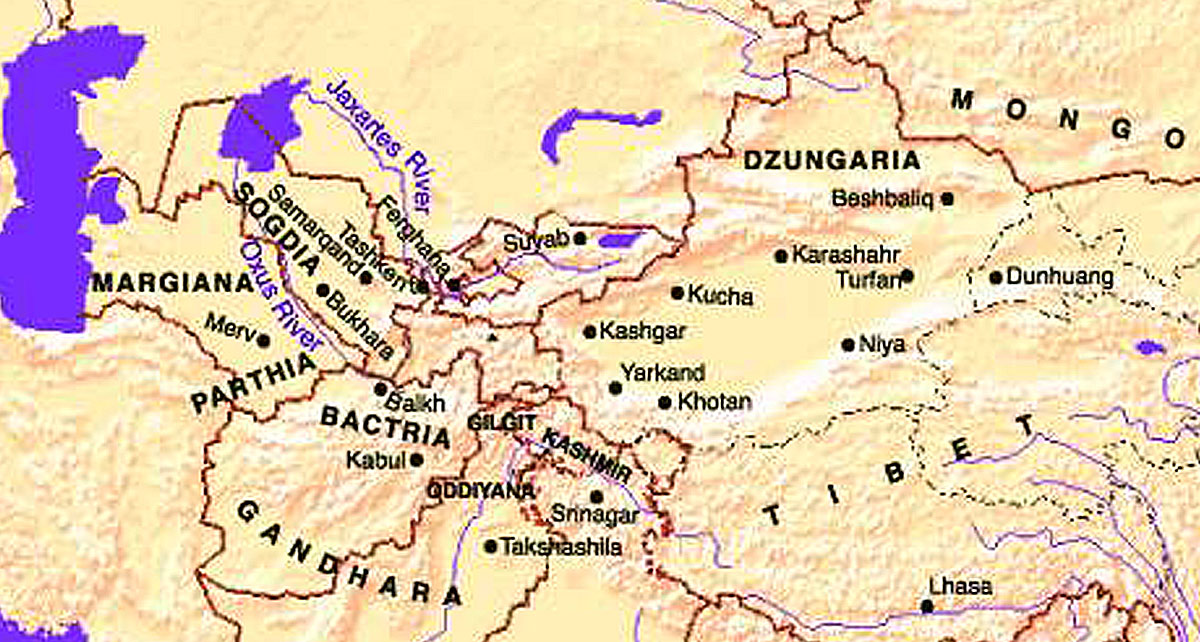
From a map of Inner Asia; it seems that Uighurstan is plugged into the Central Asian/Turanian network. Like the two Dashts in Iran that separate Iran from Khorasan it seems the Taklamakan Desert separates Turkestan from the Tibetan-Mongol orbit. Islam’s borders sometimes seems etched in geography; it’s not a coincidence that the Muslim further East in China practice “Islam with Chinese characteristics” as opposed to the more restive Uighurs.
I believe the map above has to date to pre 5th century Asia since Taxila was abandoned right about then. One interesting thing about maps is that depending on how you look at it there seems to be a strong clustering affect of Central Asia (Kashmir seems as Central Asian geographically as it does South Asian).
Unfortunately in our histories Iran has eclipsed the idea of Khorasan almost entirely and it’s importance to both South & Central Asian history.
Until the devastating Mongol invasion of the thirteenth century, Khorasan remained the cultural capital of Persia.[18] It has produced scientists such as Avicenna, Al-Farabi, Al-Biruni, Omar Khayyam, Al-Khwarizmi, Abu Ma’shar al-Balkhi (known as Albumasar or Albuxar in the west), Alfraganus, Abu Wafa, Nasir al-Din al-Tusi, Sharaf al-Dīn al-Ṭūsī, and many others who are widely well known for their significant contributions in various domains such as mathematics, astronomy, medicine, physics, geography, and geology. Khorasan artisans contributed to the spread of technology and goods along the ancient trade routes and decorative objects have been traced to this ancient culture, including art objects, textiles and metalworks. Decorative antecedents of the famous “singing bowls” of Asia may have been invented in ancient Khorasan.[citation needed]
The strange story behind the ‘Khorasan’ group’s name
After the region was taken over in an Arab conquest in the 7th century, Khorasan became a part of the Umayyad Caliphate, and with that, part of early Islamic culture. Notably, a widely discussed (though disputed) Hadith speaks of how “black banners will come out of Khorasan” in the end times. Will McCants of the Brookings Institute notes that the prophecies derive from the 8th century Abbasid revolution, a revolution that began in Khorasan and saw the end of the privileging of Arabs over non-Arabs in the Islamic empire.
Over the years, the Khorasan region had a fractious history, and was eventually swallowed up by a variety of different states. A part of Khorasan eventually became Khorasan state in modern Iran, and “Greater Khorasan” is generally used to refer to the larger historical region.

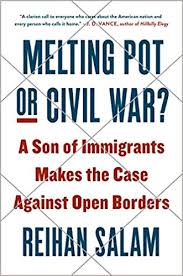 As you may know, Reihan Salam, who I would consider a friend (albeit, one I see in person three years or so!), has a new book out, Melting Pot or Civil War?: A Son of Immigrants Makes the Case Against Open Borders.