A Muslim Indian is kind of annoyed that I say “Muslims in the subcontinent are descended from Hindus.” By this, I mean 99% of the ancestry.
Of course, it can be hard to see the impact of Iranian ancestry. I’m going to look more closely to update my estimate.
I recently got contacted by a British research group. They sample thousands of Bangladeshis, and unlike the Pakistanis, they saw no internal structure aside from some individuals who seem to be a Tibeto-Burman tribal people. Like I said: the Bangladeshis might be called Hindus by Pakistanis, but the Pakistanis marry like they’re Hindus, the Bangladeshis don’t.
Since the readership is now plural majority Indian (going by IPs) I should probably ask this question… (JR’s OIT posts are now shared routinely hundreds, even thousands, of times on Facebook)
I haven’t written a post on the blog since July 2020. This has partly been due to a slightly more busy schedule and partly due to the fact that I have become a little ambitious and am trying to write more comprehensive and voluminous articles which take time to prepare. After having written about the dating of the Kushans on my blog, I delved into the linguistics aspect of Indo-European origin. Having been only partly through the subject, I came across a recent paper on the Podolian cattle of southern and eastern Europe, which are distinguished by their significant levels of Indicine admixture.
I decided to write a more lengthy and detailed article on the migration of Indicine cattle westwards from India but as I went about gathering the data, it dawned on me that there was a great amount of archaeological research, most of which has come up in the last few years, that can be marshalled to make a comprehensive case for OIT. So while keeping the focus on the Zebu migration, I am now making a case of how nicely it ties with an OIT scenario. As things stand, the preliminary draft of my article/paper is already quite big with more than 25k words but then I have managed to stumble on some more important data from Bronze Age Europe which I could not neglect. Adding this to the existing draft will likely enlarge the text by a few thousand more words. Once I am able to complete a legible final draft I am planning to get it published somewhere, God willing, on an online platform. Lets see how it goes.
To just give an idea, let us note that cow was a very important animal for Indo-European people. This Anglo-Saxon guy gives you some good understanding on the topic,
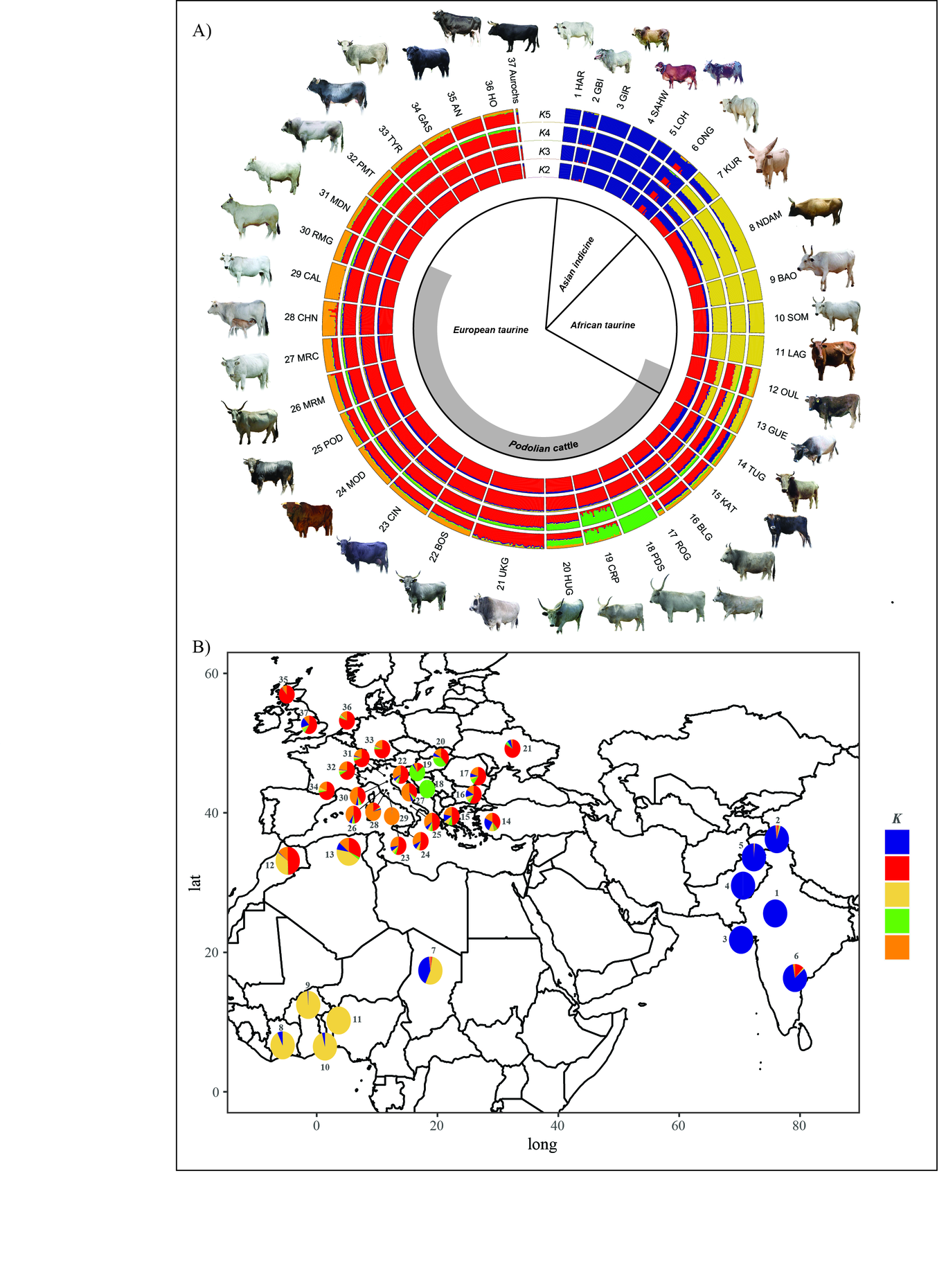
Here is a map from that recent Senczuk et al preprint,
You can see that in a large number of native southern and eastern European cattle, there is significant levels of Indicine Zebu admixture. These regions are Indo-European speaking and includes speakers of Slavic, Italian, Greek and Albanian languages. Now if cow was a very important animal for Indo-Europeans, it is likely that they must have taken it along with them in their migrations. Is it not therefore quite noteworthy, that it is the genetic ancestry of the Indian origin Zebu that unites the cattle of all these Indo-European people ? Is it just co-incidence ?
Moving on, recently, Razib came up with the assertion that a relatively fair-skinned group of people with their origins on the steppe, somewhere around Sintashta, are likely the people who spread the Indo-European culture and language in the Indian subcontinent. He also implied that these ‘fair-skinned’ steppe migrants must have perceived the native people of the Saraswati-Sindhu Civilization as dark-skinned. So essentially, the racist colonial trope of fair-skinned Aryans vanquishing the dark-skinned native Dravidians may be true. This is a very fanciful flight of imagination and it is necessary to show just how groundless it is.
The most popular theory for the origins of Indo-Europeans, is the Pontic-Caspian steppe homeland theory. However, being popular has little to do with being true. David Anthony and James Mallory, both American archaeologists, are today the two most prominent proponents of this theory. Here is what James Mallory says, in a book he co-authored with the linguist D Q Adams,
All too often surveys of the Indo-Europeans eventually conclude with something on the order of ‘scholars have concluded that the most likely area of the homeland is . . .X’ with a brief defence of one particular solution (this type of scholarship has been going on since the late nineteenth century). In fact, we not only lack total consensus but where we seem to find something of a major school it is often formed by deference rather than conviction, i.e. linguists or archaeologists indicate agreement with a particular theory that they have not themselves investigated in any depth. This situation means that a small number of advocates—at times, very vigorous advocates—provide an assortment of homeland theories for the rest of their colleagues to comply with passively. The homeland is an interesting question but it is so difficult to resolve (we have over two centuries of dispute to prove that) and requires the application of so many less than robust means of argument that most archaeologists and historical linguists do not find it a worthwhile enterprise, at least for themselves. The last word is, therefore, far from written…
So, one of the major proponents of the Steppe hypothesis is himself admitting that most academics acquiesce passively with the IE origin theory without having come to the conclusion by any significant research on the topic themselves. There are infact weighty reasons to question the steppe origin hypothesis as we shall see.
Lack of Indisputable proof of Indo-European languages on the steppe before 1000 BCE.
The earliest evidence of an Indo-European language or of Indo-European speakers on the steppe comes from around the 9th century BCE when the Cimmerians (likely Iranian speakers), inhabited the steppe region north of the Caucasus and the Black Sea. This too, is based on the record of Herodotus. There is no inscriptional or literary evidence in their own language that directly attests it. The Balto-Slavic branch of Indo-European languages are today the only IE languages found in and around the proposed Pontic-Caspian homeland of Indo-Europeans. Yet the earliest attestation of a Slavic language on the steppe or anywhere is not earlier than the 6th century CE while the earliest attestation of a Baltic language comes from the 14th century CE. THESE ARE FACTS.
With such a state of affairs, how can you argue that, in a region like the steppe, which is in constant flux, and which has seen language turnovers many times, that Indo-European languages originated around 4000 BCE, when there is no hard evidence of any IE language speaker there before 1000 BCE ? How can we assume that for more than 3000 years from 4000 BCE to 1000 BCE, people on the Pontic-Caspian steppe and its surrounds were speaking Indo-European languages, when there is zero attestation of an IE language during this long period on the steppe ?
It is still understandable if one were to argue that IE groups existed from around 15th century BCE on the steppe, since it is temporally much closer to the first attestation of the Cimmerians a few centuries later. But to suggest that the IE languages were continuously spoken on the Pontic-Caspian steppe from around 4000 BCE right down to Cimmerians more than 3000 years later, without a shred of evidence in terms of attestation of an IE language there is quite incredible. I find it hard that people are so happy and eager to lap up and propogate this shoddy theory.
Earlier attestation of Indo-Iranian languages in South Asia and Near East than on the steppe
As we saw, the earliest evidence of an IE group on the steppe comes around 9th century BCE. This is infact, several centuries later than the arbitrary dating of the Rigveda around 1200 BCE and the presence of Indo-Aryan words among the Mitanni in the 14th century BCE. And mind you, the Mitanni Indo-Aryan elites, land up in Syria with Indian elephants and Indian humped cattle.
According to Chakirlar & Ikram,
In Southwest Asia, the earliest representations of elephants appear in art and mythological literature, originating from eastern Lower Mesopotamia, and date to the end of the 3rd millennium BC (Potts 1997: 260–61). The style of depiction, though, seems to derive from that of the Indus Valley (Salonen 1976: 146–47). This strongly suggests a second-hand knowledge of elephants, rather than first-hand, real-life experience. From Greece to Arabia, no single reference to, or depiction of, an elephant or elephant parts, ante-dates these first finds from the end of the 3rd millennium BC… the Holocene elephants of Southwest Asia were not endemic to the region and that the Early Bronze Age peoples of the region knew about them only through their contact with India, or possibly Egypt. The latter is less likely as these animals were no longer indigenous there by that time, although remembered… Secondly, ancient accounts indicate that live elephants roamed and were hunted in the Orontes Valley, the Upper Euphrates Valley and the Middle Euphrates Valley around modern Ana in Iraq, at least between the end of the 16th and 9th centuries BC, possibly into the 8th century BC (Breasted 1906–07; Gardiner 1964: 179, 201; Moorey 1994: 117; Scullard 1974: 28). The core of this region comprises the area of influence of the Mitanni Kingdom, the main local political player in LBA northern Syria… Based on all the evidence reviewed above, and in the absence of fossil evidence, we also support the hypothesis that the Syrian elephant was not endemic, but arrived in Southwest Asia later in the mid-Holocene as an import from Southeast Asia that took hold locally.
Is it also just another co-incidence that the Mitanni also happen to be Indo-Aryan speakers, a language group dominant across much of North India where these Bronze Age Elephants in Mitannian Syria came from ?
The actual date of the Rigveda, on the other hand, is likely to be much earlier to 1200 BCE and probably before 2000 BCE, when the mightly river Sarasvati of the Rigveda had already dried up. The Rigvedic geography extends from Eastern Afghanistan to Western UP.
Even the Avesta, is older than 1000 BCE, and its geography does not extend further north than the Bactrian region of North Afghanistan. So, we have the attested presence of Indo-Iranians in South Asia more than a millenia before their attestation on the steppe.
This is not all. The linguistic diversity of the Indo-Aryan languages from the Middle Indo-Aryan period is such that the linguists admit, that these languages do not directly descend from Rigvedic Sanskrit but from its sister dialects. According to Thomas Oberlies,
The problem of the linguistic affinity of Pali and the other Middle Indo-Aryan (= MIA) languages is well-known and is undisputed: These languages are by no means straightforward continuants of the Old Indo-Aryan (= OIA) of the Vedic corpus, as in all of them words and forms turn up which cannot be the (regular) outcome of any atte- sted OIA ones…There are a number of words where Pali/Prakrit does not continue what we expect as the regular outcome of OIA. applying the MIA. sound laws. These words point either to the pre-Vedic language or (more probably) to (a) Vedic dialect(s) different from the dominant one.
OIA or Old Indo-Aryan refers to the language of early Vedic texts including that of Rigveda which is Vedic Sanskrit.
According to Claus Peter Zoller,
In the textbooks dealing with the history of Indo-Aryan, a linguistic family tree is drawn with OIA on top and ever new ramifications down to the modern languages, even though every specialist can tell that the different MIA languages (e.g. Pali) are not direct descendants of the Vedic corpus…there is no doubt that at the time of the immigration of Old Indo-Aryan into South Asia a whole bunch of Indo-Aryan dialects/variants existed.
Infact, it has been a long standing theory, going back to the 19th century, that the Indo-Aryan languages can be classed into an Inner Indo-Aryan (represented by Sanskrit and its descendents) and an Outer Indo-Aryan, where the peripheral Indo-Aryan languages in the IA language geography of South Asia are said to have several archaic features in common with other IE languages but not preserved in Sanskrit.
To account for the more southern and eastern geographical presence of these Outer Indo-Aryan in South Asia, the linguists have even proposed that these Outer Indo-Aryan speakers must have migrated into South Asia before the Inner Indo-Aryan speakers who composed the Rigveda.
In other words, when the Rigveda was composed, sometime around or before 2000 BCE, before the drying up of Sarasvati, there were already multiple Indo-Aryan languages present in South Asia, as per the admission of these linguists. Yet, on the steppe, you have no evidence of any IE language until the 9th century BCE and the single parent language of the Slavic languages cannot go further in time than the 6th century CE. So there is a gap of more than two millenium between the earliest attestation of Indo-Aryan languages in South Asia and the earliest attestation of Balto-Slavic languages on the steppe.
So on what grounds can you claim that the Sintashta folks, whose language, we have no clue about and who existed more than a millenia before the earliest attestation of any IE language on the steppe, are actually the precursors of Indo-Iranians in the Indian subcontinent ? Isn’t this stretching the bounds of credulity ? Even if, hypothetically, the Sintashta folks admixed with the people of the Indian subcontinent, it cannot in any way prove that it is these Sintashta folks who spread the Indo-Iranian languages in the region. You simply have no solid proof of what language they spoke. Presence of chariots (questionable) and weapons is not enough. Chariots were also used heavily by the Egyptians and the Minoans and even by ancient Chinese. Yet that does not make them Indo-European.
No proof of cultural intrusion from the steppe into South Asia
As I have already shown here before, there is no archaeological evidence of any steppe cultural marker penetrating into South Asia. As per James Mallory,
This is indeed the problem for both the Near Eastern and the Pontic-Caspian models and, following the logic of this analysis, the Bouckaert model appears to be in the same boat. All of these models apparently require the Indo European languages (including their attendant agricultural vocabulary) to be superimposed/adopted by at least several major complex societies of Central Asia and the Indus… In any event, all three models require some form of major language shift despite there being no credible archaeological evidence to demonstrate, through elite dominance or any other mechanism, the type of language shift required to explain, for example, the arrival and dominance of the Indo-Aryans in India… all theories must still explain why relatively advanced agrarian societies in greater Iran and India abandoned their own languages for those of later Neolithic or Bronze Age Indo-Iranian intruders.
According to Kristiansen et al. (Supplement A of Damgard et al),
…contacts between Bronze Age steppe populations and NMG V and BMAC populations appears to have been one in which the dynamic of cultural influence was stronger on the side of the well-established sedentary food producing populations, and this resulted in the partial assimilation of these initial newcomers to the region both culturally and, to a lesser degree, biologically as well. Third, not all of those who emigrated from the north turned to farming but may have continued a semi-nomadic existence in the highlands, which were unsuitable for the kind of intensive farming practiced in the BMAC homelands or in the regions of Khorezm. Fourth, if there was any Central Asian influence on South Asian populations, that influence likely long predated any development of Iranian, let alone Indo-Aryan, languages, and most likely occurred during the late NMG IV to early NMG V period (ca. 2800–2300 BCE) and even earlier during the Eneolithic from Kelteminar culture groups (4000–3500 BCE).
In other words, not only is there no archaeological evidence of cultural intrusion from the steppe in South Asia but the steppe groups actually ended up getting assimilated into the sedentary agriculturalist society of the Oxus civilization. This is a very significant and fatal blow to the theory of steppe origins of Indo-Europeans. How do groups who get assimilated culturally, get to spread their language, culture and religion ?
In the absence of any solid linguistic attestation of an IE language on the steppe before 1000 BCE, it is merely the presence of the steppe cultural markers attested via archaeology which is taken as evidence of Indo-European presence or spread, as is the case in Europe with the corded ware culture. Now, if this steppe cultural marker did not intrude even in the settled agricultural settlements of Central Asia, what to speak of South Asia, how does the theory of steppe groups spreading Indo-Iranian languages into South and Central Asia, still hold ?
And this is not a minor slip for the PIE on steppe theory. Indo-Iranian languages makes up 311 of the 445 extant Indo-European languages spoken today. In other words, 70 % of all Indo-European languages spoken today are Indo-Iranian. They also constitute 50 % of the population of all IE speakers. Yet, the steppe theory cannot explain how these Indo-Iranians spread from the steppe into these present southern homelands.
Evidence of bidirectional exchange between the steppe and the Oxus
It should also be noted that, not only did steppe groups migrate southwards and got partially assimilated into the settled societies of the Oxus, but the Oxus or BMAC influence also spread further north into the heart of the steppeland. As per David Anthony, the major advocate of the steppe theory,
Stepped pyramids or crenellations appeared on the pottery of Sintashta, Potapovka, and Petrovka. The stepped pyramid was the basic element in the decorative artwork on Namazga, Sarazm, and BMAC pottery, jewelry, metalwork…This motif had not appeared in any earlier pottery in the steppes, neither in the Bronze Age nor the Eneolithic…Stepped pyramids appeared for the first time on northern steppe pottery just when northern steppe pottery first showed up in BMAC sites… later it became a standard design element in Petrovka and Andronovo pottery…A lapis lazuli bead from Afghanistan was found at Sintashta. A Bactrian handled bronze mirror was found in a Sintashta grave at Krasnoe Znamya. Finally, the technique of lost-wax metal casting first appeared in the north during the Sintashta period…Lost-wax casting was familiar to BMAC metalsmiths. Southern decorative motifs (stepped pyramids), raw materials (lead and lapis lazuli), one mirror, and metal-working techniques (lost-wax casting) appeared in the north just when northern pottery, chariot-driving cheekpieces, bit wear, and horse bones appeared in the south.
Besides this material cultural influence from the Oxus on the steppe groups far into the North, there was a gene flow, likely from Oxus into the steppe populations. As per Narasimhan et al.,
In the Central Steppe (present-day Kazakhstan), an individual from one site dated to between 2800 and 2500 BCE, and individuals from three sites dated to between ~1600 and 1500 BCE, show significant admixture from Iranian farmer–related populations that is well-fitted by the main BMAC cluster, demonstrating northward gene flow from Turan into the Steppe at approximately the same time as the southward movement of Central_ Steppe_MLBA-related ancestry through Turan to South Asia.
As per Krzewinska et al,
The Bronze Age Srubnaya-Alakulskaya individuals from Kazburun
1/Muradym 8 presented genetic similarities to the previously published Srubnaya individuals. However, in f4 statistics, they shared
more drift with representatives of the Andronovo and Afanasievo
populations compared to the published Srubnaya individuals. Those
apparently West Eurasian people lacked significant Siberian components (NEA and SEA) in ADMIXTURE analyses but carried traces of the SA component that could represent an earlier connection to ancient Bactria.
Complementing these datasets is the recent Jeong et al paper on ancient samples from Eastern Eurasian steppe, which also documented extensive Iranian farmer related ancestry most likely from BMAC/Oxus from the Bronze Age onward.
Thus, the data clearly indicates a bidirectional cultural and genetic exchange between the steppe groups and people of the Oxus civilization, where those steppe groups coming down south got more influenced by rather than influencing the settled urbanised agriculturalists of the south.
In this milieu, how can one argue that it is the steppe groups that spread their language and culture on the southern populations all the way into India ? On the contrary, since the presence of Indo-Iranian languages is attested much earlier in South Asia than the earliest attestation of any IE language on the steppe, it is more parsimonious to argue that it is these southern agriculturalists who spread their language and culture onto the steppe. Such a proposition, though quite logical, will make people very uncomfortable.
It may well be that it was the dark-skinned southern urbanised agriculturalists that assimilated and acculturated the fair-skinned nomadic steppe groups who then spread the cultural toolkit onto the steppe.
What about the genetic evidence of steppe admixture in South Asia ?
The genetic evidence is also not in favour of a steppe origin of Indo-European people. Whether it is David Reich or Willerslev, both agree that it is likely that the Proto-Indo-Europeans originated within a population with a largely Iranian farmer type ancestry, south of the steppe. Such a population already existed in South & Central Asia since the Neolithic.
So how can we be sure that those early urbanised populations of South & Central Asia were not already Indo-European speaking ? Why should one insist that it is only the steppe ancestry that could have brought the Indo-Aryans into South Asia when we don’t even have any proof of an IE language on the steppe before 1000 BCE ?
The steppe ancestry was clearly absent from Bronze Age Anatolia when we know that Hittite and Luwian groups lived in the region. Nor was R1a found among the Mycenaeans who were clearly Indo-European. Among the Western Europeans, R1a is hardly present and their y-dna profile is dominated by R1b, which is hardly present in South Asia.
When the steppe ancestry is recorded in the ancient Iron Age samples from NW South Asia, we do not find any R1a but find plenty of steppe maternal lineages. This rather supports in favour of the steppe ancestry entering South Asia via the steppe females. It also fits in perfectly with the lack of any steppe cultural marker in South Asian archaeological record. A case can be made that the steppe ancestry spread among South Asians after 1900 BC, when the South Asians took brides from the steppe groups who were also reaching out South. Thus the South Asian people got steppe admixture without any cultural influence of the steppe people by taking the steppe brides.
One final roll of the dice could be that why is it that the steppe ancestry is highly correlated with the high caste individuals in India ? Why do Brahmins have the highest steppe ancestry if steppe ancestry had nothing to do with the spread of Indo-Aryans in South Asia ?
There is also an easy answer for this – the spread of Indo-European or Indo-Aryan languages across much of northern half of South Asia, was followed by what is referred to as the Sanskritization process by the likes of Witzel. It is this Sanskritization which spread the steppe ancestry. A good example of this process spreading the steppe ancestry is the higher steppe ancestry found among Brahmins in South India. There was no language change in South India. There was only heavy Sanskritic cultural influence in South India, yet the Brahmins in this region have a higher steppe component than the rest of the surrounding population. This is what likely happened throughout North India as well,the difference merely being that people across much of North India who got Sanskritized were not Dravidian speakers but speakers of different Indo-Aryan languages that were related to Sanskrit.
As per Witzel, the process of Sanskritization occurred in North India, in the aftermath of the Mahabharata war, when the Kuru state re-organised the Vedic religion and ritual and spread it across the expanse of North India which was already speaking various varieties of Indo-Aryan languages. It is a known fact that the older layer of Indo-Aryan languages across much of North India has been overlaid by a subsequent process of heavy Sanskritic superstratal influence. This was a major political and cultural event according to Witzel who summarizes it thus,
It can be said that the Bh¯arata/Kaurava/P¯ariks.ita dynasty of the Kurus sucessfully carried out and institutionalized a large scale re-organization of the old R°gvedic society. Many aspects of the
new ritual, of the learned speech, of the texts and their formation reflect the wish of the royal Kuru lineage and their Brahmins to be more archaic than much of the texts and rites they inherited. In this fashion, the new P¯ariks.ita kings of the Kurus betray themselves as typical newcomers and upstarts who wanted to enhance their position in society through the well-known process of “Sanskritization.” …The new orthopraxy (and its accompanying belief system, “Kuru orthodoxy”) quickly expanded all over Northern India, and subsequently, across the Vindhya, to South India and later to S.E. Asia, up to Bali…the new dynasty was effective in re-shaping society and its structure by stratification into the four classes (varn. a), with an internal opposition between ¯arya and ´s¯udra which effectively camouflaged the really existing social conflict between brahma-ks. atra and the rest, the vai´sya and ´s¯udra; further, the Bh¯arata/P¯ariks.ita dynasty was successful in reorganizing much of the traditional ritual and the texts concerned with it….The small tribal chieftainships of the R°gvedic period with their shifting alliances and their history of constant warfare, though often not more than cattle rustling expeditions, were united
in the single “large chiefdom” of the Kuru realm. With some justification, we may now call the great chief (r¯aj¯a) of the Kurus “the Kuru king”…we are, I believe, entitled to call the Kuru realm the first state in India…It must be underlined, again, that the developments which brought about the the Kuru realm were lasting and not transient ones as those under the R°gvedic P¯uru or Bharata. In effect, many of the changes in religion and society then carried out shape Indian society even today.
This Sanskritization, like in South India, is likely the reason for the spread of steppe ancestry across the non-Kuru Indo-Aryan states via the Brahmins from the Kuru realm, who would have been primarily responsible for the spread of the re-organised Vedic religion.
What is most interesting is that the Kuru kingdom was centred in the region of Haryana and Western UP, and it is the Jats of Haryana and Western UP, who have the highest steppe ancestry of any South Asian group, higher than the Jats of Punjab or even the Pashtuns further west. It therefore makes perfect sense, that if Sanskritization was spread from a region with a relatively very high steppe ancestry, its genetic influence on those regions it Sanskritized would also result in the spread of steppe ancestry in those regions. And if that spread was mostly related to the spread of Sanskritized Vedic ritual and religion, the group primarily responsible for such a transmission would be Brahmins from the Haryana and Western UP region, where steppe ancestry was quite high. It is therefore hardly surprising that the Brahmins over a period, all across India, began to show higher levels of steppe ancestry than their surrounding non-Brahmin populations.
The only necessary situation for this is that the Sanskritization process must have taken place after the steppe ancestry had admixed into the NW populations including among the Kurus. In other words, if steppe ancestry spread into North or NW India around 1500 BCE, the spread of Sanskritization from the Kuru realm across much of North India, must have been after 1500 BCE.
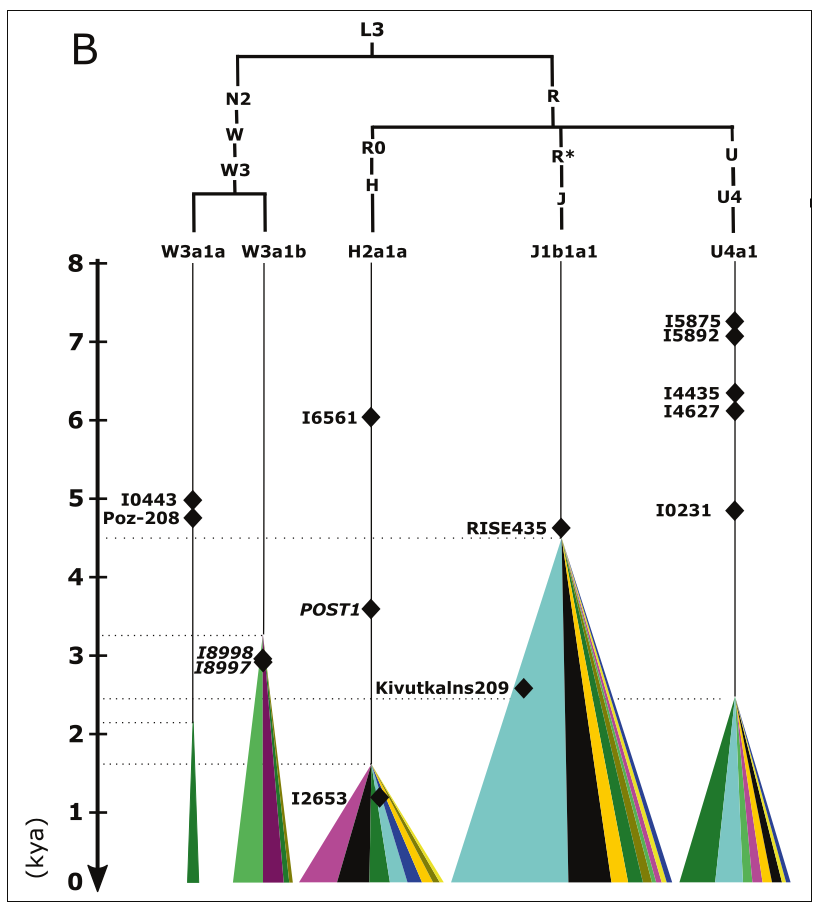
To elucidate whether Bronze Age population dispersals from the Eurasian Steppe to South Asia contributed to the gene pool of Indo-Iranian-speaking groups, we analyzed 19,568 mitochondrial DNA (mtDNA) sequences from northern Pakistani and surrounding populations, including 213 newly generated mitochondrial genomes (mitogenomes) from Iranian and Dardic groups, both speakers from the ancient Indo-Iranian branch in northern Pakistan. Our results showed that 23% of mtDNA lineages with west Eurasian origin arose in situ in northern Pakistan since ~5000 years ago (kya), a time depth very close to the documented Indo-European dispersals into South Asia during the Bronze Age. Together with ancient mitogenomes from western Eurasia since the Neolithic, we identified five haplogroups (~8.4% of maternal gene pool) with roots in the Steppe region and subbranches arising (age ~5–2 kya old) in northern Pakistan as genetic legacies of Indo-Iranian speakers. Some of these haplogroups, such as W3a1b that have been found in the ancient samples from the late Bronze Age to the Iron Age period individuals of Swat Valley northern Pakistan, even have sub-lineages (age ~4 kya old) in the southern subcontinent, consistent with the southward spread of Indo-Iranian languages. By showing that substantial genetic components of Indo-Iranian speakers in northern Pakistan can be traced to Bronze Age in the Steppe region, our study suggests a demographic link with the spread of Indo-Iranian languages, and further highlights the corridor role of northern Pakistan in the southward dispersal of Indo-Iranian-speaking groups.
Don’t focus on the percentages too much. Rather, focus on the coalescence estimate. Basically, that indicates diversification and demographic expansion. The presence in the southern subcontinent is indicative of the fact that “steppe” ancestry and cultural influence extends far beyond the distribution of modern Indo-Aryan languages. R1a we know, as it is found in adivasis. And low fractions of steppe are found in most South Indian groups (but not all).
BPer Mukunda and I were having a discussion on Twitter, which I want to elevate and push to the blog, because it’s somewhat important.
When I was young (20th century) I read stuff about how the Indo-Aryans described the natives of the subcontinent as dark and “snub-nosed.” That their arrival in some ways was a meeting of two different races.
In the 2000’s I read other books and works that suggested that actually, these descriptions were metaphorical. Terms like “dark” in other words reflect an ideological or tribal conflict, with the descriptions pointing to tropes that signal which side is evil and which side is good. This is not a crazy view. The anthropology is clear that a certain level of fictitious dehumanization occurs with inter-group conflict.
So I accepted this view and moved on with my life.
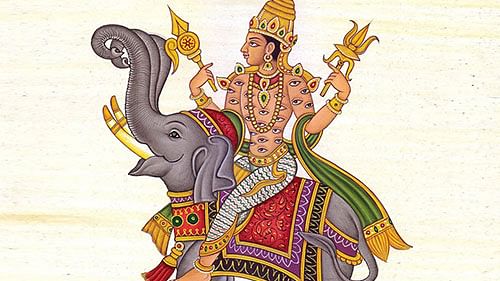
But in the 2010’s things changed. I am now convinced that 3,000-4,000 years ago a people who resembled what we would term “white” expanded within the Indian subcontinent. If modern Armenians are white, then the Indo-Aryans were white. At least initially. In the subcontinent, they met a variety of people. Some of them, such as in Sindh, were of brownish complexion. Others, to the south and east, would have been considerably darker. I also assume that the Vedas were constructed in situ in the Indian subcontinent. That is, they reflect a milieu of people who were encountering the northwest of the subcontinent, and had recently traversed through BMAC (Indra may actually be a BMAC diety).
What’s the upshot here? I know think that the metaphorical view of the physical descriptions should be set next to the literal view. The reality is probably a mix. But the fact is that groups with very different physical appearances did interact in ancient India. The Aryans were almost certainly very light-skinned, with “sharp features”, in comparison to many of the people they encountered. Though one can construct hybrid scenarios, where Indo-Aryan enemies were described in inaccurate ways precisely because those tropes were associated with tribes and peoples the Indo-Aryans had conquered.
Someone who has deep knowledge of the Vedas in Sanskrit and genetics needs to look into this. That’s obviously not me.
I just finished reading Michael Axworthy’s Iran: Empire of the Mind, one of Razib Khan’s recommended reads on Iran. The book serves as a useful primer on Iranian history for novices (such as myself), covering over 3,000 years of history in less than 300 pages. It lacks the literary flair and flourish of Tim Mackintosh-Smith’s magisterial Arabs. I found myself skimming through the latter parts of the book- the Pahlavi era and the subsequent Islamic Revolution- as I am broadly familiar with the events of the modern period.
Pre-Islamic Persia was an advanced and sophisticated civilisation. Axworthy provides a good overview of the Achaemenid, Parthian and Sassanid periods of Iranian history. Ancient Iranians developed a complex and nuanced theology centred around the teachings of the prophet Zoroaster. Zoroastrianism was the predominant religion of the Sassanid Empire, one of the superpowers of the pre-Islamic world. All of this was to change with the arrival of Islam in the seventh century. The armies of Islam burst out of the Arabian Peninsula like a supernova and reduced the Sassanid Empire to dust. The Zoroastrian religion was swept away in this upheaval.
One group of Zoroastrians escaped and sought refuge in Gujarat in Western India. These Zoroastrians are commonly known as the Parsis (from Pars or Persia). The essay below is a personal account of the Parsis of Mumbai. I had written it a decade ago. Reading Axworthy’s book brought some of those sweet memories back.
COVID-19 is still a menace that is affecting thousands of people every day across the globe. However, vaccination and palliative therapies indicate that there is less of it ahead of us than behind us. I am training in pathology at a hospital in Texas and do not have the required qualifications to talk about the nitty gritty of COVID virus and its structure. However, I was involved in management of patients with COVID who were in intensive care and before that, in procuring convalescent plasma for COVID patients. I want to write about the policy and public health side of managing COVID and not the clinical perspective, which is not my primary specialty. This piece was inspired by two articles in the New Yorker, the first is a long-read from Lawrence Wright (here) and the second is from Charles Duhigg (here).
When news about COVID started trickling at the end of December 2019, I was not alarmed. I thought of SARS, Swine flu, Ebola and MERS, which were mostly containable viral diseases and their human impact was not global. I was at a conference in Dallas at the end of January, where a presentation was on memories of dealing with the first Ebola case in the US. I remember sitting in the back row of the auditorium and listening to the lengths that a particular hospital in Dallas went, to quarantine the said Ebola patient. By February, there was news of how Chinese state was hiding things about the mysterious viral infection and whistleblowers were shedding more light on the disease. It was in late January-early February that first cases of the mystery virus were discovered in Seattle suburbs and suppression of data/news about COVID started in the US (the Trump administration). I was at another conference in Los Angeles at the end of February and saw the news that cases of COVID had been diagnosed near San Francisco.
Upon my return to work in the first week of March, I was required by the hospital to report travel to the employee health clinic, which I did. Prior to arrival of COVID, I was going to travel to Ohio for an elective rotation and to New York to present at a conference. With COVID, all plans had to be cancelled. Since March of last year, COVID has affected millions of people across the globe and disrupted life as it used to be. One of my friends refers to any year before 2020 as “X years B.C.” (before COVID). Moving from my personal story to a bird’s eye view, what can we learn from COVID moving forward? I have tried to distill my thoughts about the pandemic, pandemic response and best practices.
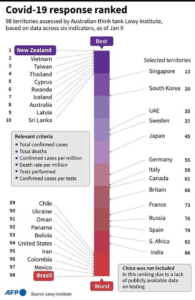
Based on what we know now, here are a few things about COVID response, with relevant exceptions:
1. Island nations have generally done better, with exception of Britain and to an extent, Vietnam. At the start of the pandemic, there were fears that autocratic governments will prevail better because dictators don’t have to worry about human rights, laws or courts. That fear has not come true, generally. Australia, New Zealand, Taiwan, Sri Lanka or Vietnam are mostly democratic nations.
2. Things have been better when scientists and public health officials have been allowed to be at the forefront, except in the case of Sweden, where the top epidemiologist wanted to test his “herd immunity” theory. The New Yorker story from Charles Duhigg that I mention above, refers to a significant difference in COVID cases and deaths between New York, where politicians were at the forefront of COVID response, versus Washington state, where public health officials made the rules.
3. African nations have done better at managing COVID than most ‘first-world’ countries, in my opinion, due to their experience in dealing with Ebola, MERS and similar viral illnesses. There has been a recent second wave and a South-African variant that is more resistance to the mRNA vaccines than the OG COVID-19 or the UK variant. There was a recent story in the BBC about the second wave (here) and earlier, about the low rates of infection and mortality in the African continent (here).
4. It is incredibly hard to restrict what constitutes “daily life” even in the face of a deadly pandemic. Human beings are social animals and severing that connection from others, whether in form of closing offices or bars and restaurants, cannot be reliably depended on for long periods. Travel has become another necessity in this day and age, for business or pleasure. Airlines and the hospitality industry as a whole will be running losses for years to come. I traveled three times during the last year, twice domestically and once on an international route. I tried to be cautious and got tested before/after each of these journeys, which, admittedly is not a perfect way of being safe from COVID. There were multiple studies about spread of COVID on airplanes and I was constantly in fear of contracting it while flying, despite all precautionary measures.
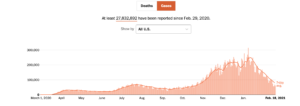
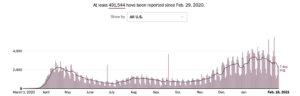
I do not frequent bars/clubs in general so i didn’t miss them much. However, I did miss spending time at the library and our nearby Barnes and Noble. If one were to look at the graphs of cases and deaths in the US, there are peaks around memorial day, 4th of July, Labor day, Halloween, Thanksgiving, Christmas and New Year. Around Christmas, close to a million people were flying every day in the U.S. Graphics from the Washington Post tracker.
5. China, not completely culpable but deserves blame for its early missteps and obfuscation (a la Great leap forward) when it comes to COVID. We still don’t know if COVID transmission started at a wet market or somewhere else. Wuhan is back to pre-COVID times while the rest of world keeps suffering. Chinese authorities have tried to strong arm the WHO and any outside effort to investigate the origin of transmission of COVID. I do not subscribe to the conspiracy theory that COVID is a “China virus” or that it was manufactured in a Chinese laboratory.
6. Vaccines. I consider the development of COVID vaccines a modern day miracle. The fastest that a vaccine had been previously prepared was close to three years. The severity of disease, mounting death rate and irresponsible behavior by the general public, made the timeline for introduction of a vaccine shorter than ever. Fortunately, the mRNA type platform vaccines had been in development for years and this was the right moment for them. The journey started in January 2020, when COVID genome was first shared by Chinese scientists and culminated in November/December 2020, when two major candidate vaccines was ready to be administered. Since mid-December, more than 73 million doses of either of these vaccines has been distributed in the US. This is a graphic from the Washington Post tracking vaccine distribution in the US:
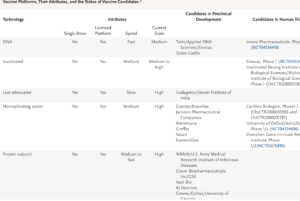
I got vaccinated in January and feel fortunate to have that immunity. However, the mRNA vaccines have a 66% response to the South-African variant (versus 90-95% against the OG COVID). The AstraZeneca vaccine has a 23% immune response to the South African variant. There is very little good data on vaccines developed by Russia, China and India. From what we know about their mechanisms of action, Russian vaccine is similar in mechanism to the AstraZeneca vaccine (uses inactivated Adenovirus), while the Chinese vaccine is based on inactivated virus and the Indian (serum institute version) uses live attenuated virus. Graphic from NEJM.
7. Viruses don’t care about state or national boundaries. The Sturgis motorcycle rally in South Dakota in August led to increased cases in neighboring Minnesota (here). A single conference in Boston in Feb 2020 lead to almost 300,000 cases (here). COVID has reached Antarctica, the last bastion of human presence without infection (here).
8. Disinformation spreads faster than the truth. The famous line that “A lie can travel halfway around the world before the truth can get its boots on” was truer during the COVID pandemic than any other modern peacetime event. Since I have a medical degree and had some exposure to COVID response, I was asked by many family members and friends from across the globe about various conspiracy theories circulating regarding COVID. The top hits included COVID vaccine altering your DNA, different cocktails for treating COVID (the whole hydroxychloroquine debacle), herd immunity, exaggerated vaccine side effects, masks, Vitamin D, COVID vs Flu, PCR vs rapid testing and their predictive values, various miracle cures etc. Many of these lies and misinformed views were spearheaded by medical personnel (doctors, nurses, nurse practitioners etc) which made it incredibly hard for a layperson to know what was the truth and what was just a fanciful conspiracy theory. To top it all off, many people initially (and still) refuse to believe that COVID is real.
9. Masks work but not all masks are the same. This is related to point 4 from earlier (human nature cannot be suppressed for long). It is hard to wear a mask all the time. I work at the hospital and that being a high-risk area, everyone has to be masked almost all the time. But, due to strict masking requirement, infection rate of workers (both medical and non-medical) at our hospital stayed less than 1% even when the infection rate was close to 10% in the community that we serve. N95s which should be worn by individuals who are at the highest risk of getting COVID provide better protection than a regular surgical mask (efficacy close to 65%), which is better than a regular cloth mask (efficacy less than 50% and needs to be washed regularly). I have seen innumerable number of people wearing their masks incorrectly (i.e. nose not covered) but I think that at least they are wearing a mask. One reason that east asian nations did better at controlling the pandemic is because mask-wearing is normalized at a larger societal level, compared to “freedom from tyranny” type attitudes seen in the US. According to estimates, if 90% people in the US had worn masks at the beginning of COVID, we could have averted millions of cases and thousands of deaths.
In Arizona, there were dramatic improvements in case numbers once mask mandates were enforced. (paper from CDC here).
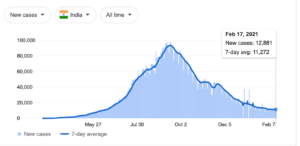
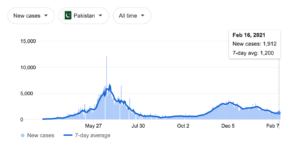
10. The curious case of Pakistan and India. Early in the pandemic, while COVID was running rampant through most of Europe, North America and South America, India and Pakistan had very few cases compared to their populations. While India has caught up with the rest of the world lately, Pakistan is still reporting less cases than any major city in the US per day. What is causing this divergence? There are many theories and until it is studied methodically, I don’t have a clear answer. Even people who got COVID in Pakistan, got a mild disease. Many people pointed to BCG vaccination as being semi-protective against COVID. Some commentators proposed immunity due to earlier sub-clinical viral infections. Are there genetic factors causing this? My hypothesis is that Pakistan is not as exposed to the outside world as lets say the United States is. Secondly, testing in Pakistan is at a much lower level than anywhere else. At one point last year, the state of Punjab, with a population larger than Germany, was doing close to 15,000 COVID tests a day. If you don’t test, you can’t diagnose. Cases in Pakistan and India, graphs from the Johns Hopkins dashboard.
11.Personal Responsibility. The mantra of personal responsibility has been used throughout the pandemic by mostly right-wing politicians, trying to avert blame from themselves, resulting in a terrible failure. Anyone who has ever worked in customer relations can tell you that most people don’t really care about other people (knowingly or unknowingly). Public health does not work that way. One can argue that even economics doesn’t work that way either, but that is a separate debate.
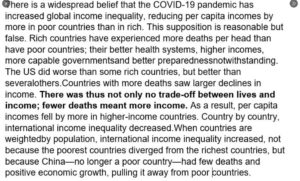
12. One heard the phrase “how many lives can you save by closing the economy” or variations of it since the early days of the pandemic. The lives versus economy rubric was debated over and over, without much evidence. Countries in the EU and Australia/NZ paid people to stay home. That approach is paying them off in the long run. In a paper titled “COVID-19 and global income equality” (here), Angus Deaton showed that saving lives has a positive impact on long-term economic outlook of a country.
13. Is the “office space” dead? Are we going to have a different economy after the pandemic? Would there be mass migration from major cities towards smaller towns and suburbs? I don’t have these answers as I am not an economist or a public planner. But these questions interest me and I am always trying to read about them.
14. Lastly, I cannot predict what is going to happen with COVID. When the pandemic started, my hope was that it would die down within six months. With a sharp decline in case numbers and increase in vaccinated individuals, I have hope that COVID would be under control by the end of the year. Would new variants disrupt this timeline and everyone will have to get a booster vaccine at some point in time? It is quite likely.
Whenever there is a debate on Kashmir, there is often a parallel drawn, particularly in Pakistan, between the accession of Junagadh to India, and the accession of Kashmir (also to India).
The narrative in Pakistan typically goes –
In the case of Kashmir, a predominantly Muslim state acceded to India, as its Maharaja was Hindu. While in Junagadh, India insisted on a plebiscite and eventual accession to India though its Muslim ruler had acceded to Pakistan.
While this criticism may seem superficially sound, it is very specious and misleading as it ignores how different the case of Junagadh was from that of Kashmir. It is worthwhile to reflect on the circumstances surrounding the accession of the two states.
A few things –
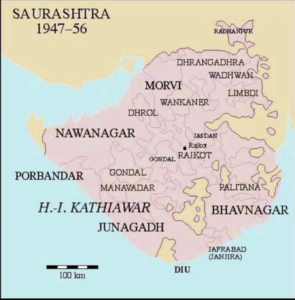
1. Junagadh was not contiguous at all with Pakistan. In contrast J&K in its entirety was contiguous with India. The Nawab’s accession to Pakistan was in violation of the contiguity principle. Here’s a map locating Junagadh in Southern Gujarat.
On the other hand, all of Jammu and Kashmir in its entirety was and is contiguous to the rest of India. So the “contiguity principle” was very much adhered to in the Maharaja’s accession to India
Image Source : wiki
2. Junagadh, with its population of 700K, was ~85% Hindu. The Nawab’s decision to accede to Pakistan was clearly in violation of the wishes of his subjects. In the plebiscite that succeeded the Nawab’s Pakistan accession, well over 95% of the voters chose to accede to India
In contrast, J&K was about 75% Muslim. Also unlike in Junagadh, where Hindus dominated the whole state, in J&K, the Muslim predominance was mainly in the Kashmir valley, while the Hindus were numerous in Jammu and Buddhists in Ladakh.
3. Junagadh’s Hindu population revolted strongly and vocally against the Muslim Nawab’s decision to accede to India. Close to 100K Hindus fled the state in the fall of 1947 as per VP Menon, leading to a near collapse of Kathiawar economy.
The plebiscite in Feb 1948 was prompted by this revolt against the Nawab’s decision. Which ofcourse settled the matter in favor of India. In contrast, in J&K, there was no major clamor among the Muslim population in favor of Pakistan. The major Muslim political body National Conference supported the Maharaja’s decision to accede to India notwithstanding its differences with the Hindu princely ruler. So it was a situation fundamentally different from that of Junagadh.
4. The Nawab of Junagadh unilaterally and hastily decided to join Pakistan, under the influence of his Dewan – Shahnawaz Bhutto (father of Pak PM Zulfikar Ali Bhutto) without even the common decency of letting the Indian govt know of the decision through proper channels.
In fact, Sardar Patel and VP Menon learnt about the decision through the media in late Aug 1947, and later got it confirmed by the Nawab. The Nawab had gone back on the word of his earlier Dewan Abdul Kadir, who had assured Gujarati press as late as April 1947, that the state won’t join Pakistan.
In sharp contrast to the indecent haste and reneging of promise by the Nawab, the Maharaja of Kashmir, Hari Singh, was deeply conscious of the fact that 70% of his subjects were Muslim. He did not accede to India in a hurry.
The accession happened only as late as 26 October 1947, following the invasion of Kashmir by “irregulars” and tribal militias sent from Pakistan. So Hari Singh’s sensitivity and judiciousness was tested to the limits and his hand was forced by Pakistan’s aggression.
5. Next, let’s examine the attitude of India and Pakistan in either case – radically different approaches.
In Junagadh, Muslim league politicians tried to “force” the hand of the Nawab through Shahnawaz, though the Nawab ruled over a Hindu province with no borders with mainland Pakistan.
While in the case of Kashmir, Sardar Patel and VP Menon assured Hari Singh throughout 1947 that they would be okay if he chose to accede to Pakistan. So the Indian attitude was a cool-headed dispassionate one that acknowledged whatever decision Hari Singh would take.
Pakistan in contrast tried to force the issue militarily in Kashmir, not just using its Army and its “irregular” agents, but by cutting off supplies and transport to Jammu from Pakistan, in an attempt to intimidate the Maharaja into acceding to Pakistan.
So these are five major ways in which the case of Junagadh differed from that of Kashmir. Clearly there is no parallel.
There is no ideological contradiction in the way India handled both cases. The Indian reaction was pragmatic and philosophically consistent.
References for the thread :
TCA Raghavan, The People Next Door: The Curious History of India’s Relations with Pakistan
In the first draft of this piece, it was mentioned that Hindus were predominant in Jammu in 1947. I have corrected this to “Hindus were numerous in Jammu”, though maybe not in a majority. The census numbers of 1941 are unreliable on account of WW2, and also the Jammu specific numbers may have been impacted in the course of 1947 on account of both the riots against Muslims in Oct 1947 and against Hindus / Sikhs in Mirpur / Rajouri the following month.
Also the % share of Muslims in the state of J&K has been edited from ~70% to ~75%, as the latter number is a fairer estimate based on 1931 census, while the former number stems from the 1961 census