Hello, Nurse!

Aloha! Wassup? Kaisay ho yaar?

My name’s TheseLongWars, TLW for short, known for twitter.com/TheseLongWars, currently from these-long-wars.blogspot.com, formerly of theselongwars.blogspot.com (RIP: 2010-2020).

It is an absolute Goddamn pleasure and honour to have been invited to be here as a writer and opinion-ator at BrownPundits.com!

As you may have seen my tweets, I have been commenting in-depth about my native Pakistan for a decade now. I’m from the city by the sea, Karachi, and I am a happy partisan for that over-grown beach-hole. I’m not a big genetics or phrenology fan. However, I love talking politics, I love talking some culture, I love history, and I enjoy getting the chance to write.

But let’s not make this intro long-winded. Snappy posts are fine, but some effort later at longer posts, will come later.

For now, here’s where the catch-phrase my title is based on is from. Do read what I write; you’ll always learn something worth knowing 😉

Ciao!

Are Hindu Atheists more Plural ?

Most Hindu believers don’t have problems with bowing down before the next idol/guru in addition to their existing ones. One only has to visit Goan Churches to see devout and traditional Hindus praying to Jesus with all their devotion without any dichotomy. There appears to be no conflict between going back to their traditional lives while asking favors/ paying respects to the supposed Son of God. The violent history of how Christianity got into Goa has very little bearing on how Hindus interact with Christian pockets of Goa in contrast with the case with Islam. (This may not be the case in other areas where there is more active proselytization). While this pluralism which is a salient part of Hinduism is often traced to the Rgvedic “एकम सत विप्रा बहुधा वदन्ति” form the First Mandala. However, as Michael Witzel points out in his analysis of Rgveda, pluralism can be found even in the Rgvedic family books (mandala 2-7 which is often to be earlier texts, with scholars putting them as at least 1500BCE), especially the 7th Mandala attributed to Vashishta. Thus it’s safe to argue that Plurality is a quintessential attribute of Hinduism.

From ages 22-25 I was hooked with the New Atheism worldview – which rarely had the representation of Ex-Hindus or Hindu-Atheists. Even then I could not fully agree with New Atheist criticism of Eastern Faith systems (I found the chapter in Hitchens book to be a strawman). More reading of history and politics since then has meant that I have come out of what Razib Khan calls the Nerd understanding of Religion. While the number of Ex-Muslims in the New-Atheist movement was low in the early 2010s, by 2020 the Ex-Muslim movement has gained a lot of momentum with many names becoming popular. I had avoided the whole Ex-Muslim internet sphere which seems to have exploded these last few years as I did not want to enforce my own confirmation bias about the ills of Islam. However, this Armin- KaliMaa fracas has meant that I have followed the works of these Ex-Muslims a lot over the last week.

Having read and listened to these guys, I can’t ignore the glaring differences between Hindu Atheists like myself and Ex-Muslim or Ex-Christian atheists. While surveys point to less than 1% of Indians self designating as atheists, I really doubt the number as most Hindu atheists continue to identify as Hindu unlike atheists coming from other faiths. In my experience, Hindu atheists spend less time arguing in the abstract about belief in the supernatural or the validity of scriptures and are more focused on concrete problems – viz rituals/traditions which they find illogical or abhorrent. This may be a function of Hinduism, which is less scriptural and much more ritualistic (at least this is true for the Brahminism which I am most familiar with). Over these particular issues, there is only a minor difference between the positions of the Reformist yet believing Hindus and Hindu Atheists. On the other hand, the New-Atheist position is glaringly similar to the Monotheistic position – with all the certainty and condescension but no coercion and violence.

This difference could be for two reasons:

  • For most Hindus being atheist is not a big deal. There is very little penalty on being non-conformist as long as atheism isn’t confrontational. As a result, Hindu atheists don’t feel like aggravated victims and are reciprocally less confrontational. This neutral feedback cycle keeps most Atheists in the larger Hindu fold.
  • Being exposed to numerous faiths and worship systems since childhood, Hindu atheists like Hindus don’t find it tough to respect the behaviors of other believers (however ridiculous) which New Atheists condescend at much more polemically.

That being said, a lot of unnecessary condescension at Hindu practices does exist in India – particularly on the left. But even that doesn’t necessarily overlap with Atheism but with the Indian “Secular” framework. I don’t mean to imply that all Hindu atheists are plural or even liberal. But for most Hindus, atheism is an epistemological position and not an absolutist belief system. Finding a Hindu atheist being as confrontational as an atheist from Monotheism is rare thought there must be numerically significant exceptions.

I personally would rather spend most of my energies fighting Homeopathy than religion. IMO both are demonstrably false but only one of them pretends to be scientific.

The anxieties behind narrative of “Love Jihad”

I finally completed Dr Ambedkar’s fascinating book on Pakistan after reading it on and off for years. Though he comes across as an essentialist in some of his arguments, many fault-lines Dr. Ambedkar points out hold true even 70 years after the publication of the book.

(I plan to write about that book sometime later – but especially for those who don’t identify with Hindutva I will highly recommend that book)

Dr. Ambedkar says the following in this book PAKISTAN OR THE PARTITION OF INDIA during his polemic against Purdah.

The evil consequences of purdah are not confined to the Muslim community only. It is responsible for the social segregation of Hindus from Muslims which is the bane of public life in India. This argument may appear far fetched and one is inclined to attribute this segregation to the unsociability of the Hindus rather than to purdah among the Muslims. But the Hindus are right when they say that it is not possible to establish social contact between Hindus and Muslims because such contact can only mean contact between women from one side and men from the other

This is the core motivation that has lead to the popularization of term Love-Jihad. The anxieties of Hindus are not motivated largely by the fear that “Muslims will abduct their daughters and sisters and forcibly convert them”. That exists largely in the straw-man.

Their anxieties stem from the following

Continue reading The anxieties behind narrative of “Love Jihad”

Charles Cameron, R.I.P.


Charles Cameron, a contributor to this weblog, and an early guest on our podcast has died after an illness. I do not know any details (I saw a Facebook post), but I felt that it was important to mention his passing since his contribution to this forum was appreciated, and from what I knew of him he seemed a man with a great heart and boundless curiosity.

Death is inevitable, and a part of life. We too shall pass in our own time. All we can hope for in this one life is to leave memories that honor what we stood for after we leave.

On Language wars and the rise of the Vernacular in history

Language wars are a constant feature of Indian public life. Most recently there was much discussion on Language on Indian twitter triggered by the National Education Policy (NEP 2020). But amidst the language squabbles, we tend to reflect less on the root cause of all the language schisms –  The rise of the Vernacular. A relatively recent phenomenon in Indian history.

Back in 1000 CE, Sanskrit reigned supreme as the primary literary tongue of India. There was some Prakrit literature and considerable literature in some of the older Southern languages – Tamil and Kannada in particular.  But for the most part Vernaculars had a position secondary to Sanskrit.

The language of prestige and literary expression was undoubtedly Sanskrit, though it was hardly the mother tongue for a large percentage of Indians. Vernaculars reigned at home, and in common speech. Yet in an age of limited literacy, they never competed with Sanskrit for “prestige”. This was very much the case not just in India, but in much of the western world as well. In Europe, as late as 15th century, 70% of the printed literature was in Latin!

Continue reading On Language wars and the rise of the Vernacular in history

Some musings on the Bengal riots of 1949-50

While any discussion of Partition tends to focus a lot on the migrations and violence circa 1947, we tend to forget the mayhem that followed in Bengal with a lag. As late as 1950! In Bengal the violence peaked in late 1949 – 1950 unlike in Punjab. Particularly in East Pakistan.

The discussion of these riots and the agreements that ensued in 1950 in TCA Raghavan’s book “The People Next Door” make an interesting read.

The partition in 1947 had left both sides of Bengal with similar proportions of minority populations. West Bengal had five million Muslims in a population of twenty one million. East Pakistan was left with eleven million Hindus in a population of thirty nine million.

Unlike in the Punjab, a full-fledged ethnic cleansing did not occur in Bengal. Perhaps in part because of the presence of Gandhi in Bengal for a couple of crucial months in 1947. There could be other reasons that can explain why Bengal didn’t start with a blank slate unlike Punjab. I can only think of the Gandhi-factor as of now

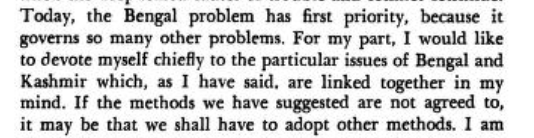
The violence festered in Bengal right up to 1950, but it peaked in the month of February that year, particularly in East Pakistan. The violence against Hindus provoked much political unrest in India, causing Nehru to assume stances that seem very hawkish to us today.

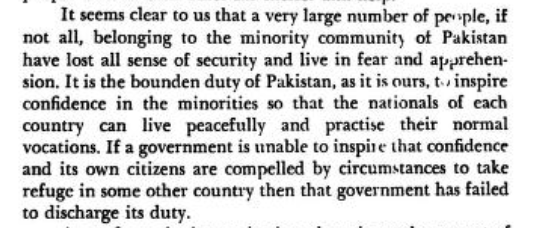
Jawaharlal Nehru addressed the Parliament on Feb 23rd of 1950, expressing outrage at the East Pakistan riots

Image

Then he went on to suggest a possible military action against East Pakistan while concluding his speech – Note the words – “We shall have to adopt other methods

Image

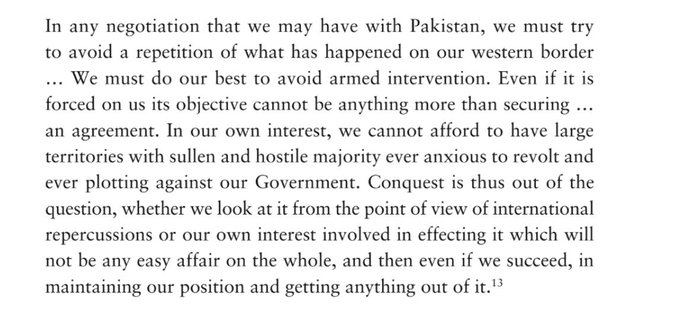
But then the invasion idea was dropped. It was not just a question of Nehru being pusillanimous. The President of India, Rajendra Prasad, a supposed right winger, wrote a letter to Nehru, suggesting that he drop the idea of attacking / annexing East Pakistan!

Image

I find this curious.

An interesting example of a “conservative” voice in India (Rajendra Prasad) persuading the supposedly more dovish and liberal Nehru to drop the idea of military action against East Pakistan

Another thing that I find curious about this episode is that the very large scale migrations that ensued in early 1950, were mostly undone by the end of the year by reverse migrations, following the Nehru-Liaquat agreement in April 1950.

Between February 7th and April 8th 1950, 1.5 million people crossed the borders! 850K Hindus from East Pakistan to West Bengal, and 650K Muslims from West Bengal to East Pakistan.

The agreement was signed on 8th April 1950, but it did not reverse the migration tide immediately. Between 9th April and 25th July, 1.2 million more Hindus left East Pakistan for India, while only 600K returned back to Pakistan prompted by the agreement.  That’s roughly a return-ratio of 1 in 2.

But it appears the ratio was much better for Muslims for exactly the same period (9th April to 25th July) following the treaty. In this timeframe, 450K Muslims left West Bengal for East Pakistan, but 300K returned back.  That’s a ratio of 2 in 3.

So it appears the agreement reassured the Muslims more than it did the Hindus. But nevertheless it did prompt Hindus to return back to East Pakistan in larger numbers by the end of the year.  A million Hindus had returned back to East Pakistan by December of that year.

One wonders if we could’ve had a more peaceful subcontinent in later decades, had the powers that be sat down and planned a more systematic population transfer, instead of idealistic reassurances to minorities, which did help stall the large scale transfer in the short run, but kept communal tensions simmering for several more decades.

References:

  • TCA Raghavan’s “The People Next Door”
  • Jawaharlal Nehru’s Speeches, Vol II

The author tweets @shrikanth_krish

The Middle Path: Towards a Liberal Conservatism in India (Part 3)

In my previous two posts, I traced the roots of India as a civilization state and proposed a framework which would seek to retain modern India’s classical Anglo-liberal framework but embellish it with Dharmic values. In this third and final post, I will seek to demonstrate how these seemingly contradictory systems could be reconciled in a coherent Anglo-Dharmic liberal conservative framework. I will also analyse Indian domestic and foreign policy from a liberal conservative perspective. Before doing that, it is worth examining how liberal conservatism would deal with the third great tradition that has influenced Indian history: Islam.

The Muslim Question

The ledger of the Nehruvian state’s interactions with and treatment of Indian Muslims is decidedly a mixed bag. On the positive side, it is to the Nehruvian state’s credit that Indian Muslims were able to see themselves as full and equal participants and stakeholders in the Indian Republic. It is easy to underestimate today how difficult and challenging this would have been in the immediate aftermath of the partition and vivisection of India in 1947. It would have been easy to let hatred and vengeance take over in the aftermath of a bloody division. The Congress party under the stewardship of Pandit Nehru ensured that the better angels of our nature prevailed and the Muslims who remained in India were treated with tolerance and compassion. The basic framework of the Indian Constitution, in particular the golden triangle of equality, freedom and liberty, ensured full and equal citizenship and freedom of worship for Indian Muslims. The wisdom and sagacity of the founding fathers of the modern Indian Republic who were the architects of this framework must be applauded.

Continue reading The Middle Path: Towards a Liberal Conservatism in India (Part 3)

Islam on the fringes

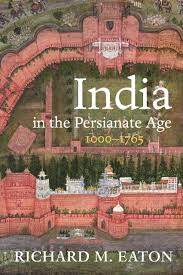
Decided to start reading India in the Persianate Age: 1000–1765. It’s a fast and easy read (and, it’s an affordable book for a nonspecialist like me who only spends $100 or more on genetics texts). I jumped ahead in a few passages, which seem to be adaptations from papers I’ve read from the author before.

In relation to discussions on this weblog and comments I’ve made:

1) The author describes islands and pockets of wholly Muslim peasants in eastern Bengal observed by the Mughals in the 16th century. These Mughals indicate that these people are not truly Hindu or Muslim, at least initially. This is line the common thesis that Islamicization is a function of the weak to nonexistent integration of these frontier peasants into Indian culture. Mughal observers also note the physical appearance of these people: small, dark-skinned, and beardless. This seems entirely accurate (I cannot grow a beard!).

The author observes that tax receipts over several decades in Bengal exhibited a pattern that is suggestive of a massive population increase in the east and stability in the west. In fact, there were two-fold increases in the east at the same time that districts in the west declined by 10%.

The thesis by the author, which seems broadly creditable, though not proven, is that the transition to high-intensity rice agriculture in the plains of the eastern delta, and in particular east of the Padma, arrived after the Mughal expansion into the reason. As such, the transition to a “higher religion” occurred under Islam, and therefore these people became Muslim (at least nominally). The analogy that is obvious here would be the Christianization of the Montagnards and other Southeast Asian “hill people” during the colonial period, as they had been detached from Theravada Buddhist civilization.

2) The author deploys a similar model, with modifications, for western Punjab. The model here is that Jat who moved up from Sindh abandoned obligate pastoralism and engaged in agriculture, and fixated upon the tombs and shrines of Islamic eminences. Due to the emphasis on paternal lineage, the author observes that the Islamicization of names occurred quantitatively over 300 years, from the 15th to the 18th century (initiation to completion).

The main qualm I have with this model is this: the Jats/people of Punjab do not look to be from Sindh if modern Sindhis are representative of ancient Sindhis. In the language familiar to readers of this weblog Sindhis are enriched for “Iranian-related ancestry” vis-a-vis Punjabis, who are enriched for “steppe.” The Jats in particular are highly enriched for “steppe” ancestry. Going by genetics alone this model is difficult to accept, though as noted in this space it does seem that caste-like stratification has ancient roots in this region, and so that may serve as some explanation.

Note: The model in Bengal implies that Islamicization and Hinduicization occurred in East Bengal simultaneously. That is, most of the sponsors of agricultural reform and intensification happened to be Muslim, but some were Hindu, and in the case of Hindu sponsored developments the regions became Hindu. Further investigation though would be warranted for Bengali Brahmins in the eastern regions, who would then presumably be migrants from the western zone, because it is hard to credit animistic tribes needing the services of literate priestly elites.

Notes on the religious demography of Punjab and Bengal

India got partitioned in 1947 and the two provinces that got split were Punjab and Bengal. But the religious demography of the two provinces took different routes.

Today the Muslim population in Indian Punjab is 1.6%, while the muslim population in Indian Bengal is 27.1%. So while there was huge emigration of Muslims from Punjab, there was less so in Bengal.

There are still districts in Indian Bengal today where Muslims are in a majority

      • Murshidabad : 66%
      • Malda : 51%
      • Uttar Dinajpur : 50%

Nothing like it in Punjab where they are in single digits across the state. This is notwithstanding the fact that back in 1947, Muslims were upwards of 40% in the districts of Amritsar, Ferozepur, Gurdaspur and Jallandhar – all of which are in Indian Punjab today.

Punjab started with a clean slate. On either side of the border. Whereas Bengal remained complex demographically, with significant Hindu population in East Pakistan and significant Muslim population in West Bengal.

But the trends of the minority population on either side of the border in Bengal, have been radically different since 1947.  In Bangladesh / East Pakistan, Hindu population has reduced significantly since the 1950s. A decline from 22% in 1951 to 11% in 2015

Hindu population in East Pakistan / Bangladesh

1951 22.05%
1961 18.50%
1974 13.50%
1981 12.13%
1991 10.51%
2001 9.20%
2011 8.96%
2015 10.70%

In sharp contrast in Indian Bengal, the minority population has thrived, with a significant increase since 1951. Here are the numbers –

Muslim population in West Bengal

1951 19.85%
1961 20.00%
1971 20.46%
1981 21.51%
1991 23.61%
2011 25.25%
2011 27.01%

But it’s also interesting to see the demographic evolution of the provinces before Partition. We tend to think that the demographic mix changed decisively in 1947 (more so in Punjab than Bengal). But that doesn’t mean there weren’t major changes in late 19th / early 20th century.

Let’s take a look at the religious composition for Punjab as a whole (both Indian and Pakistan portions) before 1940s. We see a declining Hindu population in Punjab as we move from the 1880s to 1940s. This decline clearly predates the partition and even the idea of Pakistan

Religious demography of Punjab : 1881 to 1941

Image

Notice the sharp decline in Hindu population from 43% in 1881 to 29% in 1941. But this drop is not accompanied by a rise in Muslim numbers. Rather we see a near-doubling in the Sikh % between 1881 and 1941. One is not sure if this was indeed driven by conversions, or whether Sikhs became more conscious of their distinct identity and separateness from Hindus in those six decades, leading to a surge in Sikh census figures.

When we look at East Bengal pre-independence, we see a similar story. The demographic change long predated the partition, though it was less drastic than in Punjab. Please note these numbers are for East Bengal and not united Bengal.

Hindu pop in East Bengal : 1901 to 1951

1901 33.00%
1911 31.50%
1921 30.60%
1931 29.40%
1941 28.00%
1951 22.05%

I found these numbers fascinating, The purpose is not to emote people, but to understand the long run trends and the underlying demographic reality of these provinces.

We tend to think of partition as a “discrete” event. But demographic change long predates Partition, and it continues long after the Partition particularly in Bengal (both West and East). Less so in Punjab, as Punjab was rendered homogeneous on either side by Partition violence.

References : 

The numbers on Punjab demography were sourced from this very fine paper –

https://punjab.global.ucsb.edu/sites/secure.lsit.ucsb.edu.gisp.d7_sp/files/sitefiles/journals/volume11/no1/6_krishan.pdf

(The author tweets @shrikanth_krish)

Brown Pundits