Book Review: Flashman and the Cobra

Flashman and the Cobra (Adventures of Thomas Flashman Book 2) by [Robert Brightwell]

I am a fan of the original Flashman books by George Macdonald Fraser and just happened to see that a new author is writing a series about Harry Flashman’s uncle Thomas Flashman, so I picked one up to check it out. The conceit is the same in this case: that these are the memoirs of a rogue who happens to have been around in the Napoleonic era. This allows George Brightwell (who is writing this series, the late George Macdonald Fraser having passed away) to write entertaining little books about various campaigns from that era. This particular book starts with Thomas Flashman getting caught in up in a sexual escapade in Napoleonic Paris (complete with a dinner with the first consul himself) that leads him to take up a secret mission to India, where the Wellesley brothers are getting ready for war with the Marathas (the second anglo-Maratha war).

The book is great fun to read and readers will get a flavor of the life and times and a detailed description of 2 major battles (Assaye and Argaon) and one siege (the siege of Gawilgarh). I certainly understand the battles and the siege better than I ever did before, but unfortunately Mr Brightwell is no George Macdonald Fraser, so the book tells us little about the overall war (why it was being fought, what else was going on; for example, Lord Lake was taking Delhi at the same time as these events, but you would not know it from this book). In the case of the Flashman books, you could pretty much get the story of an entire campaign (eg the Indian mutiny is covered really well in “Flashman and the Great Game”), at least from the British point of view. This is not the case with this book. Readers will learn relatively little about the overall picture here (unless they have read other books about the topic). Still, the book taught me more about the battles he does happen to get caught up in than any summary history is likely to teach.  I see that there are a couple of “Sharpe’s” books about the same war (Sharpe’s triumph and Sharpe’s fortress) and they likely cover the same battles in even greater detail, but I have not read them yet. If, like me, you have not read about these battles in any detail, then this is a good book to start. The book also introduced me to the begum of Samru, one of those extraordinary characters that inhabit India between the decline of the Mughals and the stabilization of British rule. Other notable characters who make an appearance in the book include James Skinner (the anglo-Indian adventurer who raised “Skinner’s horse”), but unfortunately none of the other Indian characters of the age get much coverage (or sympathy).

The books have the usual imperialist British rogue POV one expects from Flashman books and the author is clearly in awe of Arthur Wellesley (later the Duke of Wellington) and the fighting qualities of the Scottish Highlanders, but in both cases he has good reason to be a fan. The historical details are accurate as far as they go, but unfortunately lack the “big picture” view one gets in George Macdonald Fraser’s books even as he follows Harry Flashman from bedchamber to narrow (and implausible) escapes in various battles. Still, these books are very inexpensive on Kindle and audible.com and this one was certainly a fun read and very informative about the topics he does happen to cover. Worth a quick read.

By the way, the title has almost nothing to do with the book. The cobra shows up once and disappears without much ado.


 

Book Review: The Battle for Pakistan

From our regular contributor, Dr Hamid Hussain.

Book Review – The Battle for Pakistan by Shuja Nawaz

Hamid Hussain

 Shuja Nawaz’s new book The Battle for Pakistan is a timely release of a work that reviews Pakistan’s security challenges and U.S. Pakistan relations. A new unpredictable era of U.S.-Pakistan relations is around the corner in view of recent U.S.-Taliban agreement and uncertain future of Afghanistan.

There are not many analysts and scholars of the region with access to both Pakistani and American sources. Shuja is uniquely equipped for such a project as he has access to Pakistani army high command as well as Pentagon and State Department sources.  Book covers U.S.-Pakistan relations, working of Pakistan army high command and fraught civil-military relations in Pakistan.

 Shuja gives a comprehensive view of expectations and disappointments of Pakistan and United States.  The dilemma of this un-equal and transactional relationship is that each side fail to understand the interests of the other party and ends up blaming its own failures on the duplicity of the other party.  This has been a predicted cycle over the last seventy years.

 Shuja gives insight into power struggle among senior officers of Pakistan army.  The first round was when General Pervez Musharraf was forced to give up his uniform and his confidant and successor General Ashfaq Pervez Kayani worked to bring his own team.  He superseded and removed from important positions officers considered close to Musharraf.  Kayani brought his own team of senior officers and then eased Musharraf’s ouster in 2008 to enjoy two three years tenures as the master game-keeper of the reserve.  

 Several segments of the book deal with civil-military relations. Shuja provides details of many episodes of serious friction.  Army is the dominant force and civil-military relations are seriously imbalanced.  Mutual distrust, antipathy and outright disdain for each other ensures repeated cycles of crisis.  Each side has become expert in self-goal seriously damaging country’s reputation.  Army high command has not been able to work with two major political parties; Pakistan People’s Party (PPP) and Pakistan Muslim League – Nawaz (PML-N).  This forced them to put their chips on the third option. Current Pakistan Tehreek-e-Insaaf (PTI) government headed by Prime Minister Imran Khan is actively supported by army high command.  Army high command and PTI repeatedly claim that they are on the ‘same page’, however, army is taking lead in tackling different problems faced by the country.  Army nominated and supported serving and retired military personnel, bureaucrats and politicians have found place in all corridors of power.  The seeds of distrust are thus sowed, and friction will inevitably increase between army and new political force of PTI. 

 Shuja also provides details about increasing role of Saudi Arabia and United Arab Emirates (UAE) in Pakistan’s internal affairs.  In many cases, United States used Saudi Arabia and UAE to manage delicate domestic political matters of Pakistan. Pakistan is increasingly dependent on Saudi and UAE largesse due to difficult economic state. Crown Prince Muhammad Bin Salman (MBS) has developed close personal relation with President Donald Trump and Washington uses this connection to manage some areas of Pakistan policy.

 Book is a must read for everyone interested in U.S.-Pakistan relations and the region.  In Pakistan, the book launch became unintended casualty of controversy over Chief of Army Staff (COAS) General Qamar Javed Bajwa’s three years extension of service.  Book’s South Asian edition was published in India in August 2019.  When Pakistan enacted trade ban with India, book could not be delivered to Pakistan.  A Pakistani publisher released the book and Shuja travelled to Pakistan for book launch ceremonies in several cities.  Pakistan Supreme Court took the case of extension of COAS shaking the army brass.  They asked Shuja to delay the book launch as it could generate criticism of the army although book presents Pakistan army point of view on various issues. Shuja refused to cancel book launch and army directly pressurized event organizers to cancel the events.  More copies were sold in Pakistan due to silly acts of the brass. 

 Shuja Nawaz.  The Battle for Pakistan: The Bitter US Friendship and a Tough Neighborhood (Karachi: Liberty Publishing), 2020

 Hamid Hussain

May 2020

coeusconsultant@optonline.net

The Shadow Sultanate: Qatar

Influence is an art. It is a dance of subtlety and force. A moving of the mind and a journey of the heart. It is difficult enough to master at an individual level; so how can one possibly master it at a geopolitical level?

Yet, influence is the invisible hand in geopolitics. Hard to quantify and in constant flux, some countries wield it with brute might, while other countries seduce their counterparts into submission.

Qatar may be the per square mile most influential nation in the world. This little, lavish country has mastered the painting of perceptions through the art of influence. And more than that, Qatar has turned its art into action.

Continue reading The Shadow Sultanate: Qatar

Browncast Episode 105: Mongolian Nazis, Antifascists, and the American Scene

Another BP Podcast is up. You can listen on Libsyn, Apple, Spotify,  and Stitcher (and a variety of other platforms). Probably the easiest way to keep up the podcast since we don’t have a regular schedule is to subscribe to one of the links above!

You can also support the podcast as a patron. The primary benefit now is that you get the podcasts considerably earlier than everyone else. This website isn’t about shaking the cup, but I have noticed that the number of patrons plateaued a long time ago.

Today I talk to Tasmania-based writer Richard Alexander. We discuss the protests, riots, Antifascism, and Mongolian Nazis.

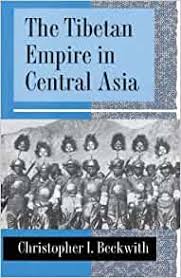
Browncast Episode 104: The Tibetan Empire in Central Asia

Another BP Podcast is up. You can listen on Libsyn, Apple, Spotify,  and Stitcher (and a variety of other platforms). Probably the easiest way to keep up the podcast since we don’t have a regular schedule is to subscribe to one of the links above!

You can also support the podcast as a patron. The primary benefit now is that you get the podcasts considerably earlier than everyone else. This website isn’t about shaking the cup, but I have noticed that the number of patrons plateaued a long time ago.

We discuss Tibetan Buddhism and the Tibetan Empire in this podcast.Browncast Episode 103: Abhijit Iyer-Mitra on Indian Defense, Economics, and History

Browncast Episode 103: Abhijit Iyer-Mitra on Indian Defense, Economics, and History

Another BP Podcast is up. You can listen on Libsyn, Apple, Spotify,  and Stitcher (and a variety of other platforms). Probably the easiest way to keep up the podcast since we don’t have a regular schedule is to subscribe to one of the links above!

You can also support the podcast as a patron. The primary benefit now is that you get the podcasts considerably earlier than everyone else. This website isn’t about shaking the cup, but I have noticed that the number of patrons plateaued a long time ago.

I would though appreciate more positive reviews! Alton Brown’s “Browncast” has 30 reviews on Stitcher alone! Help make us the biggest browncast! At least at some point.

Abhijit Iyer-Mitra (@Iyervval) | Twitter

This episode features Omar, Mukunda, and Akshar talking to Abhijit Iyer-Mitra, a defense and policy analyst, about his evolution of political thought with highlights on his former communist affinity, evolving feelings on Modi, and passion for Indian nationalism. We also get into the continued inefficiencies of India and how it has been so detrimental to its development, plus possible reforms to remedy it. The wide-ranging conversation also includes insights into Abhijit’s time in jail, Kashmir, and “Frugal Indian” cooking tips!

Open Thread – Brown Pundits

The usual. Talk about whatever (that means Pakistan, Islam, and haplogroup H, I guess).

Second, please remember to subscribe to the podcast (see the links for the services). There has been a delay in some episodes for posting show notes.  Also, please post more positive reviews.

Third, this month is a Brown Pundits record for traffic. Indian readers who are new might check out my other blog, Gene Expression. Or, my other podcast, The Insight.

Finally, the comments have been OK despite becoming lively. You don’t have to be inoffensive or polite, but please remember at some point I do intervene.

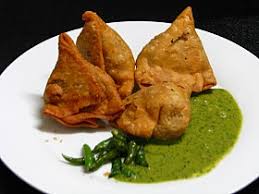
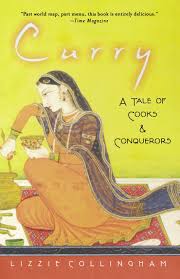
Pass the samosa, spare the postcolonialism

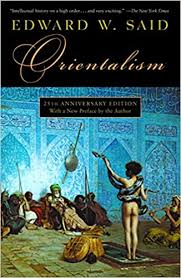
Edward Said’s Orientalism was a work of scholarship. I think it was a very mixed work of scholarship (better as a critique than a plausible interpretation of the facts, in keeping with the author’s expertise as a literary scholar rather than a historian). But it was one of the later 20th century works which ruminated on the impact and power of the colonial experience.

Its influence has echoed down through the past two generations, and not to good effect. One could actually understand the argument of Orientalism. The argument of much of mass-level postcolonialism is inchoate, while its academic variety is insular and unintelligible.

Consider this piece from The Juggernaut, Keeping Up with Cultural Appropriation:

What qualifies as cultural appropriation is complicated — some advocate for cultural sharing, while others call it cultural theft. Cultural appropriation is “taking intellectual property, traditional knowledge, cultural expressions, or artifacts from someone else’s culture without permission,” according to Susan Scafidi, the founder of the Fashion Law Institute at Fordham Law School, in her book Who Owns Culture: Appropriation and Authenticity in American Law. This “taking” can occur in a variety of ways, from creative collaborations to cringe-inducing Halloween costumes.

Taking cultural elements without permission from a less predominant culture in a specific context is at the heart of appropriation. “It involves a culture with relatively more economic, social, or political power taking from a culture with less power, and so it involves an unequal relation,” explained Rina Arya, professor of visual culture and theory at the University of Huddersfield.

First, as an empirical matter, the individuals of a “less predominant culture” who object to cultural appropriation are invariably privileged, deracinated, and Diasporan or Diasporic in their cultural influence. People who reside in Japan, for example, have no problem with white people wearing kimonos. Instead, it is Asian American activists. Therefore, you have the farce a few years ago of an Indian American woman explaining to a Japanese art curator why white people in kimonos is “problematic.”
There are two points of this post:

– Is there anything of value in 2020 in the way postcolonialist academia views the world? I’d stay no. What’s the “postcolonial” angle on Chinese aggression Ladakh? Yes, the British borders matter, but note that the Manchus invaded Nepal without the influence of white people. Academic postcolonialism is sterile, offers no novel insights, and frankly centers white people and Europeans to a degree that is idolatrous.

– Second, mass-postcolonialism with its concepts such as “cultural appropriation” is not fertile toward cultural creativity. Rather, it promotes a vague and unclear essentialist idea of cultures, societies, and presumes a lack of dynamism and a static element of power relations. The Romans conquered Greece, but in their turn, they were conquered by Greek culture. One could say they “appropriated” Greek culture, but the synthetic glories of Greco-Roman art and thought would not be possible without the “appropriation.”

Contrast the above piece with another one from The Juggernaut, “Not Indian Enough”. Yes, it trades in some signaling to woke shibboleth, but it explores an interesting topic that is genuinely novel and not simply a rearrangement of cognitive furniture.

{{{Brown Pundits}}} 2020 survey results

260 responses so far.

– 95% male

– 55% S. Asian and 35% white

– 50% USA, 25% Asia (mostly India?). A lot of the rest is Europe

– 50% completed postgraduate work

– 35% no religion, 35% Hindu, 20% Christian

– 35% atheist, 25% skeptical of gods, 25% conventional theist

– More Right of Center than Left, but ideologically diverse, with the exception of very few “Far Left” respondents

– Diverse views on Hindu nationalism.

– 40% English speakers (mother tongue). 10% Hindi, 10% Tamil.

– 25% {{{Brahmin}}}. Means nearly half the brown respondents are {{{Brahmin}}}.

– More people come to the side via links from other sites than social media or search engine

Brown Pundits