A fascinating video about food from Kermanshah. I got confused initially that it was Kerman but this is the Kurdish Kerman. The city’s name has a very interesting story and they also have an extremely exotic minority, which I had only first heard about a few weeks ago (when I first read the article I assumed the religious minority in question were Bahais):
Anyway back to the original topic the reason why food is so *delicious* in Kermanshah (the most integrated Kurdish city in Iran because it’s inhabitants are Shi’ite) is because they use copious amounts of ghee.
While Iranian food is flavourful the most signature dishes also tend to be variants on Iraqi-Syrian food (grilled meat). Similarly the most delicious and well-known Turkish food comes from Gaziantep, which is on the Syrian border (and was a mixed city).
I am increasingly coming round to the idea (first floated by a Lahori friend of mine) that Arabic food is best when it comes to balancing taste and health.
I find it very difficult to eat Desi food healthily. There is just not enough protein in the diet and way too many carbs (rice & bread are accompaniments).
I’m sure it sounds like an oversimplified cliche but the Bedouin/nomadic food items of meat, spices & yogurt pared with the Mediterranean diet seems the ideal combination. It’s little wonder that Lebanese food is one of the world’s great cuisines; maybe not on par or as well known as Indian, Chinese, Franco-Italian but sort of like the Thai food of West Asia.
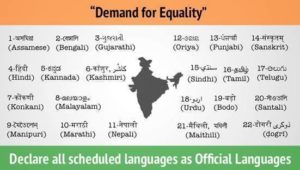
The first language controversy in the subcontinent emerged in Uttar Pradesh in the 19th century as a section of Hindus sought to replace Urdu ā till then the language of administration along with English ā with Hindi. As part of this politics, āUrdu and Hindi became proxies for Muslim and Hindu [political] mobilisation,ā wrote Garga Chatterjee. āIn that process, shoring up Hindi numbers became crucial. Many languages of North India like Awadhi, Bhojpuri, Rajasthani, Braj, etc., were nominally fused into Hindi as a political tactic with devastating long-term consequences for the counted-as-Hindi-but-not-Hindi languages.ā
I feel *Hindu* nationalism is a many headed Hydra. It builds on a millennia of humiliation but at the same time seems extraordinarily insensitive to actually diversity.
The only real defence Hindu nationalists have as to why their ideological brand is softer than the Muslim equivalents is simply because “Hinduism is a broad tent.”
I feel this obscures that Hinduism was the subject of intense reform over the last two centuries in a way Islam wasn’t. However it won’t surprise me if this tenuous commitment to liberalism falters after longer and more successful stunts of the BJP.
It seems the BJP has discovered the political power of Two Nation Theory and is really riding that perilous horse.
Not only is Hindi growing, it is changing. The Union governmentās efforts to make it a ānational languageā have resulted in it being āfirmly moored to a vastly associational Sanskrit with all its casteist baggage intactā, writes Mrinal Pande. āIts highly associational vocabulary is being used to purge thousands of words it has assimilated through the centuries from regional dialects and Islamic and European languages.ā Of course, actually purging Hindi of all its Persian vocabulary would be an impossible task āthe very name of the language is from Farsi.
Another BP Podcast is up. You can listen onĀ Libsyn,Ā Apple,Ā Spotify, andĀ Stitcher. Probably the easiest way to keep up the podcast since we donāt have a regular schedule is toĀ subscribeĀ at one of the links above.
You can also support the podcast as aĀ patronĀ (the primary benefit now is that you get the podcasts considerably earlier than everyone else).
In this episode we discuss the outcome of the Indian elections with Kushal Mehra, host of the Carvaka Podcast (and a BJP supporter, albeit not exactly a traditional one). Kushal thinks Modi’s sweeping victory had more to do with his ability to deliver real benefits to the poorest Indians. Feel free to disagree and post your opinions in the comments. We talk about the failure of the Left’s dream scenario of “dalit-Muslim unity” as a counterweight to Hindutvadi politics (at least in this election), what this means (or does not mean) for Indian democracy, the role of Indian Muslims, and so on.
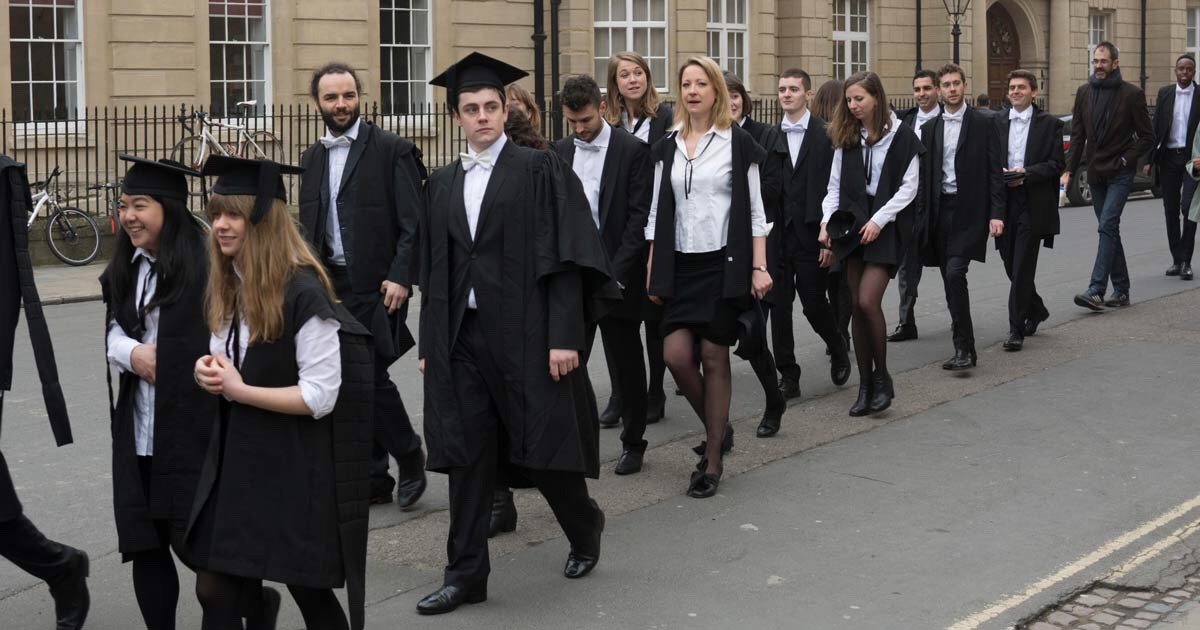
We’ve convened a Guft-e-Guh for the Cambridge coloured community.
A very interesting story was relayed. One of the kids is from a very middle class Hindu (cobbler) neighbourhood in Patiala (Sikh city).
They mentioned the fear that the Hindus felt when they saw men in Muslim costumes walk through the neighbourhood (Patiala is of course post-Partition).
One time 4 Kashmiris were surrounded by 50 of the men (the families would call everyone inside) and it transpired they were selling walnuts.
I applauded the narrator for sharing this important and heartfelt story; the Left-Liberal-Lutyens crowd just like to shade everyone as progressive or bigoted.
What is interesting is that the healing of the South Asian psyche is only possible through transparent and honest conversation.
I think I’ve alienated many people tonight since I’m ideologically flexible; as a libertarian I value free speech and the “battle of ideas.”
NASIM ZEHRAS TOO LATE AFTER THE EVENT KARGIL BOOK ANALYSED
Agha H Amin
My first issue with this book is that analysis delayed is analysis lost and Nasim Zehra is guilty of publishing this analysis some 20 years late. Before that she was in the good books of many culprits of Kargil who 20 years later are fired cartridges with near zero nuisance value. More seriously, I take analytical as well as conceptual dispute with her in regarding characters like Lieutenant General Javed Hassan as ā courageous and conscientiousā
My pronunciation is in between the first two. There is some overlap between Persian and Pakistani (Indo-Persian) names of course. So I usually pronounce the name in the way I first heard it or heard it most.
Of course the “Hindi” pronunciation is different where the N in Jahanara is nasalised rather than pronounced.
The personal name “Jahan” seems to have retired from Persian and instead migrated to Hindustan. So I’m inclined to defer to the Urdu version of the name but nasaling the N is very unnatural to me as it reminds of the time at Urdu class. One of the students was counting the Urdu numbers with a Punjabi nasalisation and the teacherĀ started chuckling.
I dropped the Urdu class after one semester even though I was making the fastest progress; Persian & Urdu are simmering languages for me, it’s easy to get to fluency but English almost always takes over.
As a final note; Urdu, by any other name would be just as sweet, but Persian is sweeter (I’ve mauled Iqbal & Shakespeare in a single sentence).
The irony is that Urdu was called Hindi since Urdu was initially used to refer the Persian of Shahjahanabad. Urdu is the regularisation of a Hindustani standard that came about through Amir Khusrao but was obviously was called Hindi as it was the local language.
As a final aside it is just astounding the extent to which India’s medieval history is in Persian. I *knew* that the official language was Persian but never understood what that meant entirely. The Indo-Muslim rulers were copious writers and along with their monuments left mountains of documents (Shah Alam’s unfinished Perso-Urdu verse ran to 600+ pages).
The reason Pakistanis and Urdu-speakers go on and on about Middle Eastern forebears is because their ancestors were certainly in that milieu for centuries. It’s a vestigial memory that has persisted.
Of course one can never deny Pakistan’s aristocratic heritage when our dear Captain decides to wear a cheesy Shalwar Kameez in an audience with HM the Queen:
When meeting Royalty one should at least be aware of the sartorial graces. It looks like something he would wear to a shaadi in the Pind. Also Virat Kohli may be brash but his socks, shoes and pants do not go together at all!
If anything learn from the wonderful Noorie Abbas in how to dress:
ISI/RAW have trained this vixen well. Interestingly though the choice of a Sari was very unorthodox; Pakistan girls her age will never wear a Sari to a formal event. I know that the older generation in Pakistan wear it (one socialite NGO makes a point of wearing it everywhere) but it’s pretty much died down; I wouldn’t be surprised if Noorie has inadvertently kick started it.
Her pastel shawl and gray-blue top set off extremely well. It was an interesting thing in the Prof. Devji podcast that the main gripe Hindutva had against Muslims pre-1947 was their “aristocratic connotations”. After Independence when most of these people went across to Pakistan; the image of the Muslim changed to gangster and poor.
Pakistan’s structural inequality, which we explored in our educational podcasts, means that even though there is a very high National Asabiyah (in core Pakistan; East of the Indus); the Islamicate class structure is very much dominant.
So you have these extremes in Pakistan, which are not so apparent in other countries. Since Bangladesh shackled the yoke; it’s made tremendous strides since it seems so much more egalitarian (it may also be that Perso-Urdu culture is inherently hierarchical considering its origins despite a strong socialist tradition of Urdu Poetry).
The rest of the Pakistan nation is as lemmings off a cliff: