Did the Brits “Indianise” the NorthWest?

I was picking up the comment thread on the linguistics podcast. To my mind there are some inconsistencies about modern-day Pakistan:

(1.) Ever since MBQ conquered Sindh in 712; Sindh has remained under Muslim rule. When it did have local rule it was essentially a tussle between the Baloch and Muslim Rajputs, which has replicated itself to this day. Benazir Bhutto is of Rajput ancestry (Bhatt) while her husband Zardari is a Baloch. The Hindu minority were either merchants or serfs and as far as I know the caste Hindus of Sindh are a basically heteregenous lot (there is only one Brahmin surname among the Amils and the castes tends to have strong geographic regions).

(2.) As for Baluchistan and KPK; It’s basically seen the incursion of Iranian speakers the past millennia or so.

So the real question left is Punjab (the 5th major Indus region Kashmir is out of scope). Continue reading Did the Brits “Indianise” the NorthWest?

Browncast Episode 33: an ethnography of doubting Darwin

Another BP Podcast is up. You can listen onĀ Libsyn,Ā iTunes, Spotify,Ā  and Stitcher. Probably the easiest way to keep up the podcast since we don’t have a regular schedule is toĀ subscribeĀ at one of the links above.

You can also support the podcast as aĀ patronĀ (the primary benefit now is that you get the podcasts considerably earlier than everyone else…). Would appreciate moreĀ positiveĀ reviews.

Today I am posting a podcast that I decided to record on a lark. I talked to Benjamin Dierker, the author of Why One-Third Of Biologists Now Question Darwinism. To be frank, this is a case where you need to read beyond the title…

Dierker and I had a lot of common ground and his main project is not a defense of Intelligent Design, as much as an ethnography of it. We hashed out what Neo-Darwinism means, as well as how conservatives should bury the hatchet when it comes to their historical enmity to evolutionary theory. In fact, we discussed extensively how the left’s revolt against human nature in the past generation opens up an avenue for conservatives to be on the side of science.

Browncast Episode 32: Indian Linguistics Podcast

You can listen on Libsyn,Ā iTunes, Spotify,Ā  and Stitcher. Probably the easiest way to keep up the podcast since we don’t have a regular schedule is toĀ subscribeĀ at one of the links above.

You can also support the podcast as aĀ patronĀ (the primary benefit now is that you get the podcasts considerably earlier than everyone else…).

We had a conversation about Indian linguistics. It was Razib, myself, Avtansa, Indian Linguist and TianChengWen.

I’m quite proud of this podcast since I was able to get some of the linguistic luminaries together. The topic was a broad overview of language in South Asia.

We were able to keep a very strong regional balance since TCW’s specialty is Dravidian. We touched on the role of Sanskrit and its prominence as a literary lingua franca until the late medieval period (until it was supplanted).

Incidentally, we didn’t talk all that much about Indian English instead we delved into the “dialects.” There seems to be a turning point in that the Subcontinent is consolidating linguistically among regional, national and religious lines with English emerging as the great neutral and prestige language.

We touched a fair bit on the specific languages of the Hindi belt but I guess for next time we will have to tackle those that are tangential to the Hindi language sphere like Punjabi, Bengali, and Marathi.

Pakistan is home to the most frenetic education reforms in the world

EVERY three months, Shahbaz Sharif, the chief minister of Punjab, gathers education officials around a large rectangular table. The biggest of Pakistan’s four provinces, larger in terms of population (110m) than all but 11 countries, Punjab is reforming its schools at a pace rarely seen anywhere in the world. In April 2016, as part of its latest scheme, private providers took over the running of 1,000 of the government’s primary schools. Today the number is 4,300. By the end of this year, Mr Sharif has decreed, it will be 10,000. The quarterly ā€œstocktakesā€ are his chance to hear what progress is being made towards this and other targets—and whether the radical overhaul is having any effect.

For officials it can be a tough ride. Leaders of struggling districts are called to Lahore for what Allah Bakhsh Malik, Punjab’s education secretary, calls a ā€œpep talkā€. Asked what that entails, he responds: ā€œFour words: F-I-R-E. It is survival of the fittest.ā€ About 30% of district heads have been sacked for poor results in the past nine months, says Mr Malik. ā€œWe are working at Punjabi speed.ā€

Reformers are trying to make up for generations of neglect

Continue reading Pakistan is home to the most frenetic education reforms in the world

Open Thread – Brown Pundits

Please keep the other posts on topic. Use this for talking about whatever you want to talk about.

Also, I’ve posted a new linguistic podcast on the patron page. It’s 1 hour and 20 minutes, and really dense with information and wide-ranging. There were five people, but I didn’t say much, and Zach was mostly asking questions. So there were three with a huge amount of knowledge engaging with each other. I have to say that this serves as a good model/example for future podcasts.

The many ways of being Brown Diasporic

An admission: I have no idea what half of Zach’s posts are about. More clearly, they’re written in English, but there are so many references to Indian/South Asian pop-culture and drop-ins of Hindi-Urdu words that I have no idea what he’s talking about. It might as well be Greek. Often after 30 minutes of Google, I get it, but it’s pretty funny because technically we’re both English-speaking brown people living in Anglo countries.

There are different kinds of brown people. Some of them are well talked about. For example, ABCD vs. “FOB” culture. But it’s way more subtle and diverse than that.

For example, I have a friend who grew up in Canada, who is from a South Indian Brahmin background. But, it turns out that the only Indian language she knows is Hindi, because of the people she grew up with. I am not good with languages. I have primitive fluency with Bengali, though I can’t read it, and absolutely no firsthand knowledge of Hindi or Urdu. A lot of Diasporic South Asians though drop-in in Hindi-Urdu words into their speech and a lot of us have no idea what you are talking about (I share this reaction with a lot of people of South Indian background raised in the USA, who don’t know Hindi).

Zach is a “Third Culture” person in a traditional sense. I really am not…my parents left Bangladesh in 1980, and did not raise me among many Bengalis or even South Asian people. Better to describe me as American culture + an accent/perspective of something very different.

The Advice of the Childfree

As an aside Vidhi censured me last night for my “polemical” post since it seemed as though she was condoning my views on Arjun Rampal.

I explained to her my perspective that rich and powerful men must always be held to account as they are the movers and shakers of all societies. That includes Mr. Rampal, Mr. Akhtar and Mr. Ali Khan.

It is interesting that Farhan and Saif are the “spoiled” scions of an Indian elite whereas the much more humbler Shah Rukh Khan has kept his marriage and family together (whatever the rumours may be about them).

Farhan Akhtar is simply replicating the pattern of his philandering father and is now infecting his close friend Arjun. What irks me about these boys is that they all have daughters (5 daughters between them and only Saif has a son from his first marriage) and essentially the message they are transmitting to their daughters is that they can be replaced for a younger model when the time comes.

It’s interesting that Zoya Akhtar has never gotten married; the sins of the father visiting upon the innocent daughter. I also think that Alia Bhatt’s older half sister (Pooja Bhatt) never had children either, so it really is the daughters who get the pain of their selfish fathers.

I do not condone selfish behaviour by fathers. I’m not a father and I’m very happily child-free because neither Vidhi or I are at the stage of our life where we want to be parents. As an old school libertarian I don’t believe in laws necessarily regulating human behaviour but custom and culture.

Having children is a long and painful process since they are meant to be the culmination of any relationship. While I believe government has no role in marriage I simply cannot understand how a couple, who cannot bother to have a wedding, can go on to have a child.

I’ve noticed that the most successful children are those that have received intelligent and formidable parenting. Just because a man can happen to have children does not mean he should have them.

While I don’t think abortion should be the answer, it would be incumbent on all to realise that having a child should be a very hard-thought process. A sign of an affluent society is the shift from the quantitative to the qualitative and to my mind the collapsing birth rates are usually a sign of civilisation. Of course the line between self-actualisation and self-indulgence is a sober one so collapsing birthrates in Russia and Eastern Europe is a very different phenomenon to that in Western Europe or the US.

I am simply taking exceptions to the neo-Mughals of Bollywood who strut about thinking they are demi-gods. A good example is when I heard Nasserudin Shah state that he had taught his children (with Ratna Pathak) the Quran to improve their “Tahafuz.”

I’m taking that to mean that their fluency in Urdu but if one wanted to get really good in Urdu it would be better to learn Hindustani and Dari since Urdu is not simply a creolic language where one can add Perso-Arabic words at whim. Also those words that have been added have in themselves been transformed so reading the Quran to learn Urdu is disingenuous and simplyĀ  cloaking the real reasons for teaching it to his children.

Linguistics Podcast

Finally we’re doing a linguistics podcast tomorrow; Razib, əbʰɪ əʋətĢŖÉ™nsĢŖ अभिअवतंस &Ā Indian Linguist. Any questions please pop into the comment.

Is Bollywood “whitening” Indian beauty standards?

Since Vidhi’s passing remarks seem to generate so much controversy on BP; I thought I would share a statement she made to me earlier (I usually send her the links when I’m quoting her but she’s too busy to read them).

But she was pointing me towards this latest starlet:

https://www.instagram.com/p/BuWv610B-Cg/

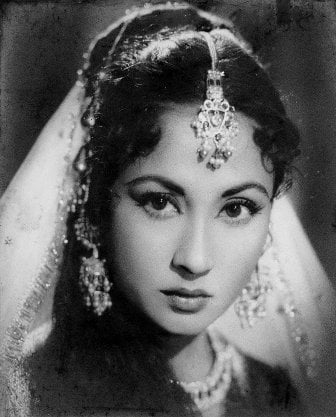
V was saying that she could look Spanish or Italian and the first person who came to my mind was Natalie Portman. V was then comparing Tara to Madhubala or Meena Kumari who had much more “Indian looks.”

Image result for meena kumari Continue reading Is Bollywood “whitening” Indian beauty standards?

The unconscious whiteness of Britain-

I had posted this last night but saved it in the draft. I just heard a story about a Bursar of a Cambridge College telling an *Asian* lighting Engineer that he should watch out with the lighting because otherwise you can’t see “black people in the dark except for their teeth.” Continue reading The unconscious whiteness of Britain-

Podcasts by Major Amin. India, Pakistan, Proxy Wars

Readers of this blog are familiar with Pakistani military historian Major Agha Humayun Amin.Ā  Major Amin has recorded a number of podcasts on the AnchorĀ app and they are worth a listen if you are interested in military history, Indian history and related topics.

This podcast in particular is a good introduction to Major Amin’s own background (he has worked with the Northern Alliance in Afghanistan, has been a Taliban prisoner, and then a contractor in post-American Afghanistan, with extensive experience in the region). He also mentions his mentor Edward Luttwak.

In this podcast he makes many interesting observations and has his usual blunt and sometimes harsh opinions. Some of his topics here include:

  1. His view is that there is no such thing as a “non-state actor”. All actors in Afghanistan are proxies of some state or the other. In the case of the Taliban, that means Pakistan.
  2. How the Americans were fooled into bombing (via drones) and paying for bombing (Pakistani armed forces) the FATA region, while Taliban were actually located in Balochistan.
  3. How Kiyani prolonged the FATA operations to milk American coalition support funds.
  4. FATA Pakhtoons as “Red Indians” , subject to endless operations, not just today but many years ago, regarded as “our firing range”. Regarded as such not just by non-Pakhtoons, but also by many “settled area” Pakhtoons.
  5. Some of the nuts and bolts of this endless war.
  6. Pakistan’s theory of nuclear brinkmanship, developed initially with American acquiescence (because they did not want India to attack Pakistan and disrupt their Afghanistan operation).
  7. Siachen, Kargil.
  8. The renewed Kashmir infiltration in the last few years.
  9. Pakistan army’s mindset and some of the more interesting nonsense that is promoted in its cause (such as Javed Hasan’s classic “India, a study in profile”).
  10. The security setups of both sides leak like a sieve. Nothing is really secret, yet most things are unknown to their own politicians and common people.
  11. No Indo-Pak war is likely, but proxy war will accelerate.
  12. Trump will abandon Afghanistan for electoral reasons, civil war will accelerate.

You don’t have to agree with Major Amin’s views. But his detailed knowledge of this murky world is worth a listen. At a minimum it should make you wary of all state propaganda narratives.

Brown Pundits