We’ve been watching the excellent Suno Chanda. It’s the story of a respectable Muhajir industrialist family in Karachi but features some ethnic characters as well (a Punjabi mother in law and a Pathan Uncle).
Even though I spent formative years in Islamabad the only ethnic language I was exposed to was Pushto, which was the domain of the labourers, house help and security guards. Punjabi was simply non-existent and Urdu & English were the dominant languages. So I haven’t heard much Punjabi and to be honest growing up all the Punjabi neighbours were the “Pakistanis” while the Sindhis, Pathans were the exotics.
So for the first time I’ve really been listening to the Punjabi language in sustained doses.
Udaari and Dastaan also had Punjabi speakers but in Dastan the Muslim Punjabis spoke chaste Urdu while it was the Sikh kidnappers who lapsed into comical Punjabi.
What is rather shocking to me is how Punjabi sounds like a rustic version of Hindustani. A sort of Braj Brasha for the East?
Little did the opposing party know that this could be expected of any language spoken in Pakistan but Punjabi, for it is considered by our beau monde to be an illiterate version of Urdu owing to the likeness of the two languages. Speaking Punjabi in public is frowned upon and is not used by our nonpareil A-list to even communicate with servants. The current status of this 14-centuries-old language can be gauged by the simple inclination of Asif Ali Zardari to deliver at least some part of his speeches in Sindhi, but the smirks and guffaws that erupt in assemblages of the Pakistan Tehreek-e-Insaf when Imran Khan utters a single phrase in Punjabi.
Something has happened in the history of Punjabi whereby Hindustani speakers pushed Westward into the Lahore region (Amritsar is essentially a Lahori suburb). As an aside in the “Sacred Geography” of India; are there any Hindu holy sites in present-day Pakistan?
What is interesting is that all the “Lahnda” (Western) dialects of of Punjabi are in Pakistan and all the Eastern dialect (except for the prestigious and no doubt Hindustani influence Majhi) are in India. Continue reading Suno Punjab
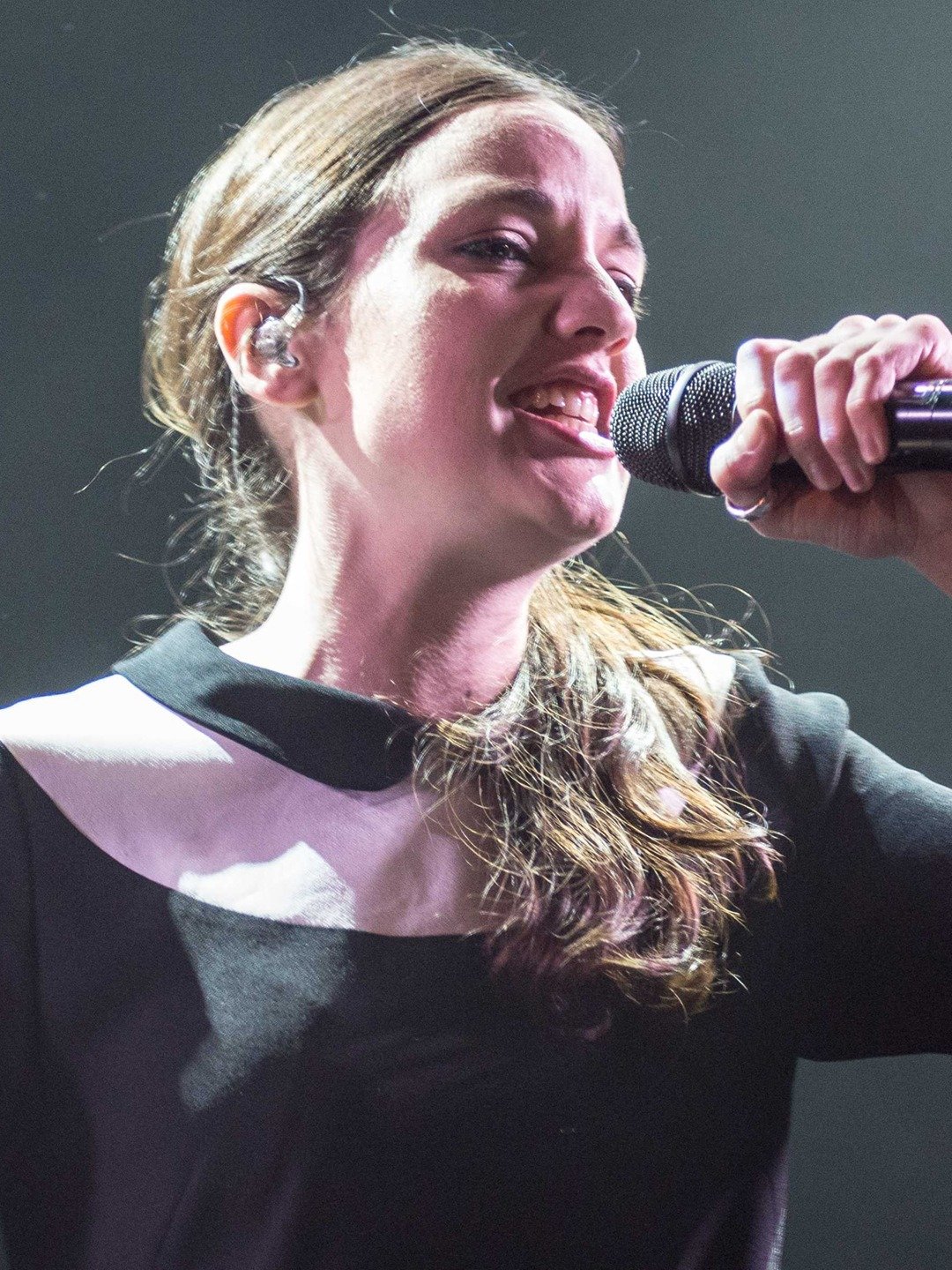
Vidhi and I have gotten into this song since it’s so catchy. The artist is French and a quarter Malagasy. But she looks straight up “Caucasian” to the extent that she has to emphasize her exotic background (probably also to insulate herself against claims of cultural appropriation – the Twitter handle “Jain Music” belongs to her).
Excerpts
Four of the top five states are from the south, with Kerala leading the list. Tamil Nadu is at number two on the survey which ranks states across a three-year period.
A notable inclusion in the top three is the state of Telangana, which was created in 2014, carved off from Andhra Pradesh/
The bottom spots of the survey were taken up by states from the north: Madhya Pradesh, Jharkhand and Bihar.
States in India have a wide remit with control over water, agriculture, land rights, public health and order, theatres and entertainment, even duties on opium and other narcotics, and in some cases are as powerful as an individual country in a continent such as Europe might be. Uttar Pradesh, home to 200 million people, would be the world’s fifth biggest country if it were an autonomous nation,
States are linguistically diverse, culturally and socially varied – for example, in the cluster of eight northeastern states which border China and Myanmar, people look eastwards for their cultural cues, eschewing Bollywood in favour of K-pop, and prefer soccer to cricket. Home to matrilineal societies, women are far more visible in everyday life than in the “cow belt” states of central India.
Kerala too, is markedly different from the north. It has the highest literacy rate in the country, at more than 93%, as well as a high life expectancy and the best gender ratio in the country. It also tops the UNDP-sponsored Human Development Index thanks to high standards in sanitation, health, education and poverty reduction.
But for all of its highs, Kerala – indeed, all of south India – is about as appealing to the central government as coconut oil in butter chicken. In north India, southerners are universally mocked with the pejorative “Madrasis” (a reference to the former name of the city of Chennai). South Indians are looked down on for their dark complexions, their mannerisms, even their diets. Keralites eat beef.
It might be worth noting that four out of the top five best-government states are not ruled by the Hindu-right BJP, but the party does preside over the three states that come last in the survey.
“Woke” minorities, especially East, South, & Southeast Asian ones, have a misguided attitude towards undoing colonialism. In most cases, they’ve totally internalized Western values and are often hostile to traditional ones, only seeking to guard things like food and music. pic.twitter.com/0tje676nxb
The above diagram really hits at something important. Back when I was commenting on Sepia Munity, or as I read The Aerogram, I always come back to the reality that many people of Asian heritage who grew up in the United States or Europe are culturally Western.
Therefore, fundamental aspects of Asian culture were always refracted through a Western lens. When I read The Aerogram I know what I’m getting: the story will end with a progressive (Western) “final thought.” The types of Asian Americans who write this type of journalism are politically progressive. Those of us who are Asian American, and not progressive, do other types of work.
Not that there is anything wrong with this…but there is often a tendency to not take non-Western culture on its own terms. People of Asian origin in the United States are identified as fundamentally and deeply Asian because of their faces in their native environment, the West. They are ambassadors and exemplars of Asiatic ways. But over the years these people forget that Asians living in Asia see them, rightly, as Western. They have no authority from authenticity, the authority is given to them by non-Asian Westerners who don’t know sari from salwar.
“Woke Asians” are actually simply “woke,” and so they have internalized a world-system where it is bad whites/colonialists against good PoC. When Asian values, Asian practices, don’t fit into the narrative, the prosecution brings the case against Asians for being insufficiently authentic, of being distorted by hegemonic “colonialist” paradigms.
The sin of “oppression” is universal, not particular.
I have not watched Crazy Rich Asians. Perhaps I will for my cultural edification. Unlike some people, I don’t care too much about “representation.” This isn’t for ideological reasons…I just have weak group identity/identification, and on an implicit level, I probably think I’m a unique enough person that no other is going to “represent” me in the media, ever. I know I’m not the only one who feels this way.
Sangeetha Thanapal is an artist and writer working on the intersections of race, gender and body in Asia and Australia. She is the originator of the term ‘Chinese Privilege,’ which situates institutionalized racism within Singapore. Her fantasy fiction and political writing have been published by Djed Press, Brown Girl Mag and many more.
First, about “representation.” I put it in quotes because in a social justice context the word means something particular. For example, “representation” of South Koreans means Sarah bane-of-goblin-kind Jeong. Not, an evangelical Korean missionary in the Middle East. In the academy, “representation” means a good regional, racial, and gender proportionality. Not, reflecting the political and religious variation in the population.
Crazy Rich Asians are Asian, but not the representational kind of Asian. Sangeetha Thanapal though is a representational Asian: she’s cosmopolitan, educated, and woke. Ironically, her South Asianness is almost incidental. Kind of a wrapping around the real substance of her ideological affinity to a certain tendency which spans all shades.
The second issue are the specific particulars to Singapore and the relationship between East Asians and South Asians, or more generally, “Chinese” and “Indians.” It is a simple fact that Chinese people are racist against Indians for being dark, for India being a poor an underdeveloped nation, as well as differences in comportment and social mores. It is also a simple fact that Indians are racist against Chinese people, who are perceived to be strange-looking dog-eaters who lack deeper values than the acquisition of money and power.
If you want to represent the true dynamics of the Chinese and Indian relationship in Singapore, then you need to represent the racism and segregation which is mutual. Of course, there are other dimensions as well, such as the growing number of mixed-race Chindians. Unless that is, you want to “represent” your nonexistent utopian vision?
Which brings me to the big issue about objections to Crazy Rich Asians: the critiques are reductive and simplistic, even if they utilize layered and verbose textures. Singapore is dominated by a Chinese ruling class, and there is racism against minorities. But a massive influx of highly educated professional Indian immigrants in the past few decades into Singapore is why Indians now earn a bit more on average than Chinese in Singapore. But this summary is misleading too, and masks the diversity of the South Asian population, from well-off Indian immigrants to manual laborers from Bangladesh, as well as the long-established Tamil community which is itself socioeconomically diverse.
Finally, there are some things that Thanapal and others bring up as “Chinese privilege” which I don’t see as a privilege. Singapore is a mostly Chinese city, in a region where Chinese economic power is ascendant. It is entirely reasonable that the city-state should be given preference to English and Mandarin Chinese as the dual languages. Thanapal’s Tamil language is not hard-wired into her being like her dark skin and curly hair. Tamil can continue to be maintained in the traditional Tamil community, but in Chinese dominated city-state it seems reasonable that Tamils should learn the lingua franca of the majority and adopt it as their own. Mandarin can be a fine first language even if your hair is blonde or your skin is black.
Chinese Indians speak Indian languages, and when they speak English they naturally have an Indian accent.
I’m not saying my viewpoints are the “right” ones. But, for various reasons my viewpoints are not not “represented” in the mainstream international media. And I’m not the only one who feels this way. So there, I said it.
Vajpayee has passed away and my thoughts on him is that he is the “loveable loser.” A bit like Advani & Rahul Gandhi; these philosophical Brahmins are really no match for the Modi phenomenon. Vajpayee is a remnant of a simpler gentler India; Modi is Hindustan’s future. As we much as we are mourning a Nehruvian relic. Modi’s India is rapidly wisening up to her world role.
As an aside I’m just increasingly shocked by how breathtaking the pace of change in India is. In the Pakistani higher circles there was always this assumption that the liberal elite of Pakistan (the 1,000 families) were the most Westernised (but Urduphile) segment of South Asia. That is rapidly beginning to change and huge swathes of the Indian upper classes are becoming “tanned white people.” Their accents, family structures, cultures are just Westernising and a good example is the Priyanka Chopra-Nick Jonas engagement. They probably represent this segment while Virat Kohli and Anushka Sharma are the more desi side (the Khan-Kapoor family are somewhere in the middle, Kareena has just gone off on another jaunt with her besties).
I’m just a Damad to Indian culture but I hope India doesn’t lose her soul in this rapid transformation (she has the highest growth rate in the world at 7.2% edging out Bangladesh at 7%).
I am very passionate about Imran’s Khan need to redistrict Pakistan. We need a Pakistan of the Provinces. We have strong ethno-linguistic regions like the Punjab, Pashtunistan but we also have very strong provincial identities (Karachi must be set free from Sindh to become another Dubai) and Bahawalpur-Multan (one of the great tragedies of Independence is what happened to the Principalities of the Sub-continent and their ignominious fate by Indo-Pak).
Sharing some trailers:
Nawazuddin Siddiqui is one of India’s best actors (it’s usually the case in Bollywood where the traditional Bollywood looks & acting ability are inversely correlated; Radhika Apte, Kangana Ranaut, Irfan Khan – Tabbu is probably an exception) and is such a strong reason as to why Sacred Games was the blockbuster as it was.
I have a mixed feelings on Shahid Kapoor as an actor but I guess this movie will be alot like Akshay Kumar’s film, Toilet. Bollywood’s increasingly important tradition of social film-making (Padman, Aamir Khan’s films) is welcome. I guess it’s also a way for aging actors to regain moral legitimacy and cultural relevance..
I’m a fan of Varun Dhawan, he seems to have completely eclipsed Sid Malhotra. However I see his acting style to be somewhat typecast as the spoilt Punjabi kid with comic overtones; he belongs in a joint family. Again I welcome any film that has a made in India message.
Finally if there are any Indian readers who are looking for good Pakistan dramas, I would recommend Suno Chanda. It’s a light-hearted fare about the Pakistani family and the attendant complications. Much as India is transforming; Pakistan takes pains to preserve the idealised Hindu-Arab cultural mix that is our wonderful Mughal-Muslim Republic.
I have been busy with a move for several months (from the Midwest to the Best Coast) and have not been active on Brownpundits. I hope this will change in the coming weeks and months. Not enough time today for a full post on something, just some quick notes on two recent events:
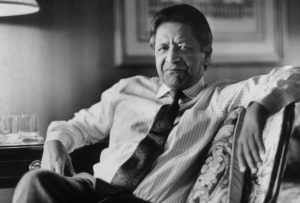
VS Naipaul has died. I am a fan of Naipaul the writer, which sometimes gets me into arguments with woke friends, because the memo has been circulated that he was “a White supremacist” and so on (there is also the issue that he was a misogynist and mistreated some of the women in his life, which is probably true, but the broader un-personing instructions are based on his supposed ideological crimes, not his personal life). I don’t have anything to say about his relations with women (FWIW his last wife seems to have been happy with him) or his general crankiness and misanthropy, but I think the ideological accusations are an unfair characterization of his work. As far as I can tell, he had no single over-arching ideology; his aim was to try and see “things as they are”, which is never easy (and perhaps never possible), not to promote a particular Right or Left wing political viewpoint. He will be missed.
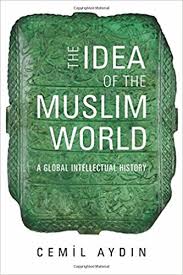
I’m reading a book titled The Idea of the Muslim World: A Global Intellectual History. It’s works within the postcolonial framework. Unlike a lot of postcolonial scholarship it isn’t bluster and rhetoric riddled with basic historical errors. The author presents a lot of interesting facts. But, as I’ve said elsewhere I disagree with the thesis of the book, which is that modern Islamic identity can be understood primarily through its interaction with European colonialism.
This isn’t to say colonialism doesn’t matter. It does matter. It’s just that Muslims are not inactive substrate upon which European agents operate. Muslims, and Islam as a civilization, has its own life, orientation, and self-conceptions, which exist somewhat apart from Europeans, and the West (I say somewhat because it is hard to understand the modern West and Islam without their coevolutionary dance over the centuries). Colonialism did not create the idea of the Muslim world de novo, it operated upon the idea of the Ummah which predated the modern West, and in fact emerged in tension with the ancient late antique Near East and Turan in the 7th and 8th centuries AD.
But this post is not about Islam. From the comments:
The big tragedy during the unmitigated disaster that was the partition upon the Hindus, many realized was that while there was a thing known as Ummah, there was no such thing as the Hindus. There are Muslims, but they are actually the largest plurality. There was no such thing as the Hindus. There was the Brahmins. There was the Namashudra. There was the Punjabi. There was the Thakur…
This to my mind is a much stronger position to defend than the ideas above in relation to Islam. To a great extent modern day, Hindu nationalism seems to be about creating an analog to the Dar-ul-Islam and Christendom for Hindus, many centuries after Muslims and Christians. But, I do think I disagree with this. It seems clear that Megasthenes, al-Biruni, and Faxian all had a sense of Indians, or Hindus as we were all called then, as a distinct, albeit variegated, people.
Hinduism as a particular confession with a creedal orientation is a relatively recent affair. Perhaps you can date it to Adi Shankara. Or even as late as Arya Samaj. That doesn’t matter. Hinduism as a distinctive civilization of Indians, with consistent particular unifying beliefs, is very ancient and dates to antiquity.
One might object that this only applies to the twice-born varna. But the Maurya were like of sudra origin. And South Indian polities welcomed Brahmins, who they clearly saw as part of their civilization, albeit different and apart.
Of course one might change the goalposts with some semantics. I myself liked to be clever and would say that Hinduism was invented by Muslims or Westerners a few years ago. But thinking more deeply, I think that that was just a stylistic pose by me, attempting to burnish my heterodoxy, as opposed to reflecting the first order substance.
Addendum: Genetics is now making it clear to me that the matrix of “Dravidian” and “Indo-Aryan” proto-India were closely connected and emerged around the same time, probably in tension, conflict, and interaction. Religious ideas we’d term “Hindu” probably didn’t exist 4,000 years ago, but the openness of South and North India to engagement and cultural exchange in the historical period is not I think coincidental, but reflects primal commonalities derived from the tumult in the centuries after the decline of the IVC.