Judicial Jitters in Pakistan, continued..

Two pieces from Dr Hamid Hussain on the higher judiciary in Pakistan. Well worth a read. Third piece is awaited.

What follows was written by Dr Hussain. 

Societies in general are becoming polarized and Pakistan is no exception. In times when main source of information is tweets, face book posts and a vlog by a youtuber, no one has the time or inclination to try to get information. Everyone picks his own set of facts that fits into his pre-conceived idea.  Facts are not shaping the opinion but it is the other way around where facts are adjusted to one’s opinion.

Judiciary has emerged as an important player in the power play. In the last few months, I have made an attempt to write about the subject that was a new ground for me.  I got educated and enlightened by many well informed folks.  This is first of the three part series on the subject matter.  Only for those interested in the background of unfolding events.

“Neither to laugh; nor cry

Just to understand”        Spinoza

Hamid Continue reading Judicial Jitters in Pakistan, continued..

On Centenarian Kissinger

Author’s Note: This is not an academic or objective essay; rather a personalised opinion on the soon-to-be centenarian former secretary of state.

On one occasion, a joke was made on television about how Fidel Castro survived attempts to have him removed by US presidents as well as the  downfall of USSR, who served as his main supporter. In 2023, a soon-to-be centenarian Dr. Henry Kissinger would be grinning and telling Castro’s soul to, as they say, “Hold his beer.” If the AI generator were asked to picturise “American foreign policy”, it would not be shocking if Henry Kissinger’s portrait or painting appeared. 
For decades, he was open and honest about his opinions on American foreign policy based on the pursuit of both national interest and power. In his own words: “A country that demands moral perfection of itself as a test of its foreign policy will achieve neither perfection nor security.” Kissinger has proven to be rich ground for historians and publishers. Along with business books about him as a deal-maker, there are also personality studies, tell-alls from former coworkers, and collections of his quotes.

Simultaneously, Kissinger had long been criticised by many as a ruthless realist. The critics would often quote Kissinger’s own words “when policy becomes excessively moralistic it may turn quixotic or dangerous”. Those words don’t seem all that offensive in retrospect after seeing so-called American moralist decisions made in places like Libya, Syria, Iraq, and Afghanistan. The critics would respond by citing Bangladesh and Chile as examples of how Kissinger was no better.

Weimar-Chile Connection 

For the last few years, Kissinger seems to no longer arouse widespread contempt. Instead, some individuals have since expressed some sympathy for him, tying Kissinger’s ruthlessness to his status as a former resident of Weimar Germany. Born Heinz Kissinger on May 27, 1923, to an Orthodox Jewish school teacher in FĂŒrth, Bavaria. In 1938,  shortly before Kristallnacht, Kissinger and his family escaped to America, as did several German Jewish families.  Continue reading On Centenarian Kissinger

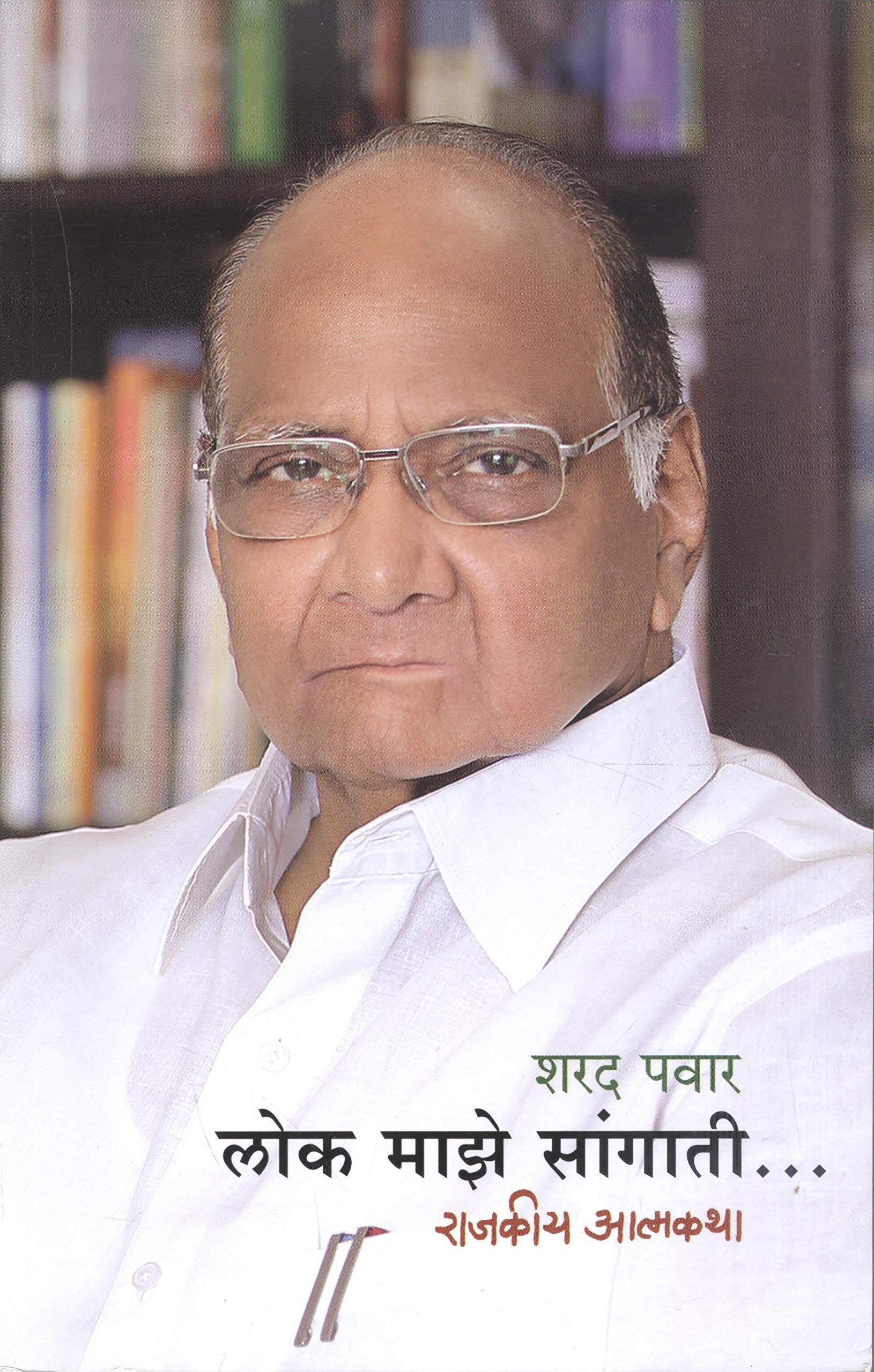
Book Review: à€Čà„‹à€• à€źà€Ÿà€à„‡ à€žà€Ÿà€‚à€—à€Ÿà€€à„€

This was only the second Autobiography I have read and I enjoyed it a lot.
Naturally no one should expect any autobiography to be frank and thorough, much more so incase of the autobiography being of an active politician.

Mr Pawar’s vision for development which often doesn’t get discussed gets due credit in the book. His putting his ideological commitment over electoral gains in the “Namantar” controversy, speech on Women’s rights and the anger at the Dabhol-Enron project stood out of the book for me.
His lack of explanations for his miscalculations (like supporting Sonia Gandhi in 90s), corruption allegations sticks out like a sore thumb. His (now) wrong predictions post 2015 and somewhat myopic view on Hindu-Muslim problems could highlight the shortcomings of his brand of Progressivism.

To really understand an autobiography, one must always read between and beyond the lines. Mr Pawar has also been linked with outfits like like Sambhaji brigade, especially in the 21st century. But brigade and their notoriety do not find a single mention in his book. Nor does the eponymous
second Chattrapati (unless i am mistaken).

In the final passage, Mr Pawar mentions his close friendship with the radical Muslim rationalist – Hamid Dalwai. Incidentally, after the tragic and early death of Hamid Dalwai, it was Sharad Pawar who ensured Mr Dalwai’s final wishes of cremation were followed, against his family/communities wishes. Given this history, its highly ironic that the NCP has among its ranks some leaders who couldnt be further from Mr Dalwai in their speech and action.

In end the reader is forced to acknowledge both the genius and underachievement of a brilliant career which wouldn’t contain national premiership. (YET)

Major Amin on the current crisis, May 2023

Another Browncast is up. You can listen on Libsyn, Apple, Spotify, and Stitcher (and a variety of other platforms). Probably the easiest way to keep up the podcast since we don’t have a regular schedule is to subscribe to one of the links above!

In this episode I talk to Major Amin, well knows to our listeners. Just a short chat about what is going on.

Pakistan Crisis: The Arrest of Imran Khan

Another Browncast is up. You can listen on Libsyn, Apple, Spotify, and Stitcher (and a variety of other platforms). Probably the easiest way to keep up the podcast since we don’t have a regular schedule is to subscribe to one of the links above!

In this episode I talk to Maneesh about the latest crisis in Pakistan. We start with a little background and then discuss what is happening right now and what we may expect in the future. Comments welcome.


I promised to link some good articles:

Best summary of how we got to this point: What Imran Khan’s Ascent did to Pakistan 

Good as always from Dr Mohammed Taqi (@mazdaki on twitter) https://thewire.in/south-asia/imran-khans-arrest-will-exacerbate-pakistans-multi-system-meltdown

Probably the best news and analysis show on Pakistani TV these days (as in well prepared, logical, usually objective) is Shahzeb Khanzada. 

The corps commander’s peacock

A Sojourn to Swades

For a foreigner, India is an assault on the senses. A land of every extreme you can imagine, every data point you can parse, and every anecdote you can hazard is found in this heterogenous homeland. An opulent ancient structure makes way for decrepit shantytowns which morph into a 21st-century skyscraper. Blaring horns that find a home on every road transform into the blowing of a conch and eternal songs. Pollution stings your nose and strangles your throat until you find refuge in the appetizing aroma of an eatery. Every flavor is expressed in a single bite of a chaat, akin to instruments combining in an orchestra of taste. An omnipresent dust travels across your skin as you hold the hands of a loved one not seen in ages. At this point, I feel a bit like Rupi Kaur narrating a diaspora novella about a visit to the homeland, but I’m guessing you get the point.

Continue reading A Sojourn to Swades

Indian futures

Over at his Substack, Noah Smith has a pretty bullish take on India, Here…comes…INDIA!!!:

The United Nations estimates that India has now surpassed China as the world’s most populous country — or, as we colloquially say, the world’s “largest” country.

Obviously, crossing this threshold doesn’t mean much in practical terms. Being a tiny bit bigger than China doesn’t really change anything, and India has just about as many people as it did a year ago. But the flurry of news stories accompanying the event is a wake-up call for the world: India has arrived on the world stage, in a big way.

What does that mean? Well, a whole lot of stuff. More stuff than I can summarize or even mention in a single blog post. There was a quote attributed to Napoleon two centuries ago: “Let China sleep, for when she wakes, she will shake the world.” Well, China did wake up, and the world has been shaken. The whole economic landscape of the planet, the geopolitical balance of power, and even the Earth’s environment have been irrevocably changed in the last three decades by the addition of 1.4 billion human beings to the ranks of the (more or less) developed world. Now India brings another 1.4 billion, eager to join those ranks. Get used to seeing a lot more graphs with this basic format…

It’s a long post, but I think the major takeaway from the viewpoint of an economist is agglomeration. The co-location of producers and consumers and resources at such massive scale nations like China, India and the USA, result in a level of synergistic economic growth and power that smaller nations cannot match structurally. This is probably one reason that Britain punches below its weight vis-a-vis the US, it cannot scale.

But Smith is aware of human capital concerns, and this is probably the a signifier of the number one issue: Worthless Degrees Are Creating an Unemployable Generation in India. Fake credentialing just means firms will have to re-train or do their own intake (the obsession with credentialing shows up in funny ways on even on this blog; I don’t care what your credential is if you are a moron, something is common-sense to Americans working in tech).

Another issue that is focused on in the post is that India needs to focus on productivity growth through manufacturing. I actually thought a bit about India when I read this long and excellent piece in Palladium on the century-long failure of the British ruling-class on updating their nation for the 20th century.

Soldier Sahibs-Review

I reviewed this book for the Pakistani magazine “Herald” 22 years ago. We had a podcast about the East India company yeseterday and it reminded me of this book, so I dug up my old review (posted unedited):

Soldier Sahibs is an old-fashioned and unapologetically imperialist book. And writer Charles Allen makes sure you know what you are getting into by giving it the flagrantly politically incorrect subtitle: The Daring Adventurers Who Tamed India’s Northwest Frontier. But imperialist does not necessarily mean inaccurate and Allen has taken a good deal of trouble to get his facts right. The book claims to tell “The astonishing story of a brotherhood of young men who together laid claim to the most notorious frontier in the world, India’s North-West Frontier,
which today forms the volatile boundary between Pakistan and Afghanistan.”
The men in question include John Nicholson, Harry Lumsden (founder of the Guides), Herbert Edwardes, William Hodson, James Abbot and Neville Chamberlain. ProtĂ©gĂ©s of Sir Henry Lawrence, these men were responsible for laying the foundations of British rule in the Punjab and the Northwest Frontier. The author’s intent is to tell the story of these young men and through their adventures, give the reader an idea of how the British conquered – or, as he would prefer, “pacified” – the ‘wild’ Northwest Frontier of India.
But while Soldier Sahibs gives a very readable account of the adventures of these (surprisingly) young men, it is not possible to piece together the broader history of those times from his book. Why the British were here in the first place and what were the factors that made a small island in Europe more powerful than any kingdom in India do not form any part of Allen’s concerns. Nor does he waste much time explaining the situation in the Punjab or of the East India Company at that time. In fact, the author does not even provide a map of the vast area over which his protagonists established their rule. If you are totally at sea about those times, then you may have to read a few other books to fully appreciate the goings-on in this one. But if you are one of those enthusiasts who cannot get enough of the Raj, the mutiny and all that jazz, then you will definitely enjoy this book. Its written in authentic ‘Flashman’ style, with wit and verve and loads of ‘local color’. Continue reading Soldier Sahibs-Review

Brown Pundits