Bollywood calling Pakistan. Again.

So a new trailer for a hindi acshun phillum dropped recently, and its another one of those that throws around the ‘based on true events’ tag for additional street cred. This time around though, there’s a bit of a twist. The plot apparently centers around the Lyari Gang wars in Karachi, with some additional fictional tempering of course.


Unsurprisingly, this will elicit a whole gamut of reactions from either side of the Radcliffe line, especially due west. The preview is unusually long, and somewhat unsurprisingly filled with shocking violence – the recent success of movies like Kill and Animal were bound to result in a race to ever-increasingly levels of ‘ketchup’ and fireworks. But apart from that, at least to me, didn’t seem very novel or interesting. I am mildly curious about the world building that the movie manages to pull off.

Sanjay Leela Bhansali’s Netflix series Heeramandi is another example of this phenomenon. Where the Indian movie industry is accused of ‘cultural appropriation’ and telling a story that is “Pakistani, and not Indian”. With that one, as much as I am… unimpressed with Bhansali’s output – I view him more as a choreographer, less of a filmmaker, one who is far more successful at spectacle, not so much with cinema – I still think that the stories of the subcontinent should be accessible to all. Lahore after all, especially pre-partition Lahore is as much a legacy of Ganga Ram as it is of the Mughal Empire, or the Sikh, for that matter.

This time around however, the setting isn’t historical or pre-partition. Is there an argument to be made that this is “cultural appropriation”?

For me, more than anything, its yet another missed opportunity. In an alternate timeline, a movie like this would have been a golden opportunity for Pakistani actors to get visibility on a much larger Indian stage, and the quality of the output could have been immeasurably raised with behind-the-scenes contributions – production design, location and language expertise, to name a few.

Somewhere down the line, if things finally start reverting to ‘normal’, perhaps future projects like these will incorporate Pakistani participation and be better for it.


Racism Is Wrong. So Is Calling People Sub-Human.

It is wrong to dehumanise anyone. One of the recurring issues on BP is this histrionic insistence that individuals “own” the truth. The truth is broad, multi-layered, and something we all approach imperfectly. No single person has a monopoly on it.

I obviously reject racism in every form; that should go without saying. But I also find it nonsensical to claim that it is a moral imperative to call a racist “sub-human.” That is a classic moral slippery slope. Once you begin dehumanising others, even for views you find repugnant, you simply replicate the logic you oppose.

What I’ve noticed recently is that people are increasingly confusing ego with ideology. That never ends well. This is a blog. Nothing here is existential. We should be able to disagree fiercely without crossing into territory that strips others of their humanity.

I am back

I am now going to manage the blog more actively.

Everyone please behave. I have restored all deleted comments (I haven’t read them).

I’ve also realised that the Commentariat are actually manifestly ungrateful.

I expect everyone to adhere to civility; if I don’t like the tone of a comment, I will simply trash it. This is a no-nonsense policy that applies to ALL.

Also to all authors, contributors and editors please make sure you are above board; don’t descend into the pettiness.

An internal note I sent earlier to all authors/contributors/editors: Continue reading I am back

The Poetry Has Gone From Our Lives, but Hate Cannot Last Forever| The Wire Talks

Thirty years ago, Saeed Akhtar Mirza made his final feature film, Naseem, about an aging Urdu poet, played by Kaifi Azmi, and set in the days preceding the demolition of the Babri Masjid. The film opened with a title card which said, “That one act of demolition wrote the epitaph of an age that has passed, perhaps never to return!” “ The Babri Masjid epitomized the final collapse, you know, of an idea of India, of a sovereign, secular, democratic republic, equal for all, equality and justice. You saw it collapse in front of your eyes.” He said. “I was in despair but I was also angry when I made the film,” Mirza said in a podcast conversation with Sidharth Bhatia. He has not made any feature film since, though he still makes documentaries and has written two books. Mirza spoke about how the “Hindu-Muslim binary was stupid” and said that those who promoted it hadn’t read any history. Their idea of history is “fundamentally flawed” he said.

Authors, please dont post against each other

It makes no sense to write posts against each other here. Just do what you want in the comments (and the author can moderate those).

We will recover from this. I just deleted several posts and I hope the authors will not start it up again 🙂

And Kabir, please, try to limit yourself to one post a day. Educational and informative ones are better than daily “RSS is coming” warnings 🙂


Thomas Blom Hansen, Qurban Ali & Harsh Mander on the RSS’s role in communal violence

Note: Whoever keeps deleting this post must know that I will keep re-posting it.   Non-interference in other people’s threads is a sacred principle on BP. 

In this episode of Saffron Siege, the anthropologist Thomas Blom Hansen and journalist Qurban Ali join Harsh Mander to examine how the RSS has triggered, enabled and executed riots, targeted communal attacks and other forms of communal violence in India over the 100 years of its existence. Qurban Ali who has reported on many of these incidents on the ground documents how many commissions have found the RSS culpable in riots dating back to Sholapur in 1967. Hansen talks about how violence is a central thesis of the RSS not only as a physical act but as a state of mind.


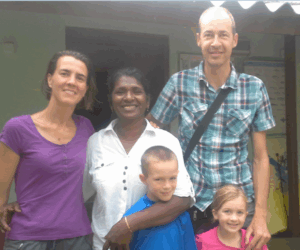
Sri Kumari my Late Partner

YouTube link

This is a video of a Adivasi dance.  I watch it often.  One of my partners (late) looks like the tall woman on the left.   The video

My partner Kumari of about 10 years passed before she got to 50.  Diabetic complications

Her name Dona Chitrangani Sri Kumari
Sri Kumari another name for Kali.
Name was given because her parents made a vow at Muneshwaram Kovil to Kali get a child.

Her parents were killed by the LTTE when she was about 14 (1990 or so).  When Kumari and I came here to this village, it was only then Kumari realized her parents had been killed by the LTTE nearby

Kumari was tall for a Sri Lankan woman, about 5’7″

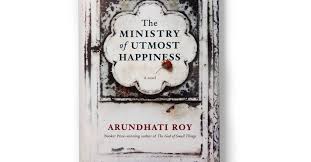
The Ministry of Utmost Happiness: A Look into the Underbelly of Modern India

[Note:  I have absolutely no issue with Sairav moderating his posts the way he sees fit–this is the right of all BP authors.  However, he doesn’t have the right to cast aspersions on other authors. Comments from others that I’ve “faked my degrees” are also ridiculous.  I frankly have no interest in interacting with Sairav so you all are free to discuss among yourselves. Similarly, I will be deleting any comments Sairav makes on my posts.]

From my Substack:

This review originally appeared on The South Asian Idea in June 2017. 

Ever since The God of Small Things was published to great acclaim in 1997, Arundhati Roy’s fans have been eagerly awaiting her next novel. It was a long wait—two decades—as Roy transitioned from being a novelist to being an activist and a non-fiction writer. Now, the wait has finally ended with the publication of The Ministry of Utmost Happiness.

The novel focuses on several characters, most of whom are outcasts from the new rising India. They include a hijra named Anjum, a Kashmiri separatist (or freedom fighter) named Musa and Tilottama, the Malayali woman who loves him. Over the course of the novel, these disparate characters encounter one another and their stories intersect, sometimes in surprising ways.

Much of the novel is set in the Kashmir Valley during the 1990s—at the height of the insurgency against the Indian state—viewed by many Kashmiris as an occupying force. Musa’s wife and daughter are killed in crossfire between the Indian Army and Kashmiri militants. Tilo herself is harshly interrogated by the Indian Army and is only let go because of her connections to an old college friend, who is high up in the Intelligence Bureau. In this section of the novel, Roy evocatively describes the brutality of life in Kashmir and the impact it has on those on both sides of the ideological struggle.

Those who have followed Roy’s non-fiction will find many resonances in this novel. Asides from the Kashmir conflict, the plot touches on rising Hindutva, the Maoist struggle in the forests of central India, and Dalit assertion against upper-caste violence. One consequence of such a large canvas is a certain fracturing of the narrative. For example, when the narrative moves to Kashmir, Anjum has to be abandoned in Delhi. Although Roy convincingly brings the characters together at the end, there is a sense of disconnect while reading the story. Continue reading The Ministry of Utmost Happiness: A Look into the Underbelly of Modern India

Brown Pundits