American University in Delhi?

India might open to foreign universities. That could be a game-changer:

And India’s higher education system badly needs shaking up. Setting aside issues of quality (as if those can be set aside), India does not come close to providing sufficient seats to those aspiring to higher education — a glaring shortcoming as India’s burgeoning middle class strives to prepare their children for the opportunities of the future.

India’s system has its successes, of course, but they are narrow. Just nine Indian higher education institutions made the top 500 of the most recent QS World University Rankings. The top one — the Indian Institute of Science (at 155) — is a highly specialized institution focused on postgraduate studies and research in the sciences. The other eight are part of the well-known Indian Institutes of Technology, which specialize in engineering. The highest-ranked comprehensive university was the University of Delhi, falling in the 520s.

That is simply not good enough. All told, India has just over 1,000 institutions of higher learning. China, with a similar population, has three times that. The United States, with a much smaller population, has four times as many.

This all sounds find, but India will replicate some of the US’s pathologies in the education sector. The “consumer model” of higher education has been causing serious problems here over the past few decades. The op-ed even states that “Private universities, too, are overly regulated and cannot operate for profit. That deters the best entrepreneurs from entering the sector.” Entrepreneurs entering the sector was a disaster, and for-profit colleges were a way to absorb student loans from the public fisc.

But I wish India well.
Hindenburg vs. Adnani

Don’t know much about this, but I noticed it hit WSJ today, India’s Adani Group Fails to Halt Short-Seller Driven Decline:

A giant Indian conglomerate couldn’t stop the freefall in its shares and bonds set off by an American short seller in what has grown into a bitter fight over the empire created by one of India’s richest and most politically connected businesspeople.

Adani Group, an energy and infrastructure company, released its 413-page rebuttal to the short seller’s claims just as the trading week began in Asia. Investors weren’t convinced and dumped shares of the company on Monday, bringing the total value lost to $64 billion since last week.

The fight could have wide implications for India’s power industry and for its transition to clean energy. It has also caused billions of dollars in losses for Indian investors who have helped drive up the company’s share price to stratospheric levels.

You can find the Hindenburg Ressearch Report here. This part jumped out at me:

Most large companies hire credible, well-known external auditing firms in order to give investors confidence that their financials are being independently reviewed by a capable team.

Given the complexity of Adani Total Gas and, particularly, Adani Enterprises, with 156 subsidiaries and many more affiliates and joint ventures, one would expect a large, highly experienced team to be monitoring its labyrinthian corporate structure.[62]

But Adani Group has apparently shunned this approach, choosing a tiny auditor named Shah Dhandharia to oversee the audits for these two public companies.

Shah Dhandharia’s website has gone offline during our investigation and now appears to have no website. Archived versions of the website as of February 2020 show that the firm was comprised of only 4 audit partners and 7 support staff.[63]

Of the partners featured on its team page, we found that 3 were in their 20s – hardly the level of experience or seniority needed to seriously scrutinize one of the world’s wealthiest and most powerful businessmen.

Apparently, the Adani group has a 413-page rebuttal to the short-sellers. Rebuttals often take more time/space…but I not going to lie, I am not surprised at the length here…

(though some short-sellers have done sketchy things, my own view is short-sellers are an essential part of af functioning market and discourage crony-capitalism)

Open Thread, 1/27/2023, Brown Pundits

Some stuff from my Substack: Genetic history with Chinese characteristics – How two Bronze-Age tribes became the world’s 1.3 billion Han (without even changing much genetically) and Venerable Ancestors: untangling the Chinese people’s hybrid Pleistocene origins origins – More than 40,000 years of human evolution in East Asia. I’ve written more about India because it’s super genetically variable, unlike China. But China has more written history.

Also, if anyone wants to know what I’ve been doing with most of my time the last few years, I founded a tech startup, GenRAIT.

Indian Idol, Super Singer Star Maalavika Sundar on Learning Carnatic Music in a Traditional Gurukul

On the 23rd Episode of The Indic Explorer Show-my weekly podcast, I spoke to Maalavika Sundar one of the top contestants in Super Singer as well as The Indian Idol. We spoke about the how the training and practice of Carnatic Music is carried out within a Traditional Indian Gurukul.

The Indic Explorer YouTube channel focusses on the interplay of Indic culture with modernity explored through different facets in the socio-cultural sphere.

Do subscribe to the channel at https://www.youtube.com/theindicexplorer

and follow me here

Twitter- https://twitter.com/theindicexplor1

Instagram- https://www.instagram.com/theindicexplorer/

Substack-https://digitaldharma.substack.com/

History of Travel in Ancient India and the State of Heritage Tourism in Modern India

On the 22nd Episode of The Indic Explorer Show-my weekly podcast, I spoke to Anuradha Goyal on the History of Travel in Ancient India and the State of Heritage Tourism in India today.

The Indic Explorer YouTube channel focusses on the interplay of Indic culture with modernity explored through different facets in the socio-cultural sphere.

Do subscribe to the channel at https://www.youtube.com/theindicexplorer

and follow me here

Twitter- https://twitter.com/theindicexplor1

Instagram- https://www.instagram.com/theindicexplorer/

Substack-https://digitaldharma.substack.com/

Down with eggs?


I don’t have a big personal issue with vegetarians, though I really enjoy ribeye and you’ll take shrimp from my dead hands. My daughter has been a vegetarian since she was five due to ethical concerns about animal cruelty.

But every now and then I hear that BJP-aligned governments or officials are removing eggs from school meal programs due to cultural sensitivities. I get that, but is there a good argument from this from a utilitarian/nutritional angle? Children at critical ages need protein and fat, and perhaps I’m wrong, but India still seems to have a lot of nutritional issues in a lot of is population. These kids are the future, and honestly, this seems like the cultural forces are shooting society in the face.

If Marin county or the Irvine School District unveiled this I wouldn’t care. With enough money and care you can design a vegan diet with balance and supplementation to be healthy. But this requires care and execution, and I see many American with lots of money who don’t pull it off well judging by their physique and fatigue.

What’s the deal? It’s true that the Chinese eat everything, but sometimes I wonder if the Indians eat nothing.

(this matters to all of us because a massive number of working age people in the next few decade are going to be Indian, and we need them to be as healthy as possible)

Episode 18 – The Maratha Empire

Another Browncast is up. You can listen on LibsynAppleSpotify, and Stitcher (and a variety of other platforms). Probably the easiest way to keep up the podcast since we don’t have a regular schedule is to subscribe to one of the links above!

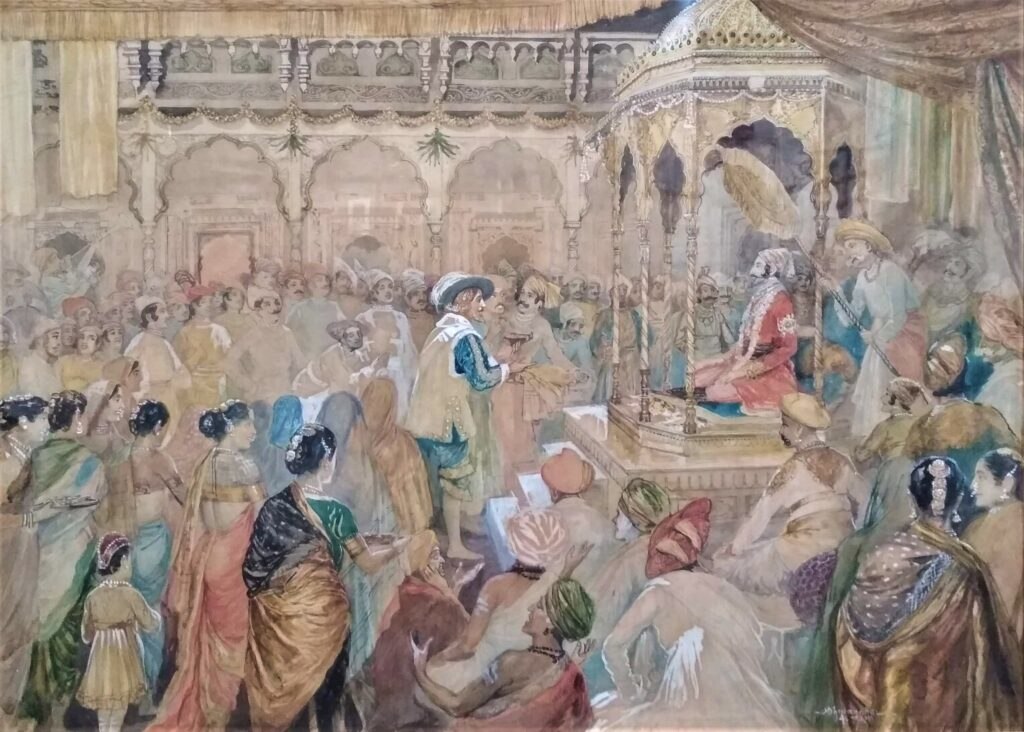
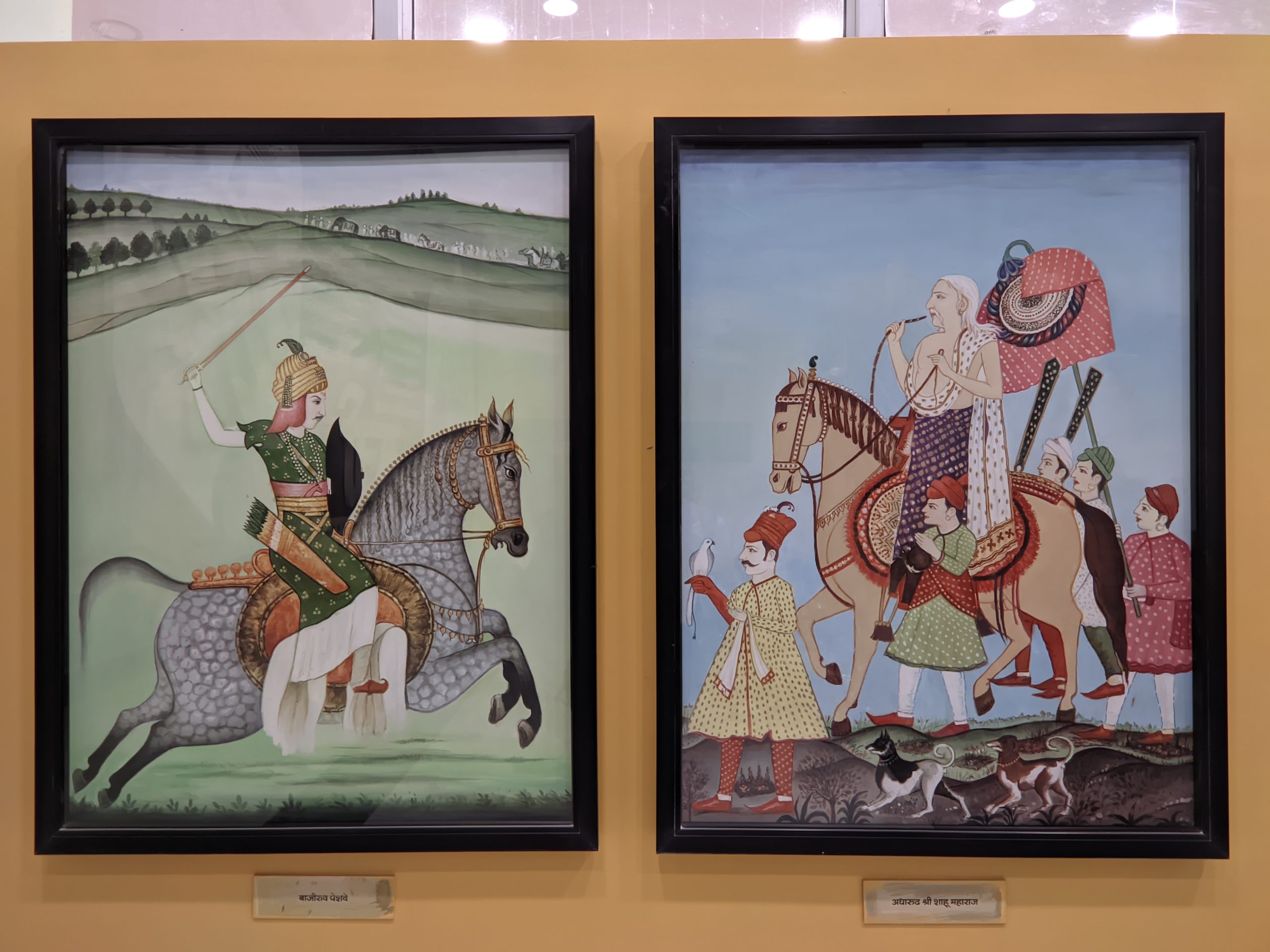
In this episode, Prathamesh Godbole and Amit Paranjpe discuss the Maratha empire – spanning from its humble origins as a Jagir of Adilshahi to the largest power in the subcontinent before the British conquest. We discuss the great maratha rulers Shivaji Raje, Sambhaji Raje and the Peshwas.

Postscript (from Omar): At 1 hour 27 minutes on the youtube recording I was asked how they are perceived in Pakistan and i went on about their role against Tipu, but I should have mentioned Panipat first. THAT is, of course, taught as a great Muslim victory, but without too much background information.

References:
English
Solstice at Panipat, Era of Bajirao, Epoch of Nanasaheb Peshwa, Mastery of Hindustan – Uday Kulkarni
A New History of Marathas, Volumes I-III by G.S Sardesai
Shivbharat – Shivaji Raje’s biography in Sanskrit by a court historian – has been translated to English
History of Marathas- Grant Duff
History of the Maratha People – Kincaid
Translations done by Prathamesh, of selected letters from multiple Marathi sources regarding battles, diplomatic exchanges and other military matters.
Its about ~300 pages equivalent, and covers 1720-1803.
Marathi
Itihasachi Sadhane some 20 volumes- Rajwade
Peshwe Daftar- 40 volumes
Aitihasik Lekh Sangraha – 15 volumes
About 20 different Bakhars, Eg: Panipat – chronicles written by prominent nobles and about major battles. Not always fully reliable, but still a useful source.

Division

One of the things that has saddened and frustrated me on this weblog over the last 12 years has been the tendency of brown people, Indian subcontinentals, South Asians, etc. to engage in differentiation. As a geneticist, I am aware of differences, and I accept and admit it candidly to an extent that is rare in an open manner in the West. Also, some ribbing and joking is normal, and I am not offended.

But Pakistanis vs. Indians, Southies vs. Northies, Bangladeshis vs. Indians. High caste vs. low caste, vegetarian vs. non-vegetarian.

Our cultural differences are striking. Our diversity of form, belief and practice is mind-blogging. But we come from the same roots. The rest of the world looks at us, and recognizes the kinship. We? Not so much. Muslims claim Arab or Iranian heritage. Jats and northwest Indians distinguish themselves from the lower and dark races. Southerners express contempt for the barbarism of BIMARU. BIMARU claims that they are the font of culture. And so forth.

This is not to end with a resounding assertion. But sometimes, I wonder if the silent majority is not like this, and we hear the prattling of the minority?

The Indian Overton: Opposition Offensives

About 45 million years ago, the Indian tectonic plate collided with the Eurasian plate. The union between these earthen pieces bore giants – the Himalayas. These soaring temples of stone would decide the fate of Indians for millions of years. The Himalayan earth wrapped by the highest winds in the world would give birth to water. Glaciers turned into rivers that turned into Goddesses as Indians would later dutifully worship these daughters of the Himalayas. The great mountains would breathe the monsoon winds across the subcontinent as each exhale and inhale covered the soil in greenery. Fertile river basins would flourish as different cultures thrived in this Petri dish of geography, which soon enough would evolve into civilization.

AI RENDITION OF THE RIVER GODDESS GANGA 

Continue reading The Indian Overton: Opposition Offensives

Brown Pundits