
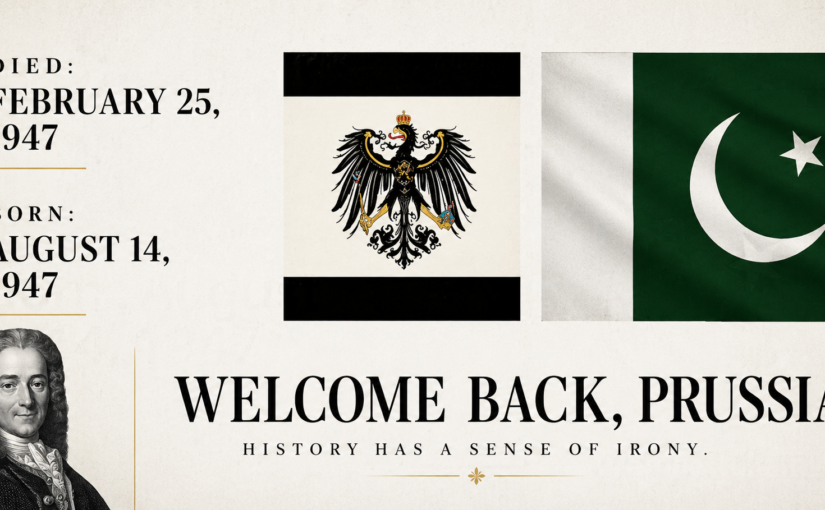
A precedent post on Pakistan’s self-exile from the subcontinent, and the geography that outlasted it
This is not anti-Pakistan polemic. Pakistan can flourish in the role she has chosen, and may continue to do so (Pakistan’s pivotal role in the US-Iran war is, on any honest reading, a legitimisation win for the current hybrid government)). The point being made here is structural, not personal.
Pakistanis are a subset of the British Raj’s Muslim population. As Punjabis, as inheritors of the Mughal cultural complex (alas one cannot destroy his Masjid and simultaneously claim to be his heir), as native carriers of the Hindustani register that becomes Urdu under one stylisation and Hindi under another, they began with a favoured position inside the subcontinent. They have traded it for a subordinate position inside the wider Muslim world. The internal hierarchies of the Islamicate, where Pakistanis rank against Arabs, Turks, and Persians, are dense and unflattering and deserve their own treatment another day.
The cause of the trade, in the end, is theological. The subcontinent runs on iconographic generosity, painted shrines, sung saints, plural deities, devotional excess. Strict iconophobia cannot live inside that civilization without breaking it. Pakistan chose the stricter line in 1947 and has progressively tightened it since. The Urdu denial, the recent insistence in some Pakistani quarters that Urdu is not really an Indian language, is the cleanest evidence of the opt-out.
Irreducibly Indo-Persian
Continue reading Gurdaspur and Siliguri: The Two Necks That Held