
Back from Vermont

Dr. V and I spent Valentine’s week in the Green Mountains. Clean slopes, functioning lifts, small towns organised around winter.

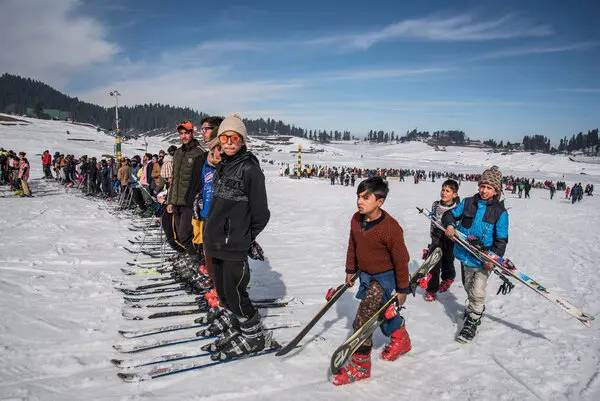
It is hard not to compare that with the Himalaya–Hindu Kush arc. The Karakoram, western Himalayas and Hindu Kush contain some of the highest and most snow-reliable terrain in the world. Peaks above 7,000–8,000 metres. Glaciated valleys. Long vertical drops that exceed most Alpine resorts. Gulmarg in Kashmir already has one of the highest gondolas on earth, reaching nearly 4,000 metres. Parts of northern Pakistan and Ladakh receive heavy winter snowfall and have multi-month seasons.

In purely geographic terms, the region has the ingredients for a major winter sports economy. Yet large stretches of this highland are militarised or politically contested. Infrastructure is thin. Insurance is expensive. Foreign tourism is episodic. Investment flows elsewhere; to the Alps, to the Rockies, to Japan. The comparison is not moral; it is structural. Geography offers potential. Institutions determine whether that potential becomes an industry. That contrast stayed with me on the drive back.

The (Original Brown) Pundits: Spies, Explorers and Scholars during the Great Game

Galwan Valley, Pangong Lake, Karakoram Pass, Doklam Plateau, Mishmi Hills. These obscure geographical features and landmarks in the high Himalayas separating India from China have suddenly made their way back into the public consciousness. The catalyst this time is the increased friction between the People’s Republic of China and the Republic of India. I use the phrases “way back” and “this time” deliberately. To scholars and enthusiasts of the Great Game, these names and the surrounding context are eerily familiar: shadow boxing between an ascendant, assertive superpower (Tsarist Russia) trying to throw its weight around in its immediate neighbourhood and an ostensibly weaker but rising middling power (British India) trying to protect its interest in its backyard.

The original Great Game, which played out over the course of the nineteenth century between the British Indian and Russian Empires in South and Central Asia, had all the characteristics of a bestselling novel, filled with action, adventure and intrigue. It also had its set of glamorous characters: Sir Alexander ‘Sikunder’ Burnes- the famous British spy with oodles of charm and dashing good looks to boot- was the James Bond of his era. He was matched on the Russian side by Captain Yan Vitkevich, the enigmatic Polish-Lithuanian orientalist and explorer. Mercifully, there was very little by way of direct bloodshed between the principal protagonists, although things did come close to getting out of hand on a few occasions. No wonder the Russians evocatively called the contest “The Tournament of Shadows”.  It was compelling drama and the public- in Britain, India, Russia and beyond- lapped it up. The romance and zeitgeist of the times was captured by the great Victorian author Rudyard Kipling in his famous novel, Kim.

Continue reading The (Original Brown) Pundits: Spies, Explorers and Scholars during the Great Game

Brown Pundits