Another BP Podcast is up. You can listen on Libsyn, iTunes, Spotify, and Stitcher. Probably the easiest way to keep up the podcast since we don’t have a regular schedule is to subscribe at one of the links above.
Would appreciate more positive reviews!
In this episode I talk to Keerthik Sasidharan, an author and columnist whose debut book “The Dharma Forest” just came out in India in December 2020. Release in the US is awaited. We talk about his book, the Mahabharata, Indian tradition and whatever comes to mind..
The Caravan has a piece up intended to inflame, The Hindu Hoax – How upper castes invented a Hindu majority. If you are a sudra or an avanra who believes in the Hindu religion the piece seems geared to denying you all agency or independence. You are a dupe, the victim of “false consciousness.” The Brahmins control you!
That is fine as far as it goes. I am not a Hindu or from a Hindu background. Instead of being offended, mostly I just roll my eyes. And yet I have to admit that twenty years ago I would have been interested in, perhaps even attracted to, the idea that “Hindu identity” or “Hindu religion” was “invented” in the past few centuries. It’s one of those counterintuitive “Freakonomics-style” facts that you can deploy for fun and rhetorical profit. “Actually, did you know….”
But after reading and thinking about this for a few decades, I think this is wrong. I don’t think this is wrong because of what I know about Hinduism, as such. I think this is wrong because of what I know about the spread of religion over history.
For many decades astronomers have been arguing about the existence of “planet X”, which is an undiscovered planet-sized object in the outer solar system which may need to exist to explain the orbits of the planets we can see. That is, we don’t have any evidence of this planet itself, but, we have evidence of its impacts on the other planets. Whether “planet X” exists is irrelevant. Every time I check the consensus seems to change. The point is your model of something can allow you to infer facts through deduction.
As many of you know, one of the mysteries and miracles of human history is how India maintained its religious uniqueness despite 500 years of predominant Islamic rule. In Iran, the best data suggests Muslims were a majority after 300 years. Egypt, it probably took a little longer, but 400 years seems right. I’ve written extensively on hypotheses why India was different. This post isn’t about that. Rather, the very persistence of a non-Muslim majority is indirect evidence of the religious character and identity of the people under Muslim rule.
The stylized fact that I see bandied around is that non-Brahmins, at more modestly Hindus who were not twice-born, had their own non-Hindu religious traditions. These local and indigenous traditions were bracketed into and assimilated as Hindu only within the last few centuries. Before that, it’s best to think of them as not Hindu at all. A conspiratorial and unflattering model is that Brahmins and their allies engaged in a massive re-identification and implicit conversion campaign against the pagan masses, who were as distinct from Brahmanical Hinduism as Muslims were.
The fundamental problem with this is in other areas the pagan and marginal people invariably defect and convert to an alien and novel new religion first. This is the Iran and Kashmir, model. Most of the non-Muslims remaining are of the priestly caste (this is the origin of the Parsis). The core of the old religion. But people on the margins or who were always outside of the boundary of pre-Islamic elite identity quickly switched to becoming Muslim. Turan, north of Iran proper, Islamicized more rapidly than Iran, because it was multireligious, to begin with. In the Roman Empire, nobles from the frontier provinces converted to Christianity faster from the inner core zone. The Roman and Iranian example actually has resonances to the Indian subcontinent, as one argument for early and pervasive Islamicization in the northwest and northeast (Punjab and Bengal) is that its Hindu matrix was weak to nonexistent at the time of the Muslim conquest.
Where am I going with this? If I was a believing Hindu, perhaps I would contend that the persistence of Hinduism in the face of Muslim domination is a function of the power of God and the gods protecting their people. It is a literal miracle. But I’m not a believer in religion. Another hypothesis is that India is the exception to the rule universal elsewhere. A mass of pagan people without any religious connection to a priestly caste (Brahmins) somehow maintained their identity and practices in the face of a dominating “higher religion” (Islam). Then, the cunning Brahmins during the colonial people convinced these non-Hindu pagans that they were actually Hindu!
Both scenarios are implausible to me. First, because there is probably no God in the first case. Second, because I’ve met Brahmins, and they aren’t that incredibly persuasive and Machiavellian. Rather, like “planet X”, I default to the thesis that there’s an identity, a self-conception, a set of beliefs and practices, which suffused itself through the matrix of indigenous Indian groups. Though there was some defection, for various reasons, the cultural matrix was strong enough to maintain itself down the modern period, when information technology and modern identity formation created something much more coherent. That cultural matrix is the precursor to Hinduism today. It wasn’t a conspiracy. Just a natural evolution.
Some of my Hindu American friends online engage in a defense of attacks on Hinduism by denying the necessary connection between caste and Hinduism. Since religion is made by men, this is true on the face of it. There is nothing necessary in any religion.
But, Hinduism is a religion strongly associated with the Indian subcontinent. Far more than Islam is necessarily associated with Arabia! (the greatest doctors of Islam were not Arabs, but more often Persians!) And caste is strongly associated with the Indian subcontinent. This is not a transitive relation, but the affinity is clear. It has hard to think about Hinduism without caste and jati, though it is possible (e.g., Tulsi Gabbard is a devout Hindu, but not Indian, while some Muslim Indians have their own forms of endogamous caste, despite not being Hindu).
Untouchable
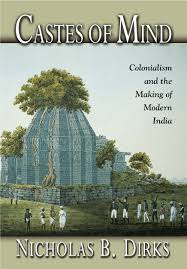
Is this just a historical coincidence? Like many, I have read Nicholas Dirks’ Castes of Mind. Though Dirks acknowledges the ancient origins of varna and jatis, he puts great emphasis on the rationalization of the system under the British. Additionally, he points out the rise and fall of jats. The Indian landscape is communally fluid in its hierarchy.
This is plausible. But I do not believe it is true on a deep and fundamental level. I have come to this conclusion because genetics is so striking.
Though the correlation is not perfect, within regions there is a strong association between “steppe” ancestry and caste status (more steppe means higher status)
Dalits in the South have almost no steppe. The non-Dalit but non-Brahmins have some. In the north, Dalits in Uttar Pradesh have the least steppe, and in some ways are genetically closer to Dalits in Tamil Nadu than non-Dalits in Uttar Pradesh.
There are clear indications of 1,500 of endogamy in a village in Andhra Pradesh (elsewhere too).
When I first stumbled onto these facts they were shocking and bizarre. Totally unexpected. I assumed some caste stratification, but this was ridiculous.
These are the reasons that though I believe the new modern Hindus do sincerely abhor caste and jati, it is sometimes hard to take their protestations that the connection between caste and Hinduism is incidental. You are {{{Brahmin}}}, the product of several thousands of years of endogamy written all over your genes, the scion of the priestly caste of Hinduism, protest that caste and jati have nothing to do with the religion! Except that the priestly castes seem to be amongst the most punctilious adherents to endogamy of all!
So what’s the future? As an atheist of Muslim familial background I have some advice: make Hinduism less Indian, because that is the fundamental issue. Hinduism evolved organically within the Indian subcontinent with jati and varna, and like intertwined siblings growing up in the same house, there are some shared characteristics. Grow up. Leave the house. Be your own person.
The pluralism in Hindu thought is often pegged back to the philosophically sophisticated एकं सत् विप्रा बहुधा वदन्ति from Rgveda – first mandala. While that message underlies a lot of Hindu thought as we know it, it’s often overstated as it sounds sophisticated to the scholars/amateurs studying it. On the other hand, some hymns from the family books, particularly the Rgvedic Hymns 7-82 to 7-89 give a fascinating peek into the mind of the Bharata purohit Vasishta after the Dasarajna Yuddha. The hymns which are very repetitive mostly praise Indra and Varuna for the help given to Sudas(Bharatas) and the Trstus in the Dasarajna where the enemies also worshiped Indra. The important point to glean here is the different functional roles for which these deities are evoked. Indra for war, Varuna for prosperity, Aditi for light, etc. Varuna who is often paired with Mitra or Aryaman, gets paired with Indra here – which scholars (RN Dandekar, Michael Witzel, etc) see as conciliatory.
According to Dandekar, it was out of this experience of bhakti that Vasistha became essential in the conciliation of the Indra- and Varuna-cults and especially in “averting a schism in the Vedic community” by demonstrating “that Varuna and Indra were not antagonistic to each other but… essentially complementary. ‘Indra conquers and Varuna rules.”
It is fair to speculate that such a conciliatory approach would go on to shape interactions the mainstream Vedic thought would have with non-Vedic deities as these hymns are the victor’s recollection. This conciliation and integration (A) appear much more pragmatic and economic than abstract ideals (B) espoused by एकं सत् विप्रा बहुधा वदन्ति or other sophisticated thought from Upanishads or Gita. For B to emerge and sustain, A appears essential. With A established, B in some form or other would follow as evidenced by other Eastern faith systems which also tend to be inclusive. It is fair to say a combination of A and B lays the foundation for the emergence of quintessential pluralism of Hinduism.
Let us segway into a short story:
In a village in Vengurla (South Konkan), there was a local Saint/Warrior (non-Brahmin) who was extremely popular with the masses.
He passed away and his devotees wanted to make a shrine/temple for him. A Kaashyap Brahmin who was a respected man in the village objected. His objection stemmed from the deification of a man (probably Shudra) and placing him on the same pedestal as the Devas.
The Brahmin (who had quite a bit of clout in the village) opposed this Adharma with all his might but was almost overpowered by the “uncouth masses” in the story.
The landed or Kshatriya(ish) castes sided with the masses instead of the Brahmin and as a result, the Brahmin couldn’t prevent the deification.
Additionally, the humiliated Brahmin was expected to condone the practice and give the shrine his blessings.
He couldn’t be part of this Adharma and hence left his lands, wealth, position, and went northeast and settled in Ichalkaranji near Kolhapur preferring his descendants living in abject poverty over condoning Adharma.
The replacement Gaargya Brahmin was happy to support the deification of the Saint. His descendants flourish economically in the village with large lands and respect but suffer spiritually.
The shrine/temple remains popular to this day and most villagers have forgotten about this tale around the origin of that particular deity.
The spiritual suffering of the current Brahmin was removed by the forgiveness of the descendent of the Kaashyap Brahmin some years ago.
Ravalnath
This is the fanciful tale of my great-great ancestor as told to me by my Chachera uncle (first cousin once removed). The Gotras are not important to this piece but the emphasis and obsession on Gotra is a salient feature of Brahmanism which deserves some attention. This tale is not very atypical. There have been other documented cases of such squabbles between village Hinduism and Brahmanism. This tale echoes many other tales from South Konkan – those of Ravalnath, Betal, etc. I am unsure if the deity in the tale of my ancestor is Ravalnath or Betal or something else entirely. But the contours of the tale are very similar. In both the cases of Ravalnath and Betal, there was initial resistance to these deities from local Brahmins in the medieval times – especially due to local traditions that involved blood sacrifices and other things frowned upon by Brahmins, but over time these deities got wider acceptance – even among local Brahmins. While Ravalnath is a Kuladevata for most Goans (all castes), Betal is a Gramadevata of some local communities. Vithoba, the popular God of Pandharpur( the annual Waari) is a very important figure of the Bhakti movement. Religious scholar and Sahitya Akademi winner RC Dhere who extensively studied Vithoba also hypotheses pre Vedic origins of Vithoba. Khandoba is another deity whose origins are similarly muddy with a range of theories explaining him as the fusion of earlier deities including Kaal Bhairav. Interestingly in the Puranic tale of Kaal Bhairav “his struggle for the atonement of Brahmanhatya” is central. Khandhoba of Jejuri remains a deity for not only the Sudra castes, but Brahmins, Jains, Lingayats, and even some Muslims including the patronage of comparatively tolerant Bijapur Sultan Ibrahim Adil Shah. While it would be tempting to dismiss this as some tenuous Donigerish take, the sheer numbers of such stories spread across the country strengthen the hypothesis.
Coming back to the descendants of the uncompromising Brahmin from Vengurla. Today my extended family proudly worships all the Gramadevatas from Ichalkaranji whose origins may be very similar to the one whose foundation my ancestor had objected to. Ironically most of my paternal family follow a plethora of local Saints (in addition to the popular Bhakti Saints), whose tales of the origin have occurred within living memory and hence are far easier to negate. I would not go into rants about these Saints (esp Gajanan Maharaj) whose followers number in millions. While some traditional elite Hindus (especially Urban) are known to have disparaging views of Saints & local deities, mostly these distinctions have weathered away. It is not unlikely to find Hindus who fast on Mondays for Shiva also fast on Thursdays for some local Saint (who mostly claim intellectual or avatarish descent from Dattatraya). Despite some initial friction, the Brahmanical thought has made its peace with such traditions. Most scholarship refers to this as – the local traditions (non-Vedic) being co-opted by Brahmanism. IMO this is an incomplete way of looking at it as it conflates organic integration which typically occurs over generations with the realization of some highly foresighted plan. Typically humans are not foresighted enough to pull off multi-generational machinations. From a multi-generation evolutionary paradigm, these would make sense but not if you take a snapshot at any particular moment in history.
With this background, we go into realms of pure speculation and come to the Post Vedic deities in Hinduism. The origin of some of these deities is highly contested – especially that of Shiva. While the Rgvedic Rudra is often said to be the precursor of Shiva, the meaning of Shiva is certainly in contrast with Rudra. Whether the Pashupati seal from IVC or other Proto-Lingas are Proto-Shiva or not will likely not be resolved till we decipher the IVC script, but these speculations seem very plausible. Even Parpola doesn’t dismiss them in his Roots of Hinduism. In addition, Parpola makes a good argument in the IVC origins of Durga with seals of Tiger riding goddesses from Kalibangan. Similarly, we can say the Dravidian Murukan and the Vedic Skanda gave rise to the Karthikeya we know today. We still don’t have any intelligent speculation about the origins of Ganesha (other than some references to Gajapati), buts it fair to assume the elephant-headed god is a pretty late addition to the Hindu pantheon. The aim here is not to discuss and speculate the origins of these deities but to guess the mechanisms of integration of these deities and customs into Brahmanism. Brahmins had a huge ritualistic/moral capital, but given the tenuous or conflicting relations they had with the Kshatriyas and other dominant castes (as seen through numerous puranic stories especially those of Parshuram) it is fair to assume Brahmins would not often get their way with subtracting traditions they found Adharmic or uncouth, yet they could continue to shape these traditions from inside with participation. Pressure both from the masses and Brahmins would’ve actively shaped the integration of these traditions for centuries to the point where it’s often hazy where Brahmanism ends and where “Non-Brahmanical” traditions begin. (This probably happened with Sramana or Proto-Sramana traditions competing with Brahmanism but that is a different discussion)
IVC goddess riding Tiger
While it is generally said Brahmanical thought absorbed the local traditions, it is equally or more appropriate to say that the village Hinduism made space for Brahmanism & tamed it – into the diverse and plural fold and this process was not complete for the entire subcontinent when Mahmud of Ghazni attacked Somnath. Scholars like to emphasize Adi-Shankara’s Advaita and Mutts, Upanishads, Rgvedic “एकं सत् विप्रा बहुधा वदन्ति” as it appears sophisticated and intellectual. However, the tendency of humans to pragmatically negotiate the boundaries of their traditions (in absence of exclusionary universalist ideas) when they already have multiple modes of worship tends to be underemphasized as it appears uncouth or folk. Roman religion easily absorbed Isis and Cybele into the Roman fold but couldn’t absorb the God of Abraham. In contrast, when Christianity conquered Europe it absorbed the old gods into the Christian fold as Saints but kept them subordinate to the one true god. However, Shiva and Ganesh did not bow done to Indra, and by the time of the Puranas, the mighty Vedic Indra was reduced to an insecure and somewhat petty King of Gods.
Maybe the Brahmin elites & Sanskrit managed to maintain a cohesive identity-based on sacred geography only because they themselves were tamed in similar mechanisms by the natives of the geography. If yes, then Hindu Pluralism and Syncretism is as much a legacy of numerous lost stories as it is of the philosophical moorings of the Vedas, Itihasas, and Upanishads.
Postscript:
I had been thinking along these lines since my discussion with Mukunda and Omar on the Brown-cast about the roots of Indian pluralism. While commenting please stick to the topic and be civil & constructive. I will delete off comments for this piece.
Every now and then there is a controversy on Indian-Twitter which bleeds over into my timeline that I have to notice.
Some quick observations:
– There are those who lambast the critics of this ad. Many of the critics are low-IQ vulgarians. So the criticism is not without foundation. But, most of the responses dodge the gendered nature of the objection. The fact is that in Islam it is understood that Muslim men can marry non-Muslim women. It is also tolerated for Christians and Jews to retain their religion after marriage. The children are considered Muslim. This practice in a patriarchal society was seen as a boon to the Islamic nation.
The advertisement plays into this Islamic trope. The converse of this is that most interpretations of sharia ban the marriage of Muslim women to non-Muslim men. Again, the rationale for this is straightforward: the children inherit the religion of the father, and therefore the children are lost to Islam. If the supporters of the beauty of the advertisement of interfaith marriage believe in this custom, then they should support more speech. In particular, they should support an advertisement where a Hindu man marries a Muslim woman in a Hindu ceremony to show that there is nothing wrong with this act so long as the people consent freely.
Since many of you are innumerate, I first want to make it clear that Sindh province is 10% Hindu. These Hindus are concentrated mostly in rural areas. As you likely know most elite Sindhi Hindus no longer live in Pakistan. These are poor and relatively powerless people.
The mass ceremony was the latest in what is a growing number of such conversions to Pakistan’s majority Muslim faith in recent years — although precise data is scarce. Some of these conversions are voluntary, some not.
News outlets in India, Pakistan’s majority-Hindu neighbor and archrival, were quick to denounce the conversions as forced. But what is happening is more subtle. Desperation, religious and political leaders on both sides of the debate say, has often been the driving force behind their change of religion.
Treated as second-class citizens, the Hindus of Pakistan are often systemically discriminated against in every walk of life — housing, jobs, access to government welfare. While minorities have long been drawn to convert in order to join the majority and escape discrimination and sectarian violence, Hindu community leaders say that the recent uptick in conversions has also been motivated by newfound economic pressures.
As someone who has read a great deal about religious dynamics, this is not subtle, but a very typical. Contrary to some claims, very few conversions to Islam were “forced” in a physical sense. Rather, historically, individuals converted out of self-interest or desperation. Often there were whole communities who make this choice.
A second issue is that there are attempts to present a symmetry between what is happening in India and Pakistan. This story illustrates how no such symmetry exists. Muslims in India are obviously at a disadvantage, but their situation is not analogous to Pakistani religious minorities.
Part of the story here is obviously about the treatment of religious minorities under Islam, which was not out of the ordinary in 1000 A.D., but 1,000 years later is anomalous, insofar as low-grade persecution is common. But it is also a story about the lack of Hindu solidarity with these people who were literally “left behind” as the Lohannas decamped for Mumbai.
At my other weblog, I have a long post on Irish DNA which I think will be interesting to readers of this weblog. The reason is that the big aspects aren’t really about Irish DNA, but the fact that ancient DNA is shedding new light on the mythology of the Irish people, which unlike other Northern Europeans was preserved rather than forgotten during Christianization (the indigenous and gradual nature of Irish Christianization probably explains this).
The authors found a high-status individual buried in a Neolithic mound who was the product of first-order incest (brother-sister or parent-child). This strongly suggests a very stratified society. But this is the incredibly interesting part:
The Brú na Bóinne passage tombs appear in Medieval mythology that relates their construction to magical manipulations of the solar cycle by a tribe of gods, which has led to unresolved speculation about the durability of oral traditions across millennia…Although such longevity seems unlikely, our results strongly resonate with mythology that was first recorded in the eleventh century AD, in which a builder-king restarts the daily solar cycle by copulating with his sister…Fertae Chuile, a Middle Irish placename for the Dowth passage tomb (which neighbors Newgrange), is based on this lore and can be translated as ‘Hill of Sin’ or ‘Hill of Incest’…
It seems clear here that the Irish had clear memories of the native Neolithic people and their practices, over 3,000 years after these people had been replaced by intrusive “Bell Beakers” who likely spoke Indo-European languages (perhaps, but not necessarily, Celtic). This is not surprising in light of other instances of long-term preservation.
But, it does suggest that the early Indian mythological cycles have embedded within them a fair amount of information, though it will no doubt be mixed in with narrative elaboration and fabulation.
Recently on Twitter someone asked why people of subcontinental backgrounds who leave Islam don’t refamiliarize themselves with the religion of their ancestors. One response could be “well actually, my ancestors weren’t really Hindu…” I think this is a pedantic dodge. In places like Iraqi Kurdistan and Tajikstan some people from Muslim backgrounds are embracing a Zoroastrian identity.
In a ceremony at an ancient, ruined temple in northern Iraq, Faiza Fuad joined a growing number of Kurds who are leaving Islam to embrace the faith of their ancestors — Zoroastrianism.
Years of violence by the Islamic State jihadist group have left many disillusioned with Islam, while a much longer history of state oppression has pushed some in Iraq’s autonomous Kurdish region to see the millennia-old religion as a way of reasserting their identity.
“After Kurds witnessed the brutality of IS, many started to rethink their faith,” said Asrawan Qadrok, the faith’s top priest in Iraq’s autonomous Kurdish region.
But to be clear, not all the ancestors of the Kurds were Zoroastrian. Some were Christians. Others were probably Jews. The largest numbers on the eve of the Arab conquest were probably a mix of folk mountain pagan, with a patina of Zoroastrianism among the elites. Additionally, modern Mazdaist Zoroastrianism is only a single stream, and one strongly shaped by its Islamic captivity.
And yet on some level, it makes sense that Kurds convert to Zoroastrianism to reconnect with their ancestral Iranian tradition. It is part and parcel of that tradition. Similarly, people of Muslim subcontinental background turning toward Sanata Dharma is not crazy, even if their ancestors were Buddhist or pagans of some sort.
But there’s a problem with “converting” to Hinduism: modern Hinduism is organized around jatis, and being Hindu means being part of the community, and membership in that community is a matter of birth, not choice. Someone who was raised a Muslim and converts to Hinduism can’t just join one of the many local jatis. Of course, there are devotional sects such as ISKON, but these are exceptions, not the rule.
Obviously the same problem occurs in Islam and Christianity. I have read of converts to Islam who were single talk about the difficulty of finding a spouse since they have no “connections” within the community, and being single as a Muslim convert can be very isolating. But, Islam has within it more of an acceptance, like Christianity, that conversion of individuals is possible and even meritorious. Hindus are more ambiguous and ambivalent.
In the premodern world, Hindu communitarianism was a good fit. But in a more individualistic world, it puts Hinduism at some disadvantage.
Recently I’ve been reading about the Kalash religion. For readers who are not aware, the Kalash area group of Indo-Aryan speaking pagans who reside in the fastness of Chitral, Pakistan. Genetically about ~30% of their ancestry can be modeled as “Sintashta”, the pastoralist Indo-Europeans who were dominant in Bronze Age Turan, and likely gave rise to the Indo-Aryans. The remaining ~70% of their ancestry is similar to that of the Indus Valley people.
Despite their predominant non-Aryan ancestry, I do wonder if the Kalash could give us insights about the beliefs of the original Indo-Aryans, before they were exceedingly transmuted by India. One thing that is clear to me is that their “mountain shamanism” seems to be similar to the “steppe shamanism” outlined in Empires of the Silk Road. The insight from this work is that ecology and lifestyle matters. Turks, Iranians, Mongols, and Tungusic peoples all transformed in similar ways when exposed to and habituated toward steppe pastoralism. The shift toward more “organized” and structured religion happens with sedentarism and mixed-agriculture.


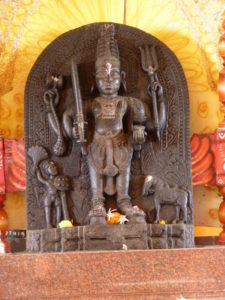
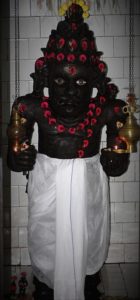 While Ravalnath is a Kuladevata for most Goans (all castes), Betal is a Gramadevata of some local communities. Vithoba, the popular God of Pandharpur( the annual Waari) is a very important figure of the Bhakti movement. Religious scholar and Sahitya Akademi winner RC Dhere who extensively studied Vithoba also hypotheses pre Vedic origins of Vithoba. Khandoba is another deity whose origins are similarly muddy with a range of theories explaining him as the fusion of earlier deities including Kaal Bhairav. Interestingly in the Puranic tale of Kaal Bhairav “his struggle for the atonement of Brahmanhatya” is central. Khandhoba of Jejuri remains a deity for not only the Sudra castes, but Brahmins, Jains, Lingayats, and even some Muslims including the patronage of comparatively tolerant Bijapur Sultan Ibrahim Adil Shah. While it would be tempting to dismiss this as some tenuous Donigerish take, the sheer numbers of such stories spread across the country strengthen the hypothesis.
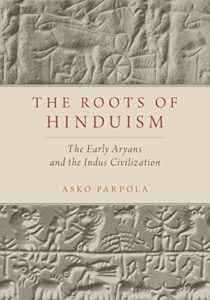 Whether the Pashupati seal from IVC or other Proto-Lingas are Proto-Shiva or not will likely not be resolved till we decipher the IVC script, but these speculations seem very plausible. Even Parpola doesn’t dismiss them in his Roots of Hinduism. In addition, Parpola makes a good argument in the IVC origins of Durga with seals of Tiger riding goddesses from Kalibangan. Similarly, we can say the Dravidian Murukan and the Vedic Skanda gave rise to the Karthikeya we know today. We still don’t have any intelligent speculation about the origins of Ganesha (other than some references to Gajapati), buts it fair to assume the elephant-headed god is a pretty late addition to the Hindu pantheon. The aim here is not to discuss and speculate the origins of these deities but to guess the mechanisms of integration of these deities and customs into Brahmanism. Brahmins had a huge ritualistic/moral capital, but given the tenuous or conflicting relations they had with the Kshatriyas and other dominant castes (as seen through numerous puranic stories especially those of Parshuram) it is fair to assume Brahmins would not often get their way with subtracting traditions they found Adharmic or uncouth, yet they could continue to shape these traditions from inside with participation. Pressure both from the masses and Brahmins would’ve actively shaped the integration of these traditions for centuries to the point where it’s often hazy where Brahmanism ends and where “Non-Brahmanical” traditions begin. (This probably happened with Sramana or Proto-Sramana traditions competing with Brahmanism but that is a different discussion)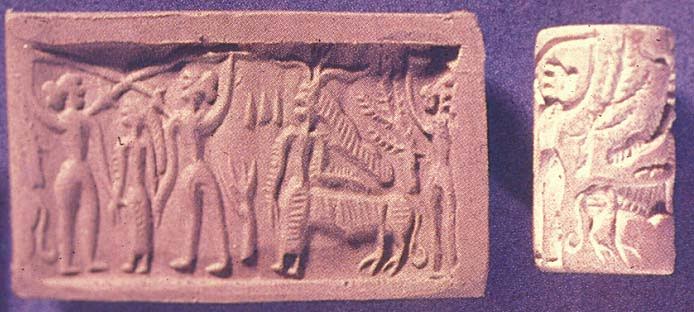
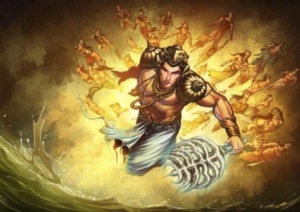
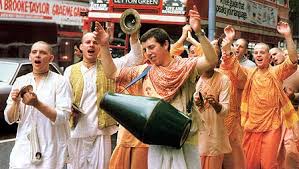 Recently on Twitter someone asked why people of subcontinental backgrounds who leave Islam don’t refamiliarize themselves with the religion of their ancestors. One response could be “well actually, my ancestors weren’t really Hindu…” I think this is a pedantic dodge. In places like Iraqi Kurdistan and Tajikstan some people from Muslim backgrounds are embracing a Zoroastrian identity.